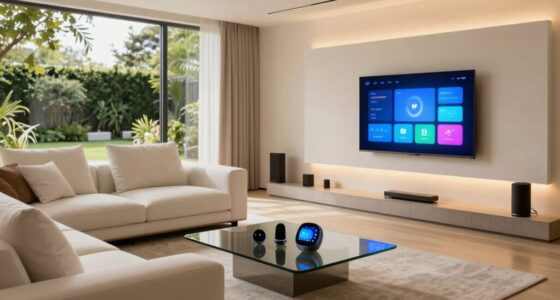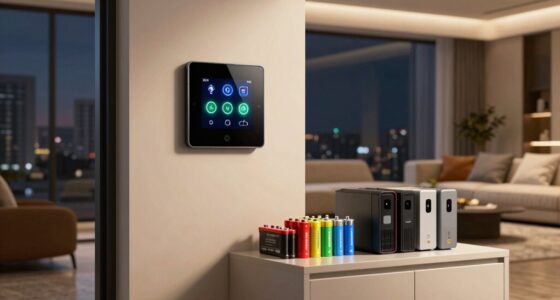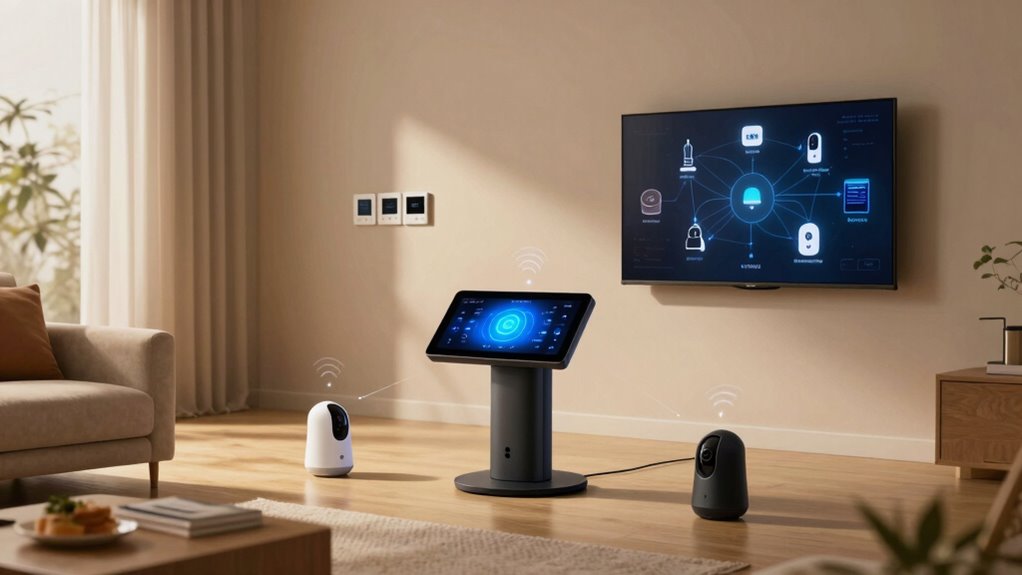
Choosing between centralized and decentralized smart home systems depends on your priorities. Centralized setups offer easy management, seamless device integration, and energy monitoring through a single hub, ideal for straightforward control. Decentralized systems provide more privacy, flexibility, and resilience, as devices operate independently and reduce vulnerability. Both have their challenges, like security concerns or maintenance complexity. To find out which setup fits your needs best and discover tips for peak smart home management, keep exploring these options further.
Open a free Amazon Business account
Business pricing, bulk buying and tax-exempt orders.
As an affiliate, we earn on qualifying purchases.
Key Takeaways
- Centralized systems offer unified management and easier expansion, while decentralized systems provide greater flexibility and local control.
- Centralized setups are more vulnerable to security breaches at the main hub, whereas decentralized networks distribute data, reducing single-point risks.
- Centralized systems simplify energy monitoring and troubleshooting, but may face single points of failure; decentralized systems are more resilient but complex to manage.
- Decentralized networks support better privacy and device-specific customization, while centralized systems enable seamless integration across brands.
- Future trends favor hybrid approaches, combining centralized control with decentralized device autonomy for optimal scalability and security.

Sensi Touch 2 Smart Thermostat Wi-Fi, Alexa, Energy Star Certified, ST76
- Compatibility with Room Sensors: Works with Sensi Room Sensors
- Privacy Commitment: Does not sell personal data
- Energy Savings: Saves approximately 23% on HVAC
As an affiliate, we earn on qualifying purchases.
Understanding the Core Differences Between the Systems
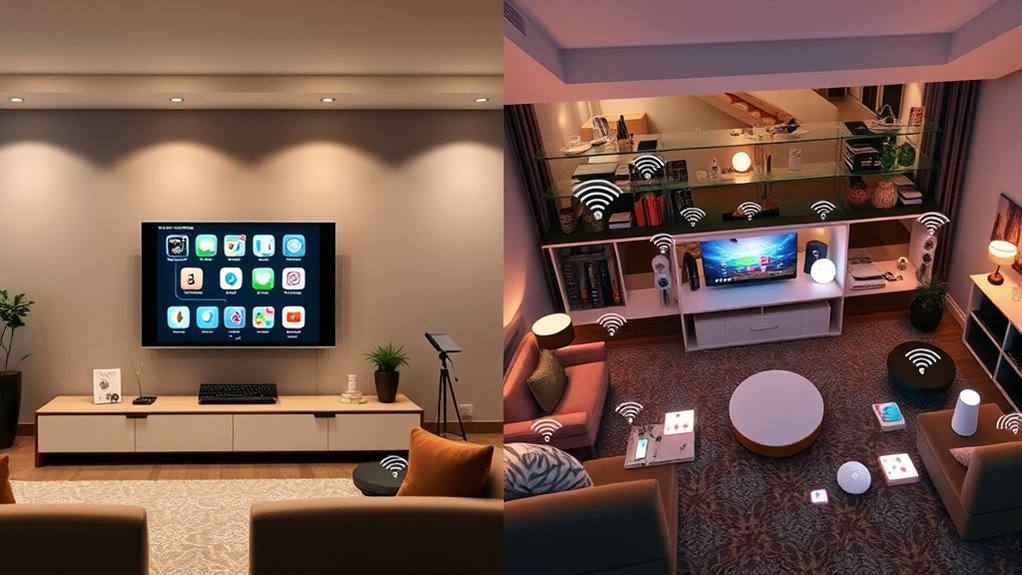
To understand the core differences between centralized and decentralized smart home systems, it’s important to recognize how each approach manages your devices and data. Centralized systems rely on a main hub that connects and controls all devices, making voice control easier and more intuitive. This setup often enhances energy efficiency because the hub can optimize device usage and reduce unnecessary power consumption. In addition, high-quality projectors can further improve the overall user experience by providing better image clarity and color accuracy. From an automation perspective, centralized systems facilitate cross-platform integration, enabling seamless routines across different brands and device types. Furthermore, centralized systems often allow for remote monitoring, giving users the ability to oversee their smart devices from anywhere. Additionally, device interoperability is typically more straightforward in centralized systems, simplifying setup and management. In contrast, decentralized systems distribute control across multiple devices, which operate independently or through peer-to-peer connections. This means you might experience more flexibility but less streamlined energy management. Your data is handled differently: centralized setups store information in one location, raising security considerations, while decentralized systems keep data more distributed, potentially reducing overall vulnerability.

Honeywell Home T9 WiFi Smart Thermostat with 1 Smart Room Sensor, Touchscreen Display, White
- Energy Saving Control: Adjust from anywhere with mobile app
- Auto Home/Away Scheduling: Automatically optimize energy use
- Rebate and Utility Programs: Save with energy rebates and demand response
As an affiliate, we earn on qualifying purchases.
Advantages of Centralized Smart Home Setups
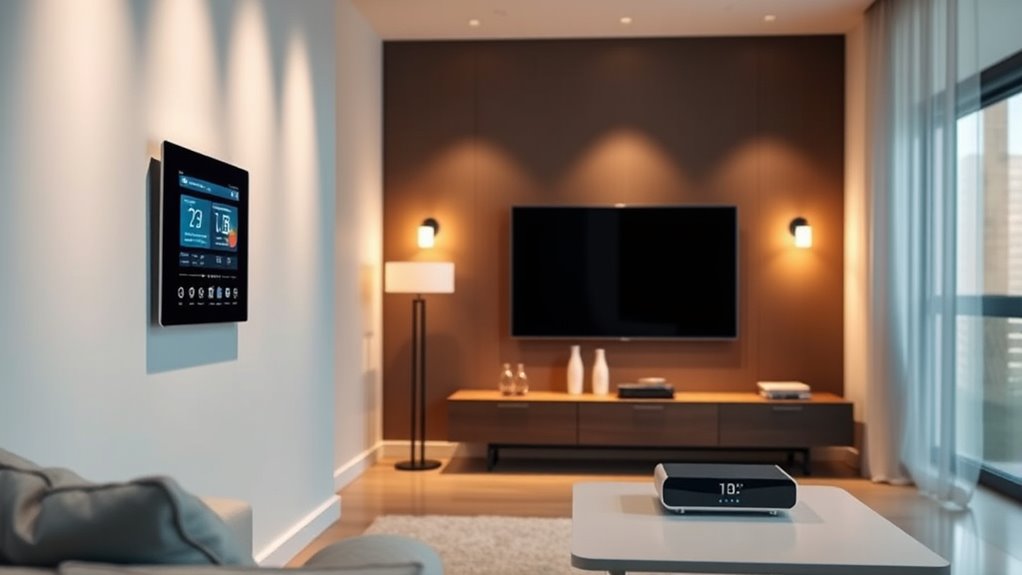
With a centralized smart home setup, managing your devices becomes straightforward through a single interface. You’ll enjoy seamless integration, so your devices work together smoothly without extra effort. Plus, centralized security control helps you monitor and protect your home more effectively. Additionally, trusted resources can assist you in choosing reliable devices and services for your setup. Leveraging modern home technology ensures your system stays up-to-date and secure. Incorporating comprehensive support from reputable providers can further simplify ongoing maintenance and troubleshooting.
Simplified Management Interface
Centralized smart home systems offer a clear advantage by providing a unified management interface that simplifies controlling all devices. With this setup, you can easily adjust settings, monitor status, and automate routines from a single app or dashboard. Voice control becomes more effective, as commands are directed through one system, reducing confusion and increasing responsiveness. This streamlined interface helps you optimize energy efficiency by allowing you to set schedules and control devices effortlessly, ensuring appliances run only when needed. Additionally, a centralized system can improve system reliability by reducing potential points of failure and simplifying troubleshooting. Implementing a central control hub enhances overall system stability and makes future upgrades easier to manage. Moreover, centralized systems often incorporate security measures that help protect your smart home network from unauthorized access. The integration of user-friendly interfaces further simplifies the management experience for users of all technical levels. By consolidating control, you also benefit from ease of maintenance, which reduces the time and effort required to keep your system running smoothly. Overall, a centralized system makes managing your smart home more intuitive, efficient, and accessible, enhancing your daily convenience.
Seamless Device Integration
A unified management system not only simplifies control but also enables seamless device integration across your smart home. With a centralized setup, you can easily connect and coordinate devices from different brands, creating a cohesive environment. Voice control becomes more efficient since all compatible devices respond uniformly through a single interface. This integration also enhances energy monitoring, allowing you to track power consumption across appliances and adjust usage effortlessly. By having everything linked in one system, you avoid compatibility issues and reduce the need for multiple apps or control hubs. This streamlined approach ensures your smart home operates smoothly, with devices working together harmoniously to improve convenience, efficiency, and overall user experience. Additionally, a centralized system supports accessible management, making it easier for all users to operate and customize their smart home environment.
Centralized Security Control
By consolidating your security systems into a single platform, you gain better control and faster response times. With centralized security control, you can easily monitor cameras, alarms, and locks from one interface. Voice commands make managing security effortless—you can arm or disarm systems hands-free. Plus, centralized setups help improve energy efficiency by optimizing device usage and reducing unnecessary power consumption. Imagine viewing all security statuses at a glance and controlling everything with a simple voice command. To visualize, here’s a quick overview:
| Feature | Benefit | Example |
|---|---|---|
| Unified Control | Simplifies management | One app for all security devices |
| Voice Commands | Hands-free operation | “Lock the front door” |
| Energy Efficiency | Reduces power waste | Automated device scheduling |
| Faster Response | Quick threat detection | Instant alerts and actions |
| Enhanced Security | Better system coordination | Integrated security protocols |
Additionally, centralized systems can facilitate system updates more seamlessly, ensuring your security infrastructure remains current and effective. A centralized setup also enables easier maintenance by providing a single point for troubleshooting and updates. Implementing a centralized system also allows for easier scalability as your smart home expands and new devices are added. Incorporating security standards aligned with industry best practices can further strengthen your smart home’s defenses. Furthermore, cybersecurity measures are essential to protect your centralized systems from potential threats.

ecobee Smart Thermostat Essential - WiFi Thermostat, Energy Star Certified
- Energy Savings: Save up to 23% annually on energy costs
- System Compatibility: Compatible with 85% of HVAC systems
- Easy Temperature Control: Adjust temperature via touchscreen or app
As an affiliate, we earn on qualifying purchases.
Benefits of Decentralized Smart Home Configurations
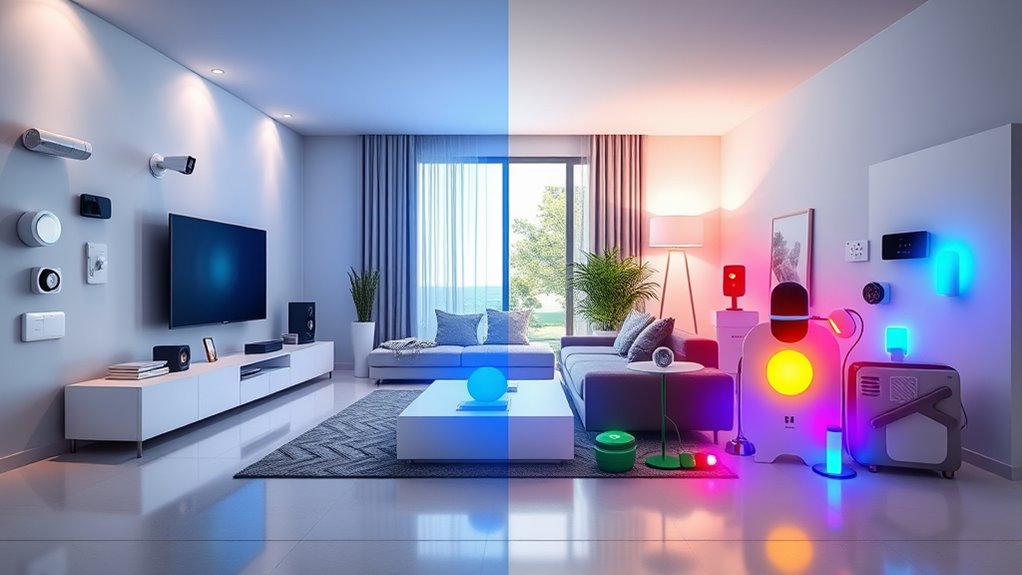
Decentralized smart home configurations offer significant advantages by distributing control and processing power across multiple devices. This setup enhances energy efficiency because devices can operate independently, reducing unnecessary energy use and allowing for smarter, localized decision-making. You also gain greater customization options, tailoring automation and device settings to your specific preferences without relying on a central hub. If one device fails or encounters a problem, the rest of your system continues functioning smoothly, increasing reliability and resilience. Decentralized systems also provide more flexibility, enabling you to add or upgrade devices without disrupting the entire network. Understanding the smart home architecture involved helps optimize system performance and security. For example, a distributed control approach allows you to better manage data privacy and reduce vulnerability to cyber threats. Moreover, embracing a decentralized setup can facilitate easier maintenance and troubleshooting, minimizing downtime. Overall, this approach empowers you to optimize your smart home for efficiency, personalized control, and continued operation, making it a practical choice for tech-savvy users.
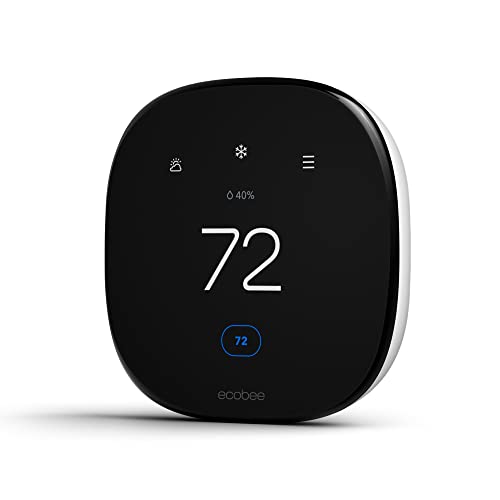
ecobee Smart Thermostat Enhanced, Programmable Wifi Thermostat
- Energy Savings: Save up to 26% on energy costs
- Auto Away Adjustment: Adjusts temperature when you're away
- Wide Compatibility: Compatible with 90% of systems
As an affiliate, we earn on qualifying purchases.
Challenges and Limitations of Each Approach

Centralized systems can be vulnerable to single points of failure and security breaches that threaten your entire setup. On the other hand, managing a decentralized network can become complex, making maintenance and troubleshooting more challenging. Understanding these limitations helps you choose the best approach for your smart home needs. Additionally, free floating configurations can offer more flexibility but may require more advanced management skills.
Centralized System Vulnerabilities
While centralized smart home systems offer streamlined control and easier management, they also present significant vulnerabilities. If a hacker breaches your main hub, they could access all connected IoT devices simultaneously. This creates a single point of failure, making your entire network susceptible to attack. The network topology in centralized setups often resembles a star, where one central device connects to everything else. This design simplifies management but heightens risk. A compromise of the central system can lead to significant security breaches, privacy leaks, or even device malfunctions. Additionally, the security of IoT device firmware plays a critical role in overall system vulnerability, as outdated or unpatched devices can be exploited to gain entry into the network. Regular firmware updates and vulnerability management are essential to mitigate these risks and maintain system integrity.
Decentralized Complexity Management
Managing complexity in decentralized smart home systems presents unique challenges that can be difficult to overcome. As you add more devices, maintaining automation flexibility becomes complex since each device may operate independently, requiring careful coordination. Network scalability also becomes a concern; with multiple nodes communicating directly, your network can quickly become congested or unstable. Troubleshooting issues is more complicated because problems may originate from any device or connection point. Additionally, updates and security patches must be managed individually across devices, increasing maintenance effort. While decentralization offers benefits like resilience, these complexities can hinder smooth operation. To succeed, you need robust protocols and management strategies that address these limitations, ensuring your system remains reliable, flexible, and scalable as it grows.
Factors to Consider When Choosing a System
Choosing between centralized and decentralized smart home systems depends on several key factors. Privacy concerns are vital; if you prioritize data security, a decentralized system might be better since it processes data locally, reducing exposure. Conversely, a centralized system often stores data on a single platform, which could pose risks if not properly secured. Scalability options also matter—centralized systems typically make it easier to expand with new devices through a single hub, while decentralized setups require managing multiple nodes individually. Consider your technical comfort level, budget, and future growth plans. If you want a simple setup with straightforward expansion, a centralized system may suit you. If privacy and control are paramount, explore decentralized options that offer more autonomy.
Future Trends in Smart Home Technology
Future trends in smart home technology are poised to make your living space more intuitive, efficient, and secure. Voice command will become even more seamless, allowing you to control devices effortlessly with simple spoken instructions. As energy efficiency continues to be a priority, smart systems will optimize energy use by learning your habits and adjusting settings automatically, reducing waste and lowering costs. Expect smarter sensors and AI-driven automation that adapt to your lifestyle, making your home more responsive and personalized. Enhanced security features, such as facial recognition and real-time alerts, will keep you safer. Additionally, integration across devices will become smoother, whether centralized or decentralized, enabling you to manage your smart home more efficiently than ever before.
Frequently Asked Questions
How Secure Are Centralized Versus Decentralized Smart Home Systems?
Centralized smart home systems tend to have higher privacy concerns because all your data is stored in one place, making it a tempting target for hackers. Decentralized systems offer better security since data is spread out, reducing risks. However, both systems use data encryption to protect your information. You should always keep your software updated and use strong passwords to enhance security, regardless of the system type.
Which System Offers Better Scalability as My Home Expands?
Decentralized systems offer better scalability as your home expands because they allow you to add devices without overloading a central hub. You’ll find device compatibility remains high, and the user interface stays manageable, making it easier to control new devices. With decentralized setups, you won’t face bottlenecks, so your smart home can grow seamlessly, ensuring smooth integration and simple management as you add more gadgets over time.
Can Both Systems Integrate With Emerging Smart Home Devices?
Yes, both systems can integrate with emerging smart home devices, but you might face different device compatibility and integration challenges. Centralized systems often offer streamlined compatibility through a single platform, making it easier to add new devices. Decentralized systems can be more flexible, supporting varied protocols but may require more setup and troubleshooting. To avoid issues, check device compatibility and verify the system supports upcoming smart devices.
What Are the Maintenance Differences Between Centralized and Decentralized Setups?
You’ll find maintenance differs between the two setups. With centralized systems, you’ll need to handle device upgrades and updates for the main hub, which can be more complex but fewer points of failure. Decentralized setups require you to manage upgrades on individual devices, making maintenance more hands-on. Power consumption varies too; decentralized systems often use less power since devices operate independently, while centralized systems may consume more due to the central hub’s constant activity.
How Do Cost Considerations Compare for Each System Type?
You might find centralized systems cost more upfront due to their complex setup, but they offer better cost efficiency over time with easier maintenance and upgrades. Decentralized setups often have a lower initial budget impact, making them attractive for smaller projects, but they can become more expensive long-term due to individual device replacements and management. Weigh your budget impact against long-term savings to choose the best option for your smart home.
Conclusion
Ultimately, choosing between centralized and decentralized smart home systems depends on your needs and preferences. Think of it like a ship: a strong central helm offers control, but decentralization provides flexibility. Remember, the best system aligns with your lifestyle and future plans. As the saying goes, “A chain is only as strong as its weakest link.” Make an informed choice today, and your smart home will serve you well tomorrow.
Grilling season Picks
grills
As an affiliate, we earn on qualifying purchases.