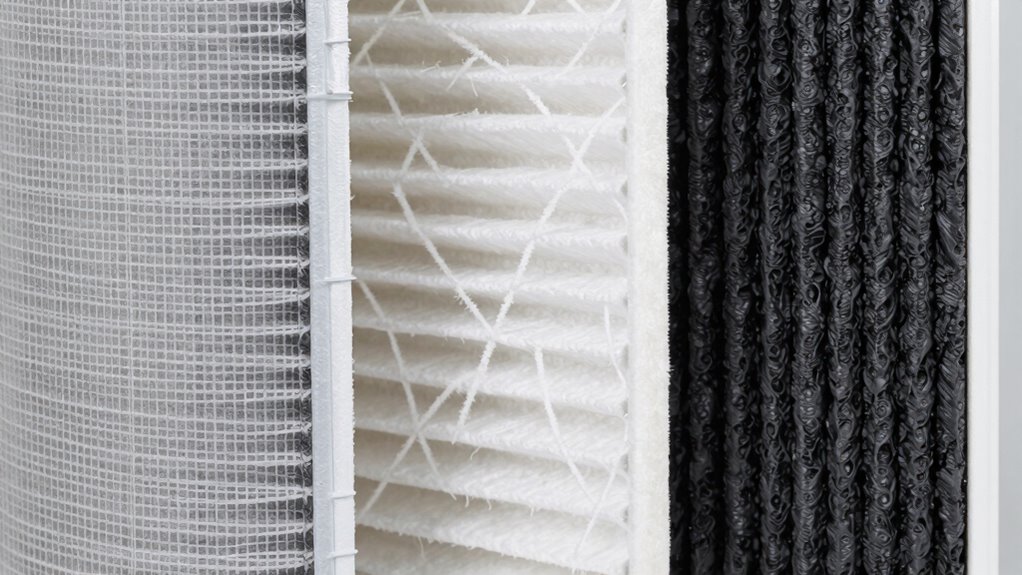

A well-structured filter stack with pre-filters, HEPA filters, and activated carbon offers ideal air purification. Pre-filters catch large particles like dust and pet hair, extending the life of more delicate filters. HEPA filters trap tiny allergens and particles as small as 0.3 microns, while carbon filters absorb odors and harmful gases. Combining these ensures you get cleaner, fresher air. To learn how to select, maintain, and enhance this system, keep exploring this helpful guide.
Listen free for 30 days with Audible
Thousands of audiobooks and originals — cancel anytime.
As an affiliate, we earn on qualifying purchases.
Key Takeaways
- Pre-filters trap large particles, preventing clogging of HEPA and carbon filters, extending their lifespan and maintaining airflow.
- HEPA filters efficiently capture 99.97% of particles as small as 0.3 microns, improving air purity.
- Carbon filters absorb odors, VOCs, and gases, enhancing indoor air quality and reducing chemical pollutants.
- A layered filter system combines pre-filters, HEPA, and carbon filters for comprehensive removal of allergens, odors, and airborne chemicals.
- Regularly replacing each filter type as recommended ensures optimal performance and sustained indoor air cleanliness.
Understanding the Role of Pre-Filters

Pre-filters play a crucial role in maintaining your air purifier’s efficiency by capturing larger particles like dust, hair, and pet dander before they reach the more delicate filters. This initial barrier prevents these sizable particles from clogging up the main filters, which helps extend their lifespan and keeps your device working effectively. Proper filter maintenance is essential for optimal performance and indoor air quality. By removing these bulky contaminants early, pre-filters reduce the load on your HEPA and carbon filters, allowing them to focus on capturing smaller particles and odors. Regularly cleaning or replacing the pre-filter ensures consistent airflow and peak performance. Think of the pre-filter as the first line of defense, stopping the biggest threats before they can cause problems deeper in the filter stack. Additionally, filter lifespan can be significantly extended when pre-filters are maintained properly, which also helps prevent the buildup of contaminants that could degrade overall air quality over time. Proper airflow management can further enhance the filter efficiency, making sure your air purifier works at its best. Maintaining a clean pre-filter also contributes to energy efficiency, reducing unnecessary strain on the device. Ultimately, this simple step preserves your purifier’s efficiency and improves indoor air quality.
How HEPA Filters Capture Tiny Particles

HEPA filters are highly effective at capturing tiny particles that can harm your indoor air quality, such as bacteria, pollen, and smoke. They do this through a combination of three main mechanisms. First, impaction occurs when larger particles collide with filter fibers and get trapped. Second, interception happens when particles follow airflow lines but come close enough to fibers to stick. Third, diffusion affects the tiniest particles, which move erratically due to collisions with air molecules, increasing their chance of contact with the filter. These processes work together to capture particles as small as 0.3 microns with 99.97% efficiency. Your HEPA filter’s dense, fibrous structure is essential for trapping these microscopic pollutants, helping you breathe cleaner, safer indoor air. Understanding filtration mechanisms is key to appreciating how HEPA filters provide such high levels of particle removal. Additionally, fiber density plays a crucial role in maximizing filtration efficiency by increasing the likelihood of particle capture. The filter media structure also influences how effectively particles are trapped and retained within the filter.
The Function of Carbon Filters in Odor Removal
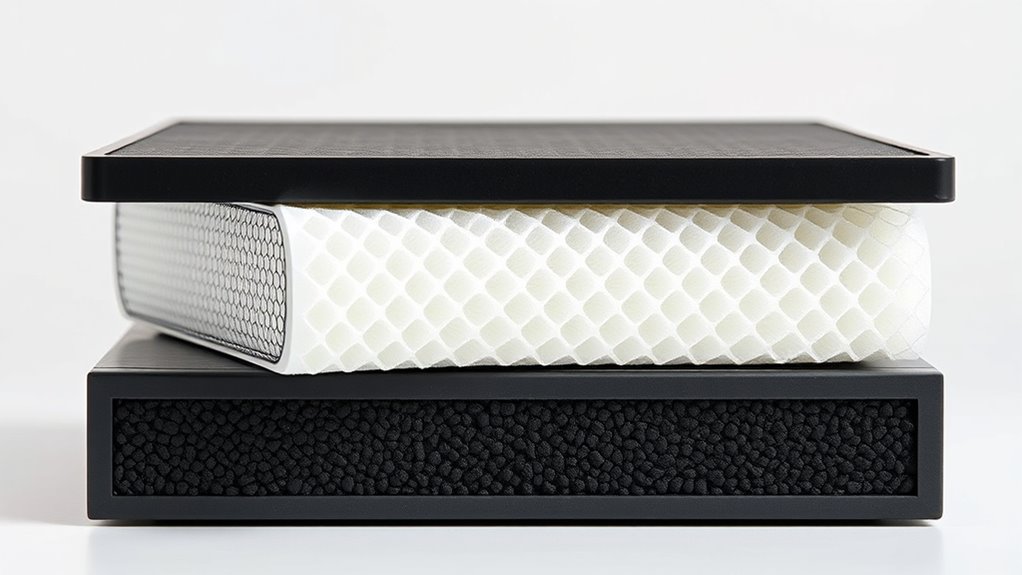
Carbon filters are highly effective at absorbing odorous compounds, making your indoor air smell fresher. They target a wide range of smells, from cooking fumes to pet odors. This versatility helps guarantee your air stays clean and odor-free. Additionally, carbon filters are known for their absorptive properties, which enable them to trap a variety of airborne contaminants effectively. Incorporating these filters into your air purification system can also support a healthier indoor environment by reducing harmful pollutants.
Absorbing Odorous Compounds
Ever wondered how odor removal works in air purification systems? It’s the activated carbon inside the filters that does the heavy lifting. When air passes through, odorous compounds—like smoke, cooking smells, or pet odors—stick to the carbon’s porous surface through a process called adsorption. Unlike absorption, where substances dissolve into a material, adsorption traps odors on the surface. The tiny pores increase the surface area, making the carbon highly effective at capturing a wide range of molecules. Over time, these compounds fill the pores, reducing the filter’s effectiveness. That’s why carbon filters need replacement or regeneration. Additionally, proper filter maintenance can extend the lifespan of the carbon and maintain optimal odor removal performance. Understanding activated carbon properties helps in selecting the right filter for specific odors. Proper filter maintenance also involves monitoring the adsorption capacity, which determines how much odor the filter can effectively trap before it needs to be replaced. By actively absorbing odorous compounds, carbon filters keep your indoor air smelling fresh and clean, making them an essential part of any thorough air purification system. Regular filter replacement and proper maintenance ensure continued effectiveness in odor removal.
Versatile Air Purification
Because of their ability to target a wide range of airborne pollutants, carbon filters play an essential role in versatile air purification. They don’t just remove odors; they also absorb volatile organic compounds (VOCs), chemicals, and gases that other filters might miss. This makes them crucial for improving indoor air quality in various environments, from homes to industrial spaces. Carbon filters are highly adaptable, working alongside pre-filters and HEPA to create a thorough filtration system. They can handle different pollutants simultaneously, ensuring your air is cleaner and safer. Their versatility means you don’t need multiple devices or filters—just one well-designed system with carbon at its core can effectively manage odors, gases, and airborne chemicals.
Combining Filters for Maximum Efficiency
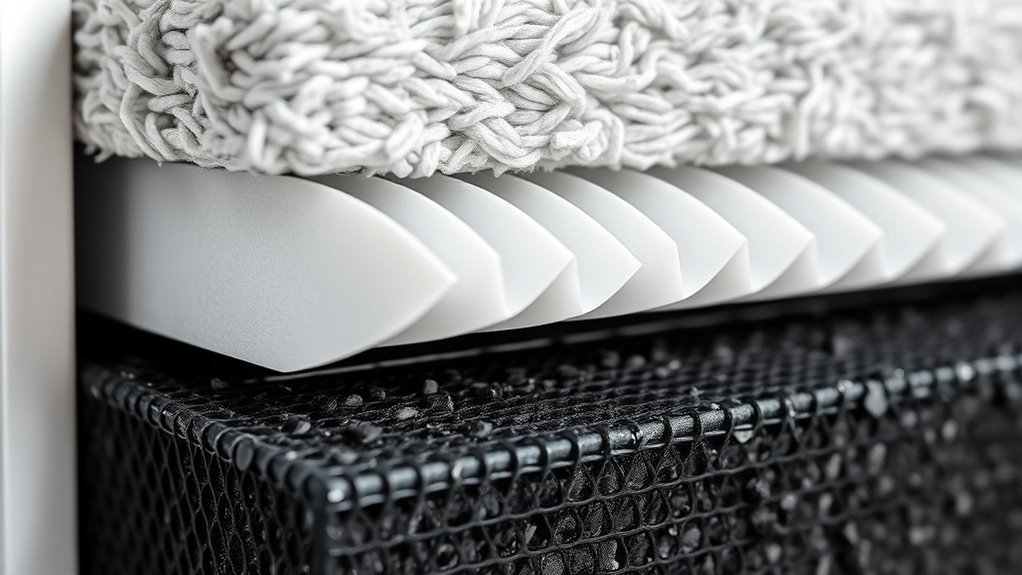
To achieve the highest air purification efficiency, combining different filter types is essential. Starting with a pre-filter captures larger particles like dust and hair, preventing clogging and extending the lifespan of your main filters. Next, a HEPA filter targets microscopic allergens such as pollen, pet dander, and mold spores, ensuring cleaner, healthier air. Adding activated carbon filters absorbs odors, volatile organic compounds (VOCs), and chemical fumes, improving indoor air quality. Each filter type plays a specific role, and when used together, they create a layered defense that maximizes pollutant removal. Layered filtration strategies can further optimize your air quality management, especially considering how filtration systems can be tailored for specific environments. This strategic combination not only enhances overall performance but also prolongs the life of your filtration system. Incorporating filter maintenance routines ensures your system remains effective over time, maintaining optimal air quality in your home.
Benefits of a Layered Filtration System

A layered filtration system offers significant benefits by providing extensive air purification through multiple filters working together. This approach guarantees a broader removal of pollutants, allergens, and odors. By combining different filter types, you get:
- Enhanced particle capture, reducing airborne allergens and dust.
- Better odor elimination, thanks to activated carbon layers.
- Longer filter lifespan, as each layer handles specific contaminants.
- Improved indoor air quality, creating a healthier environment.
Implementing proper maintenance practices ensures that your filters remain effective over time. Regularly inspecting and replacing filters prevents clogging and maintains optimal airflow, which is essential for consistent performance. Additionally, understanding the types of filters involved helps in selecting the best combination for your needs. Using layered filtration systems is especially beneficial in environments with high pollution levels or allergies, providing comprehensive protection. Proper filter sequencing maximizes the efficiency of each layer, ensuring optimal air cleaning. This multi-filter setup maximizes efficiency, preventing clogging and maintaining airflow. It’s a smart way to address a variety of airborne issues without sacrificing performance. Ultimately, a layered system delivers cleaner, safer air, making your space more comfortable and reducing health risks.
Choosing the Right Filter Stack for Your Space
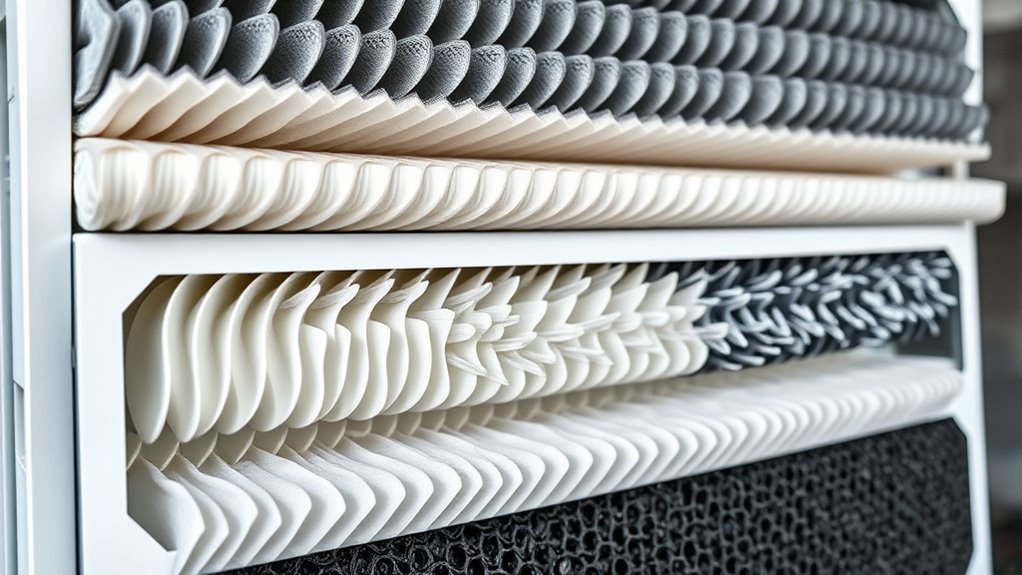
Selecting the right filter stack depends on your specific air quality concerns and the environment you’re aiming to improve. First, identify what pollutants you need to target—dust, allergens, odors, or chemicals. For dust and allergens, a HEPA filter is essential because it captures tiny particles effectively. If odors or chemical fumes are a concern, add a carbon filter to absorb gases and VOCs. Pre-filters are useful if your space has high dust levels or larger particles, as they extend the life of the more advanced filters. Consider the space size and airflow requirements; larger areas may need more robust systems or multiple filters. By matching your needs with the appropriate filter types, you’ll create a customized stack that maximizes air purification while optimizing system efficiency.
Maintenance and Replacement of Filter Components
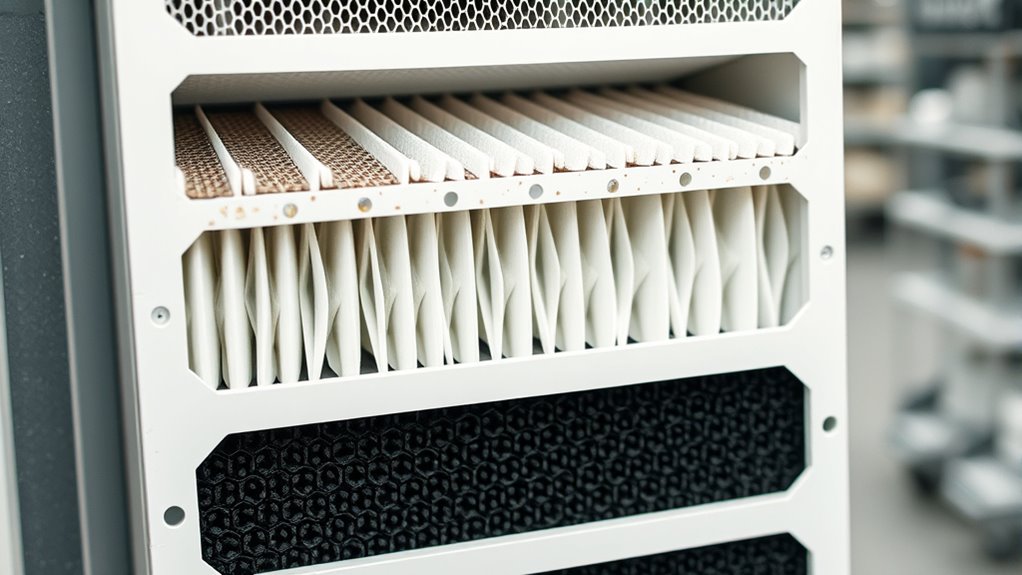
Regular maintenance and timely replacement of your filter components are essential for keeping your air purifier functioning effectively. Neglecting this can reduce filtration efficiency and compromise air quality. To stay on top of maintenance:
Regular filter maintenance ensures your air purifier works effectively and maintains optimal air quality.
- Check filters monthly for visible dirt or clogging.
- Replace pre-filters every 1-3 months, depending on usage.
- Change HEPA filters every 6-12 months for ideal performance.
- Swap activated carbon filters every 3-6 months to maintain odor absorption.
Always follow your manufacturer’s specific recommendations, as filter lifespan varies with air quality and use. Keep track of replacement dates, and don’t wait until filters are visibly dirty. Proper upkeep ensures your air purifier continues to protect your indoor environment effectively.
Frequently Asked Questions
How Do Filter Layers Affect Air Purifier Noise Levels?
Filter layers can influence your air purifier’s noise levels, as each layer adds some resistance and requires the fan to work harder. When filters get clogged or are thicker, the fan may run at higher speeds, producing more noise. To keep noise low, regularly replace or clean filters, and choose a purifier with adjustable fan speeds. This way, you can balance effective filtration with quieter operation.
Can Filter Stacks Remove Viruses and Bacteria Effectively?
Yes, filter stacks can effectively remove viruses and bacteria from the air. HEPA filters are especially good at capturing tiny particles, including many viruses and bacteria, with 99.97% efficiency. Pre-filters and activated carbon layers add extra protection by trapping larger particles and odors. Together, these layers create an all-encompassing barrier, considerably reducing airborne pathogens and making your environment safer and healthier.
What Is the Lifespan of Each Filter Type?
Think of your filter system as a diligent guardian, each part with its own lifespan. Pre-filters typically last 3-6 months, catching larger particles before they clog. HEPA filters work best for 12-18 months, trapping tiny pollutants, while carbon filters usually need replacement every 3-6 months to remove odors and chemicals effectively. Regularly changing them keeps your indoor air fresh and your system performing at its peak.
Do Different Filter Materials Impact Energy Consumption?
Yes, different filter materials impact energy consumption. Heavier or denser filters require your system to work harder, increasing energy use. For example, HEPA filters have high filtration efficiency but can create more airflow resistance, leading to higher energy bills. Conversely, lighter filters like pre-filters help reduce overall load, saving energy. Choosing the right filter material balances filtration needs with energy efficiency, helping you save money and maintain good air quality.
Are Replacement Filters Environmentally Friendly?
Replacement filters can be environmentally friendly if you choose options made from sustainable materials and recycle them properly. Look for filters with eco-friendly certifications and biodegradable components. By maintaining your filters and replacing them responsibly, you reduce waste and minimize your environmental footprint. You can also opt for reusable filters when available, further supporting sustainability. Making informed choices helps protect the planet while keeping your air clean.
Conclusion
By layering pre-filters, HEPA, and carbon filters, you’re building a fortress against pollutants, odors, and allergens. This filter stack works like a well-orchestrated symphony, each component playing its part to keep your air clean and invigorating. When you choose the right combination and keep up with maintenance, you’re not just filtering air—you’re creating a healthier, more comfortable space. Think of it as giving your home a breath of refreshing, essential life.
Labor Day sales Picks
labor day deals
As an affiliate, we earn on qualifying purchases.