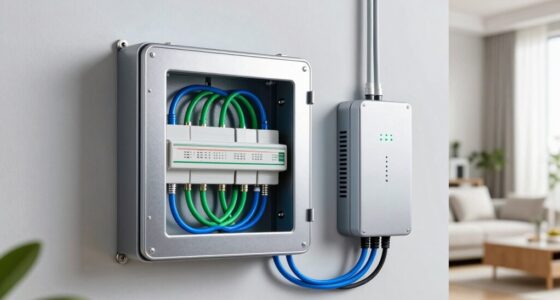

Rolling blackouts are planned measures that help prevent the grid from collapsing when demand is high or supply drops unexpectedly. To manage when power comes and goes, utility companies rotate outages across different areas, giving everyone a chance to conserve energy during stress periods. By understanding how these blackouts are scheduled and controlled, you can better prepare and adapt. Staying informed about grid conditions can help you anticipate and navigate these disruptions more smoothly.
Open a free Amazon Business account
Business pricing, bulk buying and tax-exempt orders.
As an affiliate, we earn on qualifying purchases.
Key Takeaways
- Understand that blackouts occur to balance supply and demand during high usage or grid stress.
- Prepare by minimizing electricity use during peak hours and following utility alerts.
- Keep emergency supplies ready, such as flashlights, batteries, and backup power sources.
- Stay informed through official updates about blackout schedules and restoration times.
- Use energy-efficient appliances and reduce unnecessary electricity consumption to lessen strain on the grid.

The primary reason for rolling blackouts is that the electrical grid must balance supply and demand at all times. When there’s a spike in consumption—say, during a heatwave when everyone’s running air conditioners—the grid can become strained. Traditional power plants, such as coal and natural gas, supply consistent energy, but renewables like wind and solar are more variable. Their intermittency can cause fluctuations that challenge grid stability, especially during periods of high demand or low renewable output. To prevent the entire system from failing, grid operators implement rolling blackouts as a controlled way to reduce stress on the network. Additionally, the increasing integration of renewable energy sources requires sophisticated management to maintain grid stability, making these blackouts a necessary tool for preventing larger outages.
As an affiliate, we earn on qualifying purchases.
Frequently Asked Questions
How Can I Stay Safe During a Blackout?
During a blackout, stay safe by avoiding the use of generators indoors to prevent carbon monoxide poisoning. Always follow generator safety guidelines, like placing it outdoors and away from vents. Prepare for blackouts by creating a kit with essentials such as flashlights, batteries, and non-perishable food. Stay informed through a battery-powered radio and check on neighbors, especially the elderly. Proper blackout preparation keeps you safe until power is restored.
Are Rolling Blackouts Predictable or Random?
Think of the power grid like a weather forecast—you can often predict storms, but sometimes they surprise you. Rolling blackouts are somewhat predictable because they depend on power grid stability and blackout frequency; utility companies try to schedule or announce them, but sudden issues can make them feel random. While some patterns emerge, it’s wise to stay prepared, because the timing of blackouts can still catch you off guard.
What Should I Include in an Emergency Kit?
You should include emergency supplies like bottled water, non-perishable food, batteries, a flashlight, and a first aid kit. Don’t forget communication devices such as a portable charger, battery-powered radio, and fully charged cell phones. These items help you stay safe and informed during blackouts. Make sure your emergency kit is easy to access, stocked regularly, and tailored to your specific needs, so you’re prepared whenever power disruptions occur.
How Do Blackouts Impact My Home Appliances?
Blackouts hit your appliances like a storm, causing sudden power surges that can damage them. When power returns, your devices might get a jolt, leading to costly appliance damage. To protect your home, unplug sensitive electronics during blackouts and use surge protectors. This way, you lessen the risk of damage and keep your appliances safe when the lights go out and come back on unexpectedly.
Can I Get a Refund if My Power Is Cut?
You typically can’t get a refund if your power is cut due to blackouts, as electricity billing usually covers your usage, not outages. Utility policies often state that service interruptions are not refundable, even during rolling blackouts. However, it’s worth contacting your utility provider to explain your situation. Some companies may offer compensation or credits if outages are prolonged or caused by their negligence.
As an affiliate, we earn on qualifying purchases.
Conclusion
Think of rolling blackouts as a pulse in the city’s heartbeat, pausing to catch its breath. By understanding why they happen and planning ahead, you can navigate these power ebbs and flows more smoothly. Keep emergency supplies handy, adjust your schedule, and stay informed. Just like tides that come and go, blackouts are temporary—and with a little preparation, you’ll ride the wave until the lights come back on.
As an affiliate, we earn on qualifying purchases.
As an affiliate, we earn on qualifying purchases.
Labor Day sales Picks
labor day deals
As an affiliate, we earn on qualifying purchases.