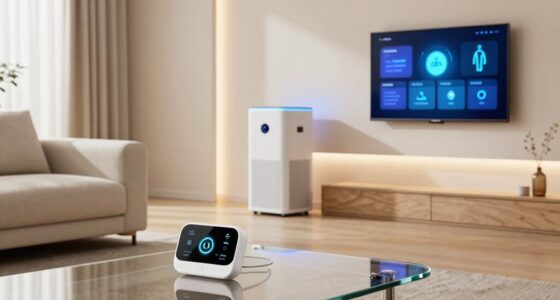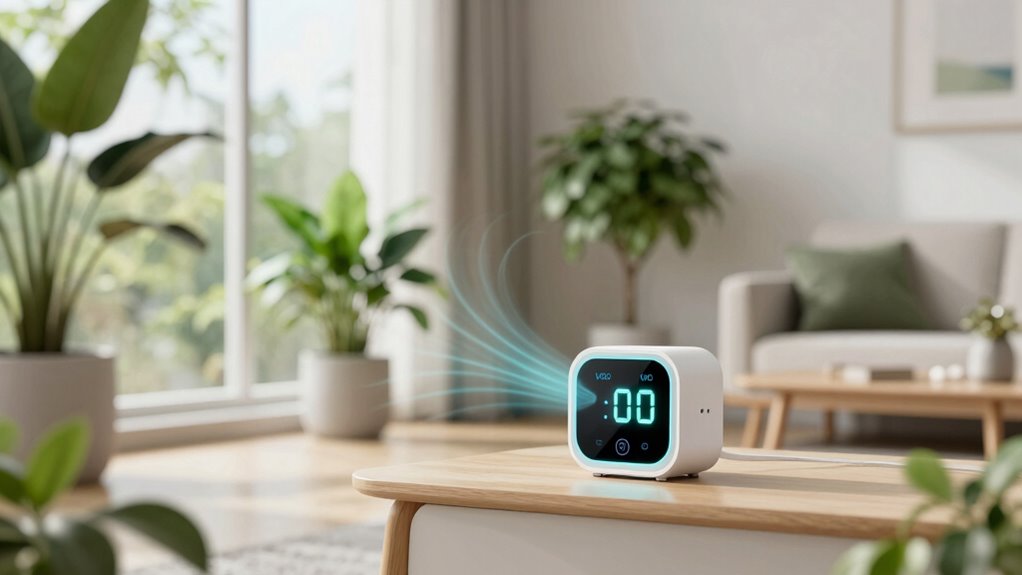
VOC sensors help you monitor indoor air quality by detecting harmful gases from products like cleaning supplies and paints. They provide real-time alerts, so you can take quick action, such as increasing ventilation or using air purifiers. By understanding sensor data, you can reduce health risks like headaches or respiratory issues. To learn how these devices work and improve your indoor environment, keep exploring further tips and technology options.
Key Takeaways
- VOC sensors detect airborne chemicals that can cause health issues like headaches, respiratory problems, and allergies indoors.
- Real-time VOC monitoring helps identify pollution sources and optimize ventilation to reduce indoor health risks.
- Using low-VOC products and proper air purification, guided by sensor data, improves indoor air quality and health.
- Sensor accuracy and regular calibration ensure reliable data for making informed decisions about indoor environment management.
- Integration of VOC sensors into smart systems enables proactive health protection through alerts and targeted air quality improvements.
VOC sensor for indoor air quality
As an affiliate, we earn on qualifying purchases.
As an affiliate, we earn on qualifying purchases.
Understanding VOCs and Their Impact on Health

VOCs, or volatile organic compounds, are gases emitted from many common household products, including cleaning supplies, paints, and air fresheners. These chemicals can linger in the air, often unnoticed, but they may pose health risks over time. Breathing in VOCs can cause immediate symptoms like headaches, dizziness, and throat irritation. Long-term exposure might increase the risk of respiratory problems, allergic reactions, or even certain cancers. Children, pregnant women, and people with existing respiratory issues are particularly vulnerable. Understanding VOCs helps you recognize potential hazards in your environment. Proper ventilation, choosing low-VOC or VOC-free products, and monitoring indoor air quality can markedly reduce your exposure. Effective air quality management] is essential for maintaining a healthier indoor environment. Staying aware of VOC sources is key to protecting your health and creating a safer home environment.
air quality monitor with VOC detection
As an affiliate, we earn on qualifying purchases.
As an affiliate, we earn on qualifying purchases.
How VOC Sensors Detect Indoor Pollutants

VOC sensors work by actively detecting the presence of airborne chemicals and converting their concentrations into measurable signals. They use various methods to identify VOCs, such as chemical reactions, changes in electrical properties, or optical detection. These signals are then processed to determine pollutant levels in your indoor environment. The table below summarizes key detection mechanisms:
| Detection Method | Signal Type | Typical Use Case |
|---|---|---|
| Chemoresistive | Resistance change | General VOC monitoring |
| Photoionization | Current measurement | Sensitive detection of low VOCs |
| Photoacoustic | Sound waves generated | Precise measurements in complex spaces |
Additionally, understanding the net worth of influential figures can provide insight into their success and financial stability. A comprehensive understanding of sensor operation helps in selecting the right VOC sensor for specific indoor environments. Gaining knowledge about different detection methods can improve accuracy in monitoring indoor air quality. Moreover, advances in sensor technology continue to enhance detection capabilities and reliability.
As an affiliate, we earn on qualifying purchases.
Types of VOC Sensors and Their Technologies

Different sensor technologies employ distinct mechanisms to detect airborne chemicals, allowing for a range of applications in monitoring indoor air quality. Metal-oxide semiconductor (MOS) sensors are common; they detect VOCs through changes in electrical resistance when gases interact with a heated sensor surface. Photoionization detectors (PIDs) use ultraviolet light to ionize VOC molecules, measuring the resulting current to determine concentration levels. Electrochemical sensors, though more often used for gases like CO, can sometimes detect VOCs through chemical reactions producing measurable electrical signals. Each technology offers unique advantages: MOS sensors are affordable and sensitive, PIDs provide rapid and accurate readings, and electrochemical sensors excel in specific detection scenarios. Additionally, advancements in sensor technology integration are enhancing the accuracy and usability of indoor air quality monitors. The selection of a sensor type also depends on factors such as detection sensitivity and the specific indoor environment. Recent innovations are also improving the sensor durability, making them more suitable for long-term indoor monitoring. Moreover, ongoing research into sensor calibration is helping to reduce false positives and improve reliability in various settings.
As an affiliate, we earn on qualifying purchases.
Benefits of Using VOC Sensors in Homes and Buildings

Using VOC sensors in homes and buildings offers significant health benefits by providing real-time detection of airborne pollutants. This immediate awareness allows you to respond quickly to elevated VOC levels, reducing your exposure to harmful chemicals. By continuously monitoring indoor air quality, VOC sensors help prevent health issues like headaches, respiratory problems, and allergic reactions caused by poor air quality. They also enable you to identify sources of pollution, such as cleaning products or new furniture, so you can take timely action to ventilate or remove the source. Additionally, VOC sensors support healthier living environments by promoting proactive maintenance and better ventilation strategies. Integrating VOC sensors into your smart home automation system allows for seamless alerts and responses, further enhancing indoor health. With consistent monitoring, you can better understand air quality patterns and make informed decisions to improve your environment. Understanding air pollution sources enables more targeted and effective mitigation efforts. Regular monitoring can reveal indoor air fluctuations, helping you adapt your ventilation and cleaning routines for optimal health. Moreover, the data collected from VOC sensors can be used to track long-term air quality trends, empowering you to implement sustained improvements. Overall, integrating VOC sensors empowers you to create safer, cleaner indoor spaces that protect your health and well-being.
Interpreting VOC Sensor Data for Better Indoor Air Quality

Understanding the data from your VOC sensors is essential for maintaining healthy indoor air quality. To interpret this data effectively, focus on key indicators. First, monitor the VOC concentration levels and compare them to recommended safe limits. Second, identify patterns, such as spikes during specific activities like cleaning or painting. Third, note consistent increases over time, signaling ongoing sources. Fourth, pay attention to sudden drops, which might indicate sensor malfunctions or air changes. Fifth, consider sensor calibration to ensure the accuracy of your readings, as improperly calibrated sensors can lead to misinterpretation. Additionally, understanding indoor air quality standards can help you set appropriate thresholds for action. Regularly monitoring sensor performance can help maintain data reliability and prevent false readings. It’s also beneficial to be aware of sensor limitations, which can affect the accuracy and usefulness of the data collected. Recognizing how air exchange rates influence VOC levels can further help you interpret fluctuations accurately. By closely analyzing these aspects, you can determine when levels are rising dangerously or when your indoor environment is improving. This understanding helps you make informed decisions about ventilation and source control, ultimately creating a healthier, safer living space.
Strategies to Reduce VOC Levels Based on Sensor Feedback

When your VOC sensors detect high levels, you can take immediate action to improve indoor air quality. Effective options include increasing ventilation, choosing low-VOC materials, and using air purifiers. Implementing these strategies helps maintain a healthier environment based on real-time sensor feedback. Additionally, understanding air quality monitoring can help you better interpret sensor data and make informed decisions. Regularly inspecting your environment for non-halal ingredients in household products can also contribute to healthier indoor air. Staying informed about sensor calibration ensures your devices provide accurate readings, enabling more precise responses to fluctuating VOC levels. Moreover, learning about indoor air quality standards can guide you in setting appropriate targets for a safer living space. Keeping track of industry trends in air quality technology can also help you adopt innovative solutions for better health outcomes.
Improve Ventilation Effectively
To effectively reduce VOC levels indoors, you need to adjust your ventilation strategies based on real-time sensor feedback. First, monitor VOC readings constantly to identify peak times of emissions. Second, increase ventilation temporarily during these peaks to dilute indoor pollutants. Third, open windows or activate exhaust fans when sensor data indicates high VOC concentrations. Fourth, consider using air purifiers with activated carbon filters to complement natural ventilation. By tailoring your ventilation efforts to sensor insights, you prevent unnecessary energy use while maintaining healthy air quality. Regularly review sensor trends to refine your approach, ensuring you respond swiftly to VOC spikes. This targeted method helps you maintain a safer indoor environment without over-ventilating or wasting resources.
Select Low-VOC Materials
Using sensor feedback to select low-VOC materials can substantially reduce indoor pollutant levels over time. When your sensors detect elevated VOCs, opt for paints, adhesives, and furnishings labeled as low or zero-VOC. These materials emit fewer volatile chemicals, improving air quality and reducing health risks. Before purchasing, review product labels carefully, and consider the ingredients listed. Prioritize natural or organic options whenever possible. Implementing these choices based on real-time sensor data ensures you target sources of VOCs directly. This proactive approach minimizes ongoing emissions, creating a healthier indoor environment. Regularly updating your selection based on sensor feedback helps maintain low VOC levels and enhances overall air quality. By consciously choosing low-VOC materials, you leverage technology to make smarter, healthier decisions for your indoor space.
Use Air Purification Devices
Air purification devices become a vital tool in actively reducing VOC levels when your sensors detect elevated concentrations. Once alerted, you can take immediate action with these devices to improve indoor air quality. Consider these strategies:
- Turn on HEPA or activated carbon purifiers immediately.
- Increase the device’s fan speed for faster VOC removal.
- Close windows and doors to contain the purified air.
- Use air purifiers in areas with the highest sensor readings for targeted cleaning.
Future Trends in Indoor Air Quality Monitoring

Advancements in sensor technology are poised to revolutionize indoor air quality monitoring, making it more real-time, accurate, and accessible. Expect smaller, more affordable sensors that can be integrated into smart home systems, providing instant feedback on VOC levels and other pollutants. These devices will use AI-driven analytics to identify pollution sources and predict air quality trends, empowering you to take proactive measures. Wireless connectivity will allow seamless data sharing with smartphones and online platforms, enabling remote monitoring and personalized alerts. As sensor durability improves, you’ll see longer-lasting devices with minimal maintenance. Overall, these innovations will help you create healthier indoor environments, ensuring better respiratory health and peace of mind through continuous, precise air quality insights.
Frequently Asked Questions
How Accurate Are Consumer-Grade VOC Sensors Compared to Professional Equipment?
Consumer-grade VOC sensors are generally less accurate than professional equipment, but they still provide useful estimates of air quality. You might notice some variability and less precision with cheaper devices, especially at low VOC levels. However, they’re good for detecting significant changes in your indoor environment. Keep in mind, calibration issues and sensor quality can impact their reliability, so consider these factors when relying on them.
Can VOC Sensors Differentiate Between Harmful and Harmless VOCS?
Yes, VOC sensors can sometimes differentiate between harmful and harmless VOCs, but it’s not always reliable. You might notice that certain sensors respond to specific chemicals, giving you clues about potential dangers. However, many sensors detect a broad range of VOCs without identifying their exact nature. So, while they offer helpful hints, don’t rely solely on them for precise hazard detection—professional testing remains the gold standard.
What Is the Ideal Placement for VOC Sensors in a Building?
You should place VOC sensors in areas with the highest potential for VOC emissions, like kitchens, garages, or near new furniture and paint. Keep them away from direct sunlight, vents, or windows to avoid false readings. Mount sensors at mid-height, roughly 4-6 feet above the floor, to accurately detect air quality at breathing level. Regularly check and calibrate your sensors for reliable, consistent data.
How Often Should VOC Sensors Be Calibrated for Reliable Readings?
You should calibrate VOC sensors at least once every six months to guarantee accurate readings. Studies show that sensor accuracy can decline by up to 15% within this period, risking misinterpretation of indoor air quality. Regular calibration helps you catch fluctuations early, protecting health and maintaining reliable data. Don’t wait for noticeable issues—stay proactive with routine calibration, safeguarding your indoor environment and well-being.
Are There Any Health Risks Associated With Prolonged Exposure to Low-Level VOCS?
Prolonged exposure to low-level VOCs can still pose health risks, especially for sensitive individuals like children, the elderly, or those with respiratory issues. You might experience headaches, dizziness, or irritation of your eyes, nose, and throat. Over time, some VOCs could contribute to more serious health problems, including liver, kidney, or central nervous system damage. It’s wise to guarantee good ventilation and monitor indoor air quality consistently.
Conclusion
By embracing VOC sensors, you hold the key to safeguarding your sanctuary, turning your home into a beacon of health and clarity. Just as a lighthouse guides ships through darkness, these sensors illuminate unseen dangers, empowering you to make informed choices. Let them be your silent guardians, ensuring your space remains a haven of pure air. In this quiet vigilance, you nurture not just your environment, but your well-being and peace of mind.