
To create a sleep-focused bedroom, choose calming colors like soft blues and neutrals to promote relaxation. Opt for comfortable, supportive bedding and add textiles that absorb noise, such as thick rugs and curtains. Use warm, layered lighting with dimmers to set a soothing mood and incorporate aromatherapy to relax your mind. Keep clutter out of sight to minimize stress and manage technology carefully by limiting blue light exposure. For more tips, discover how these elements can transform your sleep environment.
Key Takeaways
- Use soothing, muted color palettes and minimal decor to create a calm, clutter-free environment that promotes relaxation.
- Choose comfortable bedding with breathable fabrics, layered with supportive pillows and sound-absorbing textiles for restful sleep.
- Incorporate adjustable, warm lighting with dimmer switches to set a relaxing mood and minimize melatonin disruption.
- Implement soundproofing measures and use calming scents like lavender to reduce noise and enhance sleep quality.
- Manage technology by limiting device use, employing blue light filters, and using white noise for a peaceful, restorative space.

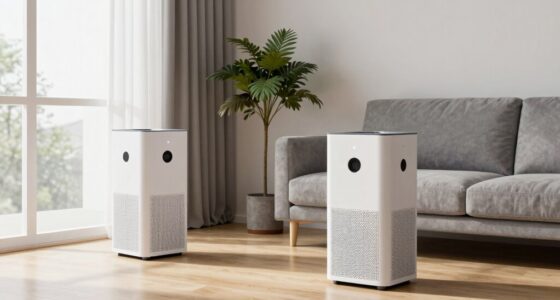
KNKA Air Purifier for Home Bedroom Large Room Up to 1,695 Ft² in 1 Hr, HEPA Air Cleaner with Washable Pre-Filter, AQI Display, ECO Mode, Sleep Mode, Pet Mode for Pets, Dust, Pollen, APH4000
𝐇𝐢𝐠𝐡 𝐂𝐀𝐃𝐑 𝐕𝐚𝐥𝐮𝐞: This air purifier provides reliable performance with a Smoke/Dust/PM2.5 CADR of 226 CFM (384 m³/h)...
As an affiliate, we earn on qualifying purchases.
Choosing Soothing Color Palettes
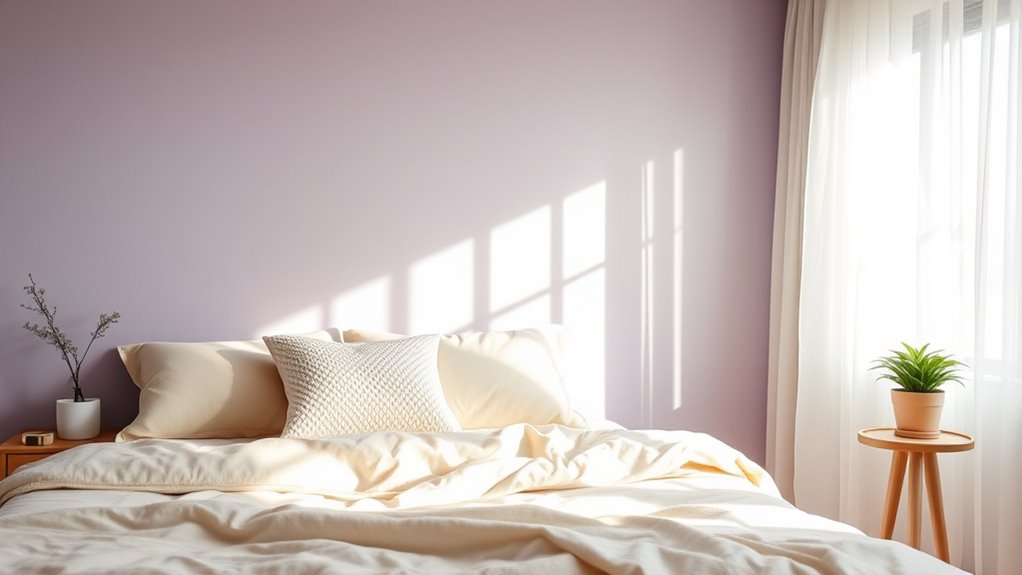
Choosing the right color palette is essential for creating a calming bedroom environment. You want colors that promote relaxation and reduce stress, so opt for soft, muted tones like gentle blues, calming greens, or warm neutrals. These hues help slow your mind and signal tranquility. Incorporating soothing color palettes can significantly impact your sleep quality by fostering a peaceful atmosphere. Avoid bright, bold colors that can overstimulate your senses and disrupt your sleep. Instead, select shades that evoke serenity and comfort, making your space feel like a retreat. Keep the palette simple—two or three complementary colors work best—so your room feels cohesive and peaceful. Remember, the goal is to create an atmosphere that invites rest, so choose colors that make you feel calm and at ease as you prepare for sleep. Incorporating Free Floating elements can enhance the sense of tranquility and natural flow in your bedroom design, aligning with the modern farmhouse decor trends that emphasize natural materials and a cozy, authentic feel. Additionally, paying attention to color psychology can help you select hues that promote relaxation and restful sleep. Including natural light in your design can also amplify the calming effects of your chosen colors, creating a more inviting environment.

LEVOIT Air Purifier for Home Large Room Up to 1073Ft² with Air Quality Monitor, AHAM VERIFIDE, Smart WiFi, Washable Pre-Filter, HEPA Sleep Mode for Pets, Allergies, Dust, Pollen, Vital 100S-P, White
𝐖𝐇𝐘 𝐂𝐇𝐎𝐎𝐒𝐄 𝐀𝐇𝐀𝐌 𝐕𝐄𝐑𝐈𝐅𝐈𝐃𝐄 𝐀𝐈𝐑 𝐏𝐔𝐑𝐈𝐅𝐈𝐄𝐑𝐒: AHAM (Association of Home Appliance Manufacturers) is an ANSI-accredited organization that sets...
As an affiliate, we earn on qualifying purchases.
Selecting Comfortable and Supportive Bedding

To guarantee restful sleep, investing in comfortable and supportive bedding is essential. Your sheets should feel soft against your skin, while pillows provide just the right amount of support for your neck. A mattress that balances firmness and comfort keeps your spine aligned and reduces tossing. Imagine the bedding layered like this:
| Soft Sheets | Supportive Mattress | Plush Pillows |
|---|---|---|
| Cool cotton or linen | Medium-firm for balance | Memory foam or down |
| Breathable fabric | Proper weight for comfort | Adjustable for preference |
Picture slipping into these layers: cool, smooth sheets, a supportive mattress, and pillows that cradle your head. This setup fosters deep, uninterrupted sleep and a restful night. Proper bedroom ergonomics can further enhance sleep quality by promoting optimal posture and comfort throughout the night. Additionally, choosing a vetted vacuum designed for bedroom cleaning can help maintain a dust-free environment that supports respiratory health. Recent advancements in bedding materials also contribute to better temperature regulation and hypoallergenic properties, promoting healthier sleep environments. Using hypoallergenic fabrics in your bedding can further reduce allergy triggers and improve overall sleep quality.

LEVOIT Air Purifiers for Home Large Room Up to 1875 Ft² with Washable Pre-Filter, AHAM VERIFIDE, Air Quality Monitor, HEPA Sleep Mode for Allergies, Pet Hair in Bedroom, Vital 200S-P, White
𝐖𝐇𝐘 𝐂𝐇𝐎𝐎𝐒𝐄 𝐀𝐇𝐀𝐌 𝐕𝐄𝐑𝐈𝐅𝐈𝐃𝐄 𝐏𝐑𝐎𝐃𝐔𝐂𝐓𝐒: AHAM (Association of Home Appliance Manufacturers) is an ANSI-accredited organization that sets strict...
As an affiliate, we earn on qualifying purchases.
Optimizing Lighting for Restful Ambiance
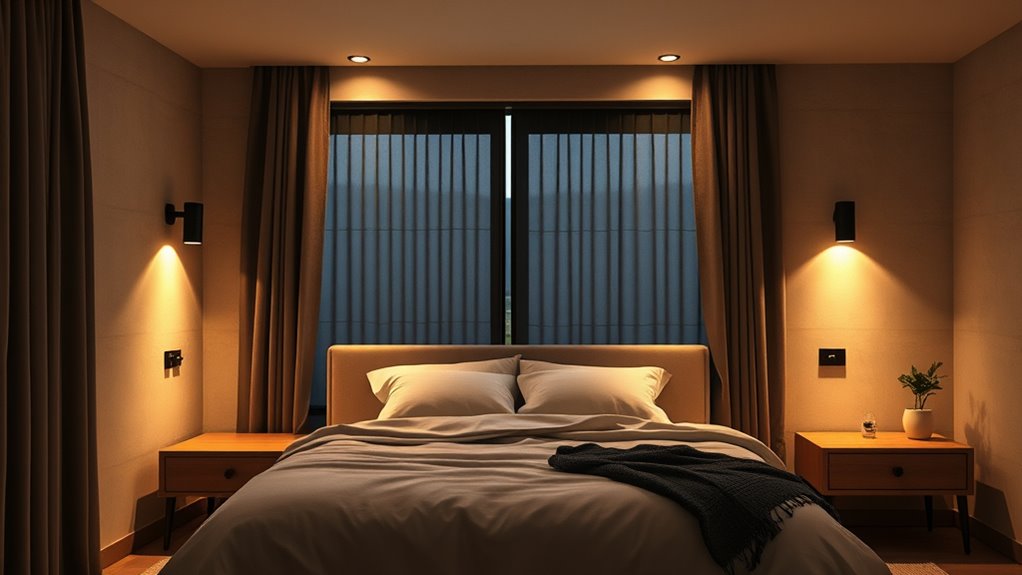
To create a calming bedroom environment, focus on soft, warm lighting that promotes relaxation. Using dimmer switches allows you to easily adjust the brightness and set the perfect mood before sleep. Small changes like these can make a big difference in achieving a restful ambiance. Additionally, incorporating security measures in your lighting setup can prevent unauthorized access or tampering with smart lighting systems. Implementing lighting control systems can further enhance your ability to customize your bedroom lighting securely and conveniently. For added peace of mind, selecting proper wiring and ensuring safe installation practices can help maintain the reliability and safety of your lighting setup. Considering smart‑home integrations can also allow you to automate lighting adjustments for optimal relaxation, leveraging lighting automation technologies to streamline your bedroom environment.
Soft, Warm Lighting
Soft, warm lighting creates a calming atmosphere that signals your body it’s time to unwind. It helps reduce eye strain and promotes relaxation, making it easier to shift into sleep. Use bulbs with a color temperature around 2700K for a cozy glow that mimics sunset hues. Avoid bright, blue-toned lights in the evening, as they can interfere with melatonin production. Instead, opt for lamps or fixtures with dimmable, warm-toned bulbs to adjust the brightness as needed. Incorporate bedside lamps or wall sconces to create layered lighting that feels inviting yet unobtrusive. This type of lighting fosters a tranquil environment, helping your mind and body relax fully before bedtime. Creating a sleep-conducive environment is essential for restful sleep. Additionally, choosing energy-efficient lighting not only supports sustainability but also ensures consistent, comfortable illumination that can be easily tailored to your evening routine. Using the right lighting can also prevent the build-up of artificial light exposure, which can disrupt your natural sleep cycle. Proper lighting selection can also help minimize light pollution from your bedroom, promoting better sleep quality. Being mindful of lighting placement can further enhance the calming effect and eliminate unwanted glare. Ultimately, soft, warm lighting supports restful sleep by creating a soothing, sleep-conducive ambiance.
Dimmer Switches Use
Dimmer switches are essential tools for creating the perfect sleep-friendly environment because they give you control over your bedroom’s lighting levels. By adjusting the brightness, you can set a calming atmosphere that signals your body it’s time to wind down. Using dimmers, you can easily shift from active evening routines to a restful state without abrupt changes. They also help reduce glare, which can interfere with melatonin production. Consider installing dimmer switches on main lights and bedside lamps for maximum flexibility. You can:
- Lower lights gradually as you prepare for bed
- Create a cozy, intimate space
- Avoid sudden bright flashes that disturb sleep
- Save energy by using only what’s needed
With dimmer switches, you tailor your lighting to support better sleep quality effortlessly.

LEVOIT Air Purifier for Home Allergens Pet Hair in Bedroom, Covers Up to 1073 ft² by 56W High Torque Motor, AHAM VERIFIDE, 3-in-1 Filter with HEPA Sleep Mode, Remove Dust Smoke Odor, Core300-P, White
WHY CHOOSE AHAM VERIFIDE AIR PURIFIERS: AHAM (Association of Home Appliance Manufacturers) is an ANSI-accredited organization that sets...
As an affiliate, we earn on qualifying purchases.
Creating a Clutter-Free and Relaxing Space
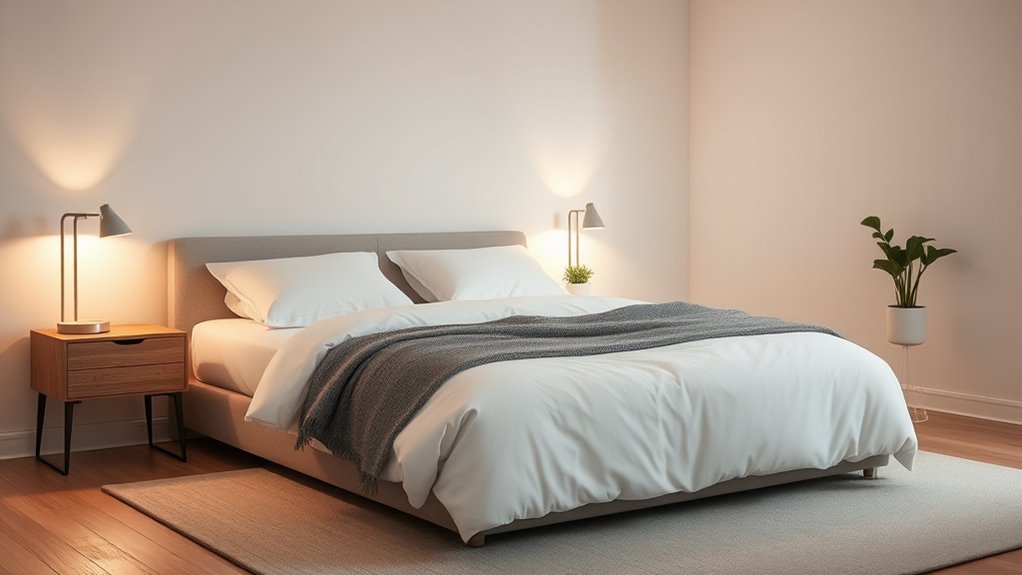
Creating a clutter-free and relaxing bedroom starts with intentionally organizing your space to reduce visual chaos and promote calm. Begin by removing unnecessary items from surfaces and floors, keeping only essentials within reach. Use storage solutions like bins, baskets, or drawers to hide clutter and maintain a clean look. Designate specific spots for your belongings to prevent buildup and make tidying easier. Keep your bedside table clear of distractions and only display calming objects, like a book or a small plant. Regularly declutter to prevent accumulation and ensure your space stays serene. A tidy room minimizes stress and creates a tranquil environment that signals your mind it’s time to relax and sleep. Remember, simplicity is key to fostering peace and restful sleep. Incorporating organized storage solutions can further enhance your space’s serenity and functionality. Additionally, mindful arrangement of your decor can promote mental clarity and deepen your relaxation. Maintaining a consistent clutter-free environment supports better sleep hygiene and overall well-being, emphasizing the importance of creative storytelling for branding in shaping a peaceful space that reflects your personal style and values.
Incorporating Sound and Noise Control

To improve your bedroom’s noise control, start by exploring soundproofing wall techniques and window insulation options. Adding soft textiles like rugs, curtains, and bedding can also help absorb sound and create a quieter environment. These strategies work together to guarantee you get the peaceful sleep you need.
Soundproofing Wall Techniques
Effective soundproofing begins with understanding how to block and absorb noise through your bedroom walls. To improve sound insulation, you can add mass to your walls with dense materials like drywall or mass-loaded vinyl. Decoupling techniques, such as using resilient channels or staggered studs, prevent sound vibrations from passing directly through the wall. Adding insulation like mineral wool or fiberglass inside wall cavities further dampens noise. Seal gaps and cracks with acoustic caulk to eliminate sound leaks.
- Install double-layer drywall with damping compounds
- Use resilient channels to decouple drywall from framing
- Fill wall cavities with insulating material
- Seal all gaps with acoustic caulk for a tight seal
Window Noise Insulation
Since windows are often the weakest point for sound transmission, taking steps to insulate them effectively can considerably reduce noise from outside sources. Start by installing double or triple-pane windows, which provide better soundproofing than single-pane options. If replacing windows isn’t feasible, add acrylic or laminated glass inserts to improve insulation. You can also use weatherstripping around window frames to seal gaps that let noise through. Heavy, acoustic curtains or window plugs made from sound-absorbing materials can further dampen external sounds. Guarantee all gaps are sealed tightly to prevent sound leaks. Combining these strategies creates a barrier that minimizes noise, helping you enjoy a quieter, more restful sleep in your bedroom.
Soft Textiles for Silence
Adding soft textiles to your bedroom can substantially enhance sound absorption and reduce noise levels. These materials help dampen echoes and block out external sounds, creating a quieter environment for restful sleep. Focus on integrating various textiles to maximize noise control:
- Thick, plush rugs or carpets to absorb footsteps and airborne sounds
- Heavy curtains or blackout drapes to block out street noise
- Upholstered headboards or fabric-covered wall panels for added sound insulation
- Layered bedding with multiple blankets and pillows to muffle sound vibrations
Using Aromatherapy and Scents to Promote Sleep

Aromatherapy has gained popularity as a natural way to enhance sleep quality, and using calming scents in your bedroom can make a noticeable difference. Essential oils like lavender, chamomile, and ylang-ylang are known for their relaxing properties. You can use a diffuser, add a few drops to your pillow, or mix them into a bath before bed. These scents help signal your brain that it’s time to unwind, reducing stress and promoting deeper sleep. Choose high-quality oils and keep the scent subtle to avoid overstimulation. To organize your options, consider this table:
| Scent | Benefits |
|---|---|
| Lavender | Calms nerves, reduces anxiety |
| Chamomile | Promotes relaxation |
| Ylang-ylang | Lowers blood pressure |
| Bergamot | Eases tension |
| Sandalwood | Induces tranquility |
Integrating Technology Mindfully
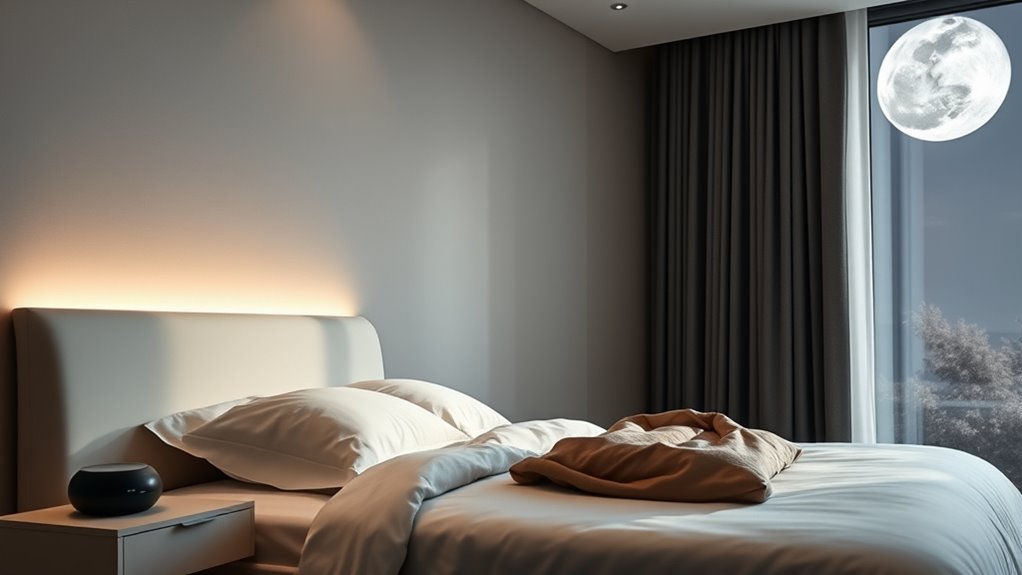
While incorporating calming scents can set the mood for restful sleep, modern technology offers additional tools to enhance your bedtime routine—if used thoughtfully. To avoid disruptions, set screens to ‘night mode’ or use blue light filters to reduce eye strain and melatonin suppression. Consider placing devices on airplane mode or turning them off altogether an hour before bed to minimize notifications and distractions. Use smart lighting to gradually dim your lights as you wind down, creating a soothing environment. You might also invest in a white noise machine or calming app to block out disturbances. Remember, intentional use of technology helps support restful sleep, so establish boundaries and create a peaceful, tech-minimized space that promotes relaxation.
Personalizing Your Bedroom for Ultimate Comfort
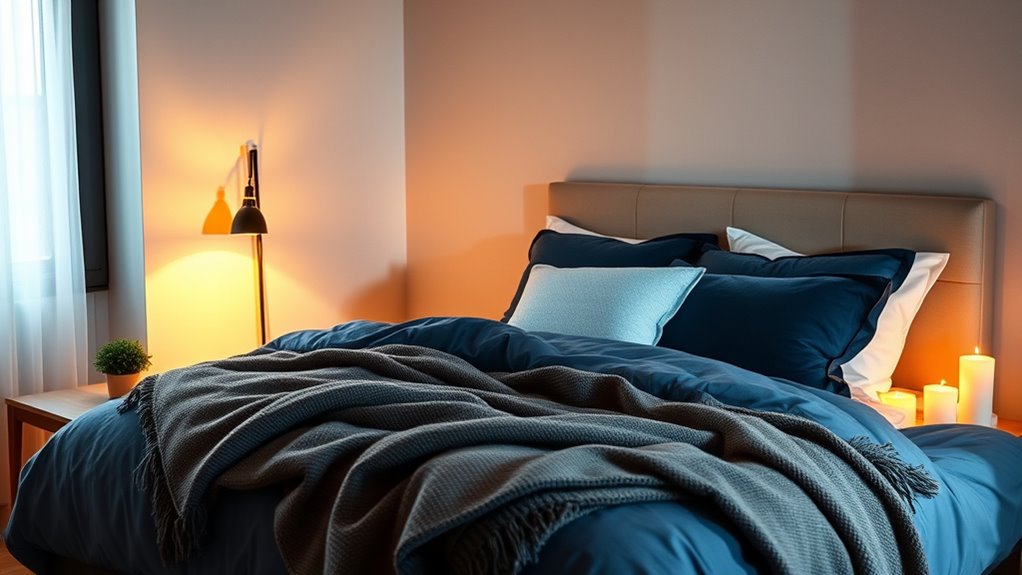
Personalizing your bedroom guarantees it feels like a true retreat tailored to your comfort. Add elements that bring you joy and relaxation, like favorite scents, artwork, or cozy textiles. Choose bedding in colors and textures that soothe you, creating an inviting space. To help you visualize, here’s a simple table:
| Comfort Elements | Personal Touches |
|---|---|
| Plush pillows and throws | Framed photos or artwork |
| Soft lighting options | Scented candles or diffusers |
| Comfortable mattress | Personal mementos |
Incorporate these touches thoughtfully; they enhance your sleep environment and make your space uniquely yours. The goal is a soothing sanctuary that reflects your personality while promoting restful sleep.
Frequently Asked Questions
How Can I Improve Airflow for Better Sleep Quality?
You can improve airflow for better sleep by opening windows regularly to let fresh air in and creating cross-ventilation. Use a ceiling fan or a portable fan to circulate air gently throughout the room. Keep vents unobstructed and consider using an air purifier with a HEPA filter. Staying cool and well-ventilated helps regulate your body temperature, leading to deeper, more restful sleep.
What Are the Ideal Mattress Types for Different Sleep Positions?
Ever wonder which mattress suits your sleep style best? If you’re a side sleeper, opt for a memory foam or latex mattress that cushions your shoulders and hips. Back sleepers benefit from a medium-firm innerspring or hybrid mattress that supports your spine’s natural curve. Stomach sleepers should try a firmer mattress to prevent sinkage and keep your neck aligned. Choosing the right mattress improves comfort and helps you wake refreshed.
How Can I Reduce Electromagnetic Fields in the Bedroom?
You can reduce electromagnetic fields in your bedroom by unplugging devices when not in use, especially at night. Keep electronics away from your bed and use wired connections instead of Wi-Fi whenever possible. Consider installing EMF shielding paint or window covers, and turn off Wi-Fi routers when you’re sleeping. Using grounded outlets and avoiding electronics near your headboard also helps minimize electromagnetic exposure, promoting a healthier sleep environment.
What Are Some Budget-Friendly Ways to Enhance Bedroom Comfort?
To boost bedroom comfort on a budget, start by softening surfaces with cozy rugs and plush pillows. Use blackout curtains to block out bothersome light, and swap harsh bulbs for warm, dimmable lighting. Declutter to create a calming space, and incorporate calming colors for comfort. You can also DIY a diffuser with essential oils for a soothing scent, making your sanctuary more serene without spending a fortune.
How Does Bedroom Layout Influence Sleep Patterns?
Your bedroom layout markedly influences your sleep patterns. When you arrange your furniture to create a calm, uncluttered space, you reduce stress and promote relaxation. Position your bed away from doors and windows to minimize disturbances. Use strategic placement of lighting and blackout curtains to control light exposure. A well-thought-out layout helps your mind associate the space with rest, making it easier to fall asleep and stay asleep throughout the night.
Conclusion
So, after all this effort, don’t forget to actually *sleep*. Your perfect, serene sanctuary might just become a shrine to sleep deprivation if you keep scrolling late or ignoring your cozy setup. Ironically, the more you try to create the ideal sleep environment, the more you might find yourself lying awake, staring at the ceiling, wondering if all those calming scents and soft lights are just a fancy distraction from the fact that you’re still awake.