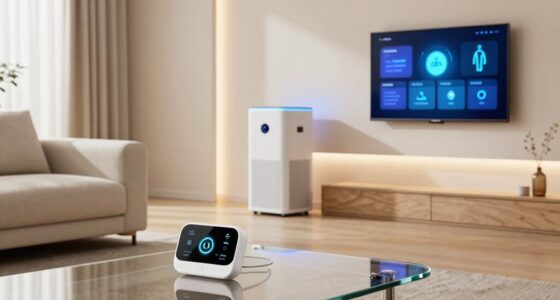
Maintaining the right humidity levels in your bedroom is key to better sleep and respiratory comfort. Aim for 40-60%, as too dry air can cause dryness and irritation, while excess moisture leads to mold and allergies. You can manage this with hygrometers, humidifiers, or dehumidifiers. Finding the perfect balance helps prevent discomfort and boosts sleep quality. Stay with us to discover practical ways to control your bedroom humidity effectively.
Key Takeaways
- Maintaining indoor humidity between 40-60% enhances respiratory comfort and promotes restful sleep.
- Low humidity can cause dry skin, sore throat, and nasal congestion, disrupting sleep quality.
- Excess humidity encourages mold and dust mites, leading to allergies and breathing issues during sleep.
- Using hygrometers and appropriate devices (humidifiers/dehumidifiers) helps sustain optimal humidity levels.
- Proper humidity management reduces irritation and supports healthy, uninterrupted sleep.
How Humidity Affects Respiratory Comfort During Sleep

Humidity levels directly impact your respiratory comfort during sleep. When the air is too dry, your nasal passages and throat can become irritated, leading to discomfort and even breathing difficulties. You might notice your throat feeling scratchy or your sinuses congested, making it harder to breathe deeply or stay asleep. On the other hand, overly humid air can cause mucus to thicken, which also hampers airflow and can trigger coughing or congestion. Proper humidity helps keep your airways moist and clear, reducing irritation and supporting smoother breathing throughout the night. Maintaining an ideal humidity level ensures your respiratory system functions efficiently, allowing you to breathe comfortably and enjoy uninterrupted, restful sleep. Additionally, consistent project management support can help maintain optimal conditions in your sleeping environment. Being aware of air quality and adjusting humidity accordingly can further enhance sleep quality and respiratory health. Managing humidity levels effectively can prevent issues like mold growth and dust mites that thrive in improper humidity, further contributing to better sleep and health. Proper humidity control can also reduce the presence of airborne allergens, which can cause respiratory irritation or exacerbate allergies.
Signs of Too Much or Too Little Humidity in Your Bedroom

If your bedroom’s humidity level is too high or too low, you’ll likely notice certain signs that indicate an imbalance. When humidity is too high, you might see condensation on windows, a damp feeling in the air, or an increase in dust mites and mold. You could also experience stuffy nasal passages or a persistent musty odor. On the other hand, if humidity is too low, you may notice dry skin, chapped lips, or frequent static shocks. Your throat might feel dry or scratchy, and you could wake up with a sore throat or nasal congestion. In both cases, sleep can become restless or uncomfortable. Recognizing these signs helps you identify when your bedroom’s humidity needs adjustment for better sleep quality. Proper use of humidifiers can help maintain optimal humidity levels and improve sleep comfort. Maintaining balanced humidity also minimizes allergen buildup, which can interfere with restful sleep. Additionally, monitoring humidity levels with a hygrometer ensures you stay within the ideal range for health and comfort. Being aware of the effects of humidity on respiratory health can further guide you in creating a sleep-friendly environment. Understanding the impact of humidity fluctuations can help you take proactive steps to prevent discomfort.
Ideal Humidity Range for Restorative Sleep

Maintaining the right humidity level in your bedroom is essential for achieving restorative sleep. Experts recommend keeping humidity between 40% and 60%. This range helps prevent dry skin, irritated airways, and discomfort that can disrupt your rest. When the humidity is too low, you might experience dry throat or nasal congestion; too high, and mold or dust mites can thrive. To find your ideal level, consider using a hygrometer to monitor humidity. Proper humidity control not only improves sleep quality but also supports your overall outdoor wisdom by creating a healthier indoor environment. Ensuring your power tools and equipment are well-maintained can also help manage your home’s climate more effectively. Additionally, maintaining proper air circulation can prevent excess moisture buildup and promote a comfortable sleeping environment. Here’s a quick guide:
| Humidity Level | Effect on Sleep | Recommended Actions |
|---|---|---|
| 30-40% | Slightly dry | Use a humidifier |
| 40-60% | Perfect | Maintain current environment |
| 60-70% | Too humid | Ventilate or dehumidify |
Practical Ways to Adjust Humidity Levels at Home

To effectively adjust humidity levels in your home, start by monitoring the current conditions with a reliable hygrometer. Once you know your humidity is off, you can take simple steps to balance it. Use a humidifier if your air is too dry, especially in winter. Conversely, open windows or use exhaust fans to reduce excess moisture during humid months. Place bowls of water near heat sources to add humidity gradually. Use a dehumidifier in damp areas like basements. Keep indoor plants, which naturally boost humidity, around your bedroom. Additionally, run your bathroom fan during and after showers to control moisture. These practical tips help you maintain the most suitable humidity for better sleep and overall comfort. Maintaining proper indoor air quality is also essential for a healthy sleeping environment. Being aware of air quality factors can help you make informed adjustments to improve sleep quality and comfort. For more effective humidity control, understanding climate factors can help you adapt your methods seasonally. Regularly checking humidity levels ensures your environment stays within an optimal range for restful sleep. Incorporating awareness of seasonal changes can further enhance your humidity management strategies year-round.
The Impact of Humidity Control Devices on Sleep Quality

Humidity control devices like humidifiers and dehumidifiers can substantially influence your sleep quality by maintaining ideal moisture levels. When your environment is too dry, you may experience dry skin, irritated sinuses, and breathing difficulties, which can disrupt sleep. Conversely, excessive humidity promotes mold growth and dust mites, leading to allergies and congestion that hinder restful sleep. Using a humidifier or dehumidifier helps create a comfortable, balanced atmosphere, reducing these issues. Proper humidity levels also improve your respiratory comfort, allowing you to breathe more easily throughout the night. Additionally, maintaining appropriate humidity levels can help prevent damage to your sauna and cold plunge systems by controlling mold and corrosion. Regularly monitoring your environment’s humidity can also prevent issues related to personal debt management, ensuring your sleep space remains safe and healthy. Maintaining optimal humidity can also support backyard transformation essentials, creating an inviting outdoor environment conducive to relaxation and sleep. Ensuring consistent humidity levels can also enhance air quality, which directly impacts sleep quality and overall health. Incorporating reliable humidity control devices can further optimize your sleep environment and overall well-being.
Frequently Asked Questions
Can Humidity Levels Influence Dreams or Sleep Duration?
Yes, humidity levels can influence your dreams and sleep duration. When the air is too dry, you might experience discomfort, dry skin, and disrupted sleep, leading to shorter rest. Conversely, overly humid conditions can cause restlessness and awakenings, reducing sleep quality. Maintaining ideal humidity helps you stay comfortable, allowing your body to relax fully, which can lead to longer, more restful sleep and potentially more vivid dreams.
How Does Humidity Affect Allergy Symptoms During Sleep?
Humidity can considerably worsen allergy symptoms during sleep. High humidity encourages mold, dust mites, and mildew growth, which trigger allergies and cause congestion, sneezing, and itchy eyes. You might find it harder to breathe and sleep comfortably when humidity levels are too high. To improve your sleep quality, keep humidity in check with dehumidifiers or air conditioning, and consider using hypoallergenic bedding to reduce allergy symptoms.
Are There Health Risks Associated With Improper Bedroom Humidity?
Yes, improper bedroom humidity can pose health risks. If it’s too high, mold, dust mites, and bacteria thrive, potentially worsening allergies and respiratory issues. Too low, and your skin, eyes, and nasal passages can become dry and irritated, increasing infection chances. Maintaining ideal humidity, around 40-60%, helps you breathe easier, prevents health problems, and guarantees your sleep environment stays comfortable and safe.
What Role Does Humidity Play in Preventing Mold Growth?
Humidity plays a vital role in preventing mold growth by keeping indoor moisture levels in check. When humidity stays between 30-50%, mold spores find it harder to thrive. You should use dehumidifiers or air conditioners to reduce excess moisture, especially in damp areas like basements or bathrooms. Proper ventilation also helps. By maintaining balanced humidity, you actively stop mold from developing, protecting your home’s health and integrity.
How Quickly Can Humidity Changes Impact Sleep Quality?
You might notice that a sudden drop in humidity causes you to wake up feeling dry and uncomfortable. Changes can impact sleep quality within hours, as your body struggles to adapt. For example, if the air becomes too dry overnight, your nasal passages dry out, disrupting your rest. Keeping your bedroom humidity stable helps maintain comfort and minimizes sleep disturbances, ensuring you wake up refreshed.
Conclusion
When you fine-tune your bedroom’s humidity, you create a cozy oasis where your sleep can flourish. Think of it as tuning a delicate instrument—too dry, and your comfort hits a sour note; too damp, and the melody gets muddled. By adjusting humidity levels just right, you set the stage for deep, invigorating sleep. It’s your personal symphony of comfort and rest, waiting to be played each night.