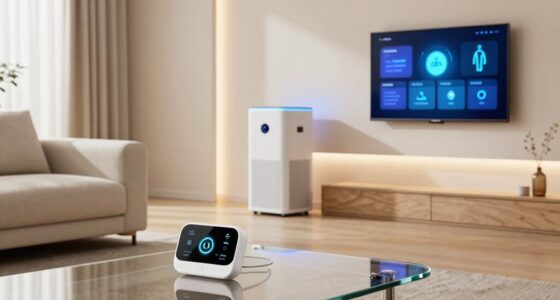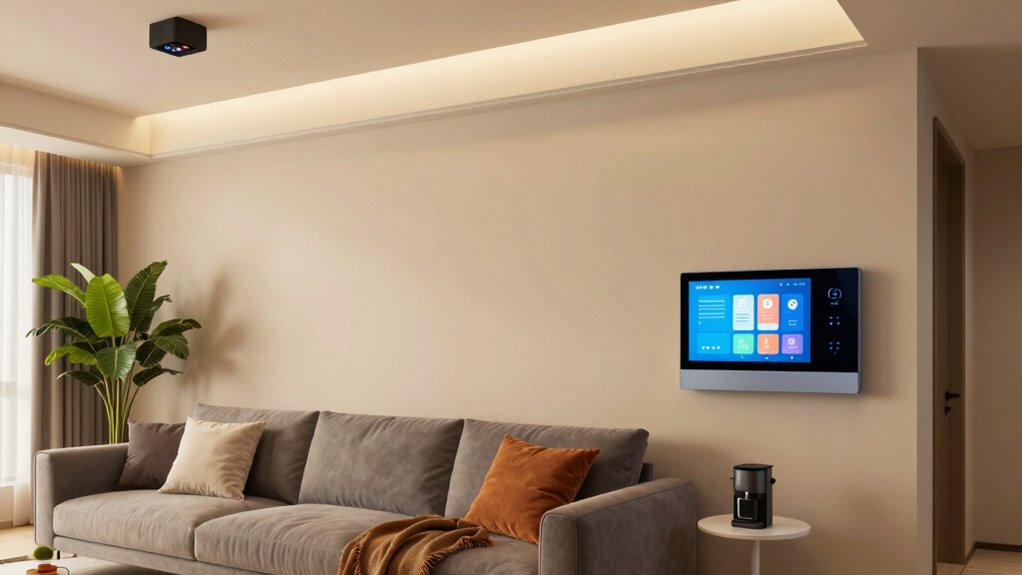
Home wellness automation helps you create a personalized, healthy living space by adjusting climate, air quality, lighting, and sleep environments automatically. You can optimize comfort with zoned temperature controls, air purifiers that react to pollution levels, and smart lighting that supports your circadian rhythm. Incorporate relaxation zones, sleep trackers, and health monitoring for a holistic approach. If you keep exploring, you’ll discover how these intelligent systems work together for your well-being.
Key Takeaways
- Personalized climate control adjusts indoor temperatures based on individual preferences and occupancy patterns for enhanced comfort and energy savings.
- Automated air quality and humidity systems monitor pollutants and moisture levels, activating purifiers and humidifiers as needed for healthier indoor air.
- Sleep optimization features include smart lighting, temperature regulation, and soundscapes to improve rest quality and support circadian rhythms.
- Wellness monitoring integrates wearable devices and smart scales to track health metrics, providing real-time insights and personalized wellness support.
- Integrated automation combines climate, air quality, sleep, and health systems to create a holistic, energy-efficient, and health-focused home environment.
Smart Lighting for Circadian Rhythm Optimization
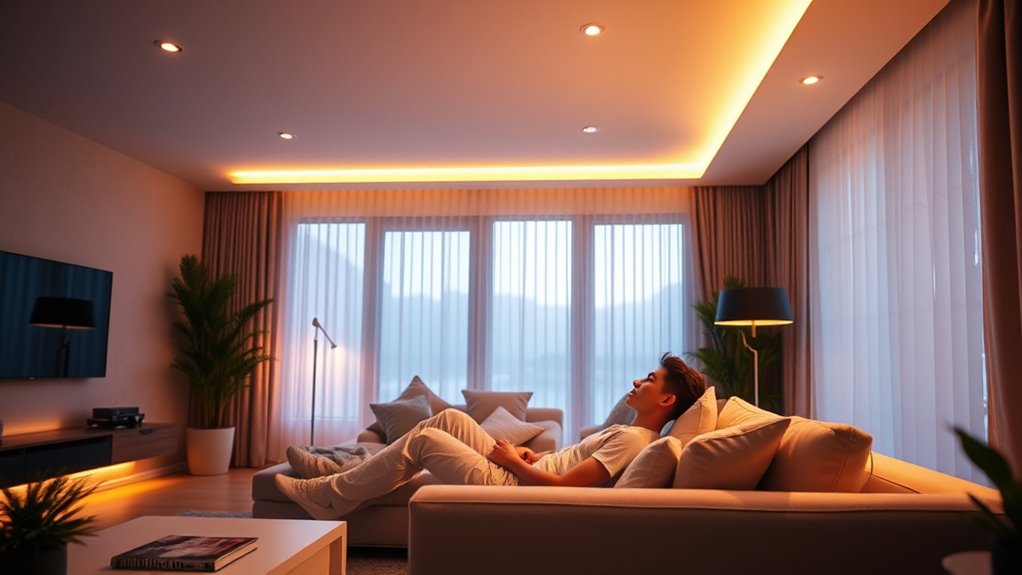
Smart lighting plays a crucial role in maintaining your body’s natural circadian rhythm by adjusting light exposure throughout the day. As the sun rises, your smart lighting system gradually brightens, mimicking natural daylight to boost alertness and mood. During the afternoon, it maintains ideal brightness to keep you energized. As evening approaches, the lights dim and shift to warmer tones, signaling your body to prepare for sleep. This dynamic lighting helps regulate your internal clock, making it easier to fall asleep and wake up refreshed. You don’t need to manually change settings or rely on external cues—you simply set your preferences, and the system adapts seamlessly. Adaptive lighting ensures your environment aligns with natural light patterns for optimal health. Incorporating biological signals into your lighting design can further enhance circadian regulation. Adjustments in color temperature can simulate natural lighting more accurately, promoting better synchronization with your biological clock. Additionally, integrating light exposure timing into your routines can optimize circadian benefits by aligning artificial lighting with your body’s needs. Consistent circadian regulation supports better sleep, improves focus, and promotes overall well-being. Additionally, implementing color temperature adjustments enhances the effectiveness of circadian alignment by simulating natural lighting conditions more accurately.
Automated Air Purification and Humidification
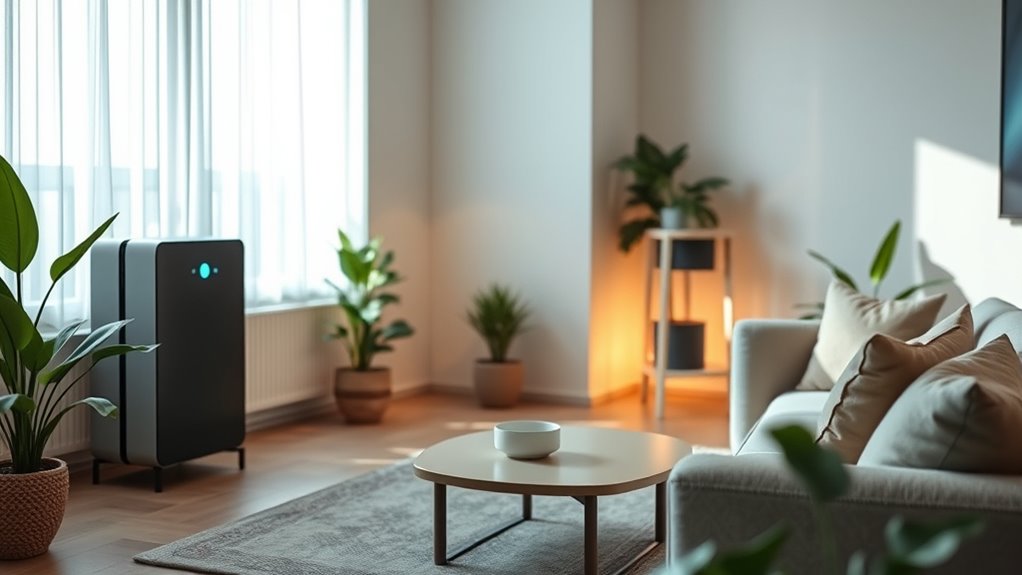
With sensor-triggered air quality monitors, your home can automatically enhance air purity when pollution levels rise. Automated humidity control keeps your environment comfortable without constant adjustments. This seamless system ensures your air stays fresh and balanced effortlessly. Incorporating smart energy management can further optimize the operation of these systems, reducing energy consumption while maintaining optimal air quality. Additionally, integrating air quality sensors helps detect various pollutants, allowing for more precise adjustments to your home’s purification system. Employing home automation strategies can streamline these processes, making your wellness environment more efficient and responsive. By leveraging outdoor environmental data, these systems can better anticipate fluctuations in air quality, enhancing overall indoor wellness. Utilizing cultural moments and design influences can also inspire aesthetic enhancements that complement your home’s wellness environment.
Sensor-Triggered Air Quality
Have you ever wondered how your home can automatically maintain ideal air quality? With sensor-triggered air quality systems, you don’t need to constantly monitor. These systems use sensors to detect pollutants, dust, VOCs, and other airborne particles in real-time. When air quality drops below a healthy threshold, the system activates your air purifiers instantly. Some sensors also measure humidity, temperature, and other factors to optimize comfort. You set the preferred air standards, and the system takes care of the rest, adjusting purification levels as needed. This automation guarantees cleaner, healthier air without manual intervention, reducing allergens and pollutants automatically. It creates a safer environment, especially for those with allergies or respiratory conditions, all while maintaining a comfortable atmosphere effortlessly. Understanding indoor air quality is essential for designing effective automated systems. Additionally, integrating sensor calibration ensures the system remains accurate over time, providing consistent air quality management. Regular maintenance and calibration of sensors are crucial for accurate readings and optimal system performance. Ensuring sensor longevity can also improve system reliability and reduce the need for frequent replacements.
Automated Humidity Control
Automated humidity control seamlessly maintains ideal moisture levels in your home, ensuring comfort and air quality without manual adjustments. By continuously monitoring indoor humidity, your system detects when levels fall below or rise above the optimal range. When humidity gets too low, a humidifier activates automatically, adding moisture to prevent dry skin, irritation, and static electricity. Conversely, if humidity becomes too high, a dehumidifier or ventilation system kicks in to reduce excess moisture, preventing mold growth and musty odors. This automation creates a stable environment that adapts to weather changes and indoor activities. Additionally, smart home integration allows for more customized control and monitoring of humidity levels from anywhere. You won’t need to think about adjusting humidifiers or dehumidifiers manually, as your system keeps moisture levels balanced, promoting healthier, more comfortable living spaces effortlessly. Proper ventilation and sanitation also play a critical role in maintaining air quality and humidity balance over time. Incorporating reliable humidity sensors ensures consistent and accurate monitoring, which is essential for optimal system performance. Furthermore, selecting appropriate humidification and dehumidification devices can enhance system efficiency and longevity, ensuring your home remains comfortable year-round. Moreover, integrating HVAC optimization can enhance overall climate control and energy efficiency within your home.
Personalized Climate Control for Comfort

With adaptive temperature settings, your home can adjust automatically to keep you comfortable all day. Zoned climate preferences let you personalize the environment in different rooms or areas. This approach leverages connected equipment and smart sensors to optimize energy efficiency while maintaining comfort. Incorporating DIY home automation solutions can also make managing these systems more accessible and cost-effective for homeowners. Additionally, integrating smart climate control systems enhances the precision of temperature adjustments, ensuring optimal comfort with minimal manual intervention. Using practical knowledge from reliable sources, homeowners can implement these systems confidently and effectively.
Adaptive Temperature Settings
Adaptive temperature settings tailor your home’s climate to your preferences and daily routines, ensuring ideal comfort at all times. These systems learn your habits, adjusting the thermostat automatically as you wake up, leave, or return home. For example, if you usually prefer a warmer environment in the evenings, it’ll preheat your space accordingly. They respond to real-time data such as occupancy, time of day, and even weather forecasts, making adjustments seamlessly. You won’t need to manually change settings or worry about energy waste. Instead, your home maintains a consistent, personalized climate that adapts to your lifestyle. This proactive approach enhances comfort, saves energy, and reduces your overall effort in managing indoor temperatures. Adaptive temperature systems bring convenience and efficiency directly into your daily life.
Zoned Climate Preferences
Zoned climate preferences allow you to customize the temperature in different areas of your home, ensuring everyone stays comfortable. With this setup, you can set individual temperatures for each zone, like bedrooms, living rooms, or home offices, based on personal preferences. This targeted control helps reduce energy waste by avoiding over-heating or cooling unused spaces. You can automate these settings to adjust at specific times or based on occupancy, making your environment more responsive and efficient. Installing smart thermostats and zoning systems makes managing multiple zones simple and seamless. By tailoring climate settings to each area’s needs, you create a more comfortable, energy-efficient living space that adapts to your daily routines and preferences effortlessly.
Sleep Enhancement Through Technology
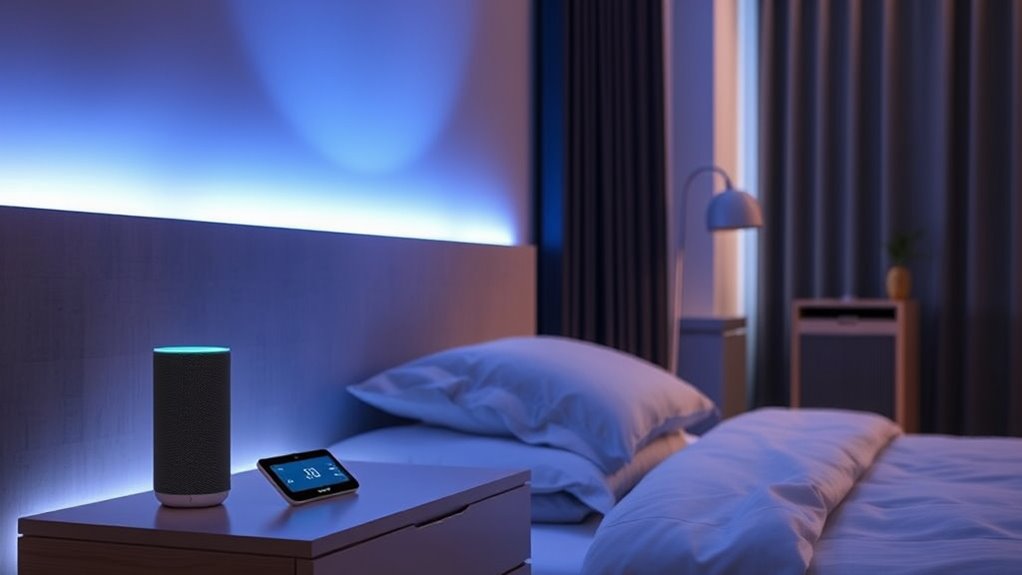
Technology has revolutionized how you can improve your sleep quality at home. Smart sleep trackers monitor your sleep patterns, providing insights into sleep duration and quality. These devices sync with your smartphone or smart home system, allowing you to adjust your environment for better rest. Automated lighting systems can gradually dim or brighten to support your circadian rhythm, helping you fall asleep faster and wake refreshed. Sleep-enhancing gadgets like white noise machines or calming soundscapes create a soothing environment, reducing disruptions. Some systems even adjust room temperature and humidity based on your sleep cycle, maintaining *ideal* comfort. With these innovations, you gain personalized control over your sleep environment, making restful nights more achievable and waking up feeling refreshed becomes easier.
Meditation and Relaxation Spaces With Ambient Settings
Creating a dedicated meditation and relaxation space at home can considerably enhance your ability to unwind and reduce stress. By integrating ambient settings, you create an environment that promotes calmness and mindfulness. Use smart lighting to set soft, adjustable hues that match your mood, or incorporate diffusers with calming essential oils. Play gentle background sounds or nature noises through smart speakers to deepen your relaxation. Consider adding temperature control features for ultimate comfort, and include comfortable seating or cushions designed for prolonged sitting. Automate these elements to activate at specific times or through voice commands, ensuring your space is always ready for your practice. With these features, your relaxation zone becomes a personalized sanctuary that fosters tranquility and mental clarity.
Fitness and Wellness Monitoring Integration
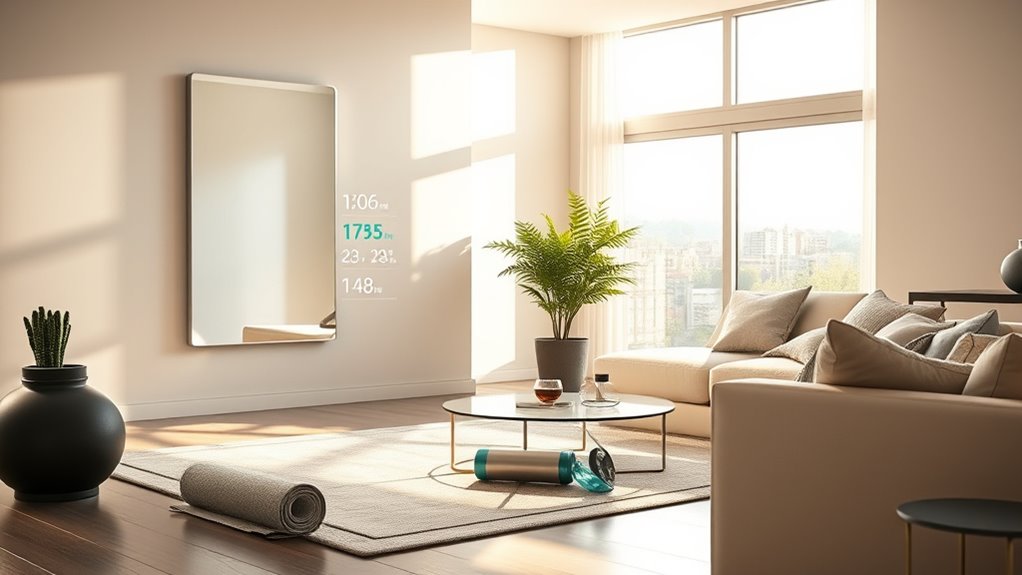
Integrating fitness and wellness monitoring into your home automation system allows you to track your health metrics seamlessly and stay motivated. With smart devices like wearable fitness trackers and smart scales, you can automatically record your heart rate, activity levels, sleep patterns, and more. These devices sync with your home system, providing real-time updates on your health dashboard. You can set personalized goals and receive alerts when you hit milestones or need to adjust your routines. Automated routines can remind you to move if you’ve been inactive and adjust lighting or climate to optimize your comfort during workouts or rest. This integration helps you maintain consistent health monitoring, making it easier to stay on top of your wellness goals without manual effort.
Nourishment and Hydration Reminders and Controls
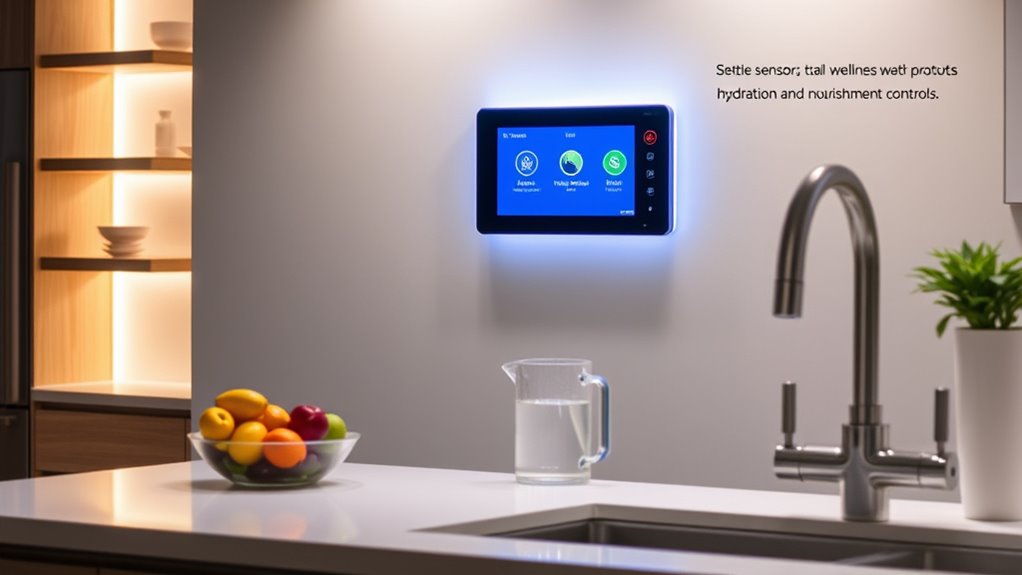
Building on your wellness monitoring system, automating nourishment and hydration routines helps guarantee you stay properly fueled throughout the day. You can set up reminders to drink water regularly, ensuring you stay hydrated, especially during busy schedules. Smart kitchen devices can alert you when it’s time to eat or prepare healthy snacks. Automated systems can also track your nutrient intake and suggest meal adjustments. With connected appliances, you might have your coffee brewed at a specific time each morning or your hydration bottle remind you to drink after intervals. By integrating these controls, you create a seamless, health-focused environment that supports your daily wellness goals.
- Hydration reminders based on activity levels
- Automated alerts for meal times
- Smart water bottles tracking intake
- Pre-programmed snack or meal suggestions
- Connected appliances for timely food prep
Voice-Activated Wellness Routines

Voice-activated wellness routines enable you to manage your health tasks effortlessly through simple voice commands. With smart speakers or voice assistants, you can set reminders for medication, initiate relaxation exercises, or adjust your environment for ideal comfort. For example, you might say, “Start my meditation,” and your system will play calming music and guide you through breathing exercises. You can also check your hydration or nutrition status by asking, “How am I doing today?” or “Remind me to drink water at 3 PM.” This hands-free approach helps you stay consistent with wellness routines without disrupting your daily activities. Over time, voice-activated routines become a seamless part of your health management, making self-care more accessible and less burdensome.
Frequently Asked Questions
How Secure Are Home Wellness Automation Devices Against Hacking?
Home wellness automation devices can be quite secure if you take proper precautions. They often use encryption and regular updates to protect against hacking. However, vulnerabilities still exist, especially if you use weak passwords or neglect firmware updates. You should enable two-factor authentication, change default passwords, and keep your device software current. These steps help reduce risks and keep your devices safer from potential cyber threats.
Can These Systems Be Customized for Individual Health Conditions?
Absolutely, you can customize these systems for your specific health conditions, much like a tailor crafts a suit to fit perfectly. You’ll input your unique health data, set personalized alerts, and adjust device parameters to suit your needs. This guarantees that your wellness system responds precisely to your requirements, providing tailored support just like a bespoke garment—making your health management both effective and seamless.
What Is the Typical Installation Process for Integrated Wellness Tech?
You start by consulting with a professional to assess your needs and choose compatible devices. Then, they’ll install sensors, control hubs, and necessary equipment throughout your home. The process involves connecting these devices to your Wi-Fi network and configuring them with a user-friendly app or interface. Once set up, you’ll test the system to guarantee everything functions correctly, allowing seamless automation tailored to your wellness goals.
Are There Energy Consumption Concerns With Continuous Automation?
Yes, there can be energy consumption concerns with continuous automation. However, you can minimize this by choosing energy-efficient devices and setting them to operate only when needed. Many smart systems have built-in energy-saving features, like sensors and timers, that help reduce unnecessary power use. By managing your automation settings thoughtfully, you guarantee wellness benefits without considerably increasing your energy bills.
How Do These Systems Adapt to Seasonal or Regional Climate Changes?
These systems adapt to seasonal and regional climate changes by leveraging smart sensors and real-time data. You’ll notice automatic adjustments in temperature, humidity, and lighting to optimize comfort and efficiency. For example, in winter, they increase heating, while in summer, they enhance cooling. They learn your routines and local weather patterns, ensuring your home remains comfortable without wasting energy, all while seamlessly responding to changing outdoor conditions.
Conclusion
By embracing home wellness automation, you create a healthier, more comfortable living space. Imagine waking up to lighting that mimics sunrise, your air perfectly purified, and a personalized climate that keeps you cozy. For instance, a family integrated these systems, leading to better sleep and increased energy. With these smart solutions, you can effortlessly enhance your well-being daily, turning your home into a sanctuary of health and relaxation.