Blue light at home mainly comes from sunlight, screens, and energy-efficient bulbs, affecting your sleep and eye health. Excessive exposure, especially in the evening, can disrupt your circadian rhythm, cause eye strain, headaches, and even long-term damage. To protect yourself, use blue light filters, activate night modes, and create a calming routine before bed. Keep going to discover simple ways to reduce blue light and care for your eyes.
Key Takeaways
- Blue light from sunlight, electronic devices, and energy-efficient lighting is pervasive indoors and outdoors.
- Excessive blue light exposure can disrupt sleep, suppress melatonin, and impair circadian rhythms.
- Prolonged screen use causes eye strain, dryness, headaches, and may increase risk of retinal damage over time.
- Strategies include using blue light filters, enabling night mode, lowering screen brightness, and wearing blue light glasses.
- Establishing evening routines with warm lighting and screen-free activities helps reduce blue light’s impact on sleep.

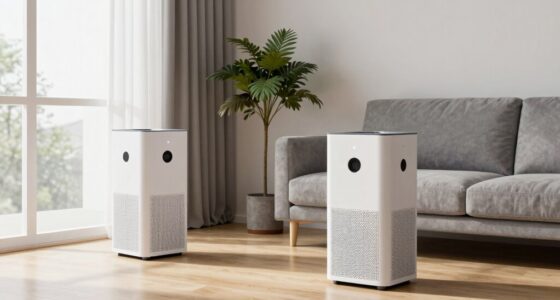
LEVOIT Air Purifiers for Home Large Room Up to 1875 Ft² with Washable Pre-Filter, AHAM VERIFIDE, Air Quality Monitor, HEPA Sleep Mode for Allergies, Pet Hair in Bedroom, Vital 200S-P, White
𝐖𝐇𝐘 𝐂𝐇𝐎𝐎𝐒𝐄 𝐀𝐇𝐀𝐌 𝐕𝐄𝐑𝐈𝐅𝐈𝐃𝐄 𝐏𝐑𝐎𝐃𝐔𝐂𝐓𝐒: AHAM (Association of Home Appliance Manufacturers) is an ANSI-accredited organization that sets strict...
As an affiliate, we earn on qualifying purchases.
Understanding Blue Light and Its Sources at Home
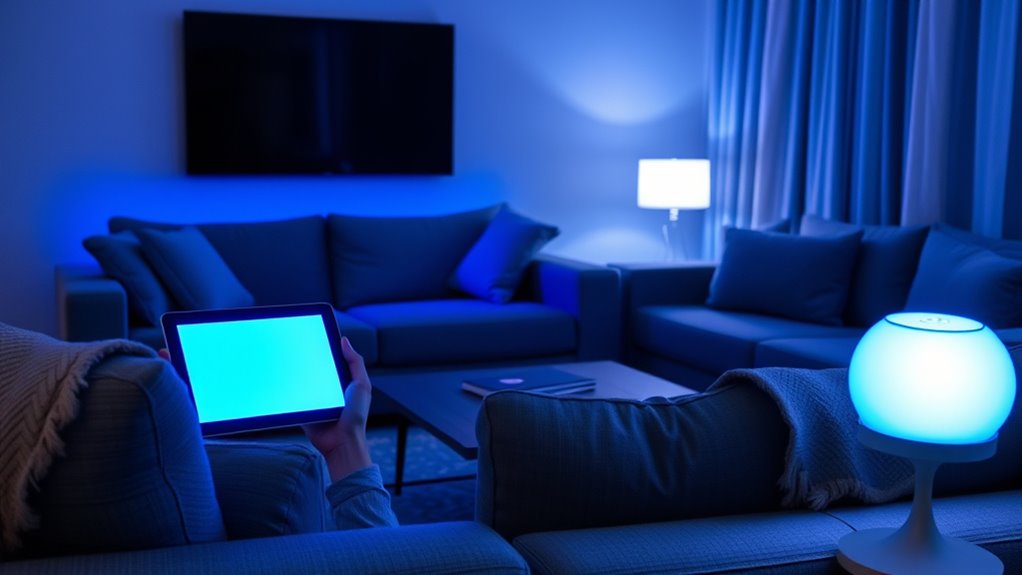
Blue light is a high-energy visible light that comes from various sources in your home, both natural and artificial. Sunlight is the primary natural source, providing ample blue light during the day. Artificial sources include LED and fluorescent bulbs, which emit blue light as part of their visible spectrum. Your electronic devices—smartphones, tablets, computers, and TVs—are significant artificial sources, often emitting high levels of blue light directly into your eyes. Even energy-efficient lighting options contribute to blue light exposure. You’ll find yourself exposed to blue light throughout the day and evening, especially if you spend a lot of time indoors or use screens frequently. Recognizing these sources helps you better understand your overall exposure and the potential impacts on your health. Additionally, the pervasive use of high-energy visible light from digital screens can contribute to eye strain and disrupt sleep patterns. Long-term exposure to blue light may also affect your eye health over time, making awareness and mitigation important. Implementing blue light filters on screens and reducing screen time before bed can help lessen these effects. Being mindful of exposure timing can further help minimize potential disruptions to your circadian rhythms and overall well-being. Furthermore, understanding the health implications of blue light exposure can guide you in making safer choices for your home environment.

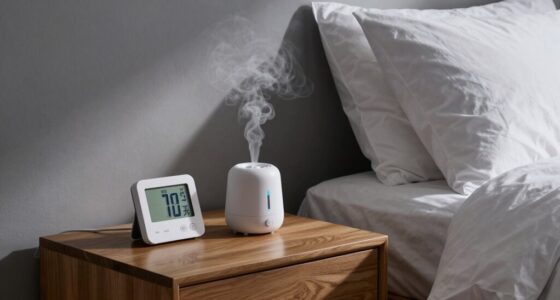
LEVOIT Air Purifier for Home Large Room Up to 1073Ft² with Air Quality Monitor, AHAM VERIFIDE, Smart WiFi, Washable Pre-Filter, HEPA Sleep Mode for Pets, Allergies, Dust, Pollen, Vital 100S-P, White
𝐖𝐇𝐘 𝐂𝐇𝐎𝐎𝐒𝐄 𝐀𝐇𝐀𝐌 𝐕𝐄𝐑𝐈𝐅𝐈𝐃𝐄 𝐀𝐈𝐑 𝐏𝐔𝐑𝐈𝐅𝐈𝐄𝐑𝐒: AHAM (Association of Home Appliance Manufacturers) is an ANSI-accredited organization that sets...
As an affiliate, we earn on qualifying purchases.
How Blue Light Affects Your Sleep and Circadian Rhythm
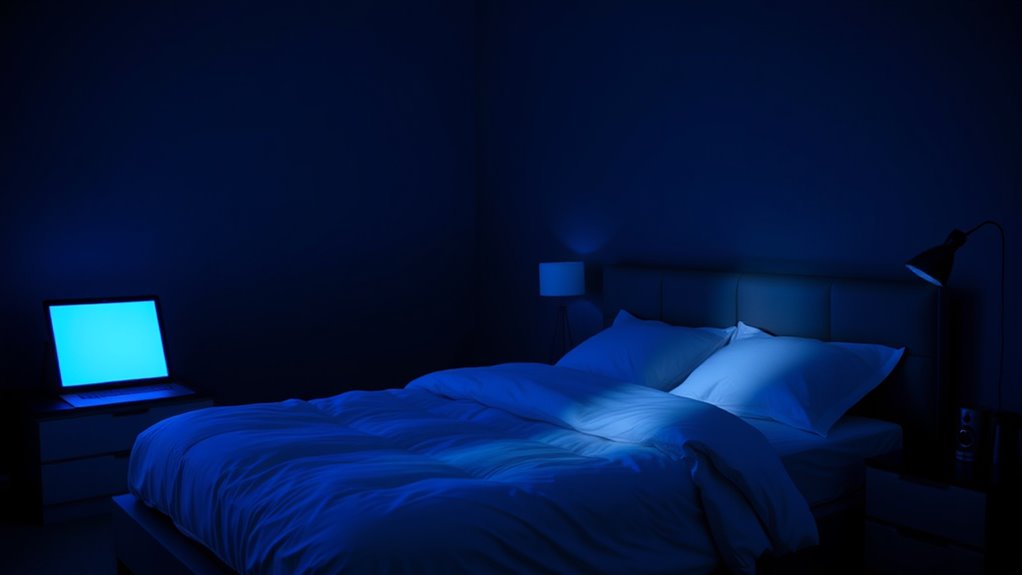
Blue light exposure in the evening can block your body’s production of melatonin, making it harder to fall asleep. When melatonin levels drop, your sleep becomes more fragmented and less restorative. As a result, your circadian rhythm gets out of sync, leading to disrupted sleep patterns and daytime fatigue. Proper sleep hygiene can help mitigate these effects and support better overall rest. Additionally, reducing blue light exposure before bedtime, such as using blue light filters on screens, can help maintain natural melatonin production. Limiting screen time in the hours before bed can further support your body’s natural sleep cycle and circadian rhythm regulation. Being mindful of light exposure timing can also play a key role in preserving your sleep quality and overall health. Recognizing the importance of light management techniques can further enhance your sleep environment and circadian alignment.
Melatonin Suppression Effects
Exposure to blue light in the evening can substantially disrupt your body’s production of melatonin, the hormone responsible for regulating sleep. When you’re exposed to blue light, your pineal gland receives signals that it’s daytime, suppressing melatonin release. This suppression can make falling asleep harder and reduce sleep quality. Visualize this process as:
- Your eyes detecting blue light from screens or LEDs.
- The signals traveling to your brain’s melatonin regulator.
- Melatonin production decreasing sharply.
- Your body struggling to wind down, feeling alert instead of sleepy.
Additionally, modern lighting technologies such as LED screens and energy-efficient bulbs emit significant blue light that can affect your circadian rhythm even when you’re indoors. As a result, you might stay awake longer, wake up feeling less refreshed, or experience more restless sleep. Blue light’s influence on melatonin is a key reason your sleep cycle can be thrown off by evening screen time. Moreover, light exposure timing plays a crucial role in how strongly your melatonin is suppressed, so managing when you’re exposed to blue light can help maintain healthier sleep patterns. Research also indicates that blue light filtering devices and settings can mitigate some of these effects, supporting better sleep hygiene. Additionally, understanding circadian rhythm regulation can aid in developing strategies to minimize blue light’s disruptive impact on your sleep cycle. Incorporating blue light management techniques into your evening routine can further improve your overall sleep quality.
Disrupted Sleep Patterns
When you spend evenings in front of screens emitting blue light, your natural sleep-wake cycle, known as the circadian rhythm, can become disrupted. Blue light tricks your brain into thinking it’s daytime, delaying the production of melatonin, the hormone that signals sleep time. As a result, you may find it harder to fall asleep, and your sleep quality can suffer. This disruption can lead to shorter, less restful nights and make you feel groggy during the day. Over time, irregular sleep patterns can impact your overall health, mood, and cognitive function. To protect your sleep, consider reducing blue light exposure in the evening, using blue light filters, or wearing glasses designed to block blue light. Restoring your circadian rhythm helps improve sleep and overall well-being, and understanding cultural habits around evening routines can also support healthy sleep patterns. Additionally, engaging in evening wind-down routines that promote relaxation can further help maintain your circadian balance. Incorporating sustainable practices into your nightly habits can contribute to a more consistent sleep cycle and better long-term health. Being aware of light exposure from both natural and artificial sources can help you make more mindful choices about your evening environment, including artificial light sources that may contribute to sleep disruption.

KNKA Air Purifier for Home Bedroom Large Room Up to 1,695 Ft² in 1 Hr, HEPA Air Cleaner with Washable Pre-Filter, AQI Display, ECO Mode, Sleep Mode, Pet Mode for Pets, Dust, Pollen, APH4000
𝐇𝐢𝐠𝐡 𝐂𝐀𝐃𝐑 𝐕𝐚𝐥𝐮𝐞: This air purifier provides reliable performance with a Smoke/Dust/PM2.5 CADR of 226 CFM (384 m³/h)...
As an affiliate, we earn on qualifying purchases.
Recognizing the Signs of Excessive Blue Light Exposure
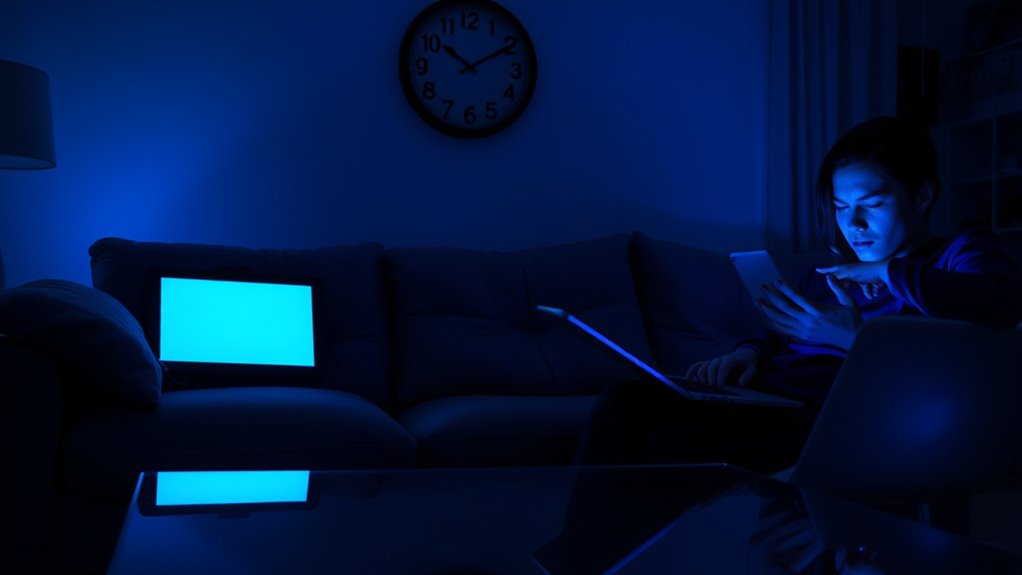
If you spend a lot of time looking at screens, you might notice certain signs that indicate you’re getting too much blue light. You could experience eye discomfort or fatigue after prolonged screen use. You might also notice:
- Headaches that start behind your eyes
- Dry or gritty feeling in your eyes
- Blurred vision or difficulty focusing
- Increased sensitivity to bright lights
Blue light exposure can also contribute to disrupted sleep patterns, making it harder to rest properly. The circadian rhythm is affected by blue light, which can interfere with your natural sleep cycle. Additionally, screen time management strategies can help reduce overall exposure and prevent symptoms. Incorporating blue light filtering devices or glasses can further lessen your eye strain during screen use. These signs signal your eyes are straining, and blue light exposure could be a contributing factor. Pay attention if you feel tired or irritable after screen time, or if your eyes feel gritty even when you’re not using devices. Recognizing these symptoms early helps you take steps to protect your eyes and reduce discomfort.

LEVOIT Air Purifier for Home Allergens Pet Hair in Bedroom, Covers Up to 1073 ft² by 56W High Torque Motor, AHAM VERIFIDE, 3-in-1 Filter with HEPA Sleep Mode, Remove Dust Smoke Odor, Core300-P, White
WHY CHOOSE AHAM VERIFIDE AIR PURIFIERS: AHAM (Association of Home Appliance Manufacturers) is an ANSI-accredited organization that sets...
As an affiliate, we earn on qualifying purchases.
The Impact of Blue Light on Eye Health and Vision
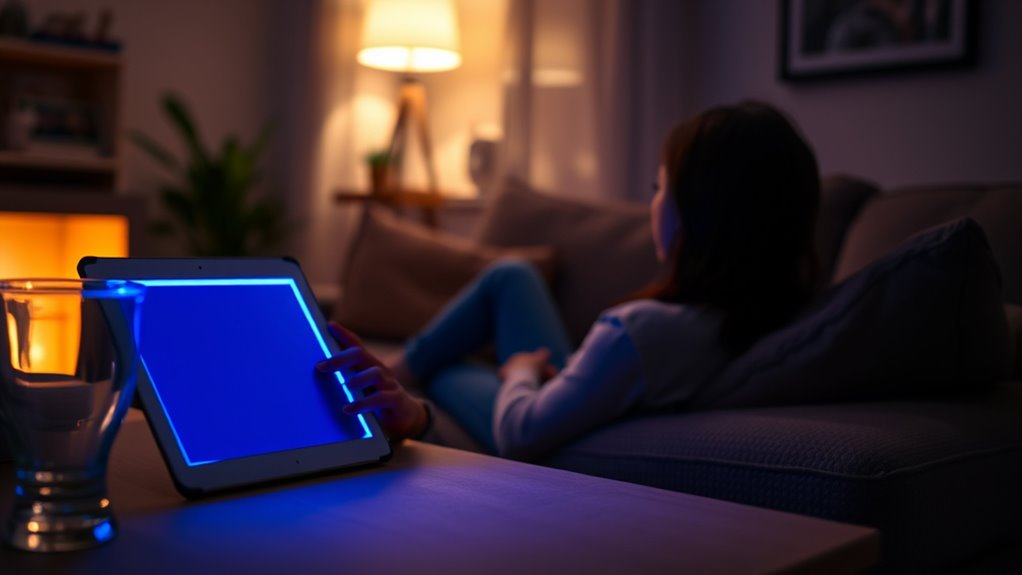
Blue light can cause eye strain and fatigue, making it hard to focus after long screen use. Over time, this exposure may lead to potential long-term damage to your vision. Understanding these risks helps you take steps to protect your eyes at home.
Eye Strain & Fatigue
Prolonged exposure to blue light can lead to increased eye strain and fatigue, especially as your eyes work harder to focus on digital screens. You might notice your eyes feeling tired or dry after hours of staring at your device. Visual discomfort can also cause headaches or blurred vision. To picture this:
- Your eyes become gritty, as if sand is trapped inside.
- You feel a burning sensation, like a mild irritation.
- Your eyelids flutter or feel heavy, urging you to blink less.
- You experience a dull ache behind your eyes, signaling fatigue.
These sensations occur because your eyes strain to process blue light, especially in low lighting or prolonged use. Recognizing these signs helps you take steps to reduce discomfort and protect your eye health during screen time.
Potential Long-term Damage
While research is still ongoing, there is growing concern that long-term blue light exposure may contribute to more serious eye health issues, such as retinal damage and age-related macular degeneration. Prolonged exposure can cause oxidative stress in your retina, potentially damaging cells over time. Although the evidence isn’t conclusive, some studies suggest that blue light may accelerate the deterioration of your macula, the part of your eye responsible for sharp central vision. This damage could lead to vision loss or increased difficulty seeing clearly as you age. Protecting your eyes now can help reduce these risks. Using blue light filters, limiting screen time, and taking regular breaks are practical steps to safeguard your vision for the future.
Practical Strategies to Minimize Blue Light During Evening Hours

To reduce blue light exposure during evening hours, you can start by adjusting your device settings. First, activate night mode or blue light filters, which soften the screen’s glow and shift colors to warmer tones. Second, lower the screen brightness to a comfortable level, preventing harsh illumination that strains your eyes. Third, set your devices to a specific time—like an hour before bed—to automatically switch to these settings, creating a calming environment. Fourth, consider using apps that block blue light entirely during evening hours, giving your eyes a much-needed break. Visualize dimming your screens from bright, white light to a gentle amber glow, making your space feel more relaxing and conducive to winding down. These small changes can considerably reduce your blue light exposure at night.
Choosing the Right Devices and Screen Settings to Reduce Exposure
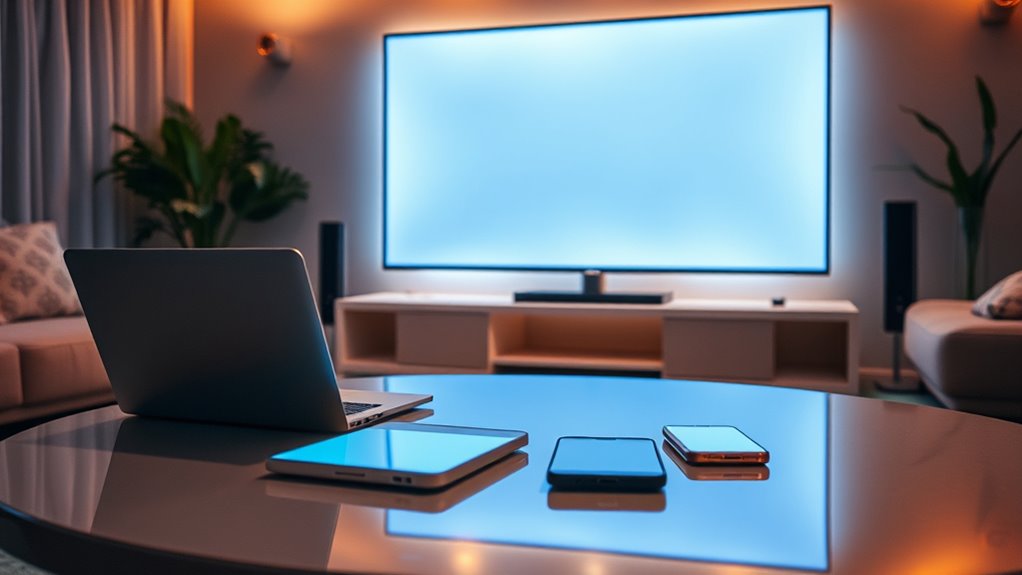
Choosing the right devices and adjusting their screen settings can substantially reduce your blue light exposure. Start by selecting devices with built-in blue light reduction features, like “Night Mode” or “Blue Light Filter.” Enable these settings during evening hours to lower blue light emission. Adjust the screen brightness to a comfortable level—brighter screens emit more blue light. Consider using warmer color temperatures, which shift the display’s hue toward red or yellow, minimizing blue light exposure. Many devices allow you to customize these settings manually or set schedules for automatic adjustments at sunset. Regularly updating your device’s software guarantees you have the latest blue light reduction options. By making these adjustments, you can protect your eyes and improve your sleep quality without sacrificing device usability.
The Role of Blue Light Glasses and Screen Filters
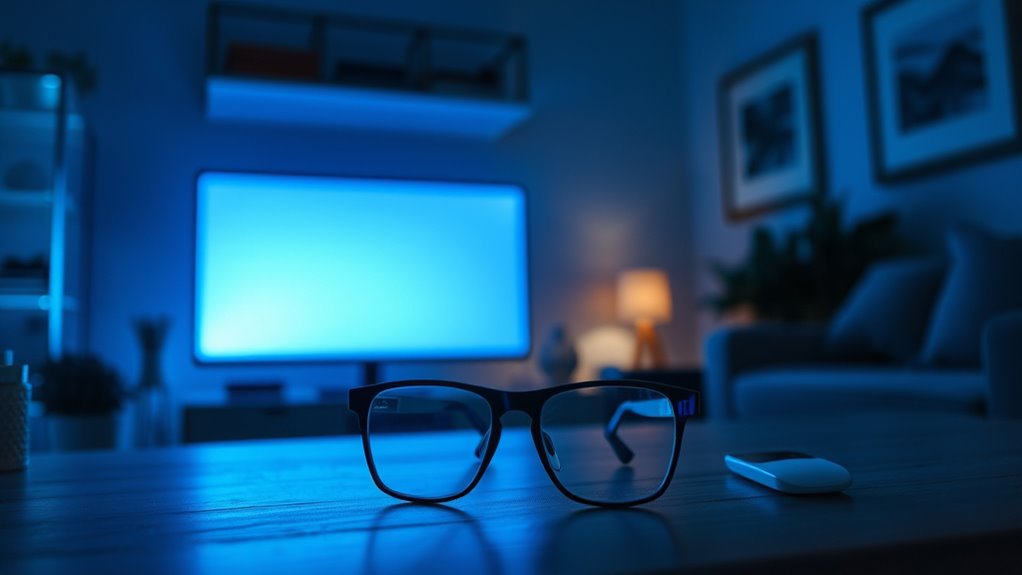
Blue light glasses and screen filters can effectively reduce your exposure to blue light, especially during evening hours. When you wear glasses with tinted lenses, you block blue light before it reaches your eyes. Screen filters, applied directly to your devices, serve as a barrier that minimizes blue light emission. Imagine:
- Putting on glasses that add a subtle amber tint, making screens look warmer.
- Applying a screen filter that dimly glows, transforming your device into a softer, less harsh display.
- Adjusting the filter’s opacity to match your comfort level.
- Seeing your evening screen time become gentler on your eyes, helping you wind down faster.
Both tools are simple yet effective ways to protect your eyes and improve your sleep quality.
Creating a Blue Light-Friendly Evening Routine
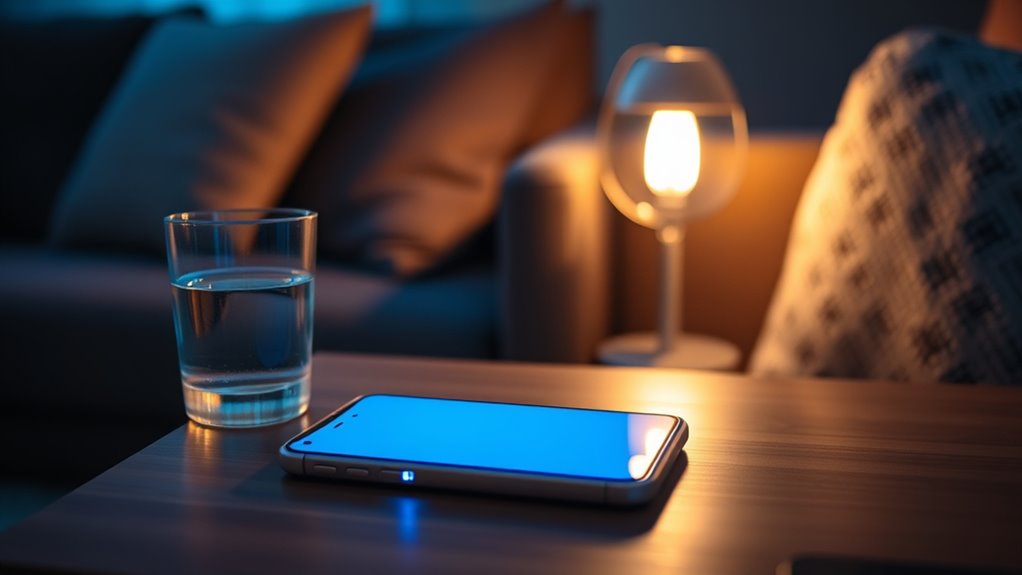
Establishing a blue light-friendly evening routine can considerably improve your sleep quality and eye comfort. Start by dimming your screens at least an hour before bed. Replace device time with relaxing activities like reading a physical book or listening to calming music. Consider using warm, low-intensity lighting in your living space. Creating a calming environment helps signal to your brain that it’s time to wind down. Here’s a visual to guide you:
| Activity | Environment |
|---|---|
| Reading a paperback | Soft, warm lighting |
| Listening to music | Dim, cozy room |
| Avoiding screens | Natural evening light |
Frequently Asked Questions
How Does Blue Light Exposure Vary Across Different Household Lighting Sources?
You’ll notice blue light exposure varies depending on your household lighting sources. LED and fluorescent bulbs emit higher levels of blue light compared to incandescent bulbs, which produce warmer tones with less blue light. Screens like smartphones, tablets, and computers contribute markedly. To reduce exposure, consider using dimmer, warmer lights in the evening and limiting screen time before bed, helping protect your eyes and improve sleep quality.
Can Blue Light Exposure Impact Mental Health or Mood?
You might find that prolonged exposure to blue light can subtly influence your mood and mental well-being. It’s like a gentle nudge that could lead to feelings of alertness or, if overdone, mild fatigue or difficulty winding down. Paying attention to your screen time, especially before bed, helps keep your mental health balanced. Using blue light filters or glasses can also make a positive difference in maintaining your mood stability.
Are Children More Vulnerable to Blue Light Damage at Home?
Yes, children are more vulnerable to blue light damage at home because their eyes are still developing, making them more sensitive to light exposure. You should limit their screen time, especially before bed, and encourage breaks to protect their vision. Installing blue light filters on devices or using glasses can also help. Being proactive now can help safeguard their eye health and reduce potential risks.
What Are the Long-Term Effects of Blue Light on Eye Health?
Prolonged blue light exposure can lead to digital eye strain, causing discomfort, dryness, and blurred vision over time. It may also increase your risk of developing age-related macular degeneration, which can impair your central vision. To protect your eye health, take regular breaks, use blue light filters on devices, and wear glasses with blue light blocking lenses. Staying mindful of your screen time helps reduce potential long-term damage.
How Effective Are Natural Remedies in Protecting Against Blue Light Exposure?
Think of natural remedies as the knight’s shield in your digital age, though they aren’t foolproof. While antioxidants found in foods like berries and leafy greens may help reduce eye strain, their protective effects against blue light aren’t scientifically proven to be significant. To really guard your eyes, combine these remedies with practical measures like blue light filters and screen breaks. Natural remedies can support, but shouldn’t replace, proven protective strategies.
Conclusion
By being mindful of your blue light exposure at home, you can protect your sleep, eye health, and overall well-being. Think of blue light as a double-edged sword—use it wisely, and it sharpens your productivity; overuse, and it dulls your natural rhythms. Implementing simple strategies and choosing the right devices helps you strike a balance, ensuring your evenings remain peaceful and restorative. Take control, and let your nights be a sanctuary, not a battleground.