To reduce noise from noisy neighbors, rearrange your furniture strategically. Place large pieces like bookshelves and sofas against shared walls to act as sound barriers. Use thick rugs, curtains, and soft furnishings to absorb sound waves. Form buffer zones with storage units or plants to block noise paths. Position beds and seating away from noisy areas and consider adding soundproof panels. Keep exploring tips to create a quieter, more peaceful space.
Key Takeaways
- Rearrange furniture to block shared walls, using large pieces like bookshelves or sofas as sound barriers.
- Position beds and seating away from noisy external walls or shared boundaries to minimize sound transmission.
- Add thick rugs, curtains, and soft furnishings to absorb sound waves and reduce reflections within the room.
- Use vertical storage solutions like tall shelves filled with heavy items to create buffer zones against noise.
- Enhance soundproofing with acoustic panels, door seals, and layered barriers combining furniture and textiles.
Rearranging Your Furniture for Better Sound Absorption

To improve sound absorption in your space, start by rearranging your furniture to break up sound waves and reduce noise transmission. Move larger pieces like sofas and bookshelves away from shared walls and position them to create natural barriers. Placing upholstered furniture against walls helps absorb sound, while avoiding long, open spaces that reflect noise. Use soft furnishings such as rugs, curtains, and cushions to further dampen sound waves. Strategically placing furniture in corners or around noisy areas can help diffuse sound energy. Keep pathways clear to prevent sound from bouncing around excessively. Remember, the goal is to interrupt sound waves and minimize their spread. Additionally, incorporating energy-efficient cloud solutions can support smart home systems that optimize sound management through integrated technology. With thoughtful furniture placement, you can considerably lower noise levels and create a more peaceful environment.
Positioning Bed and Seating Areas Strategically

Where you place your bed can considerably impact how much noise you hear or transmit. Position seating areas away from shared walls to reduce sound transfer and create a calmer space. Thoughtful placement makes a noticeable difference in maintaining a peaceful room environment. Additionally, using soundproofing techniques such as insulating panels or heavy curtains can further enhance acoustic comfort. Incorporating acoustic treatments like diffusers or bass traps can help manage sound reflections and improve overall room acoustics. For more effective sound control, considering essential oils for respiratory health, like eucalyptus or peppermint, can promote clearer breathing and reduce stress caused by noise disturbances.
Bed Placement and Sound
Strategically placing your bed and seating areas can considerably reduce noise from noisy neighbors. Position your bed away from shared walls or windows facing noisy areas, ideally against interior walls or in corners that block sound pathways. Using headboards or solid panels behind your bed adds an extra barrier, dampening sound transmission. Keep seating away from external walls or shared boundaries, and consider placing larger furniture, like bookshelves or dressers, along those walls to serve as sound buffers. When arranging your space, focus on creating zones that minimize direct sound paths from noisy neighbors. Incorporating soundproofing techniques such as acoustic panels or door seals can further enhance noise reduction. Additionally, choosing soundproof curtains can help absorb noise and improve your overall comfort and sleep quality, making your room a more peaceful retreat. Exploring room layout options that prioritize acoustic comfort can lead to more effective noise mitigation strategies. Using room dividers or movable partitions can also help create barriers that block sound transmission within your space. Implementing sound-absorbing materials on walls and floors can further diminish the impact of external noise.
Seating Area Positioning
Positioning your seating area thoughtfully can make a significant difference in minimizing noise from neighbors. Place your sofa or chairs away from shared walls, ideally facing inward or toward interior rooms. Use furniture to create a buffer, such as positioning a bookcase or sideboard behind your seating. Consider the layout’s flow: avoid aligning seats directly against noisy walls or windows.
| Placement Tip | Effect |
|---|---|
| Position near interior walls | Reduces direct noise exposure |
| Add soft furnishings | Absorbs sound and dampens echoes |
| Face seating inward | Limits sound transmission outward |
| Use furniture as a barrier | Blocks noise pathways |
Using Rugs and Soft Textiles to Dampen Noise
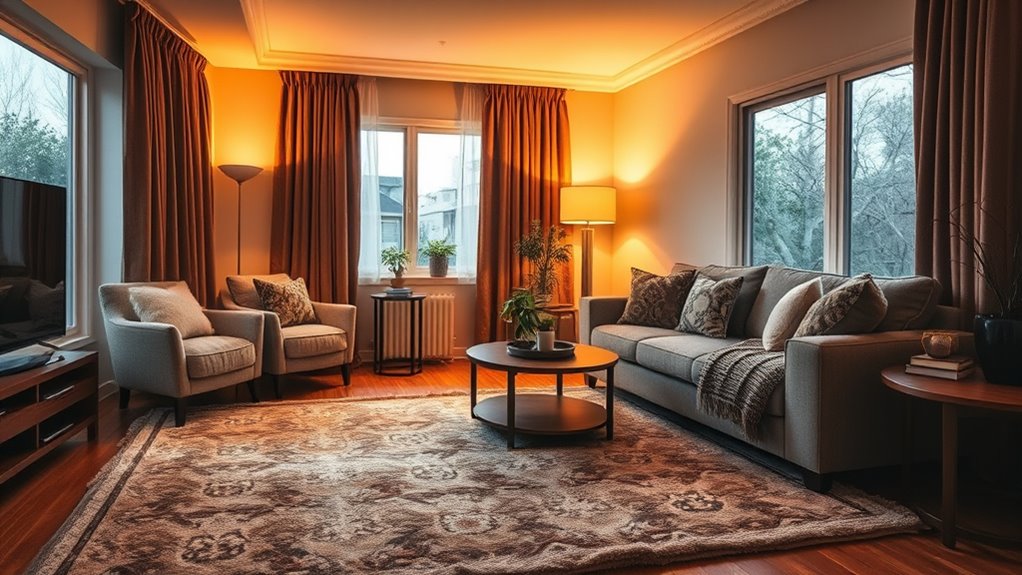
Adding rugs and soft textiles to your room can substantially reduce noise transfer between neighbors. Thick rugs absorb sound waves, preventing them from bouncing around and echoing through walls. Place a large, plush rug in high-traffic areas like the living room or hallway to dampen footsteps and furniture noise. Soft textiles such as curtains, upholstered furniture, and fabric wall hangings also absorb sound, creating a quieter environment. Layering different textiles enhances this effect. For example, adding a rug under your coffee table and hanging thick curtains can significantly cut down on noise transmission. These materials not only improve acoustics but also add warmth and comfort to your space. Incorporating sound-absorbing materials can further optimize noise reduction in your home. Utilizing acoustic treatments like wall panels or ceiling baffles can also help contain noise within a room and prevent sound from traveling outside. Employing room layout tweaks such as arranging furniture to block sound paths can additionally improve overall noise control.
Creating Buffer Zones With Bookshelves and Storage Units

Placing bookshelves and storage units strategically can create effective buffer zones between noisy neighbors and your living space. Use vertical storage to maximize space without cluttering, keeping sound barriers tall and efficient. Thoughtful placement of these elements helps reduce noise transfer and improves overall privacy. Additionally, selecting sound-absorbing materials for shelves and storage units can further dampen sound transmission, enhancing your space’s quietness. Incorporating natural elements like plants and green walls can also help absorb sound and create a more peaceful environment. Considering acoustic properties in your design choices ensures a more effective noise reduction strategy throughout your home. Implementing soundproofing techniques can significantly boost the effectiveness of your noise mitigation efforts. Understanding sound transmission pathways can help you target specific areas for improved noise control.
Strategic Shelf Placement
Strategic shelf placement can effectively create buffer zones that minimize noise transfer between rooms. By positioning bookshelves or storage units against shared walls, you add an extra layer of absorption, reducing sound waves traveling through the structure. Filling these shelves with dense books or heavy items further dampens noise, making it harder for sounds to pass through. Place larger, heavier pieces along walls where noise comes in, and avoid gaps or open spaces that can act as sound channels. Stacking shelves vertically or combining different heights can also help break up sound paths. Incorporating soundproofing materials such as acoustic panels or foam within or behind your shelves can significantly improve noise reduction. Using dense books and heavy items in your shelves further enhances soundproofing. Additionally, choosing appropriate shelf materials like solid wood or dense MDF can contribute to better sound insulation. Employing room layout strategies that optimize placement and minimize direct sound transmission can make a noticeable difference. Integrating soundproofing techniques into your design can further enhance the effectiveness of your buffer zones. With thoughtful placement, you can enjoy a quieter, more peaceful environment despite noisy neighbors.
Utilizing Vertical Storage
Vertical storage units, such as tall bookshelves or multi-level cabinets, can serve as effective buffer zones to block noise transmission. Placing these units against shared walls creates a physical barrier that absorbs and deflects sound waves, reducing disturbance in your space. Filling shelves with books, decorative items, or storage boxes adds mass, further dampening noise. Use these units strategically around areas prone to sound leaks, like bedrooms or living rooms adjacent to noisy neighbors. Not only do they enhance organization, but they also contribute to a quieter environment. Confirm the units are sturdy and closely positioned to the wall to maximize their buffering effect. By incorporating vertical storage thoughtfully, you create an effective and multi-functional solution to minimize unwanted noise. Soundproofing techniques can further enhance the effectiveness of these buffer zones.
Installing Soundproofing Materials in Key Areas

To effectively reduce noise transfer, start by installing soundproofing materials in the most critical areas of your space. Focus on walls shared with noisy neighbors, as these are primary channels for sound leakage. Use dense materials like mass-loaded vinyl or acoustic panels to dampen sound vibrations. For floors, consider adding rugs or specialized underlayments to absorb impact noise. Doors and windows are also key; replace or seal gaps with weatherstripping or acoustic curtains. Applying soundproofing foam or drywall with damping compounds can notably cut down on transmitted noise. Additionally, integrating soundproofing techniques that address both airborne and impact noise can further enhance your space’s tranquility. Proper installation and the right materials make a noticeable difference in reducing unwanted sounds from neighboring units. Incorporating soundproofing principles ensures your efforts are targeted and effective. Remember, targeting these specific areas maximizes your efforts, creating a quieter environment.
Enhancing Room Layout to Maximize Sound Barriers
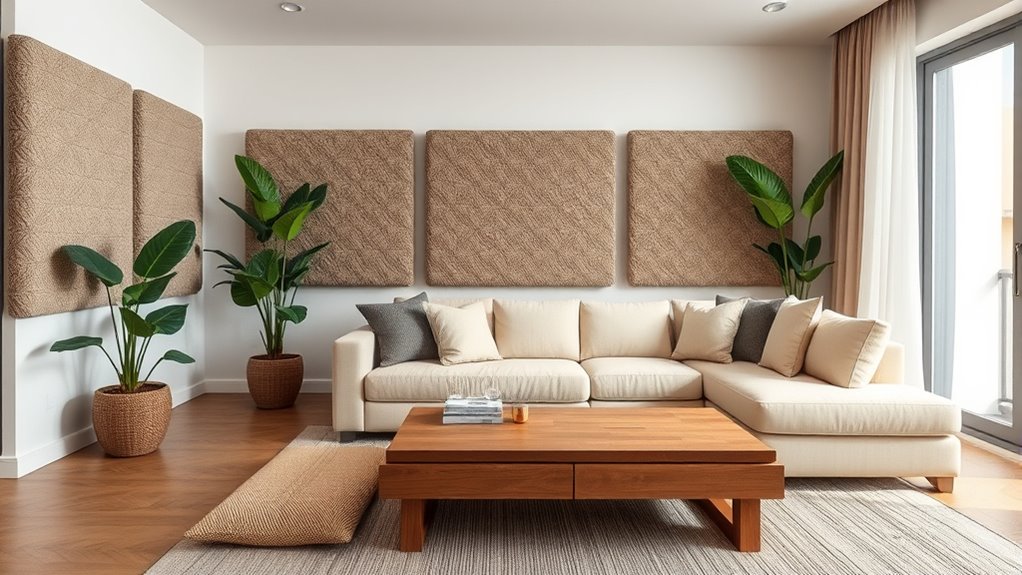
Rearranging your room layout can substantially enhance soundproofing by positioning furniture and fixtures to act as natural barriers. Place large bookshelves or heavy cabinets against shared walls to absorb and block sound waves. Position sofas and armchairs so they face away from noisy neighbors, creating a buffer zone. Use rugs and carpets on hard floors to dampen sound reflections and reduce noise transmission. Hanging thick curtains or fabric wall hangings can also help absorb sound energy. Keep furniture away from walls to prevent sound from bouncing around the room. Consider creating a layered barrier by combining multiple furniture pieces, which makes it harder for sound to pass through. Thoughtful layout adjustments can significantly diminish noise without costly renovations.
Frequently Asked Questions
How Can I Identify the Most Noise-Prone Areas in My Room?
You can identify the loudest areas in your room by spending time near different walls and corners, noticing where sound seems amplified or echoing. Use a handheld speaker or your phone’s voice recorder to play sounds and observe where they resonate most. Pay attention to spots near windows, thin walls, or hard surfaces, as these tend to amplify noise. Mark these zones to plan effective soundproofing or layout adjustments.
Are There Specific Furniture Materials That Better Absorb Sound?
Did you know soft materials can absorb up to 50% more sound than hard surfaces? When choosing furniture, opt for plush couches, upholstered chairs, and fabric-covered pieces. These materials trap sound waves, reducing noise transfer. Avoid rigid furniture like metal or glass, which reflect sound. Incorporating these soft furnishings into your room markedly improves acoustics, making your space quieter and more comfortable for everyone.
Can Window Placement Affect Overall Noise Levels in My Room?
Yes, window placement can markedly affect noise levels in your room. Position windows away from noisy streets or sources of external sound, and consider installing double-glazed or soundproof windows to block more noise. Using curtains or window inserts also helps reduce sound transmission. By thoughtfully choosing where to place your windows and adding sound-absorbing treatments, you can create a quieter, more peaceful space.
What Are Cost-Effective DIY Solutions for Soundproofing?
You can try cost-effective DIY soundproofing solutions like adding heavy curtains or blankets over windows and walls, which absorb sound. Use weather stripping around doors to block gaps, and place furniture like bookshelves or sofas against shared walls to dampen noise. Hanging wall tapestries or DIY acoustic panels made from foam or fabric also help. These simple steps can markedly reduce noise without breaking the bank.
How Does Ceiling Height Influence Sound Transmission and Room Acoustics?
Higher ceilings can improve room acoustics by reducing sound reflection and echo, making the space feel more spacious. They also help disperse sound waves, lowering the chance of noise traveling between rooms or to neighbors. Conversely, low ceilings might concentrate sound, increasing noise levels. To optimize sound control, consider adjusting ceiling height with acoustic treatments or using furniture placement to manage sound flow effectively.
Conclusion
By tweaking your room layout, you can turn your space into a quiet oasis, much like a fortress shielding you from noisy neighbors. Rearrange furniture, add soft textiles, and create buffer zones to absorb sound effectively. Think of your room as a sound-muffling puzzle, where each piece fits together to reduce noise. With these simple tweaks, you’ll enjoy a calmer, more peaceful environment—like sinking into a cozy, noise-free haven after a busy day.