To create a dust mite-proof bedroom, choose tightly woven fabrics like microfiber or special allergen-proof covers for your bedding. Wash all bedding in hot water (at least 130°F) regularly to kill dust mites and remove allergens. Keep humidity below 50% using dehumidifiers or air conditioning to prevent mite growth. Regular vacuuming with a HEPA filter and maintaining a clean, dry environment are essential. If you continue, you’ll discover effective strategies to optimize your allergy-proof setup.
Key Takeaways
- Use tightly woven, allergen-proof fabrics like microfiber or special dust-mite-proof covers on bedding and mattress encasements.
- Wash bedding and mattress covers in hot water (at least 130°F/54°C) regularly to eliminate dust mites and allergens.
- Maintain bedroom humidity below 50% using dehumidifiers or air conditioning to inhibit dust mite growth.
- Vacuum carpets and upholstery frequently with a HEPA filter vacuum to remove dust and mites effectively.
- Avoid soft, plush fabrics; opt for synthetic fills and impermeable covers to create a barrier against dust mite habitation.

Have you ever wondered how to create a bedroom that minimizes dust mite exposure? It all starts with understanding allergy prevention and choosing the right bedding materials. Dust mites thrive in warm, humid environments and tend to hide in bedding, pillows, and mattress seams. To reduce their presence, you need to select fabrics that don’t harbor these tiny creatures and implement effective cleaning routines. Using allergen-proof bedding covers made from tightly woven, synthetic fabrics like microfiber or tightly woven cotton can be a game-changer. These materials prevent dust mites from penetrating the fabric and make it easier to block out allergens, markedly reducing allergy symptoms. When shopping for bedding, look for products labeled as dust-mite-proof or allergen-proof, and avoid soft, plush fabrics that trap dust and moisture.
Your choice of bedding materials should also extend to pillows and mattress protectors. Opt for synthetic fills over natural down, as natural feathers tend to trap more dust and provide a hospitable environment for mites. Mattress encasements should be impermeable, sealing the mattress completely to prevent mites from colonizing inside. Regularly washing these covers and your bedding in hot water—at least 130°F (54°C)—kills dust mites and washes away their waste, which is a major trigger for allergy symptoms. This routine not only keeps allergen levels down but also prolongs the lifespan of your bedding materials.
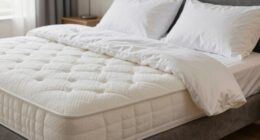
Use impermeable mattress encasements and wash bedding in hot water to eliminate dust mites and allergens.
In addition to selecting suitable fabrics, maintaining a clean sleeping environment is essential for allergy prevention. Vacuuming the bedroom with a HEPA filter vacuum cleaner helps remove dust and mites from carpets and upholstery. Keep humidity levels below 50%, as dust mites thrive in humid conditions. Using a dehumidifier or air conditioner can help maintain this level, making your bedroom less inviting for mites. Regularly airing out your bedding and furniture also helps reduce moisture buildup, discouraging mite proliferation. Gold IRA Markets can serve as a reminder that investing in quality and protection—whether for your health or your assets—requires informed choices and routine maintenance.
Your approach to bedding materials and routine cleaning isn’t just about comfort; it’s about creating a healthier sleeping environment. Choosing the right fabrics and maintaining a clean, dry space can drastically cut down on dust mite exposure and allergy symptoms. Remember, small changes like encasing your mattress and pillows in allergen-proof covers, washing bedding at high temperatures, and controlling humidity can make a big difference. With consistent effort and smart material choices, you can enjoy a bedroom that’s not only cozy but also minimizes the risk of dust mite allergies, helping you breathe easier every night.
Frequently Asked Questions
Can Dust Mites Survive in Synthetic Fabrics?
Yes, dust mites can survive in synthetic fabrics. While synthetic fabrics are known for their durability, their fabric porosity can still allow mites to thrive if not properly maintained. Dust mites prefer environments with moisture and organic material, so regular cleaning helps reduce their presence. Using high-quality, tightly-woven synthetics and washing bedding frequently can minimize dust mite survival and create a healthier sleeping environment.
How Often Should Bedding Be Replaced for Mite Prevention?
Imagine replacing your bedding as often as changing your sheets—roughly every 6 to 12 months. This schedule is key for mite prevention tips, as older bedding can harbor dust mites. Regularly washing with hot water and using mite-proof covers also helps. By sticking to this bedding replacement schedule, you create an environment less inviting for dust mites, ensuring a healthier, cleaner sleep space.
Do Natural Fabrics Resist Dust Mites Better Than Synthetic Ones?
Natural fibers tend to resist dust mites better than synthetic fabrics because they’re more breathable, which helps reduce moisture that mites love. You’ll find that natural fabrics like cotton or wool are less likely to trap allergy triggers, making them a better choice for allergy sufferers. Synthetic fabrics might be less breathable, potentially increasing the risk of dust mite buildup and allergy symptoms. Choosing natural fabrics can improve your bedroom’s allergy-proofing efforts.
Are Air Purifiers Effective Against Dust Mite Allergens?
Air purifiers can help reduce dust mite allergens, but they have limitations. Their allergen filtration efficiency varies, so you might not eliminate all allergens completely. To maximize effectiveness, choose a purifier with a HEPA filter designed for allergen removal. Keep in mind, regular cleaning and maintaining low humidity levels are essential, as air purifiers alone can’t fully eliminate dust mite allergens from your bedroom.
What Are the Long-Term Effects of Dust Mite Allergies?
If you ignore dust mite allergies, you risk turning your life into a never-ending sniffle festival. Long-term, you could develop chronic respiratory issues, making every breath feel like inhaling a cloud of dust. Your immune system might overreact, turning everyday allergens into enemies. Over time, this immune chaos can lead to asthma, sinus infections, or worse, leaving you wishing you’d invested in dust-proof bedding earlier.
Conclusion
Sure, you’ve gone to great lengths to dust-proof your bedroom, investing in special fabrics and rigorous cleaning routines. Ironically, despite your efforts, dust mites might just be laughing in the corner, thriving in the tiniest unnoticed crack. Sometimes, all that meticulous planning still can’t outsmart these tiny invaders. But hey, at least you can sleep soundly knowing you tried—and isn’t that what really matters?