

To get better sleep, keep your room cool—around 60-67°F—since it helps your body lower its core temperature and boosts melatonin production. Meanwhile, a warm bed or cozy blankets signal relaxation, making it easier to fall asleep and stay asleep longer. This counterintuitive approach works because cool environments support your natural sleep cycle, while warmth comforts your body. Want to learn how to perfectly balance these tips? Keep exploring for more helpful insights.
Key Takeaways
- Cooler room temperatures (60-67°F) promote melatonin production, aiding sleep onset and quality.
- A warm bed helps relax muscles and signals the body to prepare for sleep, easing transition.
- Proper environment control with thermostats and fans maintains stable, optimal sleep temperatures.
- Cooler environments support natural circadian rhythms and deeper, uninterrupted sleep cycles.
- Balancing warmth and coolness optimizes thermoregulation, enhancing overall sleep comfort and restorative rest.
Understanding the Science Behind Sleep Temperature
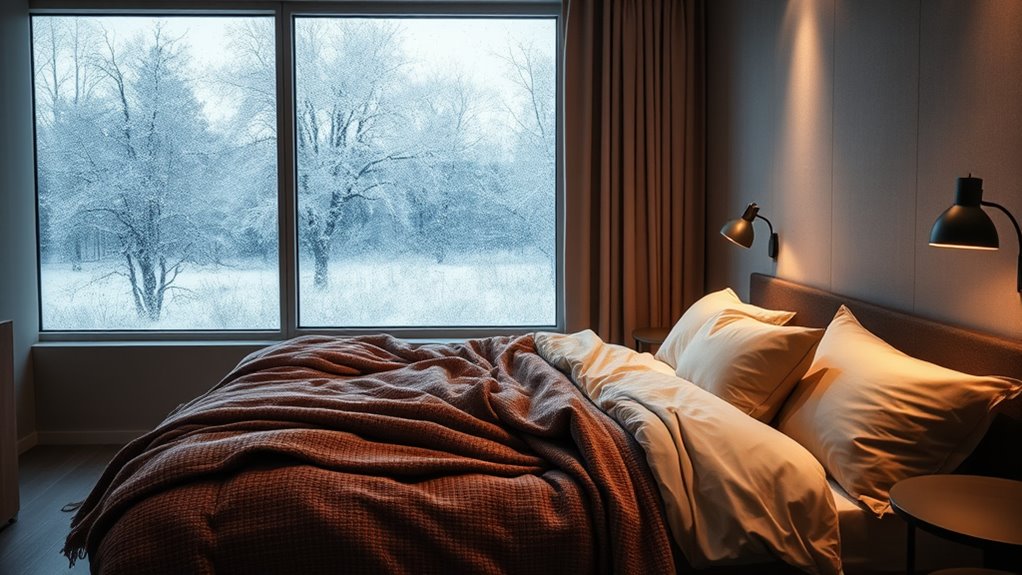
Understanding the science behind sleep temperature reveals why your body’s core temperature drops at night, signaling that it’s time to rest. When you sleep, your body naturally lowers its core temperature to prepare for deep, restorative sleep. This cooling process helps regulate your circadian rhythm, signaling your brain that it’s time to wind down. Your body works to dissipate heat through mechanisms like vasodilation, where blood vessels expand to release warmth. Keeping your environment slightly cooler supports this process, making it easier for your body to reach and maintain sleep. Utilizing smart thermostats can help you maintain an optimal sleep environment by precisely adjusting room temperature. If your room is too warm, your body struggles to cool down, disrupting your sleep cycle. Recognizing how your body responds to temperature helps you optimize your sleep environment for better rest. Proper sleep environment plays a crucial role in facilitating this natural cooling process. Additionally, understanding body temperature regulation can help you create a more effective sleep setting that aligns with your body’s natural rhythms. Maintaining a comfortable room temperature enhances this process, contributing to more restful sleep. Incorporating air purifiers can also improve sleep quality by reducing indoor pollutants that may interfere with breathing and comfort during sleep.
The Benefits of Cooler Bedrooms for Restful Sleep

Sleeping in a cooler room can boost your melatonin levels, helping you fall asleep faster and stay asleep longer. It also helps regulate your core body temperature, making your sleep more comfortable. By keeping your bedroom temperature just right, you set the stage for truly restful nights. Additionally, maintaining an optimal sleep environment can enhance overall sleep quality and promote healthier sleep patterns. Creating a sleep-friendly environment with proper temperature control can significantly improve your sleep experience. Ensuring proper room temperature regulation can further optimize your sleep quality and comfort, especially when paired with reliable backup power to prevent disruptions during outages. Regularly monitoring your firearm payment processors can help prevent security breaches and protect your financial information during transactions.
Enhances Melatonin Production
A cooler bedroom can markedly boost your body’s production of melatonin, the hormone that regulates sleep-wake cycles. When your room temperature drops slightly below comfort levels, your body senses this change and responds by increasing melatonin secretion. This hormone signals your body to prepare for sleep, helping you fall asleep faster and enjoy deeper rest. Elevated melatonin levels also improve sleep quality by reducing disruptions and promoting longer REM sleep periods. Maintaining optimal conditions by keeping the room cool supports your body’s natural rhythm, making it easier to wind down at night. Additionally, performance ratings of vacuums based on suction power and durability highlight the importance of choosing reliable cleaning appliances for a tidy environment that promotes restful sleep. This simple adjustment can enhance your overall sleep experience, leaving you more refreshed and alert during the day. Cooler temperatures genuinely help set the stage for ideal melatonin production, maximizing sleep benefits. Furthermore, body piercing jewelry materials like titanium or Bioflex, which are hypoallergenic and less likely to irritate skin, can contribute to a more comfortable sleeping environment by reducing discomfort or irritation during rest. Additionally, using thermometers or smart thermostats can help maintain a consistent sleep-friendly temperature throughout the night.
Regulates Core Body Temperature
Cooling your bedroom doesn’t just boost melatonin; it also directly helps regulate your core body temperature. When your environment is cooler, your body can lower its internal temperature more efficiently, signaling that it’s time to sleep. A cooler room prevents your core temperature from staying elevated, which can interfere with falling asleep and staying asleep throughout the night. As your body cools naturally in response to the environment, you experience deeper, more restorative sleep cycles. Without excessive warmth, your body avoids the fight against heat that can cause restlessness or early awakening. Maintaining a cooler bedroom creates the ideal conditions for your body’s temperature regulation, helping you drift off faster and stay asleep longer, leading to more restful, rejuvenating sleep. Incorporating proper ventilation considerations can further optimize these effects by promoting consistent airflow and temperature control. Additionally, temperature regulation can be enhanced through the use of energy-efficient climate control systems, supporting sustainable living while improving sleep quality. Proper insulation can also help stabilize room temperature, making cooling efforts more effective and energy-efficient. To maximize comfort, integrating smart thermostats can provide precise control over bedroom temperature, ensuring optimal sleep conditions while conserving energy.
Why a Warmer Bed Enhances Comfort and Sleep Quality

A warmer bed can make falling asleep easier and more comfortable. When your bed is warm, it helps stimulate melatonin production, which promotes sleep. Additionally, it encourages your core body temperature to drop, signaling your body that it’s time to rest. Engaging in Free Floating relaxation techniques can further enhance this process by reducing stress and promoting a peaceful transition into sleep. Maintaining a consistent sleep environment can also support your body’s natural circadian rhythms, leading to more restful nights. Incorporating temperature regulation strategies can optimize your sleep quality by helping your body maintain ideal conditions throughout the night. Using sleep tracking devices can provide insights into your temperature patterns and overall sleep quality, allowing for more personalized adjustments. Understanding the importance of homeostasis in sleep can also help you fine-tune your environment for better rest.
Bed Warmth Stimulates Melatonin
When your bed is warmer, your body responds by increasing melatonin production, the hormone responsible for regulating sleep. This rise in melatonin helps you feel more relaxed and prepares your body for restful sleep. A warm bed signals to your brain that it’s time to unwind, encouraging the natural release of this sleep hormone. As melatonin levels peak, you find it easier to fall asleep and stay asleep longer. The warmth directly influences your body’s internal clock, promoting a smoother progression into deep sleep stages. This connection explains why many find a heated bed more comforting and conducive to quality sleep. By maintaining a cozy warmth, you support your body’s natural sleep rhythms, making bedtime a more inviting and restful experience. Additionally, choosing the appropriate portable heat source can help maintain consistent warmth throughout the night.
Reduced Core Body Temperature
Lying in a warm bed helps your body lower its core temperature more efficiently, which is essential for quality sleep. When your bed is warm, your body recognizes it as a signal that it’s time to relax. As you settle in, blood vessels near your skin dilate, releasing heat and helping your core temperature drop faster. This temperature decline is vital because it triggers the sleep hormone melatonin and signals your body that it’s time to rest. A warmer bed accelerates this process, making it easier to fall asleep and stay asleep. When your core temperature decreases properly, your sleep becomes deeper and more restorative. So, a warm bed doesn’t just feel cozy—it actively promotes the physiological conditions necessary for better sleep.
How Temperature Affects Your Body’s Sleep Cycles

Your body’s internal temperature plays a vital role in regulating sleep cycles, and maintaining the right environment can make a significant difference in how well you rest. When your room is too warm, your body struggles to cool down, delaying the onset of deep sleep. Conversely, a cooler environment helps signal your body that it’s time to rest. Here are four ways temperature impacts your sleep cycles:
Maintaining a cool bedroom helps regulate sleep cycles and promotes restorative rest.
- It speeds up or slows down the progression into REM sleep.
- It influences the duration of deep sleep stages.
- It affects your body’s ability to thermoregulate during sleep.
- It can cause frequent awakenings if too hot or cold.
Keeping your room around 60-67°F (15-19°C) helps optimize these processes, leading to more restorative sleep.
Practical Tips for Setting Up Your Ideal Sleep Environment

Creating an ideal sleep environment starts with controlling your room temperature to support your body’s natural sleep processes. Keep your bedroom between 60-67°F (15-19°C) to promote better sleep quality. Use a thermostat or a fan to maintain a consistent temperature, avoiding sudden fluctuations. Invest in breathable bedding like cotton or linen, which help regulate heat and moisture. Dim the lights and eliminate noise to create a calming atmosphere that signals your body it’s time to wind down. Consider blackout curtains to block external light and use a humidifier if the air feels dry. Keep electronic devices out of the bedroom or turn them off to minimize distractions. Creating this comfortable, cool environment helps your body relax and fall asleep faster, ensuring restorative rest.
Common Mistakes to Avoid When Adjusting Your Sleep Climate

When adjusting your sleep climate, it’s easy to fall into certain pitfalls that can hinder your rest. First, don’t set your room temperature too high—aim for 60-67°F, or you risk overheating and tossing. Second, avoid extreme fluctuations; constantly changing the temperature confuses your body’s sleep signals. Third, don’t ignore humidity; too dry or damp air can disrupt your comfort and breathing. Lastly, skip using heavy blankets or too many layers, which can trap heat and make you restless. Instead, choose breathable bedding that adapts to your comfort. Being mindful of these mistakes helps create a stable, inviting environment, so your body can settle into restful sleep without unnecessary interruptions. Preventing these errors ensures your sleep climate supports, not sabotages, your nightly recharge.
Incorporating the Cold Room, Warm Bed Strategy Into Your Routine

Adjusting your sleep environment to include a cooler room and a warm bed can considerably improve your rest. To make this part of your routine, start by setting your thermostat between 60-67°F (15-19°C) before bed. Use a timer or smart thermostat to maintain this temperature nightly. Layer your bedding with a warm comforter and breathable sheets to trap heat without overheating. Consistency is key—stick to a regular sleep schedule and prepare your room ahead of time. Here’s a quick overview:
| Action | Benefit |
|---|---|
| Lower room temperature | Facilitates faster sleep onset |
| Use warm bedding | Keeps you cozy without overheating |
| Maintain routine | Reinforces your sleep patterns |
| Prepare environment in advance | Reduces nightly setup, easing passage |
This simple routine helps you harness the strategy’s full benefits.
Frequently Asked Questions
Can Adjusting Sleep Temperature Help Reduce Insomnia Symptoms?
Yes, adjusting your sleep temperature can help reduce insomnia symptoms. When you set your bedroom to a cooler temperature, around 60-67°F, it signals your body that it’s time to sleep, making it easier to fall asleep and stay asleep. A comfortable, slightly cool environment prevents overheating, which often disrupts sleep. Keep your room well-ventilated and experiment with the ideal temperature for you to improve your sleep quality.
How Does Sleep Temperature Influence Dreaming and REM Sleep?
You might think warmer temperatures boost REM sleep, but cooler environments actually enhance dreaming and REM cycles. When your room’s too warm, your body struggles to cool down, disrupting REM stages. Ironically, lowering the temperature signals your brain to enter REM more efficiently, leading to vivid dreams. So, by keeping your sleep space cooler, you promote more restful, dream-filled sleep, even if it feels counterintuitive at first.
Are There Health Risks Associated With Sleeping in a Cold Room?
Sleeping in a cold room can pose health risks if it’s too cold or you’re exposed to prolonged low temperatures. You might experience hypothermia, especially if you have certain medical conditions or are vulnerable. Additionally, cold rooms can weaken your immune system or cause respiratory issues. To stay safe, keep your bedroom at a comfortable temperature, typically between 60-67°F, and use appropriate bedding to stay warm.
What Are the Best Materials for a Warm, Comfortable Bed?
If you want a warm, cozy bed, choose materials like flannel, fleece, or wool. These fabrics trap heat and keep you warm all night. Look for plush, thick blankets or a memory foam mattress topped with soft, breathable covers. Don’t forget, layering is key—adding a warm duvet or quilt can turn your bed into a snug retreat. Stay warm, and enjoy restful, comforting sleep every night.
How Long Should I Acclimate to a New Sleep Temperature Environment?
You should give yourself about a week to acclimate to a new sleep temperature environment. During this time, your body gradually adjusts to the change, helping you sleep better and avoid discomfort. Stick with the new temperature consistently, and listen to your body’s signals. If you still feel uncomfortable after a week, make small adjustments until you find the perfect balance for restful sleep.
Conclusion
Remember, mastering your mattress means more than just adjusting the thermostat. Embrace the balance between a cold room and a warm bed to foster fantastic, friction-free sleep. By blending better boundaries and embracing the bedtime balance, you’ll boost your rest, renew your resilience, and wake up ready to conquer. So, stay savvy, set your space, and sleep soundly—because comfort and clarity come from the perfect climate control.