
If your bedroom temperature is too hot or cold, it can disrupt your sleep cycle and cause restlessness. Aim to keep your room between 60-67°F (15.5-19.5°C) for ideal rest, using fans, heaters, or insulation as needed. Monitor the climate with reliable devices to maintain consistency, and adjust bedding or sleepwear accordingly. Want to learn more about creating a perfect sleep environment? Keep exploring for effective tips and solutions.
Key Takeaways
- Maintain bedroom temperature within 60-67°F (15.5-19.5°C) to support sleep onset and prevent restlessness.
- Use reliable thermometers and smart thermostats to monitor and regulate consistent, optimal sleeping conditions.
- Avoid temperature fluctuations within 1°C, as they can disrupt REM and deep sleep stages.
- Employ cooling methods like fans, blinds, and cross-ventilation during summer, and heating solutions for winter to stabilize temperature.
- Ensure proper insulation and humidity control to prevent drafts and maintain a stable, comfortable sleep environment.
Understanding the Ideal Bedroom Temperature for Sleep

Finding the right bedroom temperature is essential for a good night’s sleep, as your body naturally prefers a cooler environment to rest comfortably. The ideal range is generally between 60 and 67°F (15.5 to 19.5°C). Temperatures above this can make it harder to fall asleep and cause restlessness, while lower temperatures might lead to feeling cold and waking up during the night. Your body’s core temperature drops slightly as you prepare for sleep, so maintaining a cooler room helps this process. Keep in mind, individual preferences vary, but sticking within this range maximizes your chances of deep, restorative sleep. Use a thermostat to regulate your room temperature consistently, and consider adjusting slightly based on your comfort levels. Thermal regulation techniques can also help optimize your sleep environment and improve overall restfulness. Ensuring good air quality can further enhance sleep quality by reducing irritants that might disrupt rest, and proper ventilation can help maintain a stable and comfortable temperature throughout the night. Additionally, maintaining an environment free of airborne pollutants contributes to healthier sleep and overall well-being.
How Temperature Fluctuations Affect Your Sleep Cycle

Temperature fluctuations during the night can markedly disrupt your sleep cycle, preventing you from reaching and maintaining deep restorative stages. When your body shifts between warmer and cooler states, it struggles to stay in the ideal sleep zones. This instability can cause frequent awakenings and fragmented sleep, leaving you exhausted. The table below shows how different temperature changes impact sleep stages:
| Temperature Change | Effect on Sleep | Common Cause |
|---|---|---|
| Sudden increase | Light sleep, waking | External heat sources |
| Sudden decrease | Awakenings, discomfort | Air drafts |
| Fluctuations within 1°C | Interrupted REM, deep sleep | Room temperature swings |
| Gradual rise | Reduced slow-wave sleep | Poor insulation |
| Gradual fall | Increased wakefulness | No climate control |
Ensuring a consistent room temperature can significantly improve your sleep quality by minimizing these disruptions. Stability in temperature supports continuous, restorative sleep. Additionally, environmental stability plays a crucial role in maintaining your sleep cycles and preventing disturbances. Maintaining a consistent room temperature is essential for optimizing sleep quality and avoiding disturbances. Proper climate control systems help maintain this stability throughout the night.
Signs Your Bedroom Climate Is Disrupting Rest

If you find yourself waking up drenched in sweat or shivering, your bedroom climate might be off. Tossing and turning all night or struggling to fall asleep can also signal temperature issues. Pay attention to these signs—they could be disrupting your rest without you realizing it. Incorporating smart appliances that monitor and adjust your room temperature can help create an optimal sleep environment. Using climate control devices designed specifically for bedrooms can provide more precise temperature management, ensuring better sleep quality. Additionally, understanding the importance of energy-efficient solutions in maintaining a consistent and comfortable climate can contribute to healthier sleep patterns. Proper filtration systems can also improve air quality, further supporting restful sleep.
Night Sweats or Chills
Night sweats or chills often indicate that your bedroom’s climate isn’t aligning with your body’s needs. If you wake up drenched in sweat or feeling freezing cold without an obvious reason, your room might be too hot, too cold, or have fluctuating temperatures. These symptoms disrupt your sleep cycle, making it difficult to stay comfortable throughout the night. Sudden chills can signal drafts or overly cool air, while excessive sweating suggests heat buildup or poor ventilation. To fix this, aim for a stable, moderate temperature—around 60-67°F (15-19°C). Use a thermostat, fans, or space heaters as needed to maintain consistency. Proper climate control helps your body regulate temperature naturally, reducing night sweats and chills, and promoting restful sleep. Additionally, indoor air quality plays a role in overall comfort and sleep quality. Ensuring good air circulation can also help prevent temperature fluctuations that disrupt rest. Maintaining the right humidity levels can further enhance sleeping comfort and prevent temperature-related disturbances.
Restless or Tossing
When your bed becomes a battleground of constant tossing and turning, your bedroom climate might be the culprit. Fluctuating temperatures or humidity levels can make it hard to settle down, causing you to shift frequently throughout the night. If the room is too hot, your body struggles to cool down, leading to discomfort and restlessness. Conversely, if it’s too cold, you may find yourself tossing to generate warmth. These temperature swings can interfere with your sleep cycle, leaving you exhausted in the morning. You might notice yourself waking up multiple times, unable to stay still. The key is maintaining a consistent, comfortable temperature that helps your body relax fully. When your environment is stable, you’re more likely to enjoy deep, uninterrupted sleep. Using a thermostat or climate control device can help regulate your bedroom temperature efficiently, ensuring a steady environment that promotes restful sleep. Incorporating temperature regulation technology can further optimize your sleep comfort. Additionally, proper insulation can help maintain consistent indoor temperatures and reduce drafts that disrupt sleep.
Difficulty Falling Asleep
Difficulty falling asleep can often be a sign that your bedroom climate isn’t working for you. When your room is too hot or too cold, your body struggles to reach the ideal temperature for sleep. This makes it harder to relax and drift off quickly. If you find yourself staring at the ceiling, unable to settle down, your environment might be the culprit. Temperature fluctuations can interfere with your body’s natural sleep cycle, delaying sleep onset. To fix this, adjust your thermostat or use fans and heaters to create a comfortable, consistent climate. Keeping your room within the recommended 60-67°F range helps signal to your body that it’s time to rest, making falling asleep easier and more natural. Understanding how at-home sleep tech can optimize your environment may also enhance your sleep quality. Additionally, maintaining a consistent sleep environment can help your body adapt and improve overall sleep patterns. Incorporating smart climate control devices can further maintain the ideal temperature and humidity levels effortlessly.
Simple Ways to Measure and Monitor Your Room Temperature
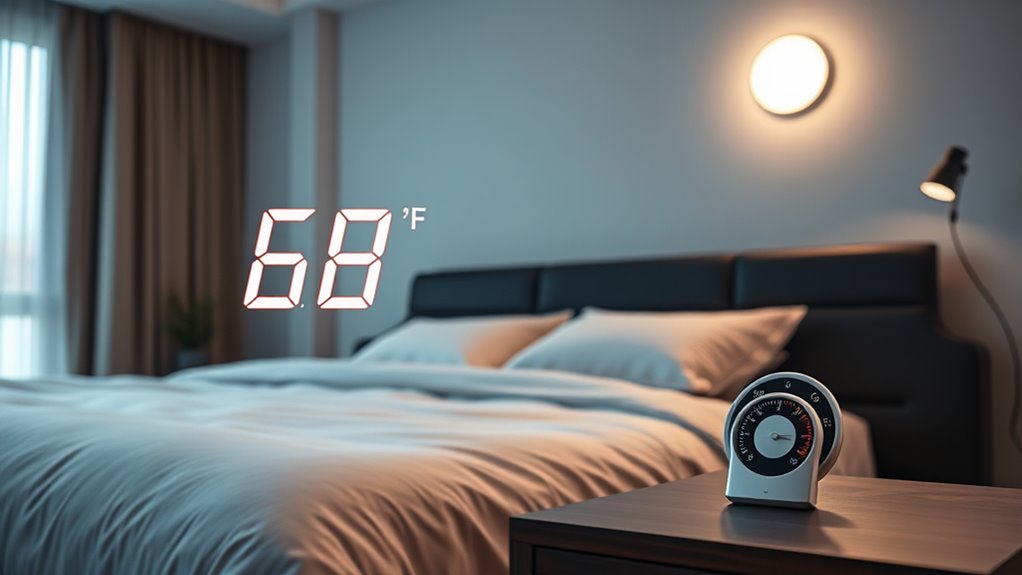
You can easily keep track of your bedroom temperature with a reliable thermometer or smart device. Using these tools correctly guarantees you get accurate readings that help you create the ideal sleep environment. Monitoring consistently lets you make simple adjustments to improve your sleep quality.
Using Thermometers Effectively
To guarantee your bedroom stays comfortable for sleep, it’s essential to measure and monitor the room temperature accurately. Place your thermometer in a central location away from drafts, windows, or heat sources like lamps or electronics. Keep it at eye level for consistent readings. Check the temperature at different times of the day to understand fluctuations, especially during evening hours. Use a digital thermometer for quick, precise results, and avoid relying solely on built-in thermostat displays, which can be inaccurate. Record your readings to track patterns over time. This consistent monitoring helps you identify if your room consistently falls outside the ideal sleep temperature range, so you can make targeted adjustments to improve comfort and sleep quality. Additionally, integrating smart home devices like robot vacuums with temperature sensors can help automate climate control adjustments for optimal sleep conditions. Regularly calibrating your thermometer ensures that your measurements remain accurate over time.
Monitoring With Smart Devices
Ever wondered how technology can make monitoring your bedroom temperature easier? Smart devices like thermostats, sensors, and even smart speakers can help you track and control your room’s climate effortlessly. Install a smart thermostat or a wireless temperature sensor in your bedroom, and you’ll get real-time updates via your smartphone. Many devices allow you to set preferred temperature ranges, sending alerts if conditions go outside your ideal zone. Some systems even learn your habits and adjust automatically. With these tools, you don’t need manual checks or guesswork. Instead, you’ll have precise data at your fingertips, making it simple to maintain the perfect sleep environment. Using smart technology ensures your bedroom stays comfortably cool or warm, improving your sleep quality considerably.
Tips for Cooling Down a Hot Bedroom
When a bedroom becomes uncomfortably hot, simple adjustments can make a significant difference in cooling it down quickly. First, use fans to improve air circulation—placing a box fan near a window pulls in cooler air from outside. Keep blinds or curtains closed during the day to block heat from sunlight. Use a damp cloth or cooling pillow on your forehead for instant relief. To emphasize the importance of airflow, consider this:
| Action | Effect |
|---|---|
| Open windows at night | Introduces cooler night air |
| Use a ceiling fan | Circulates air evenly in the room |
| Place a bowl of ice with fans | Enhances cooling with evaporative effect |
| Switch to lightweight bedding | Reduces heat retention |
| Keep doors open for cross-ventilation | Improves overall airflow |
Implementing these tips helps lower your bedroom temperature efficiently.
Strategies for Warming Up a Cold Sleeping Space

If your bedroom feels too cold at night, there are several effective ways to warm it up quickly. First, close any windows and doors to trap heat inside. Use a space heater or electric blanket to boost the temperature safely, making sure to follow safety guidelines. Layer your curtains or add draft stoppers to prevent heat loss through gaps. You can also place a hot water bottle or heating pad in your bed before getting in, ensuring you stay warm throughout the night. Additionally, keep interior doors open to allow warm air to circulate. Wearing warm socks or a hat can help retain body heat. These simple strategies will create a cozy environment, making it easier to fall asleep and stay comfortable all night.
The Role of Bedding and Sleepwear in Temperature Regulation

Choosing the right bedding and sleepwear plays a essential role in maintaining your body temperature throughout the night. Your bedding acts as a barrier, trapping heat or allowing airflow, while sleepwear affects how well your body breathes. For instance, lightweight sheets with breathable fabrics like cotton help keep you cool, whereas flannel keeps you warm during colder months. Consider this table to visualize your options:
| Bedding Type | Ideal for | Material Suggestions |
|---|---|---|
| Lightweight Sheets | Hot sleepers, summer nights | Cotton, linen |
| Insulating Comforters | Cold sleepers, winter nights | Wool, down |
| Breathable Sleepwear | Night sweats, temperature control | Cotton, bamboo |
Choose wisely to optimize your comfort and sleep quality.
Technological Solutions to Maintain Optimal Sleep Environment

Technological solutions have revolutionized how you can maintain an ideal sleep environment, making it easier to regulate temperature and enhance comfort throughout the night. Smart thermostats allow you to set precise temperatures and adjust them remotely, ensuring your bedroom stays consistently comfortable. Cooling mattresses and pillow pads use advanced materials or built-in fans to wick away heat, keeping you cool as you sleep. Bedtime apps and sleep trackers monitor your environment and sleep patterns, providing personalized recommendations for temperature adjustments. Some devices even sync with your smart home system, automatically lowering or raising the temperature based on your sleep cycle. These innovations take the guesswork out of temperature regulation, helping you create a stable, comfortable environment that promotes better, more restorative sleep.
Creating a Consistent Sleep Environment for Better Rest
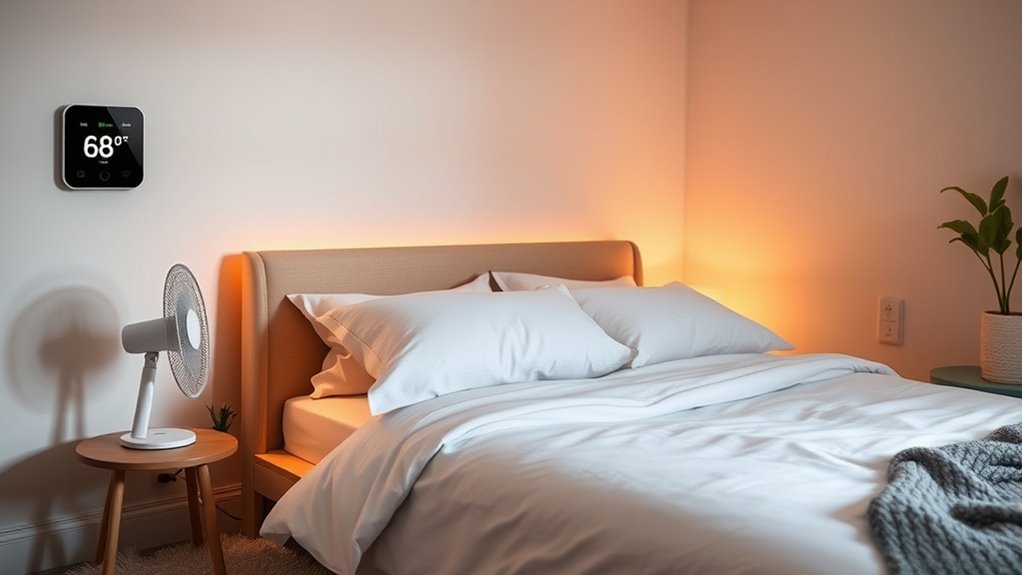
Maintaining a consistent sleep environment is essential for achieving restful, uninterrupted sleep. When your surroundings stay stable, your body can better regulate its internal clock, making it easier to fall asleep and wake up refreshed. To create this consistency, focus on these key factors:
A stable sleep environment helps your body regulate its internal clock for better rest and wakefulness.
- Keep your bedroom temperature steady, ideally between 60-67°F (15-19°C).
- Use blackout curtains or an eye mask to block out light.
- Minimize noise with earplugs or white noise machines.
- Stick to a regular sleep schedule, going to bed and waking up at the same time daily.
Frequently Asked Questions
How Does Ambient Humidity Influence Sleep Quality Alongside Temperature?
Ambient humidity directly impacts your sleep quality by affecting comfort and breathing. When it’s too dry, your skin and airways can become irritated, making it harder to fall asleep and stay asleep. Conversely, overly humid air can cause discomfort, sweating, and restless sleep. Ideally, keep humidity levels between 40-60% to optimize airflow, reduce irritation, and promote deeper, more restful sleep.
Can Personal Preferences Override Recommended Bedroom Temperatures for Optimal Sleep?
Yes, your personal preferences can override recommended bedroom temperatures for better sleep. You should prioritize what feels most comfortable, whether that’s slightly warmer or cooler. Adjust the thermostat, use breathable bedding, or add layers to customize your environment. By listening to your body and making small tweaks, you create a sleep space that suits you best, helping you fall asleep faster, stay asleep longer, and wake up refreshed.
Are There Specific Temperature Ranges for Children or Elderly Sleepers?
Yes, children and elderly sleepers often need warmer temperatures. For children, aim for around 65-70°F, guaranteeing their room isn’t too cold to prevent discomfort or chills. Elderly individuals may prefer slightly warmer settings, around 70-75°F, as they tend to feel cold more easily and have different thermoregulation. Adjust the thermostat accordingly, and use blankets or sleepwear to guarantee comfort without disrupting sleep quality.
How Quickly Should a Bedroom Reach the Ideal Temperature Before Bedtime?
Think of your ideal sleep temperature as a gentle whisper, not a shout—reach it about 30 minutes before bedtime. You should start adjusting your thermostat early enough to allow the room to settle into that perfect range. This gives your body time to unwind and prepare for restful sleep. Don’t wait until you’re already tired; the sooner you set the scene, the better your chances for a peaceful night.
What Are the Environmental Impacts of Using Cooling or Heating Devices for Sleep?
Using cooling or heating devices for sleep can substantially impact the environment. You consume energy, often from fossil fuels, which releases greenhouse gases contributing to climate change. Additionally, these devices can increase your carbon footprint and energy bills. To minimize effects, you can optimize your room’s insulation, use energy-efficient appliances, and adjust your sleep environment naturally, reducing reliance on artificial climate control and helping protect the planet.
Conclusion
By tuning your bedroom to just the right temperature, you create a sanctuary where your body can breathe and relax. Imagine slipping into cool, crisp sheets as gentle breezes cradle you into restful sleep. When your environment harmonizes with your natural rhythm, sleep becomes effortless—like a peaceful lake reflecting a calm night sky. Take control, adjust the climate, and let your dreams flow smoothly, wrapped in a cozy, balanced haven every night.