To manage night sweats and overheating, focus on controlling your bedroom environment. Keep the room temperature between 60-67°F and use fans or air conditioning to stay cool. Choose breathable, natural fiber bedding like cotton or linen to promote airflow and wick away moisture. Lower humidity with a dehumidifier and ensure proper ventilation before sleep. Taking these steps can help prevent excessive warmth and sweating, and if you want to discover more ways, keep exploring how to optimize your sleeping space.
Key Takeaways
- Maintain a bedroom temperature of 60-67°F to prevent overheating and reduce night sweating.
- Use breathable, natural fiber bedding to promote air circulation and moisture wicking.
- Reduce humidity with dehumidifiers and ensure proper ventilation to prevent heat buildup.
- Avoid synthetic fabrics and heavy blankets that trap heat and increase overheating risk.
- Ventilate the room before sleep by opening windows or using fans to enhance airflow and cooling.
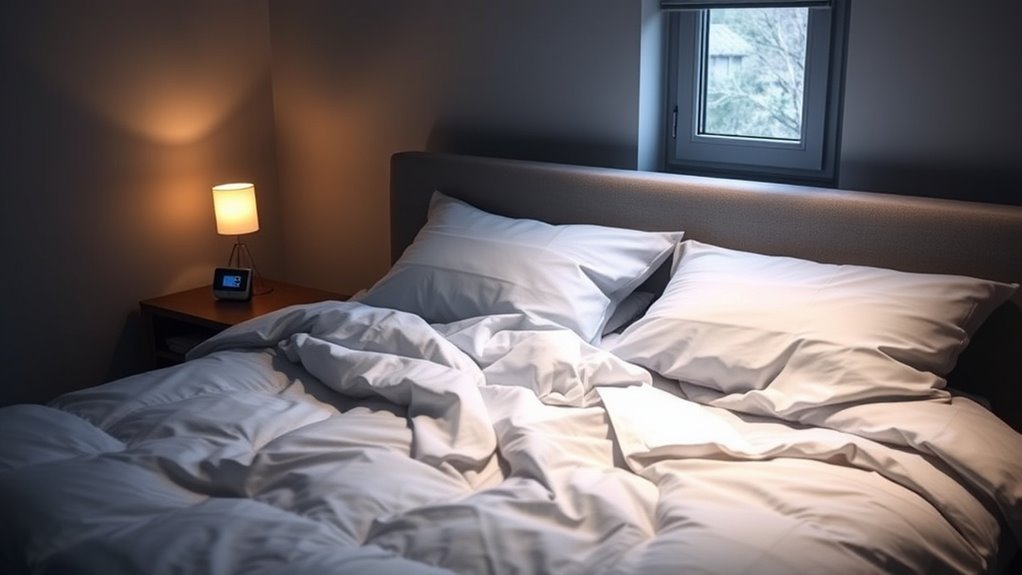
Night sweats and overheating might seem similar, but they are actually different issues with distinct causes. When you wake up drenched in sweat, it’s easy to assume you’re simply too hot, but understanding the underlying factors can help you address the problem more effectively. Your sleep environment plays a vital role in controlling your body temperature throughout the night, and making thoughtful bedding choices can markedly reduce episodes of night sweats or overheating.
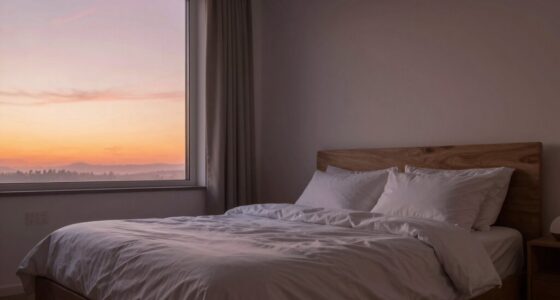
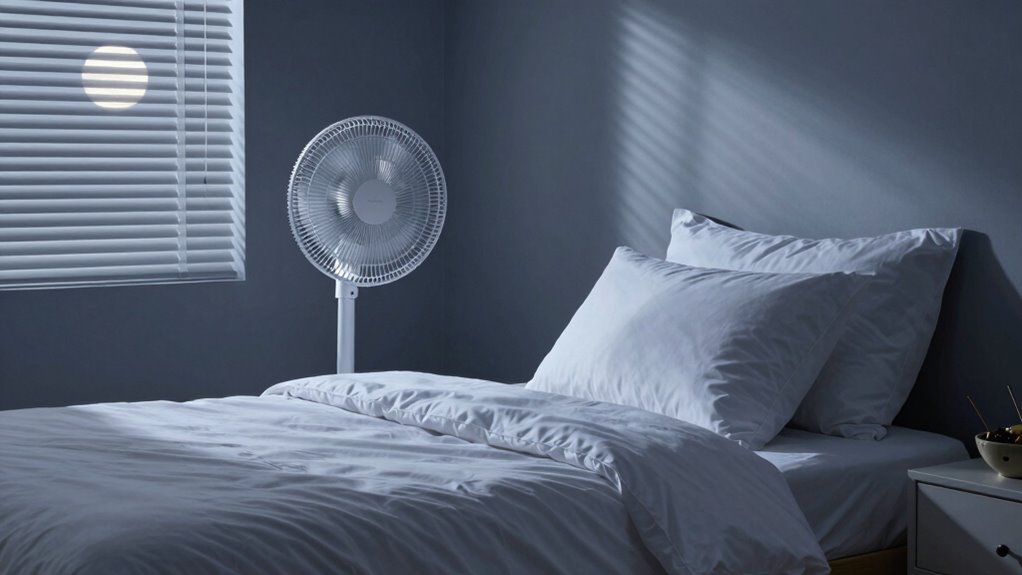
First, consider the temperature of your bedroom. A room that’s too warm can cause your body to struggle with temperature regulation, leading to overheating and night sweats. Ideally, keep your bedroom between 60 and 67 degrees Fahrenheit. Using a fan or air conditioner can help maintain a consistent, cooler environment. If you don’t have climate control, opening a window or using a portable fan can also make a noticeable difference. The goal is to create a space that promotes a comfortable, slightly cooler sleep setting, preventing your body from overcompensating and producing excess sweat.
Keep your bedroom between 60-67°F for optimal sleep comfort and to prevent overheating.
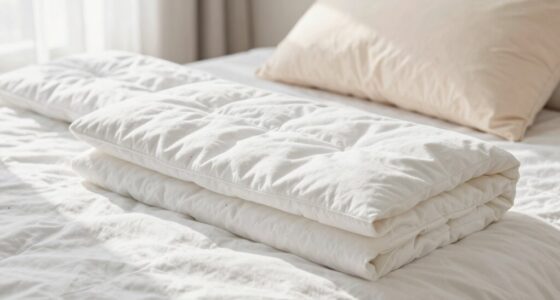
Next, your choice of bedding greatly impacts how well you can regulate your temperature overnight. Heavy, thick blankets or non-breathable fabrics trap heat and moisture, making it harder for your body to cool down. Switch to lightweight, breathable bedding made from natural fibers like cotton or linen, which allow air to circulate and wick moisture away from your skin. Opt for sheets that feel cool to the touch and avoid synthetic fabrics that trap heat and moisture, increasing the likelihood of overheating. Using a cooling pillow or a mattress pad designed for temperature regulation can also help maintain a more consistent sleep temperature. Additionally, choosing appropriate bedding materials can significantly influence your ability to stay cool during the night.
Your sleep environment isn’t just about temperature; factors like humidity and ventilation matter too. High humidity levels can make you feel hotter and cause sweating, so consider using a dehumidifier if your space tends to be damp. Proper ventilation ensures fresh air circulates, helping to prevent heat buildup around your body. Ventilate your room before sleeping and keep windows open if possible, to promote airflow.

LANE LINEN 100% Organic Cotton King Size Sheets Set, Soft & Comfy All Season Breathable Sheets King Size, Percale Weave Fully Elasticized Eco Friendly Naturally Cooling King White Bed Sheets
Pure Organic Comfort: Experience the luxurious comfort of our Lane Linen cotton sheets king size set, meticulously crafted…
As an affiliate, we earn on qualifying purchases.
As an affiliate, we earn on qualifying purchases.
Frequently Asked Questions
Can Exercise Timing Influence Night Sweats?
Yes, exercise timing can influence night sweats. Exercising too late might cause hormonal fluctuations and increased body temperature, making it harder to cool down before bed. To minimize night sweats, try scheduling workouts earlier in the day, allowing your body ample time to recover and temperature to normalize. This helps prevent overheating at night, promoting better sleep and reducing the likelihood of night sweats caused by hormonal shifts.
Do Certain Bedding Materials Worsen Overheating?
Certain bedding materials can worsen overheating, especially those with poor insulation. Thick, heavy blankets trap heat and moisture, making you sweat more. On the other hand, moisture-wicking fabrics and lightweight, breathable bedding help regulate your body temperature. Choose bedding with good insulation properties that promote airflow, and opt for moisture-wicking fabrics to keep you dry and cool throughout the night, reducing the chances of overheating.
How Does Room Humidity Impact Night Sweats?
You might find that ideal humidity levels and good air circulation create a comforting environment, easing night sweats. When humidity is too high, your body struggles to cool down, leading to discomfort. Ensuring proper air circulation helps regulate moisture and keeps the air fresh. By maintaining balanced humidity levels and promoting airflow, you can reduce the likelihood of night sweats and enjoy more restful sleep.
Are There Specific Sleep Positions That Reduce Overheating?
You can reduce overheating by choosing sleep postures that promote airflow, like sleeping on your back with arms and legs spread out. Avoid curled or tight positions that trap heat. Incorporate cooling techniques such as using a breathable pillow or moisture-wicking sheets. Elevating your head slightly can also help. Experimenting with your sleep posture and applying cooling methods can make a noticeable difference in preventing overheating during the night.
Can Diet Affect the Frequency of Night Sweats?
It’s like opening Pandora’s box—your diet can influence night sweats. Hormonal fluctuations from certain foods and drinks, especially caffeine, can trigger these episodes. Limiting caffeine and eating a balanced diet may help reduce their frequency. Staying mindful of your intake could be the key to smoother, more restful nights. Adjusting your diet is a simple step that could make a big difference in managing night sweats.

QUTOOL Cooling Pillow for Sleeping, CertiPUR-US Shredded Memory Foam Queen Pillows Set of 2, Cool Pillow for Hot Sleepers Adjustable Firm Pillow for Side, Back, Stomach Sleepers Soft Yet Support,White
𝐒𝐓𝐀𝐘 𝐂𝐎𝐎𝐋 𝐀𝐋𝐋 𝐍𝐈𝐆𝐇𝐓-𝐈𝐍𝐍𝐎𝐕𝐀𝐓𝐈𝐕𝐄 𝐂𝐎𝐎𝐋𝐈𝐍𝐆 𝐓𝐄𝐂𝐇𝐍𝐎𝐋𝐎𝐆𝐘: Tired of waking up from night sweats or feeling overheated? QUTOOL cooling…
As an affiliate, we earn on qualifying purchases.
As an affiliate, we earn on qualifying purchases.
Conclusion
By understanding the differences between night sweats and overheating, you gain control over your sleep environment. Adjust your room temperature, choose breathable fabrics, and manage your bedtime routine to create a comfortable space. When you take charge of these factors, you reduce discomfort, improve sleep quality, and embrace restful nights. Remember, controlling your environment isn’t just about comfort; it’s about caring for your well-being, empowering your sleep, and nurturing your health each night.

Dehumidifier, 95OZ Dehumidifier for Home 1000 Sq.Ft – Quiet with Auto Shut Off & Relaxing 7 Color Ambient Light,Ideal for Livingroom, Bedroom, Basement(Black)
Semiconductor dehumidifiers use thermoelectric cooling to remove moisture from the air. They create a drier, more comfortable environment…
As an affiliate, we earn on qualifying purchases.
As an affiliate, we earn on qualifying purchases.

Amazon Basics Air Circulator Desk Fan for Bedroom, Home and Office, 90-Degree Tilt Head, 3 Speed Settings, Cooling, 35 Watts, Black, 11.1"W x 6.3"D x 10.9"H
COMPACT DESIGN: Measuring just 6.3 x 11.1 x 10.9 inches (LxWxH) with three 7-inch blades, this fan occupies…
As an affiliate, we earn on qualifying purchases.
As an affiliate, we earn on qualifying purchases.