
Clean indoor air helps you sleep better by reducing irritants, allergens, and pollutants that can cause congestion, headaches, or allergies. When your air is fresh and free of dust, pet dander, mold spores, and VOCs, your breathing becomes easier, promoting relaxation and deeper rest. Proper ventilation, air purification, and controlling humidity make your bedroom more comfortable and health-friendly. Keep exploring to discover simple ways to improve your sleep environment and boost your overall well-being.
Key Takeaways
- Clean air reduces respiratory irritation and congestion, making it easier to breathe and fall asleep comfortably.
- Proper ventilation and airflow remove indoor pollutants, preventing discomfort that disrupts sleep cycles.
- Air purifiers and plants filter allergens and toxins, leading to a fresher environment that promotes relaxation.
- Maintaining optimal humidity and temperature minimizes dust mites and mold, supporting healthier, more restful sleep.
- Reduced airborne irritants decrease headaches and allergy symptoms, helping you achieve deeper, more restorative sleep.
The Connection Between Air Quality and Sleep Comfort
Good air quality in your bedroom plays an essential role in how well you sleep. When the air is clean and fresh, it helps your body relax and reduces the chances of waking up feeling stuffy or congested. Poor air quality can lead to discomfort, making it harder to fall asleep or stay asleep throughout the night. Breathing in pollutants or allergens can cause irritation in your airways, disrupting your rest. Additionally, clean air supports better oxygen flow, which helps your brain and muscles recover. Proper ventilation and the use of high-quality air purifiers can significantly improve indoor air quality, contributing to more restful sleep. Improving color accuracy in your environment can also promote a more calming atmosphere that encourages sleep. When air quality is poor, it can increase your exposure to indoor pollutants, which may affect your sleep quality. You’ll notice that with better air quality, you wake up feeling more refreshed and energized. Maintaining good air quality isn’t just about comfort—it’s about creating an environment that promotes restorative sleep, especially since air filtration systems can remove common allergens and pollutants.
Common Indoor Pollutants in Bedrooms

You might not realize it, but your bedroom can host several indoor pollutants like dust and allergens that can trigger allergies or asthma. Volatile organic compounds (VOCs) from cleaning products and furniture can also linger in the air, affecting your health. Additionally, mold and mildew thrive in damp areas, releasing spores that can worsen respiratory issues. Incorporating essential oils for respiratory health, such as eucalyptus and peppermint oil, can help improve air quality and ease breathing discomfort. Using air purifiers with HEPA filters can further reduce airborne pollutants and create a healthier sleeping environment. Regular maintenance of air filtration systems is crucial to ensure they function effectively and keep indoor air clean, especially since filter replacement can significantly impact their performance.
Dust and Allergens
Dust and allergens are among the most common indoor pollutants found in bedrooms, often accumulating unnoticed on surfaces and in fabrics. These tiny particles can trigger allergies, asthma, and disrupt your sleep. To keep your air clean, regularly dust and vacuum, paying close attention to bedding, curtains, and carpets. Using a HEPA filter can trap these irritants effectively. Here’s what you might find lurking in your bedroom:
| Common Dust & Allergens | How They Affect You |
|---|---|
| Dust mites | Cause allergies and asthma flare-ups |
| Pet dander | Trigger respiratory issues |
| Pollen | Worsen allergy symptoms |
| Mold spores | Lead to respiratory discomfort |
| Skin flakes | Contribute to dust accumulation |
Keeping these pollutants in check helps you breathe easier and enjoy better sleep. Additionally, energetic alignment with your environment can promote a healthier indoor space and improve overall well-being. Implementing natural cleaning methods can further reduce indoor toxins and enhance air quality. Regular maintenance of your heating, ventilation, and air conditioning systems, such as best heat pump technology, can also improve indoor air quality by reducing the circulation of pollutants.
VOC Emissions
While dust and allergens pose significant health concerns, volatile organic compounds (VOCs) are another major source of indoor air pollution in bedrooms. VOCs come from everyday items like cleaning products, paints, and furniture. These chemicals can off-gas into the air, causing headaches, respiratory irritation, and even long-term health issues. To reduce VOC exposure, consider: 1. Choosing low-VOC or VOC-free paints and cleaning supplies. 2. Increasing ventilation when using new furniture or household chemicals. 3. Using air purifiers with activated carbon filters to absorb VOCs. Being aware of these sources helps you create a healthier sleeping environment. Even small changes can markedly improve air quality, making your bedroom a sanctuary for restful sleep and better overall health. Additionally, integrating energy-efficient cloud solutions into your home management systems can help monitor and improve indoor air quality through smart automation.
Mold and Mildew
Have you noticed a musty smell or seen mold spots on your walls or ceiling? Mold and mildew thrive in damp, humid environments, making your bedroom a perfect habitat if moisture isn’t controlled. These fungi release spores into the air, which can cause allergies, respiratory issues, and worsen asthma symptoms. If you suspect mold, don’t ignore it—remove visible growth with cleaning solutions like diluted bleach or vinegar. Keep humidity levels below 50% using dehumidifiers or air conditioners, and fix leaks promptly. Improving ventilation also helps prevent mold buildup. Remember, mold isn’t always visible, so regular inspections and maintaining a dry, clean environment are essential for healthier indoor air and better sleep.
How Poor Air Quality Affects Sleep Patterns
Poor air quality in your bedroom can considerably disrupt your sleep patterns, making it harder to fall asleep and stay asleep throughout the night. When pollutants like dust, allergens, or volatile organic compounds are present, they can cause irritation, congestion,, and breathing difficulties that interfere with restful sleep. You might notice:
- Increased wakefulness due to respiratory discomfort
- Shorter sleep cycles and fragmented rest
- Feeling unrefreshed upon waking
These issues stem from your body’s response to airborne irritants, which trigger inflammation and stress your respiratory system. Over time, poor air quality can lead to chronic sleep problems, affecting your overall health and daytime alertness. Implementing smart air quality monitors and air purifiers can help detect and reduce indoor pollutants, creating a healthier sleeping environment. Improving your bedroom’s air quality can help you fall asleep faster, stay asleep longer, and wake up feeling more rejuvenated. Additionally, addressing common plant problems like pests or fungal infections can help maintain a healthier environment indoors. Recognizing the importance of indoor air quality is essential for fostering better sleep hygiene and overall well-being.
Recognizing Signs of Indoor Air Pollution
Ever wondered if your home’s air quality is compromised? You might notice subtle signs indicating indoor air pollution. Do you often wake up with a sore throat, headache, or stuffy nose? These could be clues. Persistent coughing or sneezing, even without an apparent reason, is another sign. Unexplained allergies or worsening asthma symptoms may also point to poor indoor air. Look out for strong odors, mold, or a lingering mustiness, which suggest air issues. To help you identify common signs, here’s a quick overview: Odor recognition can be an important step in diagnosing indoor air quality problems. Additionally, understanding how ventilation systems work can significantly improve indoor air health. Implementing proper air filtration methods can further reduce indoor pollutants and enhance overall air quality.
The Role of Ventilation and Fresh Air Intake
Good airflow is essential for keeping your bedroom fresh and comfortable. When you improve circulation and bring in fresh air, you reduce pollutants and odors. Proper ventilation systems boost efficiency, ensuring your space stays healthier and more inviting. Incorporating ventilation considerations can help optimize airflow and maintain a consistent indoor climate. Additionally, integrating smart ventilation technology can automatically adjust airflow based on real-time air quality data, further enhancing your bedroom environment. Considering local automation options can streamline ventilation management and adapt to your routine, making your space even more comfortable and energy-efficient. Paying attention to indoor air quality standards can also guide you in selecting the most effective ventilation solutions for your space. Understanding the thermal behavior of your ventilation system can help prevent issues like drafts or humidity buildup, ensuring optimal performance.
Circulation and Airflow
Effective circulation and airflow are essential for maintaining healthy bedroom air quality, as they guarantee fresh air moves throughout the space and stale air is replaced. Proper airflow helps prevent the buildup of indoor pollutants, reduces humidity, and keeps odors at bay. To optimize circulation, consider these steps:
- Open windows regularly to introduce fresh air and create a cross-breeze.
- Use fans strategically to promote even airflow without disturbing your sleep.
- Ensure vents and air vents are unobstructed for consistent ventilation.
Fresh Air Benefits
Why is fresh air so essential for your bedroom? It supplies oxygen, removes indoor pollutants, and helps regulate humidity. Fresh air can boost your mood, improve sleep quality, and reduce headaches. Proper ventilation guarantees harmful toxins, allergens, and stale odors don’t build up, creating a healthier space.
| Benefit | How It Helps | Key Point |
|---|---|---|
| Better Oxygen Flow | Keeps you alert and relaxed | Essential for restful sleep |
| Pollutant Removal | Clears dust, VOCs, and allergens | Improves breathing comfort |
| Humidity Regulation | Prevents mold and dryness | Maintains a balanced environment |
| Mood & Sleep Quality | Enhances overall well-being | Fresh air promotes relaxation |
Ventilation Systems Efficiency
Proper ventilation systems play a crucial role in maintaining ideal bedroom air quality by ensuring a consistent flow of fresh air and removing indoor pollutants. To maximize efficiency, you should consider these key factors:
- Regular maintenance: Clean filters and ducts to prevent blockages and ensure optimal airflow.
- Proper placement: Install vents where they can circulate air effectively, avoiding dead zones.
- Balanced airflow: Use systems that regulate intake and exhaust, preventing stale air buildup or drafts.
Benefits of Using Air Purifiers in Your Sleep Space

Using an air purifier in your sleep space can considerably improve the air quality you breathe overnight. It helps remove airborne pollutants like dust, pet dander, pollen, and smoke, reducing irritants that can disrupt your sleep. By filtering out these particles, you’ll experience fewer allergy symptoms and less congestion, making it easier to breathe comfortably. Air purifiers also eliminate odors, creating a fresher environment that promotes relaxation. This cleaner air can help you fall asleep faster and enjoy more restful sleep cycles. Plus, many models contain HEPA filters that trap even tiny particles, ensuring a higher standard of air purity. Overall, incorporating an air purifier into your bedroom supports healthier breathing and enhances your sleep quality.
Natural Ways to Improve Bedroom Air Quality

Improving your bedroom’s air quality naturally involves simple yet effective strategies that don’t rely on devices or chemicals. First, keep your space well-ventilated by opening windows daily to circulate fresh air. Second, introduce houseplants like snake plants, pothos, or peace lilies, which naturally filter toxins and boost oxygen levels. Third, regularly dust and vacuum to remove allergens, dust mites, and pet dander that can degrade air quality. You can also use natural cleaning products to avoid chemical fumes that may linger in the air. These easy steps create a healthier environment, reducing airborne irritants and improving sleep quality. Incorporating them into your routine helps you breathe easier and enjoy a more restful night naturally.
The Impact of Humidity and Temperature on Sleep and Air Quality

Maintaining good air quality in your bedroom isn’t just about filtering toxins or increasing ventilation; it also involves managing humidity and temperature levels. When your room is too humid, mold and dust mites thrive, which can worsen allergies and disrupt sleep. Conversely, low humidity can dry out your skin, throat, and nasal passages, making breathing uncomfortable. Temperature also plays a key role; a room that’s too hot can cause restless nights, while a cold environment might make it hard to fall asleep. Ideally, keep your bedroom’s humidity between 40-60% and temperature around 60-67°F (15-19°C) for ideal sleep and air quality. Balancing these factors creates a comfortable environment that promotes deep sleep and reduces airborne irritants.
Tips for Maintaining a Clean and Healthy Bedroom Environment
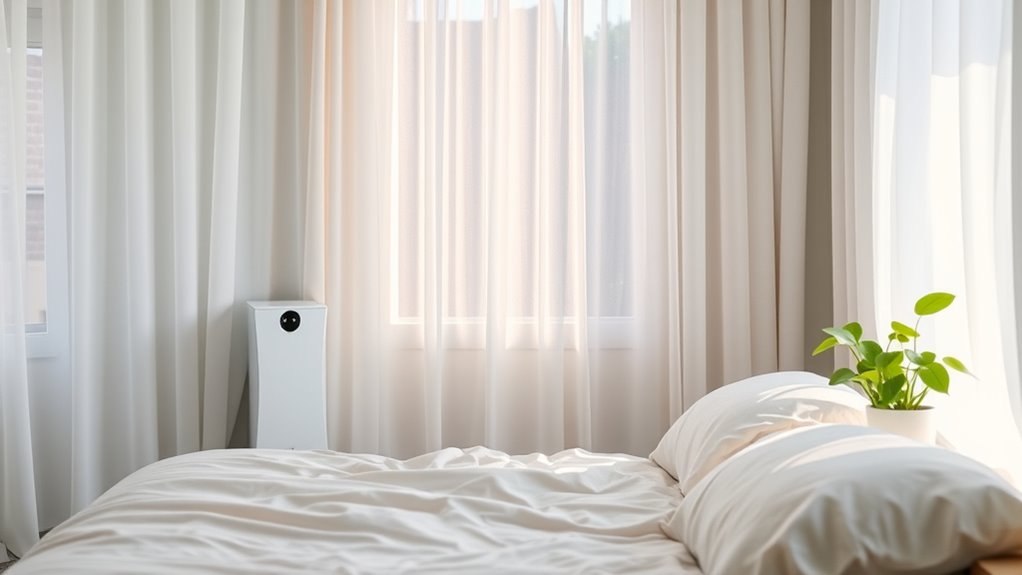
A clean and healthy bedroom environment begins with regular tidying and organization. Keeping clutter at bay reduces dust buildup and minimizes hiding spots for allergens. To maintain ideal air quality, consider these tips:
- Vacuum and dust weekly to remove dirt, pet dander, and dust mites.
- Wash bedding and curtains regularly to eliminate allergens and bacteria.
- Use an air purifier with a HEPA filter to trap airborne pollutants and improve overall air quality.
Additionally, ensure proper ventilation by opening windows daily, and avoid smoking or using harsh chemicals indoors. Keep humidity levels between 40-50% to prevent mold growth and dust mites. By following these steps, you create a healthier space that promotes better sleep and clearer air.
Frequently Asked Questions
Can Air Quality Influence the Likelihood of Waking up During the Night?
Yes, air quality can influence whether you wake up during the night. Poor air quality, with pollutants or allergens, can cause respiratory irritation or discomfort, disrupting your sleep cycle. When the air is clean and free of irritants, you breathe easier and stay asleep longer. To improve your chances of uninterrupted sleep, guarantee good ventilation, use air purifiers, and keep your bedroom free of dust and allergens.
How Often Should I Replace or Clean Air Filters in My Bedroom?
You should replace or clean your bedroom air filters every one to three months. Imagine the filter as a sieve catching dust, pet dander, and allergens; over time, it gets clogged, reducing airflow and trapping pollutants. Regular maintenance keeps the air fresh and clean, helping you breathe easier and sleep better. Check your filter monthly, especially if you have pets or allergies, to maintain ideal air quality and comfort.
Are Certain Plants Effective at Improving Indoor Air Quality for Better Sleep?
Certain plants, like snake plants, peace lilies, and spider plants, can effectively improve indoor air quality and promote better sleep. They absorb pollutants and release oxygen, creating a healthier sleeping environment. Keep in mind, though, that plants alone won’t fully purify your air, so combine them with good ventilation and regular cleaning. Place these plants in your bedroom to enjoy cleaner air and potentially more restful nights.
What Are the Long-Term Health Risks of Poor Indoor Air Quality?
You might think ignoring indoor air quality is no big deal, but it’s a ticking time bomb. Poor air quality can lead to respiratory issues, allergies, asthma, and even heart problems over time. It’s like opening Pandora’s box—you don’t see the harm until it’s too late. Regular ventilation and air purifiers help, but don’t wait until health issues knock on your door; take action now for long-term safety.
Does the Type of Bedding Impact Indoor Air Quality and Sleep Quality?
Yes, the type of bedding impacts both indoor air quality and your sleep quality. Natural fibers like cotton and wool tend to trap less dust and allergens compared to synthetic materials, reducing irritants in the air. Regularly washing your bedding removes allergens and dust mites, improving air quality. Plus, choosing breathable fabrics helps regulate temperature, leading to deeper, more restful sleep. So, pick bedding thoughtfully for better air and better dreams.
Conclusion
Keeping your bedroom air clean isn’t just about fresh scents—it’s about better sleep. Did you know that poor indoor air quality can disrupt sleep patterns for up to 50% of adults? By improving ventilation, using purifiers, and maintaining proper humidity, you create a healthier space. Prioritize these simple steps, and you’ll wake up feeling more rested and refreshed, knowing your environment supports your sleep and overall well-being every night.