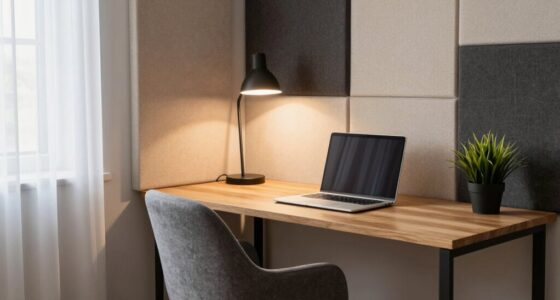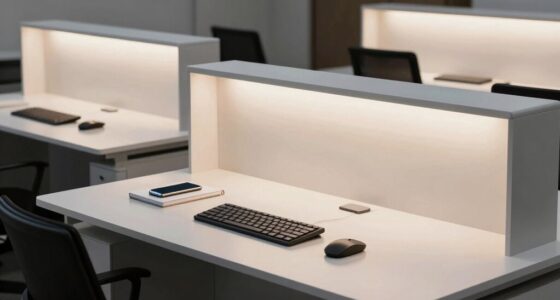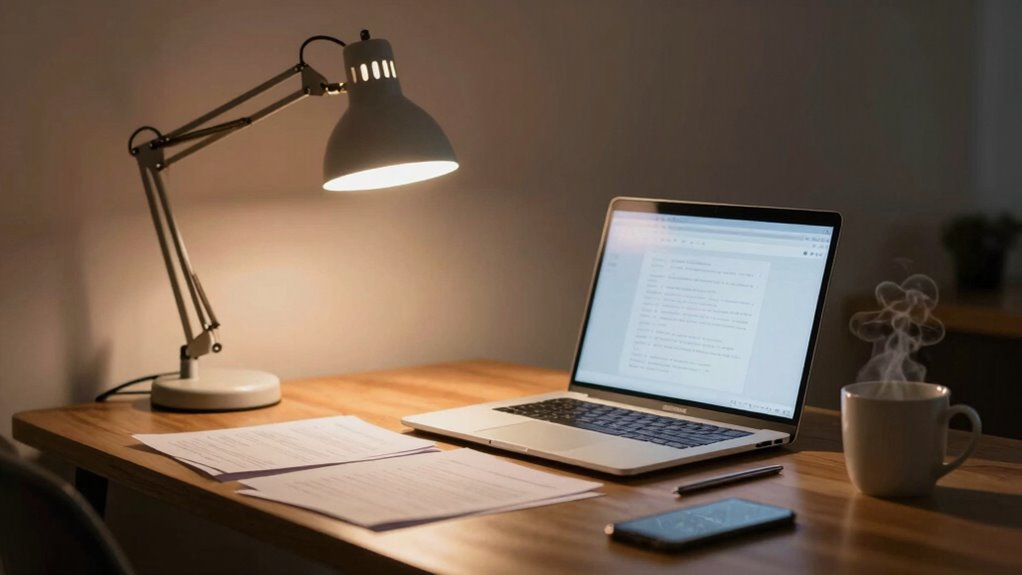

To stay comfortable during long work sessions, ensure you have layered lighting, including ambient, task, and natural light. Position your lights at a 45-degree angle, slightly above eye level, to minimize glare and shadows. Use adjustable LED lights with warm color temperatures around 2700K–3000K, and match brightness to your surroundings. Maximize natural light by facing windows and diffusing sunlight with curtains. Want to learn more tips for ideal lighting? Keep exploring.
Key Takeaways
- Use layered lighting: combine ambient, task, and accent lights to create a balanced, comfortable workspace.
- Opt for adjustable LED lights with natural or warm color temperatures to reduce eye strain.
- Position lights at a 45-degree angle and above eye level to minimize glare and shadows.
- Maximize natural light exposure by placing desks near windows and diffusing sunlight with curtains or blinds.
- Regularly adjust brightness and color temperature to match ambient conditions and maintain visual comfort.

DREO 6L Humidifiers for Bedroom, Smart Warm & Cool Mist for Large Room, 60Hr Quiet Runtime for Baby, Plant, Humidity Sensor, Indicator Light, 12H Timer, Google/Alexa, HM713S
𝙎𝙪𝙥𝙚𝙧 𝙁𝙖𝙨𝙩, 𝙄𝙣𝙨𝙩𝙖𝙣𝙩 𝙒𝙖𝙧𝙢 𝙈𝙞𝙨𝙩: The humidifiers for bedroom creates a comforting, 133°F smart warm and cool mist...
As an affiliate, we earn on qualifying purchases.
Choosing the Right Type of Lighting for Extended Work Hours

When working long hours, choosing the right type of lighting can considerably impact your focus and comfort. Opt for bright, natural-looking light that mimics daylight to keep your energy levels high and reduce eye strain. LED lights are a popular choice because they’re energy-efficient, long-lasting, and offer adjustable brightness. Avoid harsh, fluorescent lighting, which can cause headaches and fatigue over time. Consider color temperature; cooler temperatures (around 5000K) help increase alertness, while warmer tones (2700K–3000K) promote relaxation during breaks. Dim or inconsistent lighting can lead to decreased concentration, so make certain your workspace is evenly illuminated. Selecting the appropriate lighting type tailored to your needs boosts productivity and helps you stay comfortable during those extended work sessions. Additionally, ensuring proper air purifier maintenance can reduce indoor pollutants, creating a healthier environment for extended work periods. Proper lighting combined with air quality management supports overall well-being during long work hours, especially when considering ergonomic workspace setup to prevent discomfort. Furthermore, understanding the importance of lighting ergonomics can help you choose fixtures that minimize strain and promote better posture during prolonged use. Paying attention to lighting control systems can also allow you to adjust illumination levels easily as your tasks change throughout the day.
LEVOIT - Humidifiers for Bedroom - Quiet (3L Water Tank) - Cool Mist/Top Fill/Essential Oil Diffuser/25Watt - Home/Large Room - 360° Nozzle - Rapid Ultrasonic Humidification for Baby Nursery/Plant
𝗟𝗔𝗥𝗚𝗘 𝟯𝗟 𝗪𝗔𝗧𝗘𝗥 𝗧𝗔𝗡𝗞: Still be bothered by congestion, coughing, or dry mouth when sleeping? With a 25W...
As an affiliate, we earn on qualifying purchases.
Positioning Your Light Sources for Maximum Efficiency

Properly positioning your light sources is essential to maximize their effectiveness while minimizing eye strain and glare. First, place lights so they illuminate your workspace evenly, avoiding harsh shadows. Second, position lights at a 45-degree angle to your eyes to reduce direct glare. Third, make certain your light source is slightly above eye level, angled downward, to mimic natural sunlight and prevent reflections on screens. Use adjustable lamps to fine-tune the direction and height as needed. Keep lights away from your line of sight to prevent distraction. Additionally, understanding the importance of a well-designed lighting environment can significantly enhance your comfort and focus during long work sessions. Incorporating ergonomic lighting principles, such as choosing the right brightness and color temperature, can further reduce fatigue and eye strain. A well-illuminated workspace can also boost productivity and overall well-being. Properly light placement helps prevent eye fatigue and maintains visual comfort during extended periods. Consistent, strategic placement helps maintain focus and comfort during long sessions. Understanding the impact of lighting technology can help you select the most effective and eye-friendly lighting options. Remember, the goal is to create a balanced lighting environment that supports your work without causing discomfort or fatigue.

Dreo Smart Humidifiers for Bedroom, Top Fill 4L Supersized Humidifier Large Room with 28 dB, 36H Runtime, Touch/APP/Voice Control, Nightlight, Cool Mist Humidifiers for Baby, Plants, Indoor, Black
𝐏𝐫𝐞𝐜𝐢𝐬𝐞 𝐀𝐮𝐭𝐨 𝐇𝐮𝐦𝐢𝐝𝐢𝐭𝐲, 𝐕𝐨𝐢𝐜𝐞 & 𝐀𝐩𝐩 𝐂𝐨𝐦𝐦𝐚𝐧𝐝: Stop guessing the right humidity. With enhanced sensing precision for more...
As an affiliate, we earn on qualifying purchases.
Adjusting Brightness and Color Temperature to Reduce Eye Strain

Adjusting your brightness and color temperature is key to reducing eye strain during long work sessions. If your screen is too bright compared to your surroundings, your eyes work harder to focus, causing fatigue. Lower the brightness to match ambient light levels for comfort. Similarly, warm color temperatures—around 2700K to 3000K—reduce blue light exposure, easing eye discomfort. Cooler temperatures, near 5000K to 6500K, mimic daylight and can boost alertness but may cause more eye strain over time. Find a balance that feels comfortable for your eyes, adjusting throughout the day if needed. Use your device’s settings or external lighting controls to fine-tune brightness and temperature. These adjustments help minimize eye fatigue, keeping you comfortable and focused during extended work periods. Additionally, choosing energy-efficient displays can further reduce eye strain and save power during long hours of use. Ensuring proper screen positioning also plays a crucial role in preventing unnecessary eye strain and promoting better posture. Paying attention to ambient lighting conditions can further improve visual comfort and reduce fatigue, especially when combined with proper lighting setup for your workspace. Incorporating adaptive lighting options that respond to your environment can optimize comfort throughout the day.

DREO Humidifiers for Bedroom, 3L Top Fill 30H & 26dB Quiet Runtime for Large Room, Cool Mist Ultrasonic Humidifier with Humidity Sensor, Night Light for Home, Baby, Nursery, Plants, New Edition
𝐅𝐨𝐫𝐠𝐞𝐭 𝐚𝐛𝐨𝐮𝐭 𝐜𝐨𝐧𝐬𝐭𝐚𝐧𝐭 𝐫𝐞𝐟𝐢𝐥𝐥𝐬: With a 3L tank and convenient top-fill design, this humidifier large room for baby...
As an affiliate, we earn on qualifying purchases.
Incorporating Natural Light Into Your Workspace
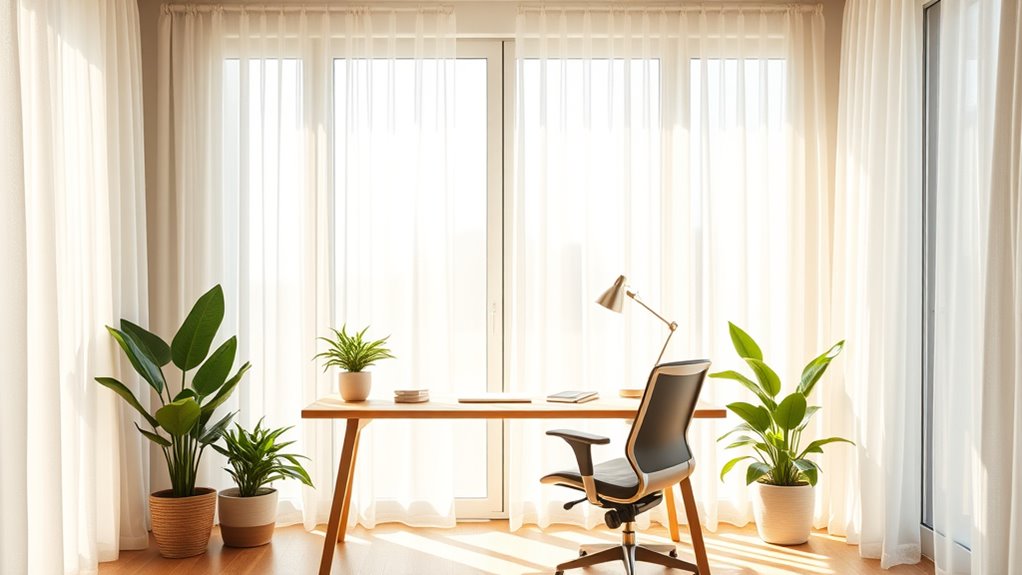
Incorporating natural light into your workspace can markedly reduce eye strain and boost your overall well-being. To do this effectively, consider these steps:
- Position your desk near a window to maximize daylight exposure, facing it directly if possible.
- Use sheer curtains or blinds to diffuse harsh sunlight, preventing glare on screens.
- Take regular breaks to step outside or move closer to windows, ensuring you get fresh, natural light throughout the day.
- Incorporate thriving plants into your workspace, as they can improve air quality and create a more calming environment.
- Understanding indoor lighting design principles can help you optimize natural light and create a balanced, energizing environment. Additionally, selecting appropriate artificial lighting can complement natural light during overcast days or late hours, maintaining a consistent and comfortable illumination level. Being mindful of light placement can further enhance the distribution of natural light, making your workspace more inviting and efficient. Proper light management strategies can prevent glare and shadows, ensuring a more comfortable work environment.
Natural light helps regulate your circadian rhythm, improves mood, and reduces reliance on artificial lighting. Keep your workspace oriented to capture sunlight without causing reflections on screens. Adjust window coverings as needed to balance brightness, making your environment both energizing and comfortable for long work sessions.
Creating a Comfortable and Well-Lit Environment

Once you’ve optimized natural light, creating a comfortable and well-lit environment guarantees you’ll stay focused and reduce fatigue during long work sessions. Proper lighting balances brightness, minimizes glare, and avoids harsh shadows that strain your eyes. Use layered lighting—combine ambient, task, and accent lights—to create a cozy, functional space. Adjust your setup so you can easily control light levels, preventing discomfort. To visualize, consider this table:
| Lighting Type | Purpose | Tips |
|---|---|---|
| Ambient | Overall brightness | Use ceiling fixtures or soft lamps |
| Task | Focused work areas | Desk lamps with adjustable arms |
| Accent | Reduces monotony, adds warmth | Warm-colored bulbs or decorative lights |
Creating an environment with appropriate lighting can help reduce eye strain and improve your overall comfort during extended sessions. Additionally, incorporating ergonomic lighting strategies can further enhance your workspace. Proper lighting is essential for maintaining productivity and eye health during extended periods of work, especially when combined with glare reduction techniques to prevent visual discomfort. A well-lit environment keeps you alert, comfortable, and ready to work efficiently. Proper lighting is essential for maintaining productivity and eye health during extended periods of work.
Tips for Maintaining Optimal Lighting Throughout Long Sessions

To keep your lighting effective during long work sessions, you need to regularly adjust brightness levels so your eyes stay comfortable. Incorporate task-specific lights where focused illumination is necessary, like for reading or detailed work. These small changes help prevent eye strain and maintain your productivity throughout the day.
Adjust Brightness Levels
Keeping your brightness levels properly adjusted is essential for reducing eye strain and maintaining focus during long work sessions. First, regularly check your screen’s brightness against the ambient light—too bright or too dim can cause discomfort. Second, use automatic brightness settings if available; they adapt quickly to changing lighting conditions. Third, manually fine-tune your display to a comfortable level, ensuring text is clear without glare or excessive contrast. Consistently adjusting brightness helps prevent fatigue and keeps your eyes comfortable. Remember to pause periodically and reassess, especially if lighting conditions shift. Maintaining ideal brightness levels isn’t a one-time task; it’s an ongoing process that supports your focus and reduces strain throughout your work session.
Use Task-Specific Lights
Using task-specific lights can considerably improve your ability to stay focused and reduce eye strain during long work sessions. By directing light precisely where you need it, you avoid unnecessary glare and shadows that can cause discomfort. For example, a desk lamp with adjustable brightness and focus helps illuminate your workspace without overwhelming your eyes. Use a focused reading light for paperwork or detailed tasks, and employ a flexible task light for computer work. This targeted lighting minimizes contrast issues and keeps your eyes from constantly adjusting between bright and dark areas. Additionally, positioning these lights correctly—aimed directly at your work surface—ensures ideal illumination. Incorporating task-specific lights helps maintain alertness, reduces fatigue, and creates a comfortable environment for extended periods of productivity.
Frequently Asked Questions
How Can Smart Lighting Technology Enhance Long Work Session Lighting?
Smart lighting technology enhances your long work sessions by adjusting brightness and color temperature automatically to match your needs. You can customize settings for focus, relaxation, or energy boosts, reducing eye strain and fatigue. With voice commands or app controls, you easily modify lighting without disruption. Additionally, smart lights sync with your schedule, ensuring ideal lighting conditions that boost productivity and comfort throughout extended work periods.
What Are the Best Color Temperatures for Reducing Fatigue During Extended Work?
You should aim for a color temperature around 4000K to 5000K, as it closely resembles natural daylight and helps reduce fatigue during long work sessions. Cooler tones in this range boost alertness and focus, preventing eye strain and drowsiness. Avoid overly warm or cool lighting, which can cause discomfort or decrease productivity. Adjust your lighting to maintain a bright, balanced environment that keeps you energized and attentive.
How Do Different Light Spectrums Impact Alertness and Concentration?
Ever wonder if your eyes are secretly demanding a party? Different light spectrums definitely impact alertness and concentration. Blue light, for instance, acts like a caffeine shot, boosting focus and keeping you alert. On the flip side, warmer tones relax your mind, perfect for winding down. So, switch your spectrum wisely—blue for work, warm for chill—and watch your productivity and mood improve dramatically.
Are There Specific Lighting Accessories Recommended for Prolonged Computer Use?
You should consider adjustable desk lamps with flicker-free LED bulbs to reduce eye strain during long computer sessions. A lamp with customizable color temperature allows you to switch between cool light for alertness and warmer tones for relaxation. Look for accessories with adjustable brightness and a wide, even light spread. Using anti-glare screens or filters on your monitor can also help minimize eye fatigue, keeping you comfortable and focused longer.
How Often Should Lighting Be Adjusted During a Long Workday?
You should adjust your lighting whenever you notice eye strain, glare, or shadows that make it harder to see your screen clearly. Typically, it’s best to check and tweak your lighting every couple of hours or as needed to maintain a comfortable, well-lit workspace. Regular adjustments help reduce fatigue, prevent headaches, and keep your focus sharp. Trust your eyes and environment; if something feels off, it’s time to make an adjustment.
Conclusion
To keep your long work sessions productive, focus on creating the perfect lighting setup. Remember, a well-lit space can make all the difference in staying alert and comfortable. Don’t forget to tweak your lighting as needed—sometimes, a little adjustment goes a long way. By paying attention to your environment, you’ll prevent eye strain and fatigue. In the end, it’s about working smarter, not harder, so you don’t burn the midnight oil unnecessarily.