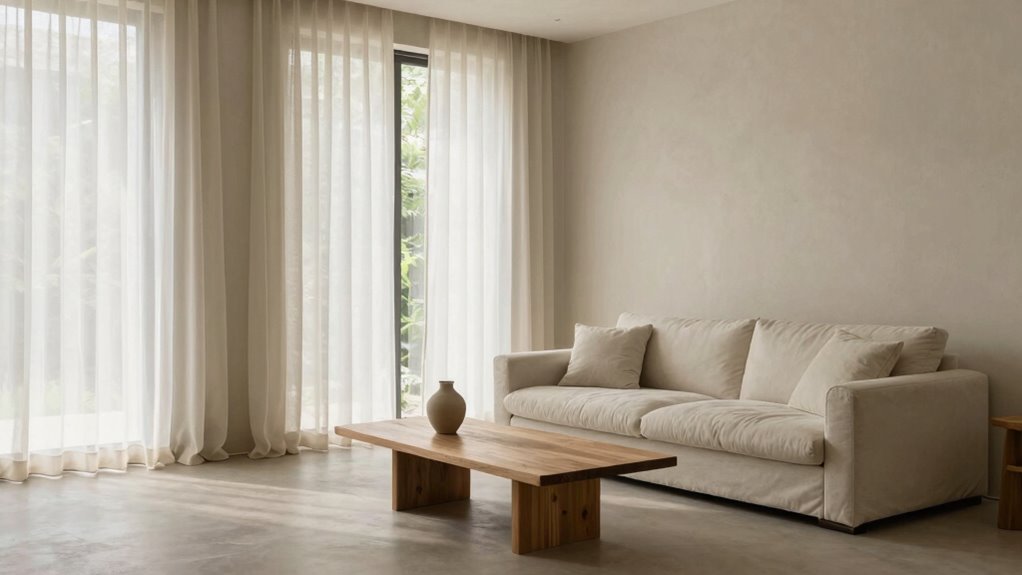
To create a quiet home, focus on soundproofing by sealing gaps, installing acoustic panels, and adding rugs. Choose calming color palettes with soft, muted tones to promote relaxation. Design cozy, functional layouts that reduce clutter and optimize lighting. Incorporate soft textures like plush rugs and natural fabrics for comfort and sound absorption. Maximize natural light and views with well-placed windows and skylights. Keep exploring these principles to transform your space into a peaceful retreat.
Key Takeaways
- Implement soundproofing techniques like acoustic panels, heavy curtains, and double-glazed windows to minimize external noise.
- Use calming color palettes with soft, muted tones to promote relaxation and visual harmony.
- Design cozy layouts that create designated zones for different activities and facilitate smooth traffic flow.
- Incorporate soft textures and natural materials such as wool, cotton, and plush fabrics to absorb sound and add comfort.
- Maximize natural light and scenic views through strategic window placement and diffusion techniques to enhance tranquility.
Incorporating Soundproofing Techniques
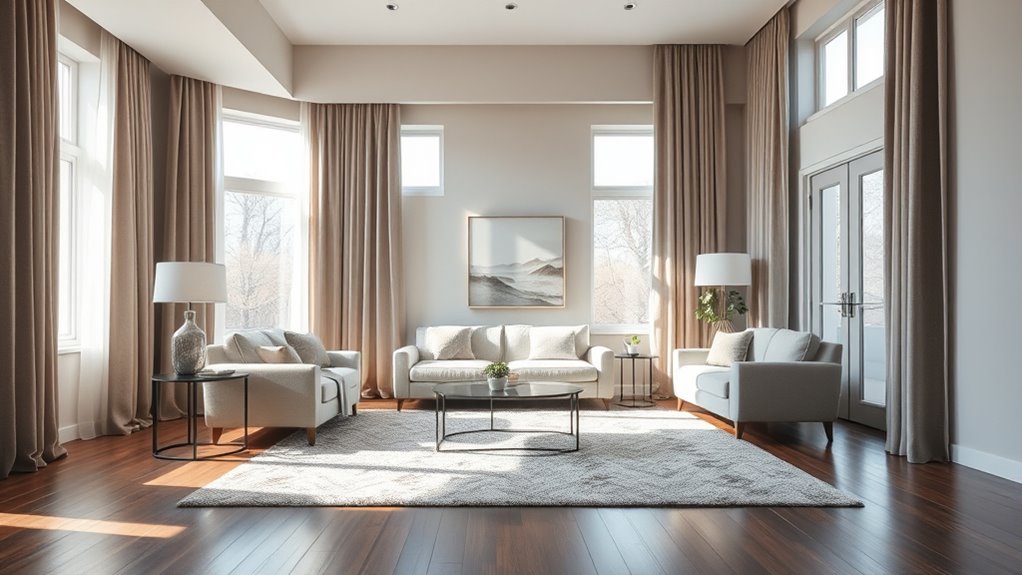
To create a quieter home environment, incorporating effective soundproofing techniques is essential. Start by sealing gaps around windows and doors with weatherstripping or door sweeps to block noise leaks. Consider installing acoustic panels or foam on walls to absorb sound vibrations, reducing echo and external noise. Thick curtains or heavy drapes can also dampen sound and provide additional insulation. If possible, upgrade to double-glazed windows, which considerably cut down outdoor noise. You might also add rugs or carpets to absorb sound within rooms. For especially noisy areas, consider adding mass-loaded vinyl barriers or installing specialized soundproof drywall. These measures work together to create a peaceful living space, shielding you from disruptive sounds and enhancing overall tranquility. Additionally, choosing rugs made from dense, sound-absorbing materials can further improve sound insulation within your rooms. Incorporating soundproofing techniques into your home design can significantly elevate your overall comfort and sleep quality. Using sealing gaps and other simple modifications can make a noticeable difference with minimal effort, especially when combined with proper acoustic treatment. Exploring advanced soundproofing materials can also offer even more effective noise reduction for sensitive areas.
Choosing Calming Color Palettes
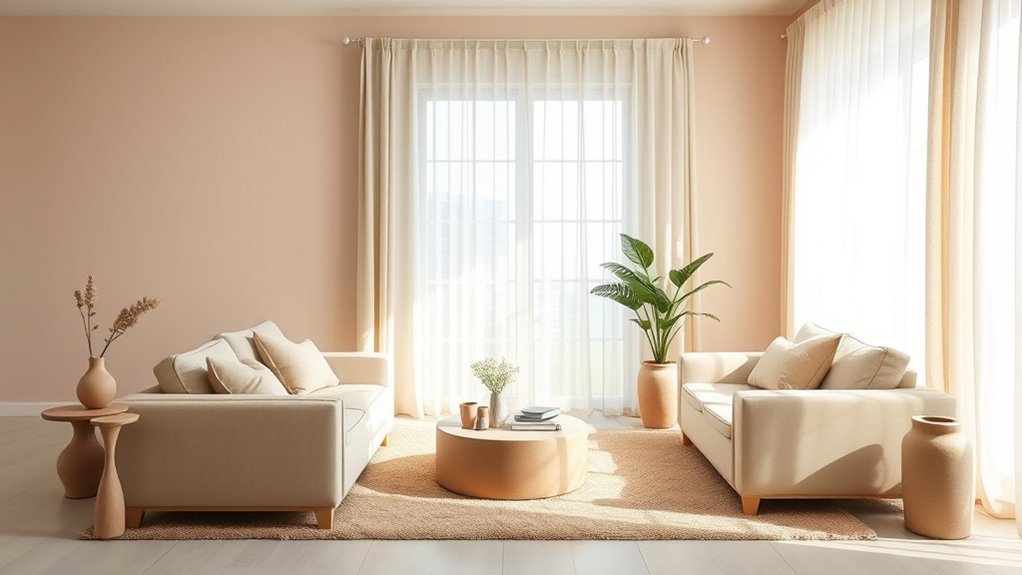
Choosing calming color palettes is a powerful way to create a peaceful home environment. Soft, muted tones like gentle blues, earthy beiges, and soothing greens evoke relaxation and reduce visual noise. Stick to a limited color scheme to foster a sense of harmony, avoiding overly bright or saturated hues that can stimulate the senses. Light colors also reflect natural light, making your space feel more open and airy. Consider incorporating matte or low-sheen finishes to minimize glare. Keep color progressions smooth and subtle, using shades that complement each other. Using calming color palettes can help reinforce a tranquil atmosphere throughout your home. By choosing these calming palettes, you set a tranquil tone throughout your home, making it easier to unwind and enjoy a serene atmosphere. The right colors can truly transform your space into a sanctuary of peace. Additionally, selecting colors with appropriate reflectivity can further enhance the calming effect by controlling how light interacts with your surfaces. Incorporating energy-efficient lighting can also amplify the soothing ambiance by optimizing light quality and reducing glare. Moreover, choosing colors that align with Lifevest Advisors guidelines on color psychology can subtly influence mood and relaxation. Being mindful of visual noise reduction techniques, such as color choice, can further support a peaceful environment.
Designing Cozy and Functional Layouts
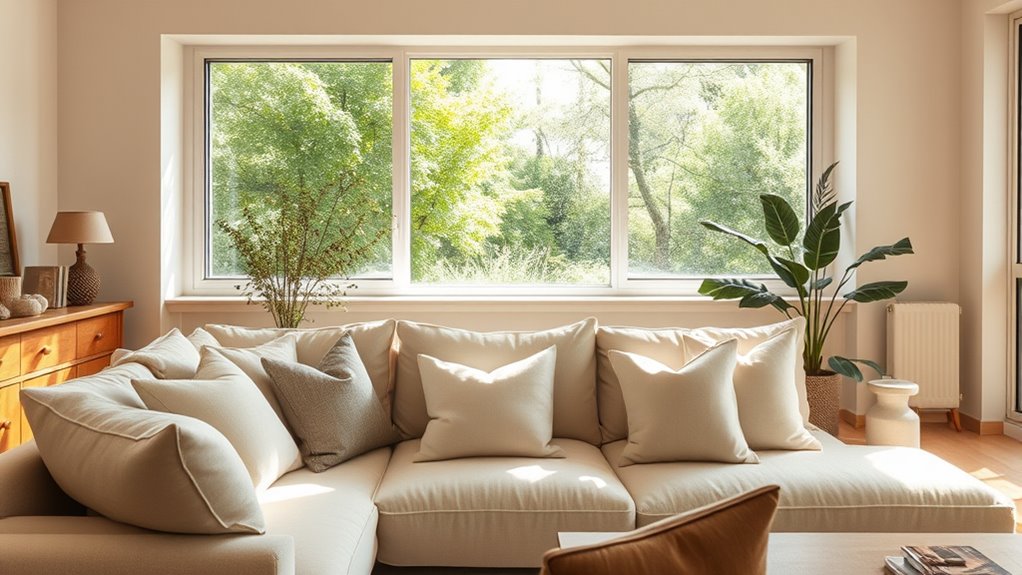
After selecting calming colors, the next step is to arrange your space in a way that feels both cozy and practical. Focus on creating designated zones for different activities, like relaxing, working, and socializing. Keep traffic flow smooth by placing furniture thoughtfully, avoiding cluttered pathways. Use furniture size and placement to promote intimacy in common areas, making them inviting without feeling cramped. Incorporate storage solutions that hide clutter and keep essentials within reach. Balance open spaces with cozy nooks where you can unwind. Prioritize functionality by choosing pieces that serve multiple purposes, like beds with built-in drawers or fold-out desks. Consider home layout principles to optimize natural and artificial lighting for a calming atmosphere. Additionally, integrating elements like thermal comfort and proper ventilation considerations can further enhance tranquility. Exploring space planning techniques can help you create a more harmonious environment. For example, understanding contrast ratio can help you select the right lighting and screen setup for a peaceful viewing experience. Remember, a well-organized layout minimizes stress and enhances tranquility, making your home a peaceful retreat.
Utilizing Soft Textures and Materials
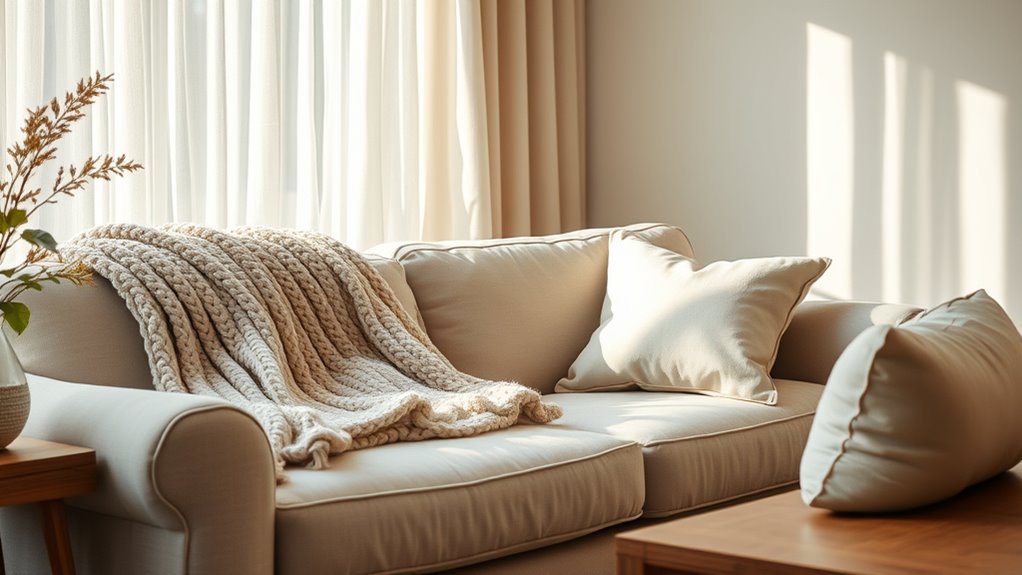
In a quiet home, soft textures and materials play a crucial role in fostering a soothing atmosphere. You can achieve this by choosing plush rugs, smooth fabrics, and cushioned furniture that invite touch and comfort. Incorporate natural materials like wool, cotton, or linen, which absorb sound and reduce echoes. Use layered textiles—throws, pillows, curtains—to add depth and softness to your spaces. These textures not only dampen noise but also create a cozy environment, making your home feel inviting and calm. Be mindful of the surfaces you select, prioritizing matte finishes over glossy ones, which reflect sound and light. Additionally, selecting materials with sound-absorbing qualities can significantly improve the acoustic comfort of your space. Understanding and applying principles of acoustic design can help optimize your home’s quietness and overall ambiance. Incorporating interior acoustics considerations, such as placement and material choices, can further enhance the peaceful atmosphere you seek. For optimal results, consider integrating soundproofing techniques to further minimize external noise intrusion.
Enhancing Natural Light and Views
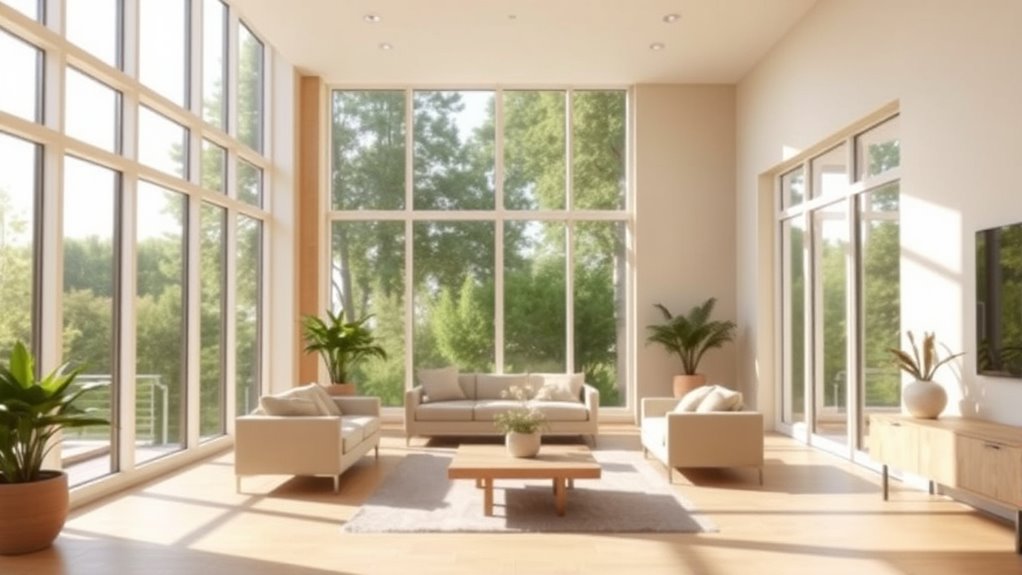
Have you considered how natural light and views can transform the tranquility of your home? Maximizing sunlight and scenic vistas creates a calming environment, reducing reliance on artificial lighting. To do this, plan your window placement thoughtfully, focusing on areas where natural views can be appreciated. Use unobstructed window designs and lightweight curtains to let light flow freely. Incorporating skylights or glass doors can also boost daylight penetration. Additionally, choosing window treatments that are minimal and light-colored can further enhance the flow of natural light. Considering light diffusion techniques can help distribute sunlight evenly throughout your space. Here’s a quick guide:
| Aspect | Tips | Benefits |
|---|---|---|
| Window Placement | Maximize exposure to the sun and views | Brighter, more inviting space |
| Window Treatments | Keep them minimal and light-colored | Enhanced natural light |
| Outdoor Connection | Maintain clear sightlines to nature | Restorative scenery |
| Architectural Features | Use large glass panels or skylights | Increased daylight, openness |
Focusing on natural light optimization and view preservation can significantly enhance the peaceful atmosphere of your home.
Frequently Asked Questions
How Can I Reduce Noise Transfer Between Rooms Effectively?
To reduce noise transfer between rooms, start by adding thick rugs or carpets to absorb sound. Use acoustic panels or foam on shared walls to dampen noise. Installing door sweeps and weatherstripping around doors and windows helps seal gaps. Consider adding bookshelves or heavy curtains as extra barriers. Finally, opt for double-glazed windows and solid core doors to further minimize sound transmission between spaces.
What Are the Best Plants to Improve Home Acoustics?
Did you know that plants can reduce noise levels by up to 5 decibels? To improve your home’s acoustics, choose lush, dense plants like fiddle leaf figs, rubber plants, or peace lilies. These plants absorb sound waves and add a calming vibe. Place them near noisy areas or on shelves, and you’ll notice a quieter, more serene environment. Plus, they boost air quality and add natural beauty!
How Does Furniture Placement Influence Home Tranquility?
You can considerably influence your home’s tranquility through furniture placement. Position large pieces like sofas and bookshelves against exterior walls to block noise from outside. Arrange seating to create cozy, enclosed spaces that dampen sound and promote relaxation. Keep pathways clear to prevent clutter and echo. Use soft furnishings like rugs and cushions to absorb sound further. Thoughtful placement helps you feel calmer and reduces ambient noise, making your home more peaceful.
Are There Eco-Friendly Soundproofing Materials Available?
Yes, eco-friendly soundproofing materials are available. You can choose natural wool, recycled cotton, cork, or cellulose insulation to reduce noise without harming the environment. These materials are sustainable, non-toxic, and effective at dampening sound. By incorporating them into your home’s walls, floors, or ceilings, you create a peaceful space that’s both environmentally conscious and acoustically comfortable. It’s a smart way to prioritize tranquility and sustainability simultaneously.
How Can I Incorporate Technology to Enhance Home Quietness?
Did you know that smart sound masking systems can reduce noise levels by up to 15 decibels? You can incorporate technology by installing sound masking devices that emit calming background sounds, effectively drowning out intrusive noises. Use smart thermostats and automated window shades to control acoustic environments seamlessly. Additionally, consider acoustic sensors that monitor noise levels, allowing you to adjust your setup proactively and create a consistently peaceful home environment.
Conclusion
So, there you have it—your foolproof guide to creating a peaceful haven, because who wouldn’t want a home so tranquil, even your noisy neighbor’s dog will envy it? Just follow these tips, and you’ll be lounging in serenity while everyone else’s chaos continues outside. Remember, a quiet home isn’t just a luxury; it’s your new best friend—so go ahead, make it happen, and finally enjoy that elusive peace everyone talks about.