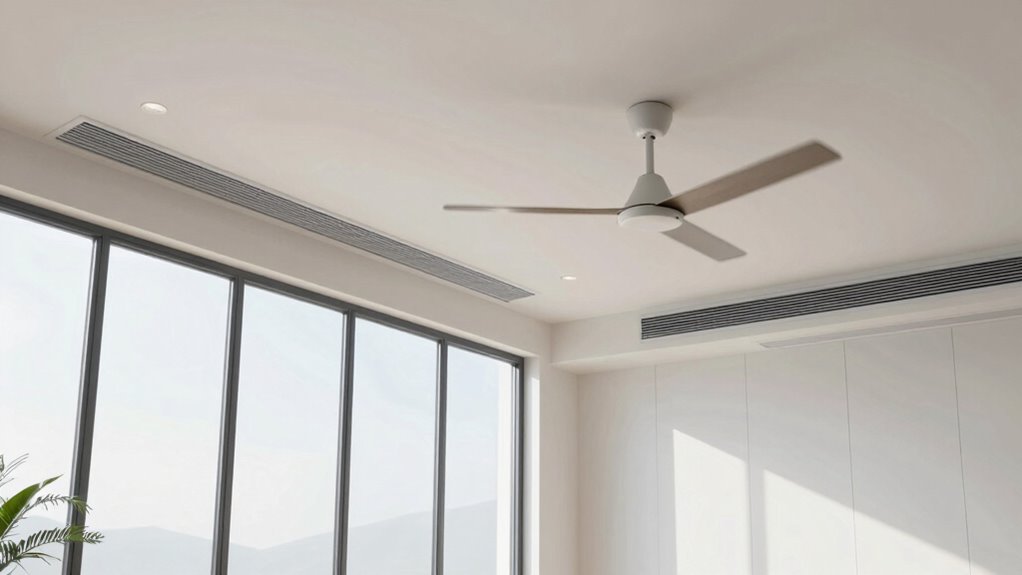

To optimize airflow in your living space, start by observing airflow patterns and removing obstructions like furniture or curtains that block vents. Strategically place vents near windows and doors to encourage cross-ventilation and install exhaust fans where warm air rises. Use fans and air purifiers effectively, positioning them for even distribution and clean filters regularly. Incorporate smart ventilation systems that adjust based on air quality, and don’t forget to maintain your HVAC for peak efficiency. Discover more ways to improve your indoor environment.
Key Takeaways
- Assess airflow patterns regularly using visual tools like tissues or smoke sticks to identify dead zones and obstructions.
- Position vents near windows and doors to promote effective cross-ventilation throughout the space.
- Use fans strategically, such as oscillating fans near vents, to distribute air evenly and reduce dead zones.
- Incorporate smart ventilation systems that respond to real-time air quality data for dynamic airflow management.
- Keep HVAC systems well-maintained by scheduling inspections, replacing filters, and cleaning ducts to ensure optimal airflow.
Assessing and Enhancing Natural Ventilation

Assessing and improving natural ventilation begins with understanding how air moves through your space. Start by observing current airflow patterns—note where air enters and exits, and identify any dead zones with little movement. Open windows and doors to see how they influence airflow; feel for drafts or stagnant air. Use simple tools like a tissue or smoke stick to visualize air movement. Check for obstructions like furniture or curtains that block airflow. Improving ventilation may involve adjusting window openings or removing barriers, ensuring fresh air can circulate freely. Incorporating effective ventilation strategies can further enhance airflow efficiency. Regularly assess your space, especially during different times of day and weather conditions, to understand how external factors affect airflow. Considering airflow patterns can help you optimize ventilation even further. Implementing proper airflow design can further improve natural ventilation. Additionally, understanding the role of natural ventilation in maintaining indoor air quality is essential for creating healthy living environments. Conducting airflow assessments periodically allows you to identify new areas for improvement and adapt to changing conditions. This ongoing evaluation helps you identify ways to enhance natural ventilation effectively.
Strategic Placement of Vents and Exhausts

Once you’ve identified how air naturally moves through your space, the next step is to enhance airflow by strategically placing vents and exhausts. Position vents near windows or doors to encourage cross-ventilation, guiding fresh air into main living areas. Place exhaust fans or vents high on walls or ceilings where warm, stale air tends to rise, helping it escape efficiently. In rooms prone to humidity, such as bathrooms and kitchens, install exhausts near sources of moisture to remove damp air promptly. Proper placement prevents air stagnation and ensures continuous circulation. To further improve efficiency, consider incorporating ventilation design principles that account for your space’s unique layout and airflow patterns. Avoid blocking vents with furniture or curtains, ensuring unobstructed airflow. Consider the layout carefully; placing vents and exhausts in ideal locations promotes balanced circulation, reduces stuffiness, and enhances overall air quality. Incorporating smart ventilation systems can further optimize airflow by adjusting in response to real-time air quality data, ensuring optimal indoor air conditions at all times. Additionally, understanding airflow dynamics can help you predict how air moves within your space, leading to more effective ventilation strategies.
Using Fans and Air Purifiers Effectively

To maximize the effectiveness of fans and air purifiers, you need to position them thoughtfully within your space. Place fans near windows or vents to promote cross-ventilation, pulling fresh air inside and pushing stale air out. Use oscillating fans to circulate air evenly across the room, avoiding dead zones. For air purifiers, position them in high-traffic areas or where you spend the most time, such as living rooms or bedrooms, ensuring unobstructed airflow. Keep air purifiers away from walls or furniture that could block intake or output vents. Regularly clean or replace filters to maintain efficiency. Additionally, understanding indoor air quality can help you make better choices about device placement and maintenance. Monitoring air quality levels can guide you in adjusting device positions for optimal results. Being aware of airflow patterns in your space allows for more strategic placement of fans and purifiers to maximize their impact. Recognizing the importance of ventilation strategies can further enhance your efforts to improve air circulation and overall air quality. Paying attention to air circulation helps prevent stagnation and ensures fresh air reaches all areas of your home. By placing your fans and purifiers strategically, you enhance air circulation, improve air quality, and create a healthier living environment.
Incorporating Smart Ventilation Technologies

Have you considered how smart ventilation technologies can transform your home’s air quality? These systems automatically adjust airflow based on real-time data, ensuring *best* freshness and efficiency. They monitor indoor pollutants, humidity, and CO2 levels, responding instantly to changes. With smart vents, you can control airflow in individual rooms via your smartphone or voice commands, saving energy and improving comfort. Imagine your home adapting seamlessly to your lifestyle, maintaining ideal air conditions without manual effort. By integrating ownership essentials, you can optimize your home’s ventilation system for both comfort and safety. Additionally, understanding air quality monitoring allows you to better interpret sensor data and make informed decisions about your indoor environment. Incorporating ventilation control systems that utilize sensors and automation can further enhance your home’s air quality management. Furthermore, leveraging energy-efficient technologies can reduce overall power consumption, supporting sustainable living. Properly sizing and planning your ventilation system with load‑planning tools ensures optimal performance and energy savings.
Maintaining and Upgrading Your HVAC System

Regular maintenance and thoughtful upgrades are essential to keep your HVAC system running efficiently and reliably. Schedule annual professional inspections to catch issues early and replace filters every 1-3 months to maintain airflow and air quality. Keep vents and ducts clean, ensuring unobstructed airflow throughout your home. Upgrading your thermostat to a smart model allows you to optimize heating and cooling schedules, saving energy and improving comfort. Consider replacing outdated equipment with energy-efficient units that meet current standards. Regularly lubricate moving parts and check electrical connections to prevent breakdowns. Proper system setup and maintenance might seem simple, but they play a crucial role in creating a healthier, more comfortable living environment. By staying proactive, you reduce system strain, extend its lifespan, and enhance overall airflow. Additionally, performing seasonal cleaning and maintenance helps prevent dust buildup and keeps your system operating at peak efficiency. Incorporating preventive measures can further reduce the risk of unexpected system failures and costly repairs. Ensuring proper airflow management within your space can also improve overall system performance and comfort.
Frequently Asked Questions
How Can I Improve Airflow in a Basement or Underground Space?
You can improve airflow in your basement by installing a ventilation fan or exhaust system to increase air exchange. Keep vents unobstructed and open windows periodically to promote fresh air. Use ceiling or portable fans to circulate air better. Consider adding vents or air transfer grilles between rooms to enhance cross-ventilation. Regularly check for blockages or moisture buildup that can hinder airflow and address any issues promptly.
What Are the Best Plants for Natural Air Purification Indoors?
Think of plants as silent guardians of your home’s air quality. Spider plants, snake plants, and pothos excel at removing toxins and releasing fresh oxygen, much like vigilant sentinels. You should place these lush defenders in well-lit spots or shaded corners, allowing them to thrive and purify your indoor air naturally. By choosing these resilient greenery allies, you create a healthier, more vibrant living environment.
How Does Outdoor Pollution Affect Indoor Airflow Quality?
Outdoor pollution can considerably impact your indoor airflow quality by bringing pollutants inside through open windows, doors, and ventilation systems. As outdoor contaminants enter your space, they reduce air purity and circulation efficiency. You might notice increased odors, dust, or poor air quality, which can affect your health. To minimize this, keep windows closed during high pollution periods, use air purifiers, and ensure your ventilation system filters outdoor air effectively.
Can Architectural Design Influence Airflow Efficiency in Home Layouts?
You can definitely influence airflow efficiency with thoughtful architectural design. By strategically placing windows, vents, and open spaces, you create a natural flow that keeps fresh air circulating and stale air out. It’s like hitting two birds with one stone—improving comfort and indoor air quality simultaneously. Properly designed layouts harness natural breezes and reduce reliance on mechanical systems, making your home healthier and more energy-efficient.
What DIY Methods Can I Use to Test Indoor Airflow Patterns?
You can test indoor airflow patterns by using simple DIY methods. Turn on fans or open windows, then observe the movement of lightweight objects like feathers or paper scraps placed around your space. Use incense sticks or candles to see how the smoke moves, revealing airflow directions. You can also feel for drafts with your hand, noting areas of high or low airflow, helping you identify spots needing better ventilation or adjustments.
Conclusion
Now that you’ve explored these airflow strategies, imagine how much more comfortable and healthier your living space could become. But the true challenge lies in finding the perfect balance—will you reveal the secrets to ideal ventilation and transform your home’s environment? The answers are within your reach, waiting to be uncovered. Don’t wait too long; the future of your perfect indoor air quality depends on the choices you make today.