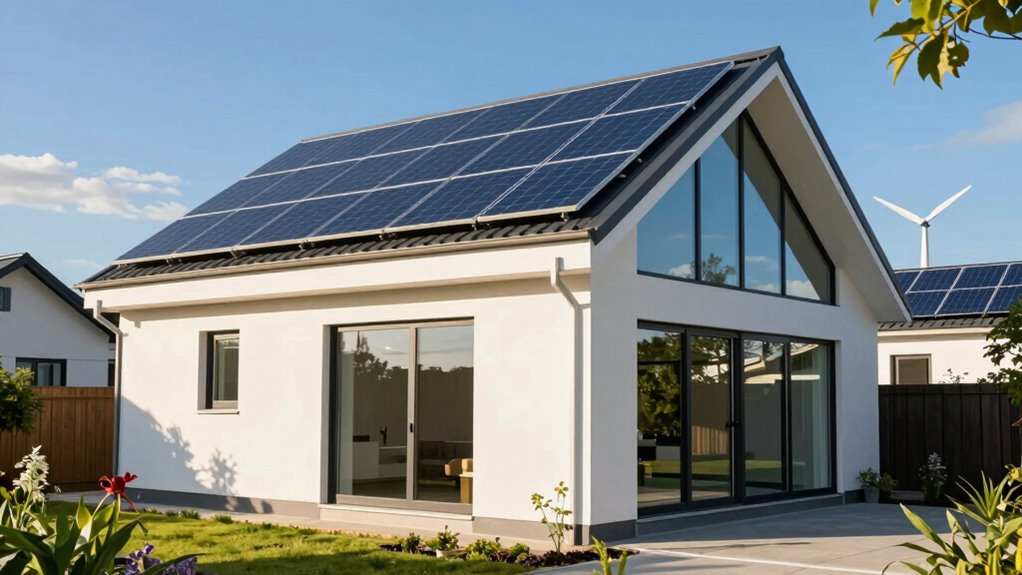

Energy positive homes produce more electricity than they use each year by harnessing renewable resources like solar panels, wind turbines, and smart energy management. These homes help cut down greenhouse emissions, save money on bills, and reduce reliance on fossil fuels. With the right design and technology, you’ll enjoy lower costs, energy independence, and a healthier planet. Keep exploring to discover how these innovative homes are shaping a sustainable future for you and others.
Key Takeaways
- Energy positive homes produce more energy than they consume annually, mainly using renewable sources like solar panels.
- They offer environmental benefits by reducing greenhouse gases and conserving natural resources.
- Advanced technologies such as solar, wind, geothermal, and energy storage enable energy surplus.
- Design strategies include passive solar, efficient materials, and smart automation to maximize energy efficiency.
- Living in such homes reduces utility costs, provides energy independence, and supports a healthier planet.

Portable Solar Generator, 300W Portable Power Station with Foldable 60W Solar Panel,110V Pure Sine Wave 280Wh Battery Power Pack with USB DC AC Outlet for Camping Smart Devices RV Van Outdoor-Orange
Portable Generator with 60W Solar Panel Included: with a big battery pack, ZeroKor 300W power stations Generator are…
As an affiliate, we earn on qualifying purchases.
As an affiliate, we earn on qualifying purchases.
What Are Energy Positive Homes?
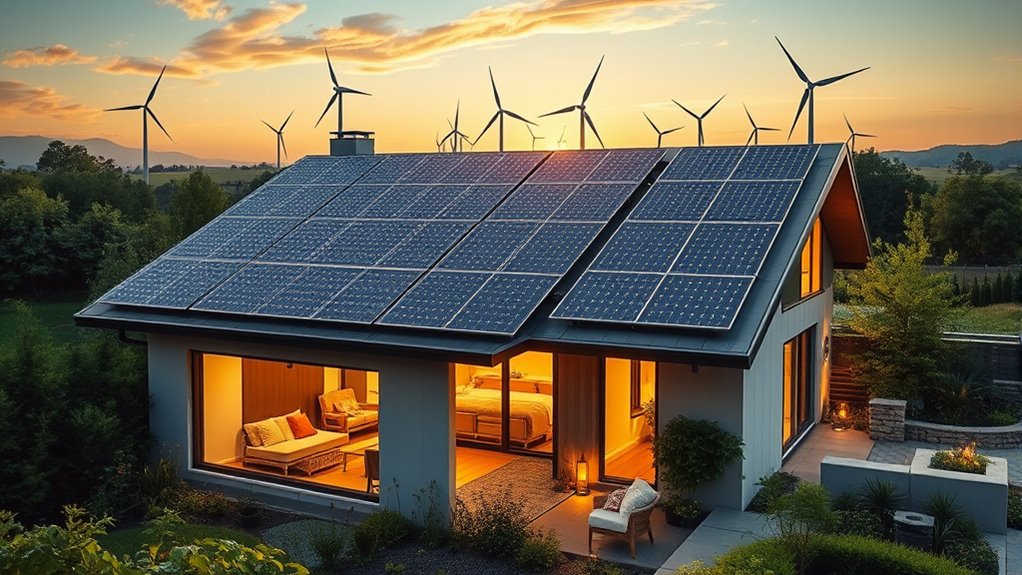
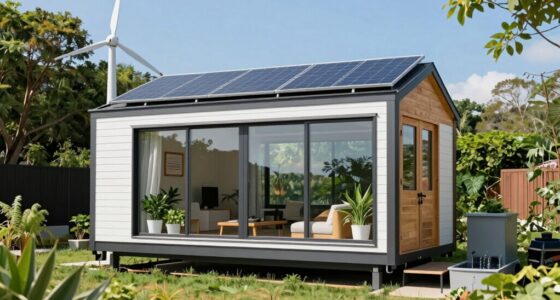
What exactly are energy positive homes? These are buildings that produce more energy than they consume over a year. When you live in one, the energy generated—often from renewable sources like solar panels—exceeds your household’s needs. As a result, you can feed the surplus electricity back into the grid, effectively turning your home into a source of clean energy. This not only reduces your carbon footprint but can also save you money on energy bills. Energy positive homes are designed with efficiency and sustainability in mind, integrating smart features and renewable technologies. By generating excess energy, you’re contributing to a greener future and helping shift towards a more sustainable energy landscape. Additionally, these homes often incorporate connected appliances that optimize energy use and further enhance their efficiency. Incorporating innovative energy management systems can help maximize energy production and storage capabilities, ensuring your home remains energy efficient even during periods of low sunlight or high demand. Embracing renewable energy integration is key to achieving energy positivity and advancing sustainable living practices. Implementing advanced insulation techniques can further improve overall energy performance and reduce wastage.

VEVOR 500W Wind Turbine Generator, 12V Wind Turbine Kit, 5-Blade Wind Power Generator with MPPT Controller, Adjustable Windward Direction & 2.5m/s Start Wind Speed, Suitable for Home, Farm, RVs, Boats
500W High-Efficiency Output: VEVOR 500W high-power wind turbine generator delivers exceptional wind energy utilization and efficiency, making it…
As an affiliate, we earn on qualifying purchases.
As an affiliate, we earn on qualifying purchases.
Key Technologies Behind Energy Positivity

The key technologies behind energy positivity include advanced renewable energy systems, energy-efficient building designs, and smart energy management tools. You harness solar panels, wind turbines, or geothermal systems to generate more energy than your home consumes, reducing reliance on external sources. Modern insulation, high-performance windows, and airtight construction minimize energy waste, ensuring your home stays comfortable with less effort. Smart energy management tools allow you to monitor and optimize energy use in real-time, automatically adjusting systems for maximum efficiency. European cloud innovation can also support the integration of these energy solutions through secure and sustainable data management. Additionally, emerging nanotechnology applications enable the development of more efficient energy storage and conversion systems, further enhancing your home’s energy positivity. These technologies work together to create a home that produces more energy than it consumes, making it truly energy positive. Incorporating building automation systems can optimize energy performance and provide real-time feedback to homeowners. By integrating these innovations, you not only lower your environmental impact but also gain greater control over your energy consumption and costs. Leveraging smart grid technology can facilitate better energy distribution and management at the community level, amplifying the benefits of energy-positive homes. Moreover, advanced energy storage solutions enable homeowners to store excess energy effectively for use during periods of low generation, increasing overall energy resilience.

Ontel Battery Daddy Smart – Battery Organizer Storage Case with Tester, Stores & Protects Up to 150 Batteries, Clear Locking Lid, As Seen On TV, Smart – 150 Batteries (BADAS-MC4)
Double-Sided Battery Organizer: The Ontel Battery Daddy is a compact & portable way to organize, store and protect…
As an affiliate, we earn on qualifying purchases.
As an affiliate, we earn on qualifying purchases.
Design Principles for Energy Positive Living
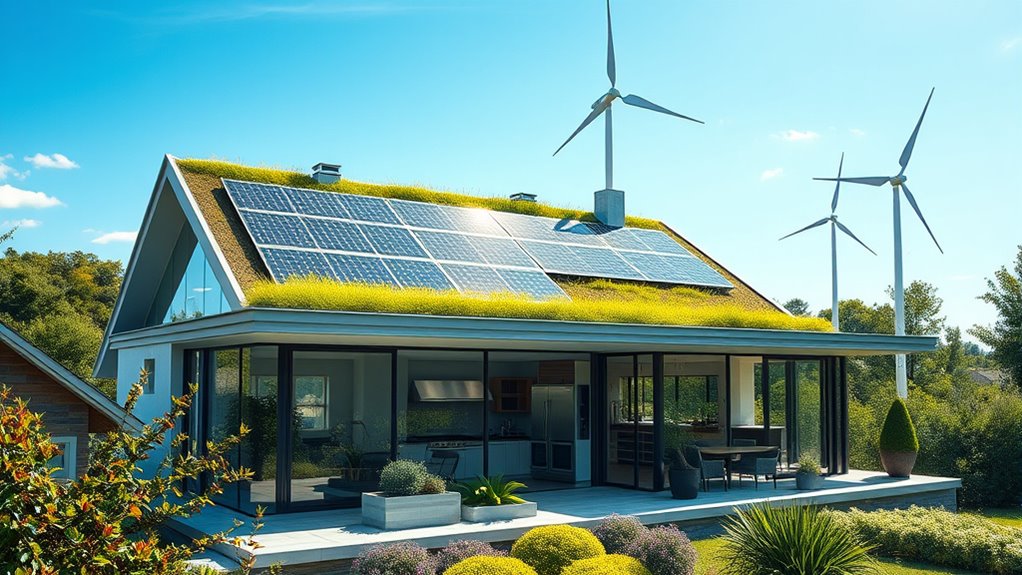
To create energy positive homes, you should start with passive solar design to maximize natural heating and cooling. Choosing efficient building materials reduces energy waste, while integrating renewable energy sources guarantees your home produces more energy than it consumes. By combining these principles, you can design a living space that’s sustainable and cost-effective. Additionally, incorporating Free Floating elements can enhance the flexibility and adaptability of your outdoor spaces, promoting a harmonious balance between nature and energy efficiency. Understanding water management strategies can further optimize energy use by reducing the need for additional heating or cooling. Integrating smart home automation technologies can help monitor and control energy consumption more effectively, leading to greater efficiency and savings. Recognizing the significance of net worth and other financial factors can help homeowners plan investments in energy-efficient upgrades effectively. Emphasizing energy-efficient technologies can also accelerate your path toward a truly energy positive home.
Passive Solar Design
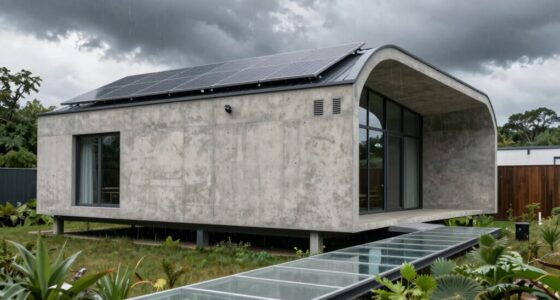
Have you ever wondered how your home can harness the sun’s energy to stay warm in winter and cool in summer? Passive solar design achieves this by optimizing your home’s orientation and structure to naturally regulate temperature. You can position windows to maximize winter sunlight and minimize summer heat gain. Properly placed overhangs shade windows during the hottest months while allowing sunlight in when it’s cold outside. Incorporating thermal mass like concrete or stone helps store heat during the day and release it at night, maintaining comfort. Additionally, strategic landscaping—like deciduous trees—shields summer heat and lets winter sun through. Understanding solar orientation is essential for maximizing energy efficiency in passive solar homes. Employing building materials that have high thermal mass can further enhance temperature regulation and energy savings. Using advanced materials can reduce the weight of structural components, making installation easier and more sustainable. Furthermore, integrating insulation techniques can prevent unwanted heat transfer, optimizing the passive solar design. Exploring passive solar strategies can help homeowners fine-tune their designs for even better energy performance.
Efficient Building Materials
Building with efficient materials enhances your home’s ability to maintain comfortable temperatures while reducing energy consumption. Choosing insulation with high thermal resistance keeps heat inside during winter and out during summer, lowering your HVAC needs. Opt for durable, low-emissivity windows that minimize heat transfer and improve insulation. Use materials like insulated concrete forms or structural insulated panels to create airtight, energy-efficient walls. Incorporate natural, sustainable materials such as bamboo or recycled steel to reduce environmental impact. Properly selected roofing materials can reflect sunlight and reduce heat gain. Additionally, utilizing materials with good thermal mass, like concrete or adobe, helps stabilize indoor temperatures. Incorporating building codes and standards ensures your home meets safety and efficiency guidelines, maximizing its energy-positive potential. Exploring smart IoT technologies can further optimize energy use and monitoring within your home. By prioritizing efficient building materials, you set a solid foundation for an energy-positive home that consumes less power and offers lasting comfort. Additionally, understanding soundproofing techniques can improve indoor acoustic comfort and overall home livability.
Renewable Energy Integration
How can you seamlessly incorporate renewable energy sources into your home’s design to achieve energy positivity? Start by positioning solar panels ideally for maximum sunlight exposure, considering shading and roof angle. Integrate small-scale wind turbines if your location has consistent wind patterns. Use building-integrated photovoltaics (BIPV) to replace conventional building materials with energy-generating alternatives. Incorporate energy storage solutions like batteries to store excess power for cloudy days or nighttime use. Additionally, guarantee your home design allows for easy maintenance and future upgrades of renewable systems.
- Optimize roof orientation and tilt for solar efficiency
- Combine multiple renewable sources for reliability
- Design flexible spaces for easy system access
- Incorporate smart controls for energy management

S.H.I.N.E.® Smart Energy System
Promotes optimal healthy energy, sleep and mental clarity.
As an affiliate, we earn on qualifying purchases.
As an affiliate, we earn on qualifying purchases.
Benefits of Living in an Energy Positive Home
Living in an energy positive home can substantially cut your energy bills, saving you money each month. You’ll also reduce your environmental footprint, helping to protect the planet. Overall, it’s a smart choice that benefits both your wallet and the environment.
Reduced Energy Costs
Are you tired of high energy bills eating into your savings? Living in an energy positive home substantially reduces your monthly expenses. Because your home generates more energy than it consumes, you can lower or even eliminate your utility bills. This extra energy can be stored or fed back into the grid, earning you credits or income. Over time, these savings add up, easing your financial burden. Plus, the reduced reliance on traditional energy sources shields you from rising rates. You’ll also experience fewer interruptions during power outages, thanks to on-site energy storage. Overall, investing in an energy positive home means more money stays in your pocket, giving you financial peace of mind.
- Lower monthly bills from renewable energy production
- Income from selling excess energy back to the grid
- Reduced dependence on fossil fuels and fluctuating rates
- Long-term savings outweigh initial investment costs
Environmental Impact Less
Switching to an energy positive home considerably reduces your carbon footprint by producing clean, renewable energy on-site. This shift minimizes reliance on fossil fuels, which are major greenhouse gas sources. As a result, your home’s environmental impact drops markedly. You’ll help combat climate change and preserve natural resources. Here’s a quick look at how your home benefits the environment:
| Benefit | Impact | Example |
|---|---|---|
| Reduced Emissions | Lowers greenhouse gases released into the atmosphere | Less air pollution |
| Conservation of Resources | Uses renewable energy, reducing resource depletion | Solar panels, wind turbines |
| Less Waste | Minimizes energy waste and pollution | Efficient energy use |
Living in an energy positive home actively supports a healthier planet for future generations.
Challenges and Considerations

While energy positive homes offer significant benefits, they also present several challenges that must be carefully considered. Initial costs can be high, making upfront investments a barrier for many homeowners. You’ll also need to navigate complex design and construction processes to ensure systems work efficiently together. Additionally, integrating renewable energy sources requires ongoing maintenance and monitoring, which might be unfamiliar if you’re new to sustainable living. Local regulations or building codes can sometimes complicate installation or design choices. Moreover, climate and geographic location influence energy generation and storage, requiring tailored solutions.
- High upfront costs and financing hurdles
- Complex design and system integration
- Ongoing maintenance and system monitoring
- Local regulations and geographic limitations
Examples of Energy Positive Homes Worldwide

Around the world, innovative homeowners and architects are creating energy positive homes that generate more power than they consume. In Denmark, the Green Lighthouse in Copenhagen produces excess solar energy, powering nearby buildings and electric vehicles. In Germany, the Sonnenhaus project combines solar panels and efficient insulation, resulting in a net-positive energy balance. Australia’s Crystal Creek Eco-Home uses solar panels, rainwater harvesting, and natural ventilation to achieve energy surplus. The BedZED development in the UK employs solar heating and green roofs, reducing energy needs dramatically. In the United States, the Bullitt Center in Seattle is designed to produce more energy than it uses through solar panels and sustainable materials. These examples demonstrate that energy positive homes are not just theoretical—they’re practical, achievable, and transforming residential standards worldwide.
The Future of Sustainable Residential Architecture

The future of sustainable residential architecture promises to revolutionize how you design and build homes by integrating advanced technologies, eco-friendly materials, and innovative design principles. Expect smarter, more efficient buildings that adapt to your lifestyle while minimizing environmental impact. These homes will incorporate renewable energy sources, such as solar and wind, seamlessly integrated into the design. You’ll see increased use of sustainable materials that reduce carbon footprints and improve indoor air quality. Additionally, adaptive designs will optimize natural light, ventilation, and insulation for maximum efficiency.
- Incorporation of smart home systems for energy management
- Use of biodegradable and recycled construction materials
- Passive design techniques to reduce energy needs
- Modular and flexible layouts for future adaptability
Frequently Asked Questions
What Is the Initial Investment Cost for Building an Energy Positive Home?
You can expect the initial investment for building an energy-positive home to range from about $150,000 to $300,000, depending on size, location, and design features. Higher upfront costs often include advanced insulation, solar panels, energy-efficient systems, and sustainable materials. Although it might seem steep initially, you’ll save money long-term through lower energy bills and potential incentives or rebates, making it a smart, eco-friendly investment in your future.
How Long Does It Take to Recoup the Investment Through Energy Savings?
You’ll typically recoup your investment in 5 to 10 years, much like planting a tree that bears fruit over time. For example, if you save around $2,000 annually on energy costs, a $20,000 investment pays off in about a decade. The more energy-efficient your home and the higher your energy savings, the faster you’ll see returns, turning your home into a long-term financial and environmental asset.
Are Energy Positive Homes Suitable for All Climate Zones?
Energy positive homes are suitable for most climate zones, but your location impacts their efficiency. In colder regions, you’ll need advanced insulation and efficient heating systems, while in warmer climates, focus on cooling and ventilation. You should work with local experts to customize designs that maximize energy production and conservation. Although these homes can thrive almost anywhere, adapting features to your specific climate guarantees peak performance and energy savings.
What Maintenance Is Required to Keep an Energy Positive Home Operational?
You’ll need to regularly clean your solar panels and check your energy systems to keep your energy positive home running smoothly. Sometimes, dust or debris coincidentally accumulates, reducing efficiency, so routine maintenance prevents this. It’s also wise to inspect the insulation and seals periodically, ensuring your home stays energy-efficient. By staying proactive with these simple tasks, you’ll maximize your home’s energy production and keep everything operational without surprises.
Can Existing Homes Be Retrofitted to Become Energy Positive?
Yes, you can retrofit existing homes to become energy positive. Start by upgrading insulation, sealing leaks, and installing energy-efficient windows. Add solar panels and consider solar water heating systems. Improve your heating, cooling, and lighting systems with smart, efficient options. You might also upgrade appliances to ENERGY STAR rated models. These changes reduce energy consumption and generate excess energy, helping your home produce more energy than it uses.
Conclusion
Imagine stepping into a home that quietly gives back more than it takes, like a gentle river flowing with abundance. As you embrace energy positive living, you become part of a harmonious dance with nature, where every sunny day and breeze fuels your sanctuary. While some hurdles remain, your journey toward a brighter, more sustainable future is like planting seeds of hope that blossom into a vibrant, resilient home—your personal oasis of balance and renewal.