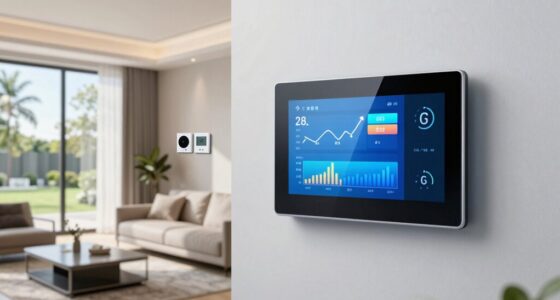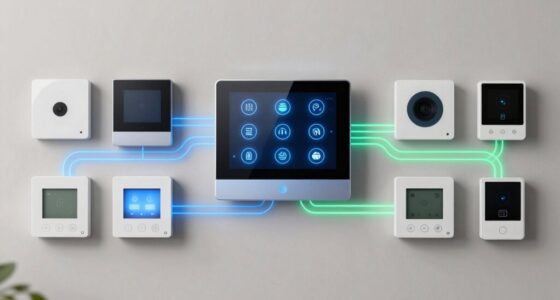
Smart homes integrate with modern power grids through advanced communication protocols, automation, and smart devices that optimize energy use. This coordination helps improve energy efficiency, stability, and sustainability by enabling real-time data sharing and demand response. While challenges like compatibility and security exist, policies and standards are shaping a more seamless connection. If you continue exploring, you’ll discover how these technologies are shaping a smarter, greener future for your home and the grid.
Key Takeaways
- Smart home technologies enable remote control, automation, and energy management through centralized hubs and compatible communication protocols.
- Integration with the smart grid allows real-time energy flow adjustments, demand response, and enhanced grid stability.
- Renewable energy sources like solar panels can be optimized with automation, enabling homes to reduce costs and feed excess energy back into the grid.
- Communication protocols such as Zigbee and Z-Wave ensure secure, reliable data exchange between smart devices and grid infrastructure.
- Policies and incentives accelerate adoption, supporting seamless smart home and grid integration for increased energy efficiency and sustainability.
Understanding Smart Home Technologies

Smart home technologies have revolutionized the way you manage and interact with your living space. With voice control, you can effortlessly command devices, adjusting lighting, temperature, or playing music without lifting a finger. Home automation systems connect your appliances and sensors, creating seamless routines that fit your lifestyle. For example, your smart thermostat can learn your preferred temperatures and adjust automatically, saving energy and enhancing comfort. These systems often integrate through centralized hubs or apps, giving you control from anywhere. As you adopt these technologies, you’ll notice how intuitive and convenient your home becomes. Additionally, privacy and responsible use are important considerations when integrating smart devices into your home environment, especially given the increasing connectivity of smart home networks. Incorporating high-quality, color-accurate displays can further improve your experience by providing clearer, more vibrant visuals. Understanding Free Floating systems can help you better customize your setup to suit your needs. Furthermore, paying attention to security protocols is essential to protect your smart home from potential cyber threats.
The Role of the Power Grid in Smart Living
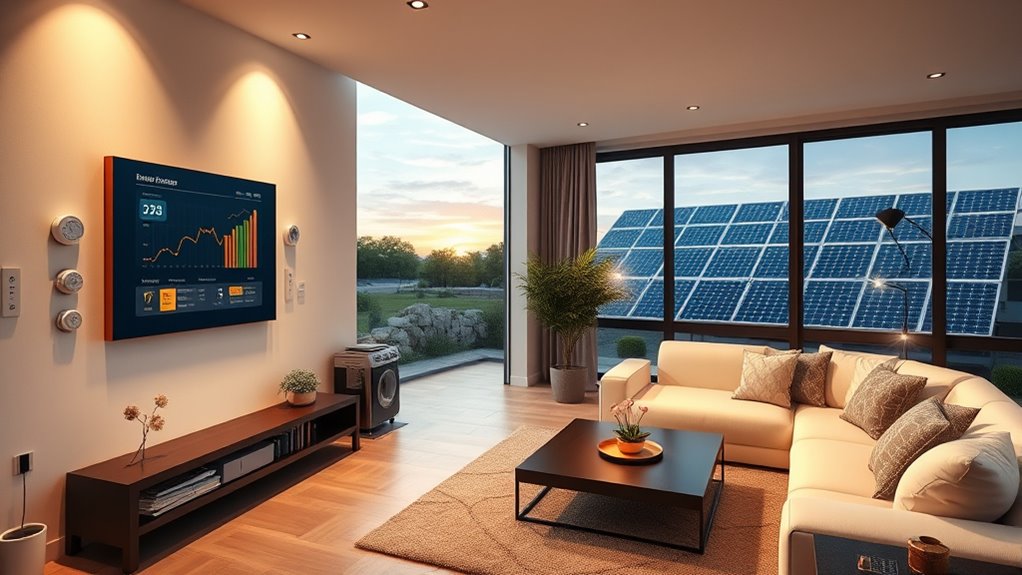
Your smart home relies on a stable and reliable power grid to function smoothly. Advanced smart grid technologies help manage energy flow and prevent outages, ensuring consistent service. Effective energy management strategies allow you to optimize usage and support a sustainable, intelligent living environment. Additionally, understanding energy flow management is essential for maintaining the efficiency and resilience of your smart home system. Incorporating European cloud infrastructure can further enhance data security and system reliability, underpinning your home’s smart capabilities with sustainable solutions. Recognizing the importance of cybersecurity measures is also crucial to protect your connected devices from potential threats and ensure ongoing system integrity. Implementing smart grid integration can improve overall system responsiveness and adaptability to changing energy demands. Moreover, adopting renewable energy sources can enhance the sustainability and independence of your smart home’s energy system.
Grid Stability and Reliability
As homes become smarter and more connected, maintaining grid stability and reliability becomes increasingly essential. Your smart devices can adjust energy consumption through demand response programs, helping balance supply and demand during peak times. This not only reduces strain on the grid but also contributes to cybersecurity by protecting your smart home from potential cyber threats that could disrupt power management systems. This reduces strain on the grid, preventing outages and ensuring consistent power quality. When your appliances and systems respond to grid signals, they support a stable energy flow, minimizing fluctuations that can cause disruptions. Reliable power quality means fewer surges, dips, or interruptions, which are crucial for your smart home’s performance. Participating in demand response programs actively contributes to a more resilient and efficient energy system that keeps your smart home running smoothly around the clock. By actively participating in demand response and helping maintain grid stability, you contribute to a more resilient, efficient energy system that keeps your smart home running smoothly around the clock. Integrating renewable energy sources further enhances grid stability and supports sustainable living. Additionally, understanding the importance of power grid evolution helps consumers appreciate how technological advances are shaping a more adaptable and sustainable energy future. Moreover, advanced grid management techniques enable better integration of various energy sources and improve overall reliability.
Smart Grid Technologies
Smart grid technologies transform the way energy flows between power sources and your home, making the entire system more efficient and responsive. They enable the integration of distributed energy resources, such as solar panels and small-scale generators, directly into the grid. This allows you to generate, store, and use energy more flexibly. Demand response plays a vital role here, allowing the grid to adjust power consumption based on real-time needs, helping to balance supply and demand. When demand is high, smart grid systems can reduce or shift your energy use to off-peak times, saving you money and easing strain on the grid. These technologies foster a more resilient, sustainable energy system, empowering you to participate actively in energy management and contribute to overall grid stability. Uncovering the secrets of how these systems operate reveals their potential to transform our understanding of energy and the supernatural realm.
Energy Management Strategies
How does the power grid support efficient energy management in smart living? It enables seamless integration with your home automation systems, optimizing energy use and promoting conservation. The grid accomplishes this through:
- Real-time data sharing that adjusts energy flow based on demand and supply, preventing waste.
- Dynamic pricing models that encourage you to shift high-energy tasks to off-peak hours.
- Automated control of appliances and systems, ensuring energy conservation without sacrificing comfort.
- Navigation and mapping explainers help optimize the coordination of multiple connected devices, enhancing overall efficiency. Additionally, advanced grid management technologies improve the reliability and stability of energy distribution within smart homes. These technologies also facilitate demand response programs, which incentivize consumers to reduce or shift their energy use during peak times. In addition, energy storage solutions play a vital role in balancing supply and demand by storing excess energy for later use, further supporting grid efficiency. Moreover, smart sensors and meters provide detailed insights into energy consumption patterns, enabling more precise management.
These strategies enable you to better manage your energy consumption while maintaining a smart, connected home. By leveraging the grid’s capabilities, you can reduce costs, minimize environmental impact, and enjoy a more efficient living environment. The power grid plays an essential role in making smart homes truly sustainable.
How Smart Devices Communicate With the Grid
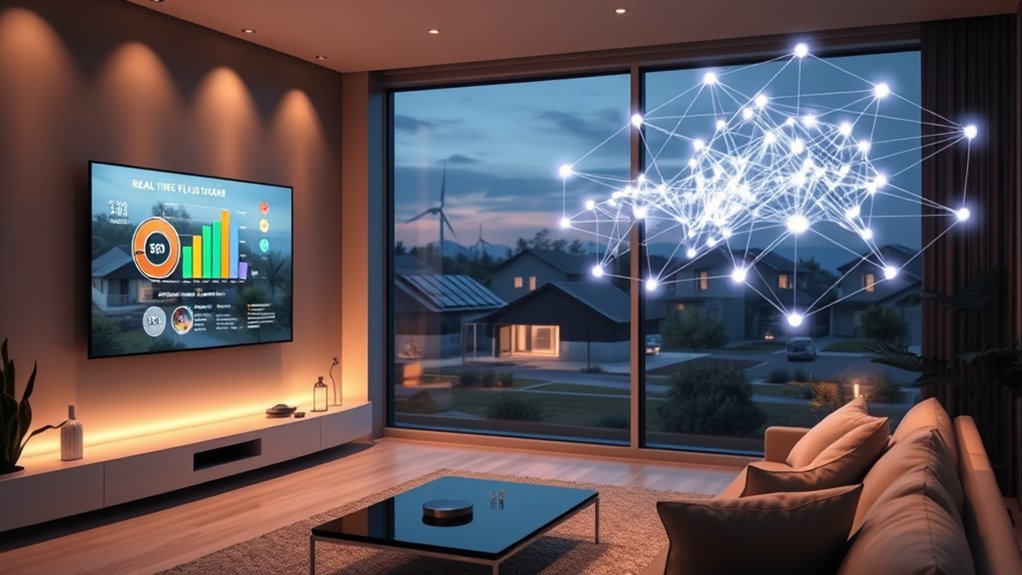
Smart devices communicate with the grid through a combination of protocols and communication technologies that guarantee seamless data exchange. You rely on device communication methods that adhere to established protocol standards, ensuring compatibility and security. These protocols, such as Zigbee, Z-Wave, and Wi-Fi, enable your smart devices to send and receive information efficiently. When your thermostat adjusts settings or your smart meter reports usage, they use these standardized protocols to connect with the grid infrastructure. This communication allows for real-time data sharing, enabling the grid to respond dynamically to your energy consumption. By following recognized protocol standards, your smart devices maintain reliable, secure, and interoperable connections, making the entire system more responsive and efficient. Vintage design elements can also enhance the aesthetic appeal of your smart home, blending retro charm with modern technology for a timeless look.
Benefits of Integrating Smart Homes With the Grid
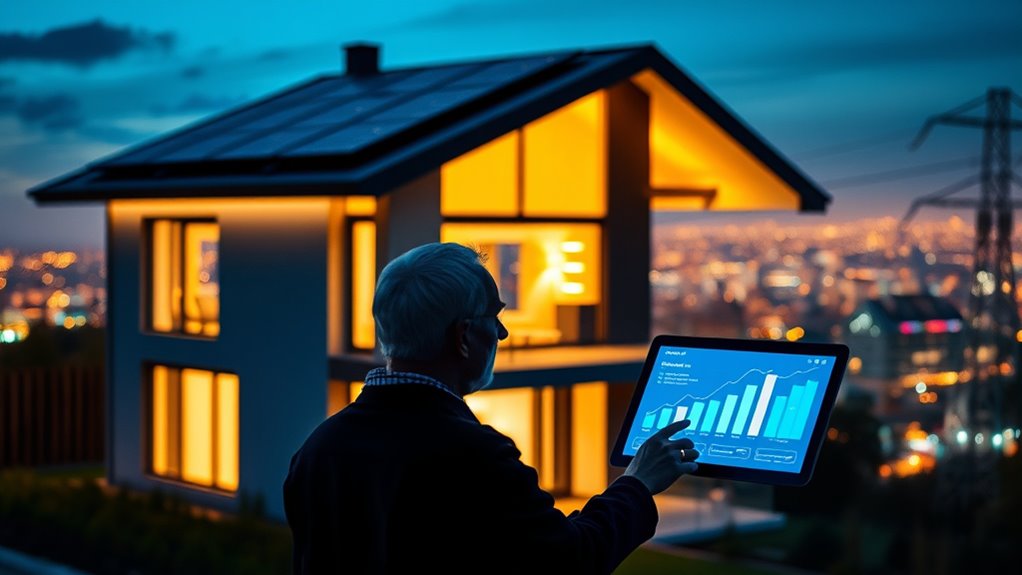
When you connect your smart home to the grid, you can boost your energy efficiency and save on costs. This integration also helps maintain greater grid stability, reducing the risk of outages. Together, these benefits make your home more sustainable and reliable. Additionally, smart appliance integration can be seamlessly incorporated into your system to further enhance daily comfort and efficiency.
Enhanced Energy Efficiency
Integrating smart homes with the grid substantially boosts energy efficiency by enabling better coordination and real-time adjustments. By leveraging home automation, your system can optimize energy use automatically. Consider these benefits:
- Smart appliances adjust their operation based on grid signals, reducing unnecessary consumption.
- Home automation systems coordinate heating, cooling, and lighting to minimize waste.
- Real-time data helps you identify energy hotspots and make informed decisions to save power.
This integration ensures appliances run only when needed, cutting costs and lowering your carbon footprint. It also allows your home to respond dynamically to energy demand, preventing overloads. Overall, it creates a more efficient energy ecosystem, making your home smarter and greener.
Greater Grid Stability
By connecting your home systems to the grid, you help stabilize overall energy flow and prevent outages. Smart home automation adjusts devices based on real-time data, smoothing out fluctuations caused by variable energy consumption patterns. When your smart systems coordinate with the grid, they can reduce strain during peak times and increase supply during lows. This dynamic interaction prevents overloads, making the entire system more resilient. Your ability to manage energy consumption patterns effectively supports grid stability, especially as renewable sources like solar and wind become more prevalent. Overall, integrating smart homes with the grid creates a more reliable, balanced energy network that benefits everyone by reducing blackouts and ensuring consistent power delivery.
Challenges in Achieving Seamless Grid Integration
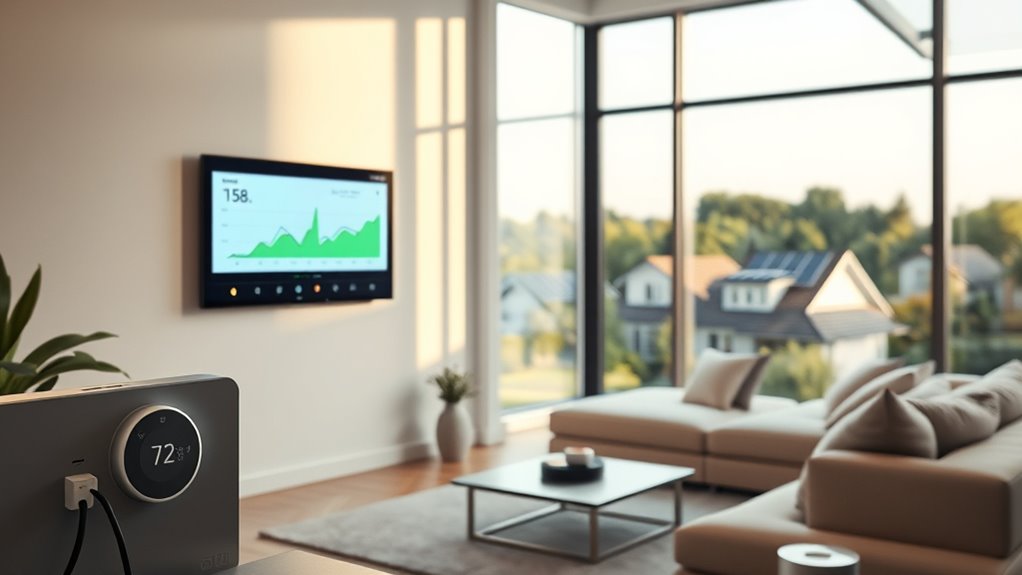
What are the main obstacles preventing smart homes from seamlessly connecting with the grid? First, retrofitting challenges arise as existing homes require costly upgrades to support smart technology and grid communication. Second, user acceptance is essential; homeowners may hesitate to adopt new systems due to privacy concerns or perceived complexity. Third, technical issues like ensuring reliable communication between devices and the grid can be complex, leading to inconsistent performance. Overcoming these hurdles demands collaboration among manufacturers, policymakers, and consumers. Addressing retrofitting challenges involves developing affordable, non-intrusive solutions, while building user trust requires transparent data policies. Ultimately, achieving seamless integration hinges on making smart tech accessible, secure, and easy to adopt for every homeowner.
Renewable Energy and Smart Home Synergies
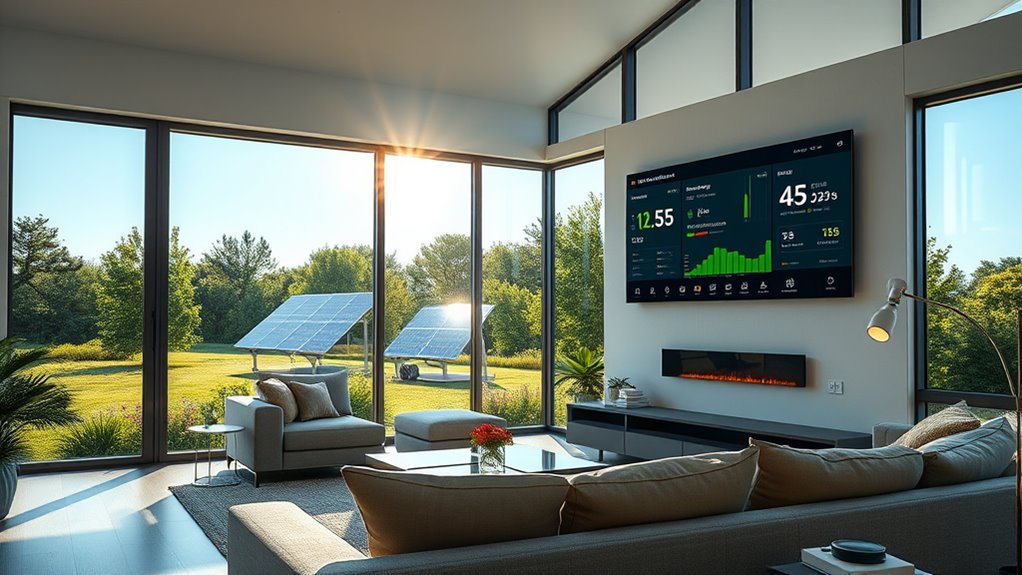
As smart homes become more connected to the grid, their ability to harness renewable energy sources offers promising opportunities. You can integrate solar panels with home automation to optimize energy use, reducing costs and carbon footprint. Automated systems can monitor solar energy production and adjust household consumption accordingly, maximizing efficiency. Imagine a home that automatically dims lights or runs appliances during peak solar generation periods. Here’s a glimpse of how this synergy looks:
| Solar Panels | Home Automation |
|---|---|
| Generate clean energy | Control devices remotely |
| Feed excess energy back | Schedule energy use |
| Monitor performance | Automate energy-saving |
| Reduce reliance on grid | Optimize consumption |
Energy Management Systems and Grid Optimization
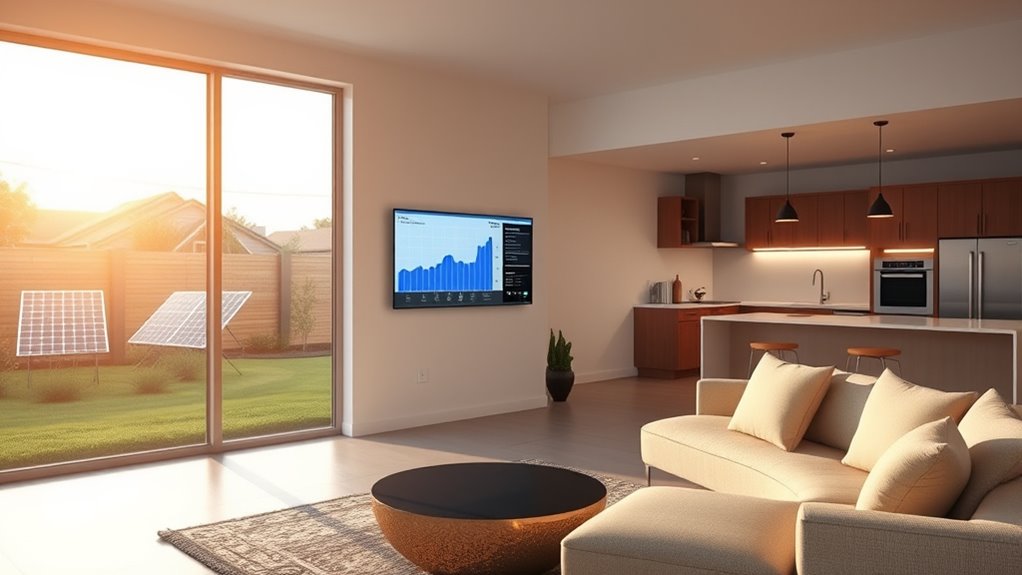
Energy Management Systems (EMS) play a crucial role in optimizing grid performance by intelligently coordinating energy flow between homes and the broader electrical network. They enable you to achieve demand flexibility and improve load balancing, which are essential for grid stability. Here’s how EMS enhances grid efficiency:
- Prioritize energy use during low-demand periods to reduce strain.
- Adjust consumption based on real-time grid conditions.
- Enable demand response strategies that shift or reduce peak loads.
Security and Privacy Concerns in Smart Grid Integration
While smart grid integration offers significant benefits, it also introduces critical security and privacy challenges that you need to address. One major concern is data breaches, which can expose sensitive information about your energy usage patterns and personal habits. Hackers may target smart meters or communication channels, risking your privacy and the grid’s stability. Protecting user anonymity is essential to prevent unauthorized tracking of your activities. Without proper safeguards, your data could be linked back to you, compromising your privacy. Implementing strong encryption, secure authentication, and regular security updates can help mitigate these risks. Staying vigilant about potential vulnerabilities ensures that you enjoy the advantages of smart grid technology without sacrificing your security or privacy.
Future Trends in Smart Home and Grid Connectivity
Emerging technologies and innovative standards are shaping the future of smart home and grid connectivity, making systems more efficient, reliable, and user-friendly. You can expect to see:
- Wireless sensors that seamlessly monitor energy use, enhancing automation and reducing waste.
- Advanced voice control systems that allow intuitive management of appliances and energy devices.
- Integration of AI-driven algorithms to optimize energy consumption based on your habits and real-time data.
These advancements will enable you to effortlessly control your home environment, improve energy efficiency, and stay connected with the grid. As wireless sensors become more sophisticated and voice control more natural, your smart home will become an even more integral part of the energy ecosystem, paving the way for smarter, more sustainable living.
Policies and Regulations Shaping Smart Grid Development
Policies and regulations play a vital role in encouraging smart grid adoption by offering incentives and setting standards. These measures guarantee that smart homes and grid systems are compatible and efficient. Understanding how policy shapes these developments helps you navigate the evolving energy landscape.
Policy Incentives for Adoption
Have you ever wondered how government policies and regulations accelerate the adoption of smart homes and integrated grids? Policies create incentives that encourage homeowners and utilities to invest in technology. For example, 1. tax credits for installing wireless sensors improve monitoring and control. 2. Subsidies for energy storage systems make it more affordable to store excess renewable energy. 3. Mandates for smart meter deployment push utilities to upgrade infrastructure. These incentives guide consumers toward adopting innovative solutions, enabling better energy management and grid stability. By reducing costs and encouraging technological integration, policies facilitate the *progression* to smarter, more efficient homes. Your engagement with these incentives can accelerate the shift to a more sustainable and resilient grid future.
Standards and Grid Compatibility
Building a seamless and reliable smart grid depends on establishing clear standards and guaranteeing compatibility among various technologies. Effective standards development sets guidelines for interoperability, making sure devices from different manufacturers work together smoothly. Compatibility testing is essential to verify that new equipment and software meet these standards before deployment. Governments and industry stakeholders play a vital role in creating policies that promote uniformity and safety. Without consistent standards, smart homes and grid components risk malfunction or limited integration. By prioritizing compatibility testing and robust standards development, you ensure your smart home systems can communicate seamlessly with the grid. This coordination enhances efficiency, reliability, and security, ultimately supporting a resilient and future-proof smart grid network.
Frequently Asked Questions
How Does Smart Grid Integration Affect Household Energy Costs?
Smart grid integration can lower your household energy costs through energy cost savings and demand response programs. By participating in these programs, you help balance supply and demand, which often leads to lower rates during peak times. Your smart devices automatically adjust usage, reducing your bills and supporting grid stability. This proactive approach makes your energy consumption more efficient, saving you money while benefiting the overall energy system.
What Are the Potential Health Impacts of Smart Home Wireless Devices?
Wireless radiation from your smart home devices can raise health concerns, causing confusion and discomfort. While most studies show low exposure levels, some worry about potential effects like headaches or sleep issues. You should stay informed and limit prolonged exposure if you’re concerned. By understanding wireless radiation‘s risks, you can make mindful choices, ensuring your home’s high-tech harmony doesn’t harm your health or happiness.
Can Smart Home Systems Operate Independently Without Grid Connection?
Yes, your smart home systems can operate independently without a grid connection through standalone operation. You’ll need a backup power source, like a generator or batteries, to keep essential devices running during outages. This setup guarantees your smart home remains functional, allowing you to control systems and access security features even when the grid is down. Planning for backup power is key to maintaining your smart home’s independence.
How Are Vulnerable Populations Protected During Grid Outages or Cyberattacks?
During grid outages or cyberattacks, vulnerable populations are protected through disaster preparedness plans and community resilience efforts. You should guarantee backup power sources, like generators, are available and accessible. Local agencies often offer resources and support to those in need. Community programs can provide education and coordination, helping at-risk individuals stay safe. By staying informed and connected, you help strengthen resilience and reduce risks during emergencies.
What Training Is Needed for Consumers to Effectively Manage Smart Grid Technologies?
Imagine becoming a superhero of your own energy universe! You need smart home security and energy management education to master smart grid technologies. Get trained on how to monitor devices, optimize energy use, and respond swiftly to alerts. This knowledge empowers you to prevent issues, protect your home, and maximize efficiency. With the right training, you’re not just a user—you’re a smart grid hero capable of managing your energy destiny!
Conclusion
As you embrace smart home tech, remember it’s not just about convenience—it’s about balancing comfort with security. While seamless grid integration promises efficiency, it also introduces privacy concerns. You can enjoy a future where your home intelligently manages energy, yet stay vigilant against potential risks. In this dance between innovation and caution, you hold the key to creating a smarter, safer living environment that benefits both you and the grid.