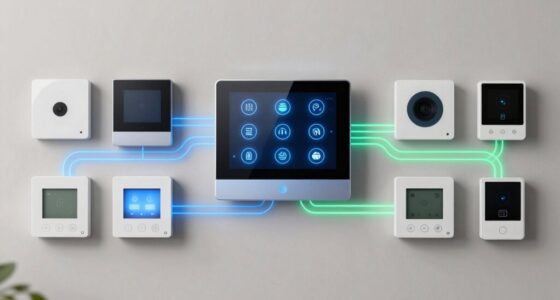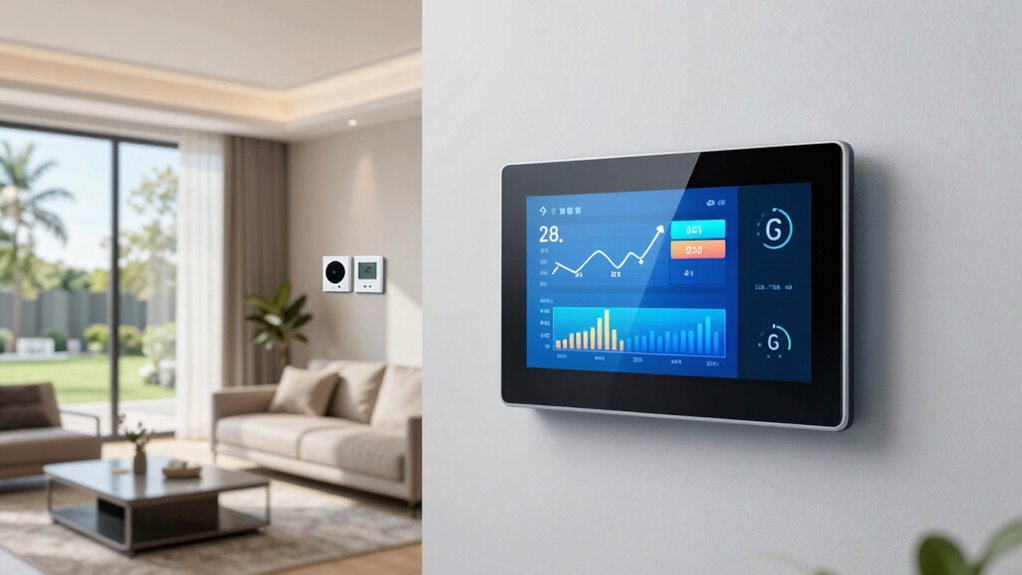

Smart homes help you cut energy waste by using sensors and automation to adjust heating, cooling, and lighting based on occupancy and natural light. They offer real-time energy insights and remote controls, so you can manage devices more efficiently. Smart thermostats learn your preferences, while appliance scheduling shifts usage to off-peak hours. Integrating renewable energy and smart grid technology further reduces your carbon footprint. Keep exploring to discover how these innovations can save you energy and money.
Key Takeaways
- Smart sensors and automation adjust heating, cooling, and lighting based on occupancy and natural conditions to prevent unnecessary energy use.
- Real-time energy monitoring provides insights for homeowners to identify and reduce wasteful consumption.
- Automated scheduling and remote control optimize appliance operation during off-peak hours, lowering energy costs.
- Learning algorithms analyze routines and adjust device settings proactively, minimizing unnecessary energy expenditure.
- Integration with smart grids enables homes to respond to energy supply fluctuations, maximizing renewable resource use and efficiency.
The Role of Sensors and Automation in Energy Management
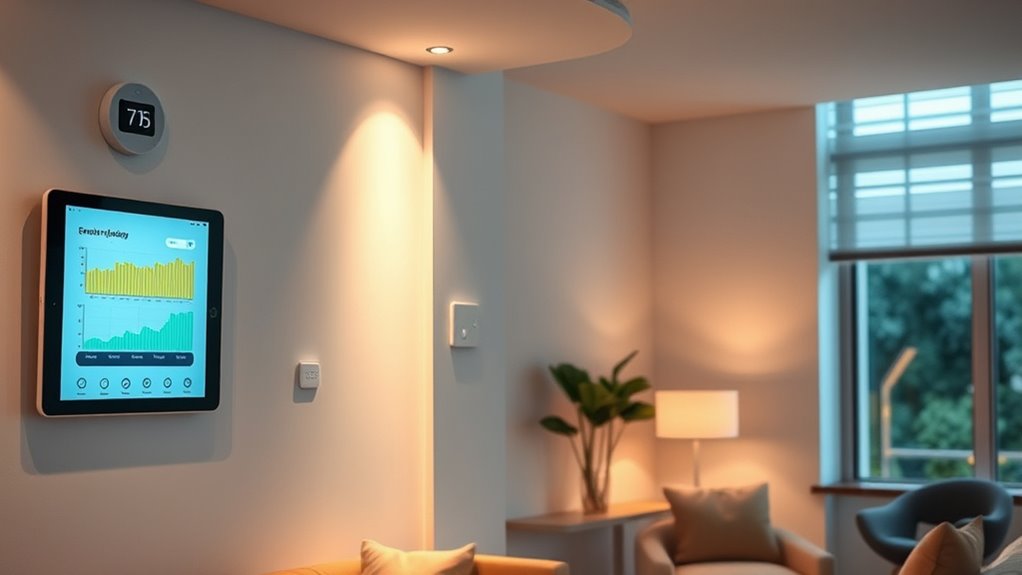
Have you ever wondered how smart homes optimize energy use so effectively? Sensors and automation play a vital role in this process. They monitor your home’s environment, adjusting heating, cooling, and electrical devices automatically. This targeted control reduces unnecessary energy consumption and saves you money. Additionally, integrating European cloud servers can enhance the reliability and security of your smart home systems, ensuring data is stored and processed within trusted infrastructure. This setup can also facilitate cross-platform functionality, allowing seamless control across devices and systems. This integration can also support local automation and cross‑platform functionality, making your smart home more adaptable. Moreover, implementing energy monitoring systems can provide real-time insights into energy usage, helping you identify areas for further efficiency improvements. To maximize benefits, manufacturers should incorporate robust security measures that protect against potential cyber threats. However, with all this data collection, security breaches and privacy concerns can arise. If hackers access your sensors or automation systems, they could manipulate settings or steal personal information. That’s why strong security measures are indispensable. Manufacturers must prioritize data protection and ensure secure connections. When implemented carefully, sensors and automation not only enhance energy efficiency but also safeguard your privacy, giving you peace of mind while your smart home works intelligently to reduce waste.
Intelligent Lighting Systems for Efficient Use
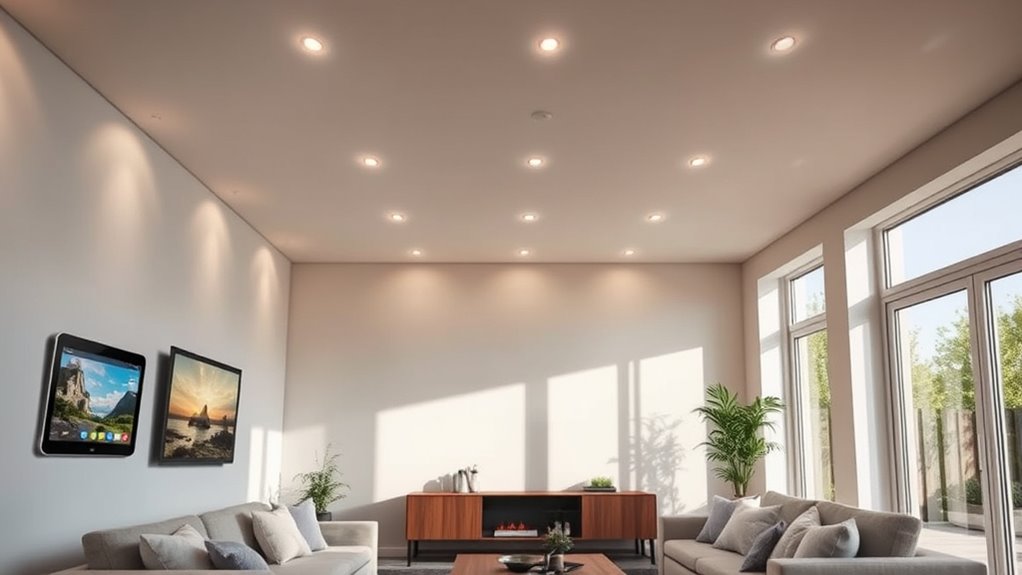
Intelligent lighting systems use sensors and smart controls to adjust brightness and color based on occupancy and natural light levels. By automatically dimming or brightening lights, you save energy and create a comfortable environment. Voice command integration makes controlling lighting easy—you can turn lights on, off, or change settings with simple voice prompts, enhancing convenience. These systems also support aesthetic lighting design, allowing you to customize ambiance for different moods or activities, all while maintaining energy efficiency. Additionally, real-time monitoring helps you track energy consumption and identify opportunities for further savings. Implementing energy management technology ensures your home maximizes efficiency and reduces waste. The integration of smart home devices further streamlines energy use and can be tailored to your lifestyle. You won’t need to worry about leaving lights on accidentally, as occupancy sensors detect when rooms are empty and turn lights off automatically. Incorporating smart lighting controls can further optimize the system’s performance and user experience. Overall, intelligent lighting systems optimize energy use without sacrificing style or comfort, making your home smarter and more sustainable. An understanding of thermal behavior can also help in designing lighting setups that work harmoniously with natural light, further enhancing energy savings.
Smart Thermostats and Climate Control
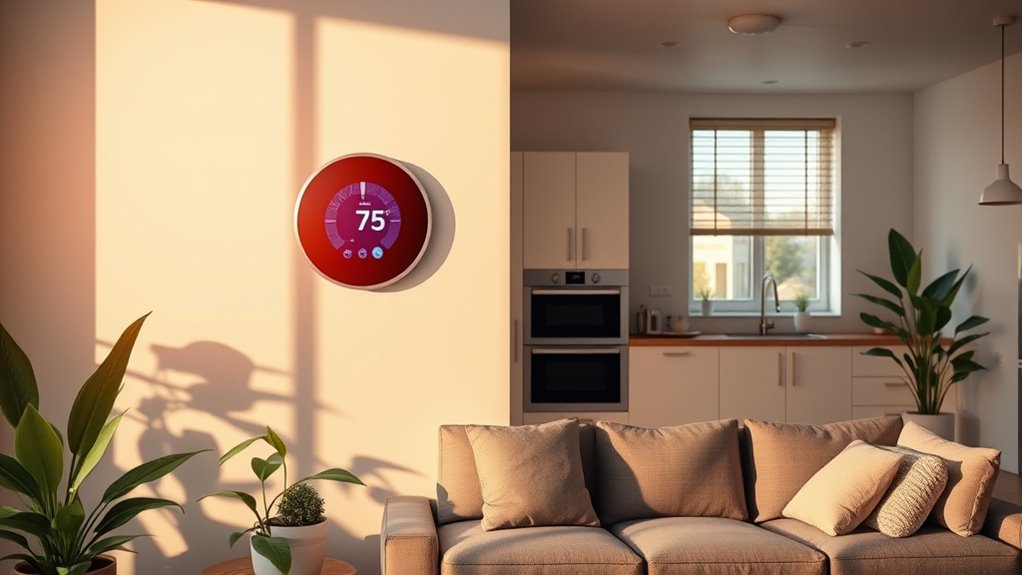
Building on the efficiency of smart lighting, smart thermostats and climate control systems further optimize your home’s energy use by automatically adjusting temperature settings based on occupancy, time of day, and weather conditions. With voice commands, you can effortlessly change the temperature without manual adjustments, making it convenient to stay comfortable while saving energy. These systems learn your preferences over time, adjusting settings proactively to prevent unnecessary heating or cooling. You won’t need to worry about forgetting to turn off the heater or AC when leaving the house, as the thermostat detects when rooms are empty and adjusts accordingly. This intelligent climate control reduces energy waste, lowers utility bills, and enhances your comfort, all while giving you simple control through voice commands or minimal manual adjustments. Additionally, many of these systems incorporate energy monitoring features that help you track your usage and identify further opportunities for efficiency, making it easier to understand your energy consumption patterns. Incorporating smart sensors can further fine-tune climate adjustments by providing real-time environmental data. Modern systems also utilize adaptive algorithms to improve their accuracy and efficiency over time.
Automated Appliance Scheduling and Power Optimization

With automated appliance scheduling, you can set timed operations to run when energy costs are lowest. Adaptive power usage adjusts in real-time, helping you save without sacrificing comfort. Plus, remote control options let you manage devices easily, no matter where you are. Implementing energy-efficient technology in your smart home can further enhance these savings by optimizing power consumption across all connected devices. Incorporating smart home integration allows for more seamless coordination between devices, maximizing energy savings even further. Additionally, utilizing real-time monitoring can provide insights into your energy consumption patterns, enabling smarter adjustments and increased efficiency. Understanding contrast ratio and how it affects image quality can help you optimize your home entertainment setup for both energy use and visual performance, ensuring your system is both efficient and high-quality. Integrating connected devices promotes better overall control and efficiency within your smart home ecosystem.
Timed Appliance Operations
Have you ever wondered how scheduled appliance operation can cut energy waste? By using timed appliance operations, your smart home can optimize energy consumption without sacrificing comfort. You set precise appliance timing, so devices run only when needed, avoiding unnecessary energy use. For example, your washing machine or dishwasher can automatically start during off-peak hours, reducing strain on the grid and lowering energy costs. Timed operations ensure appliances don’t run continuously or idle unnecessarily, which minimizes waste. This automation allows your home to operate efficiently, saving you money and reducing your carbon footprint. Smart-home integrations can further enhance scheduling capabilities by coordinating multiple devices for maximum efficiency. Incorporating energy management systems can provide even more detailed control over your energy use and help identify areas for improvement. Additionally, integrating home automation can enable more sophisticated timing strategies tailored to your lifestyle. Moreover, the use of nanotechnology-enabled sensors can improve the precision and responsiveness of your energy management strategies, leading to even greater efficiency.
Adaptive Power Usage
Adaptive power usage leverages automated scheduling to dynamically optimize your appliances’ energy consumption based on real-time needs and patterns. By integrating with the smart grid, your home can respond intelligently to fluctuations in energy supply and demand. Energy analytics monitor usage trends, enabling your systems to adjust appliance operation efficiently. This reduces waste, lowers costs, and supports grid stability. You might see your smart home:
- Automatically delaying dishwasher runs for off-peak hours
- Adjusting heating or cooling based on occupancy patterns
- Shutting off unused devices during peak times
- Prioritizing energy-efficient appliance cycles
- Coordinating device use to maximize renewable energy intake
These features make your home more responsive, saving energy while maintaining comfort. Adaptive power usage exemplifies how smart technology enhances energy management through real-time insights and automation.
Remote Control Convenience
Automated appliance scheduling gives you the convenience of controlling your devices remotely, ensuring they operate efficiently without manual intervention. With remote access, you can turn appliances on or off from anywhere, saving energy when you’re away. Using voice commands, you can effortlessly adjust your smart home’s settings, making power management simple and quick. For example, you might ask your smart assistant to power down the lights or adjust the thermostat, reducing unnecessary energy use. This level of control helps prevent appliances from running when not needed, cutting down waste and lowering your energy bills. The combination of remote access and voice control makes managing your home’s energy consumption seamless, giving you peace of mind and promoting smarter, more sustainable living.
Remote Monitoring and Control Capabilities
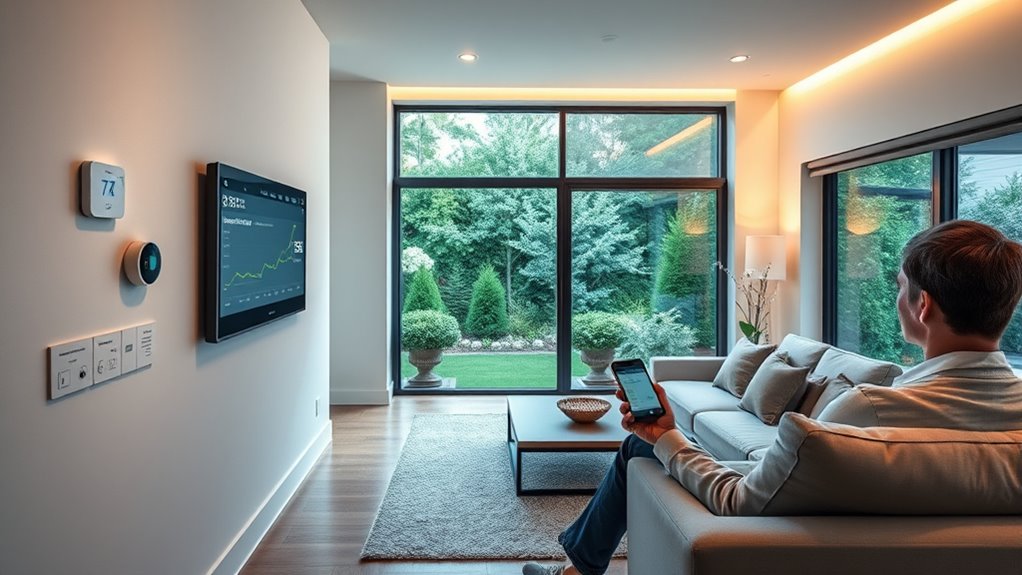
With remote monitoring and control, you can see your energy use in real time and make quick adjustments. Automated device management guarantees your appliances operate efficiently without your constant input. This technology puts you in control, helping you save energy effortlessly.
Real-Time Energy Tracking
Real-time energy tracking allows you to monitor your home’s energy use instantly, giving you immediate insights into consumption patterns. With this technology, you can see how much energy your appliances and systems consume at any moment, helping you identify inefficiencies. You’ll gain access to real-time efficiency metrics, enabling smarter decisions to reduce waste. This ongoing data helps you adjust your habits proactively and optimize energy use.
- View live energy consumption on your device
- Detect unusual spikes or drops instantly
- Set alerts for high energy use
- Compare current data with historical trends
- Make informed decisions to improve efficiency metrics
Automated Device Management
By enabling remote monitoring and control capabilities, smart homes allow you to manage your devices effortlessly from anywhere. You can adjust thermostats, turn off unused appliances, or set lighting schedules with simple voice commands or through your smartphone app. This automation aligns with your user preferences, ensuring your home operates efficiently without your constant input. For example, you might program your HVAC system to lower the temperature during work hours or turn on lights before you arrive home. Automated device management not only saves energy but also reduces waste by preventing unnecessary operation. With these features, you stay in control of your energy use, no matter where you are, making your home smarter and more eco-friendly.
Learning Algorithms and Adaptive Energy Usage
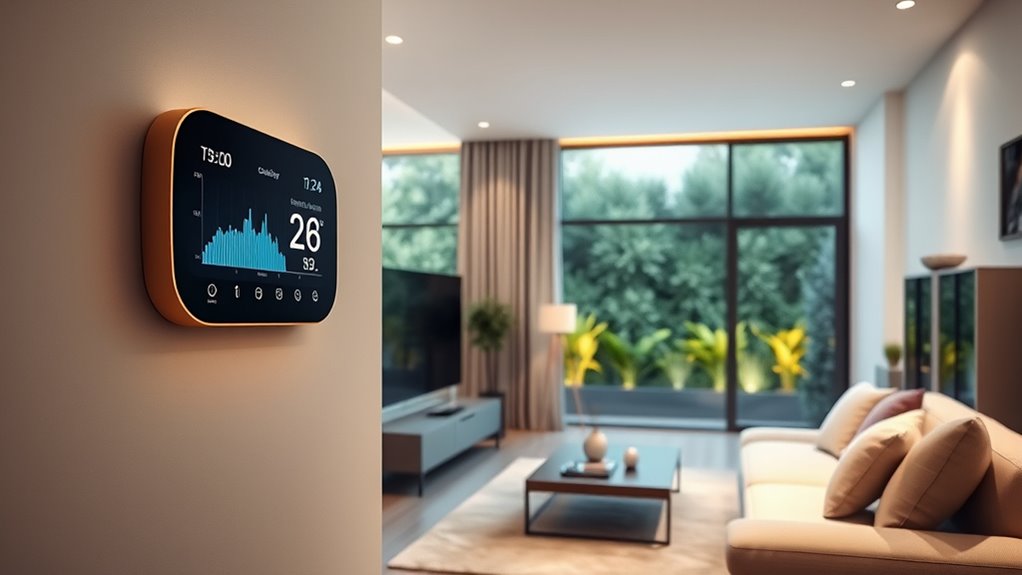
Learning algorithms are transforming how smart homes manage energy, enabling systems to adapt to your habits and preferences. By analyzing your daily routines, these algorithms optimize energy consumption and reduce waste. They learn when you’re most active, idle, or asleep, adjusting settings automatically for maximum efficiency. This personalization helps lower energy bills while maintaining comfort.
- Recognize patterns in your energy use
- Adjust heating and cooling based on occupancy
- Predict future energy needs
- Minimize unnecessary device operation
- Improve overall energy management
With these capabilities, your smart home becomes smarter over time, making decisions rooted in your user behavior. This adaptation guarantees you use energy only when needed, cutting waste and supporting sustainability goals.
Integration With Renewable Energy Sources
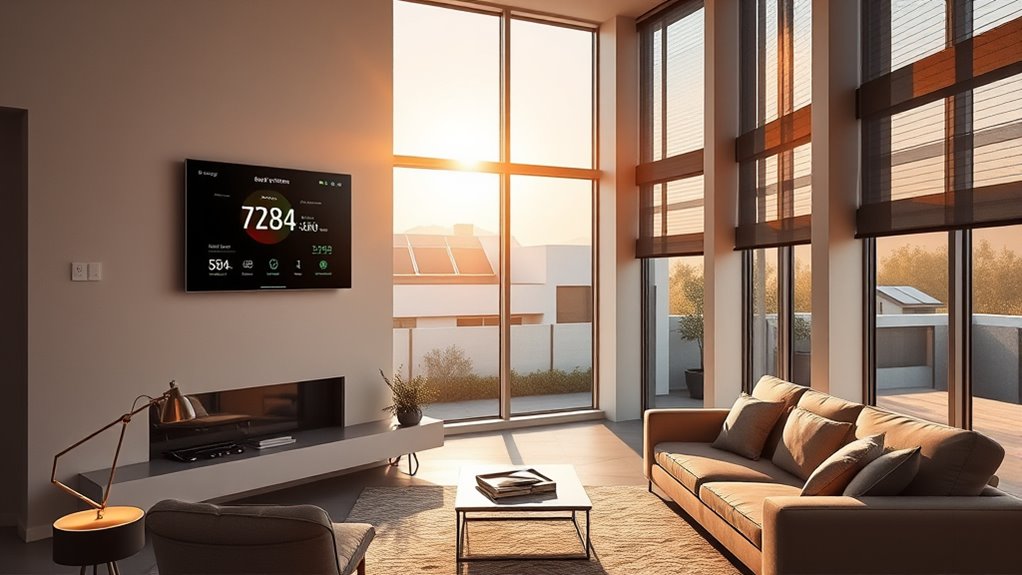
How can smart homes seamlessly incorporate renewable energy sources into their daily operations? By leveraging solar integration, your home can harness sunlight efficiently through solar panels, generating clean energy on-site. Smart systems monitor energy production and consumption in real time, optimizing how you use solar power and reducing reliance on the grid. Grid synergy allows your home to interact intelligently with the main electricity network, storing excess solar energy for later use or feeding it back into the grid when needed. This seamless integration guarantees maximum utilization of renewable resources, minimizes waste, and enhances overall energy efficiency. With smart technology coordinating these processes, your home becomes a more sustainable, cost-effective energy solution that adapts automatically to your lifestyle and energy demands.
Benefits for the Environment and Cost Savings
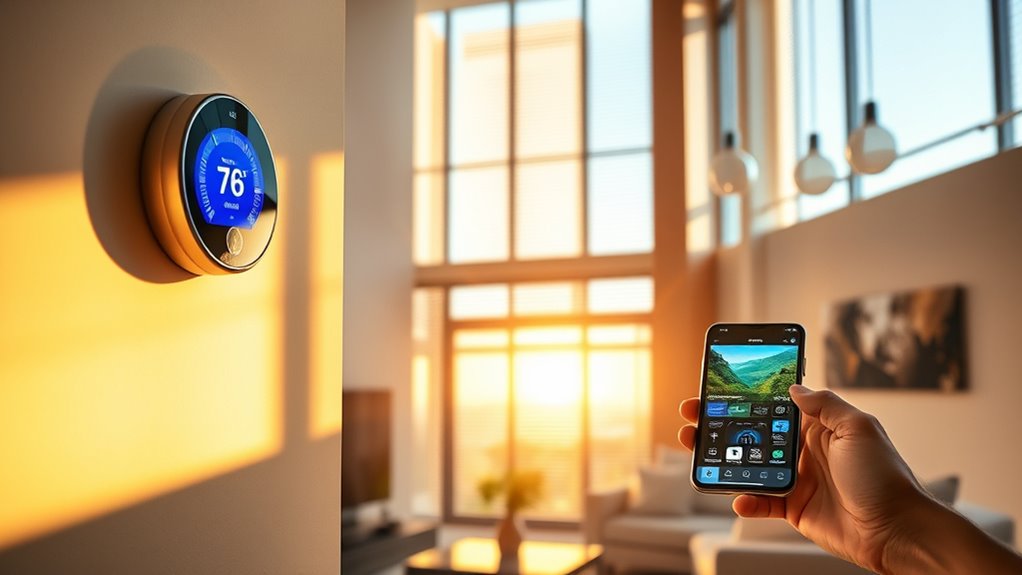
Smart homes offer significant environmental and financial benefits by reducing energy waste and lowering utility bills. With smart home design, you can optimize energy use seamlessly, saving money while helping the planet. Plus, aesthetic integration ensures devices blend perfectly with your home’s decor, making efficiency stylish. Here’s how you benefit:
Smart homes reduce energy waste, save money, and enhance your home’s style effortlessly.
- Lower energy consumption translates to reduced carbon footprint
- Automated systems prevent unnecessary energy use
- Customizable settings match your lifestyle and preferences
- Enhanced home value through modern, integrated design
- Long-term savings outweigh initial investment
Frequently Asked Questions
How Secure Are Smart Home Energy Management Systems From Hacking?
Smart home energy management systems are generally secure, but cybersecurity risks and data privacy concerns exist. You should keep software updated, use strong passwords, and enable two-factor authentication to protect your system. Regularly review privacy settings and only connect trusted devices. While manufacturers work to improve security, staying vigilant helps prevent hacking attempts and keeps your data private, ensuring your smart home remains safe and energy-efficient.
Can Smart Homes Adapt to Seasonal or Weather Changes Automatically?
Yes, your smart home can automatically adapt to seasonal adjustments and weather responsiveness. It uses sensors and smart algorithms to detect changes in temperature, sunlight, and humidity, then adjusts your heating, cooling, and lighting accordingly. This automation guarantees ideal comfort and energy efficiency without you lifting a finger. You benefit from a home that’s always responsive to seasonal shifts, saving energy while maintaining a comfortable environment year-round.
What Are the Initial Costs Versus Long-Term Savings of Smart Home Systems?
Your initial investment in smart home systems can be substantial, covering devices, installation, and setup. However, you’ll notice significant cost savings over time as these systems optimize energy use, reduce waste, and lower utility bills. While the upfront costs might seem high, the long-term savings from efficient energy management often outweigh the initial investment, making smart home technology a smart financial choice for sustainable living.
How Do Smart Homes Handle Power Outages or Connectivity Issues?
When power outages or connectivity issues strike, smart homes stay resilient by switching to backup power sources like batteries or generators, ensuring your comfort and safety. They prioritize connectivity resilience by automating system adjustments, such as conserving energy or maintaining security. You remain in control, feeling secure and confident, knowing your smart home adapts seamlessly, protecting your energy efficiency, even when the grid falters.
Are There Privacy Concerns Related to Data Collected by Smart Home Devices?
Yes, privacy concerns are valid when it comes to data collected by smart home devices. You might worry about data security, as personal information like habits and routines are stored and transmitted. To protect yourself, make sure devices use strong encryption, update firmware regularly, and choose reputable brands with transparent privacy policies. Staying vigilant helps prevent unauthorized access and keeps your data safe.
Conclusion
By embracing smart homes, you become the guardian of your energy future, wielding technology like a lantern in darkness. These systems illuminate your path toward efficiency, cutting waste and saving costs, much like a lighthouse guiding ships safely home. As you harness automation and learning algorithms, you steer towards a greener world where your choices echo in the environment’s harmony. Your smart home isn’t just a space—it’s a beacon of sustainable living.