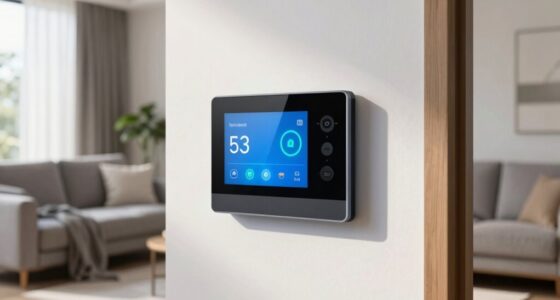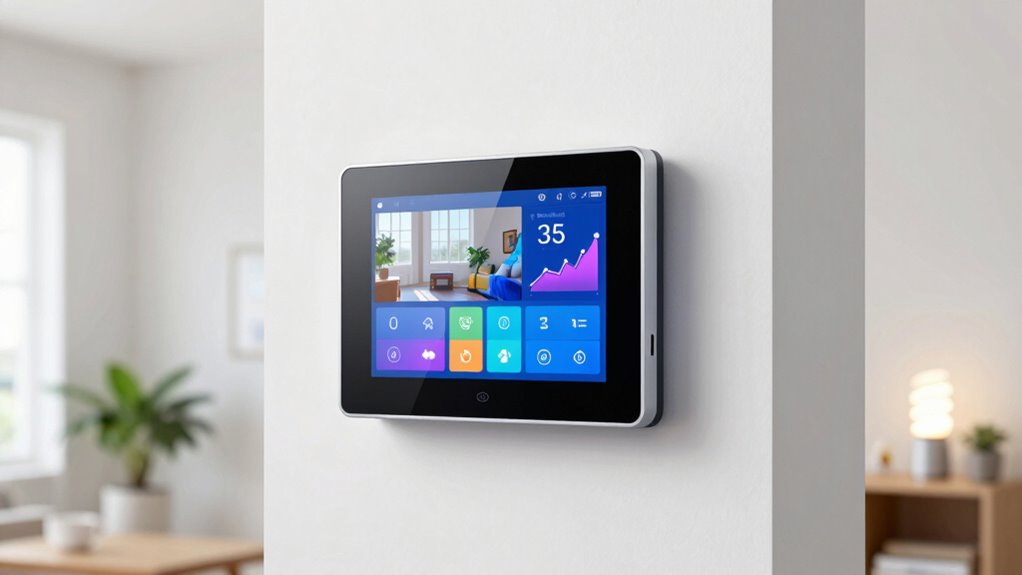

Smart thermostats save energy by learning your daily routines and adjusting temperatures automatically, so your home stays comfortable while wasting less energy. They use sensors and zone management to target specific areas, making precise adjustments based on occupancy and preferences. Remote control and real-time monitoring let you fine-tune settings from anywhere. Plus, their data insights help you identify patterns and optimize efficiency further — continue exploring how these features work for your home.
Key Takeaways
- They learn household routines to automatically adjust temperatures, reducing unnecessary heating or cooling.
- Geofencing technology triggers temperature changes based on residents’ proximity, minimizing energy use when away.
- Multiple sensors monitor occupancy and temperature variations for targeted, efficient climate control in different zones.
- Real-time data analytics optimize system performance, preventing energy waste through continuous adjustments.
- Remote control and automation enable users to fine-tune settings and turn off systems when not needed, saving energy.
How Smart Thermostats Learn Your Routine
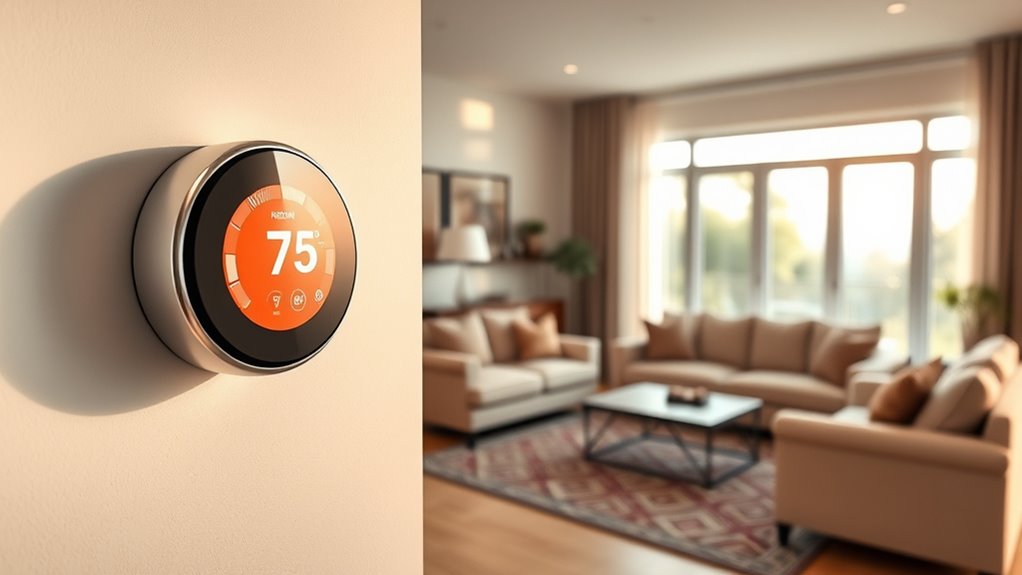
Smart thermostats actively monitor your daily habits to optimize your home’s comfort and energy use. They track when you wake up, leave, or return home, learning your schedule over time. As you adjust the temperature, the thermostat records your preferences, gradually understanding your ideal comfort levels. It notices patterns, such as heating up before you wake or cooling down when you’re away. This learning process allows the thermostat to anticipate your needs, reducing unnecessary heating or cooling. You don’t have to manually program it daily; instead, it adapts based on your routines. Over time, it becomes smarter, aligning your home’s climate with your lifestyle. This personalized approach ensures you stay comfortable while conserving energy and lowering utility bills. Smart home automation further enhances the efficiency by integrating your thermostat with other connected devices. Additionally, some models incorporate learning algorithms that improve their accuracy and responsiveness over time. Moreover, advancements in energy-saving technologies continually push these devices toward greater efficiency and sustainability.
Automated Temperature Adjustments for Efficiency

Smart thermostats use adaptive scheduling algorithms to automatically adjust your home’s temperature based on your habits. They can also utilize geofencing technology to optimize heating and cooling when you’re nearby or away. With real-time temperature optimization, your system maintains comfort while minimizing energy use effectively. Additionally, energy efficiency is enhanced through these intelligent adjustments, helping reduce utility bills and environmental impact. Incorporating smart home integration further allows seamless control and monitoring of your entire climate system through connected devices. By fine-tuning these settings, you can better account for temperature fluctuations and improve overall system performance. Furthermore, these systems often include learning capabilities that adapt to your routines over time, ensuring consistent comfort and efficiency. Utilizing adaptive algorithms allows the system to respond dynamically to changing conditions, maximizing savings and comfort.
Adaptive Scheduling Algorithms
Adaptive scheduling algorithms optimize energy use by automatically adjusting your thermostat based on your habits and preferences. These algorithms learn your daily routines and temperature preferences, making real-time changes to maximize comfort and efficiency. By analyzing data such as when you wake up, leave, or return home, they create personalized schedules without manual input. This reduces unnecessary heating or cooling during unoccupied times. Additionally, leveraging smart technology allows for more precise adjustments, further enhancing energy savings. Incorporating load calculations ensures that your system operates safely and efficiently, preventing overloads and promoting optimal performance. Understanding toilet flushing mechanisms can also contribute to overall resource conservation in your household. You benefit from consistent comfort while saving energy and lowering bills.
Geofencing Technology Use
Geofencing technology enhances energy efficiency by automatically adjusting your thermostat based on your real-time location. When you leave home, the system detects your absence and lowers the temperature, saving energy without you having to lift a finger. Conversely, as you approach your house, it warms up again, ensuring comfort upon arrival. This seamless adjustment prevents unnecessary heating or cooling when you’re away or asleep, reducing energy waste. You can set designated boundaries or “geofences” around your property to customize these triggers. With geofencing, your smart thermostat works proactively, aligning energy use with your daily routines. Additionally, integrating smart home technology with comprehensive connected equipment can optimize overall energy management, making your home more efficient. Proper system calibration is essential to ensure these features work accurately and efficiently over time. When combined with energy-saving algorithms, these systems can further enhance your home’s efficiency by learning and adapting to your habits for maximum savings. Regular system maintenance also plays a crucial role in maintaining optimal performance and energy savings.
Real-Time Temperature Optimization
By continuously monitoring your home’s interior temperature and occupancy patterns, advanced thermostats can make real-time adjustments to optimize comfort and efficiency. This dynamic process guarantees your heating or cooling system responds instantly to changes, saving energy without sacrificing comfort. As you go about your day, the thermostat adjusts settings based on current conditions, avoiding unnecessary heating or cooling. This adaptive technology helps create a more energy-efficient system that minimizes waste and lowers your utility bills. Additionally, temperature sensors enhance accuracy in detecting indoor conditions, further improving the system’s responsiveness. Incorporating natural ventilation strategies can also aid in reducing energy consumption by utilizing outdoor air flow when appropriate. Utilizing smart algorithms enables these devices to learn from your habits over time, further refining their efficiency.
Remote Control and Monitoring Capabilities

Thanks to remote control and monitoring features, you can easily adjust your thermostat settings from anywhere using your smartphone or computer. This means you don’t have to be home to change the temperature or turn off the system. If you forget to set the thermostat before leaving, you can do it remotely, saving energy and preventing waste. These features also let you monitor your energy usage in real-time, so you can identify patterns and make adjustments accordingly. Whether you’re at work, on vacation, or running errands, you stay in control of your home’s climate. This convenience encourages better energy habits and helps reduce unnecessary heating or cooling, ultimately lowering your utility bills and your carbon footprint. Understanding energy consumption can help you optimize your thermostat settings even further for maximum efficiency. Additionally, integrating your smart thermostat with European cloud solutions enhances data security and reliability, ensuring your energy management remains both sustainable and protected.
Sensor Technology and Zone Control
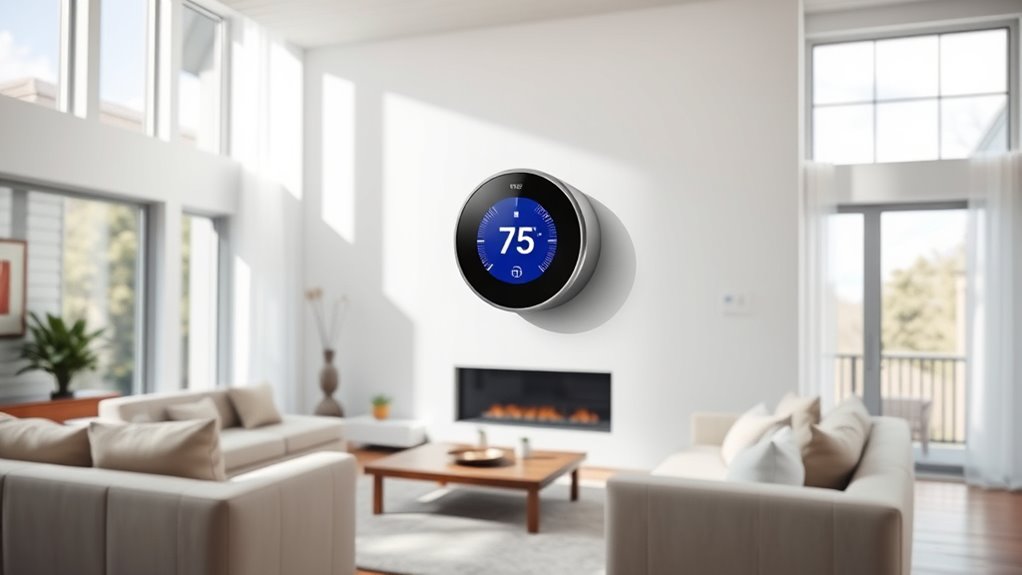
Sensor technology allows your smart thermostat to detect temperature changes accurately, ensuring your home stays comfortable without wasting energy. With customized zone management, you can control the climate in different areas, saving energy where it’s not needed. This combination of precise sensing and zone control makes your system more efficient and responsive. Incorporating auditory processing techniques can further enhance the system’s ability to adapt to environmental changes dynamically.
Precise Temperature Sensing
Precise temperature sensing is essential for smart thermostats to optimize energy use effectively. Accurate sensors detect even tiny temperature changes, ensuring your heating or cooling adjusts promptly. This prevents energy waste caused by overshooting or undershooting your desired temperature. Advanced sensor technology, such as digital thermistors and infrared sensors, provides quick, reliable readings. Additionally, smart thermostats use multiple sensors in different zones to maintain consistent comfort levels throughout your home. They can differentiate between spaces, adjusting heating or cooling locally instead of wasting energy on unoccupied areas. With precise sensing, you get:
- Faster response times
- More accurate temperature readings
- Better zone-specific control
- Reduced energy consumption
- Enhanced comfort levels
Customized Zone Management
By utilizing advanced sensor technology, smart thermostats can effectively manage multiple zones within your home, ensuring each area maintains its ideal temperature. This customized zone management allows you to prioritize comfort and save energy by heating or cooling only the occupied spaces. With sensors in different rooms, the system detects temperature variations and adjusts accordingly. You can set specific preferences for each zone, optimizing overall efficiency. Here’s a quick comparison of zone control benefits:
| Zone Type | Sensor Function | Energy Savings |
|---|---|---|
| Living Room | Detects occupancy & temp | Reduces unnecessary heating or cooling |
| Bedrooms | Maintains cozy temperature | Improves sleep comfort |
| Kitchen | Monitors heat generated | Prevents overheating |
| Office | Adjusts when occupied | Saves energy during work hours |
| Garage | Senses temperature change | Prevents energy waste |
Data Analytics and Usage Insights
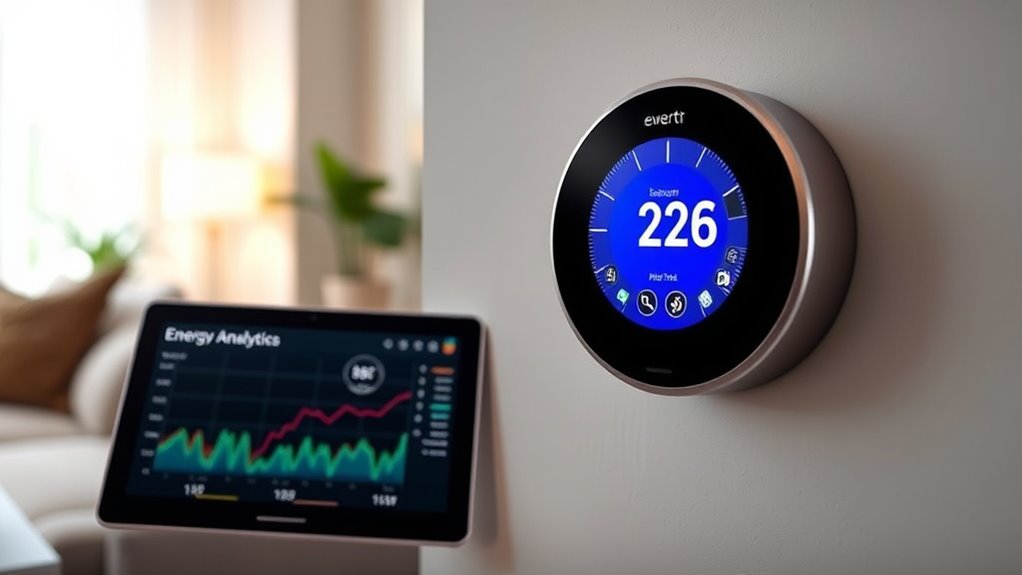
Data analytics play a crucial role in helping you understand how your smart thermostat is used and where energy savings happen. By analyzing your heating and cooling patterns, it reveals when and where you consume the most energy. This insight allows you to make smarter adjustments and optimize your system. You can see detailed reports that show:
- Peak usage times
- Temperature fluctuations
- Days with high energy consumption
- Effectiveness of scheduling
- Potential areas to improve efficiency
These insights empower you to fine-tune your settings, avoid unnecessary heating or cooling, and reduce waste. Over time, this data-driven approach helps you cut costs and lowers your environmental impact, all while maintaining comfort in your home.
Integration With Other Smart Home Devices
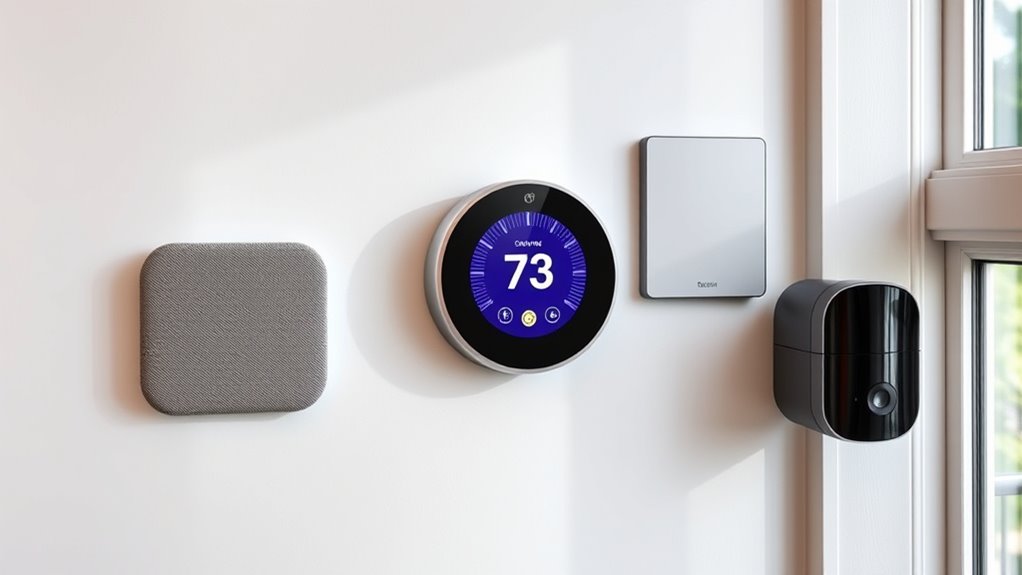
Integrating your smart thermostat with other smart home devices creates a seamless and more efficient living environment. When your smart lights, window shades, and security systems work together, your home responds intelligently to your habits and preferences. For example, your thermostat can lower the temperature when your smart window shades close or turn off heating when your security system detects you’re away. This coordination reduces energy waste and enhances comfort. You also gain greater control through centralized apps or voice assistants, allowing you to manage multiple devices effortlessly. By creating an interconnected system, you optimize energy use without sacrificing convenience. This integration ensures your home adapts automatically, saving energy while maintaining a comfortable, responsive living space.
Practical Tips for Maximizing Energy Savings
To maximize energy savings with your smart thermostat, start by setting it to align with your daily schedule. This means adjusting your temperature based on when you’re home or away, ensuring you’re not wasting energy heating or cooling an empty house. Use the scheduling feature to create consistent routines, like lowering the temperature at night or when you’re at work. Additionally, take advantage of these tips:
- Enable geofencing to automatically adjust when you leave or return home
- Set modest temperature differences to avoid extreme fluctuations
- Use occupancy sensors to detect when rooms are empty
- Regularly update your thermostat’s firmware for ideal performance
- Pair it with energy-saving modes during peak hours
Following these steps helps you save more energy and reduces your utility bills effortlessly.
Frequently Asked Questions
How Much Can I Typically Save on Energy Bills With a Smart Thermostat?
You can typically save about 10-15% on your energy bills with a smart thermostat. By adjusting temperatures automatically based on your schedule and preferences, it reduces unnecessary heating and cooling. You’ll notice savings when you’re away or asleep, as the thermostat learns your habits. Over time, these small adjustments add up, making your home more energy-efficient and lowering your monthly expenses.
Are Smart Thermostats Compatible With All HVAC Systems?
A smart thermostat is like a universal remote for your HVAC, but not all are compatible with every system. You should check your HVAC’s make and model, or consult the manufacturer’s guidelines, to guarantee compatibility. Many smart thermostats work with standard systems, but some complex or older setups may need additional wiring or adapters. Always verify before purchasing to avoid surprises and ensure seamless integration.
Do Smart Thermostats Require Professional Installation?
No, smart thermostats don’t always require professional installation, but it’s often recommended for the best setup. If you’re comfortable with basic wiring and your HVAC system is compatible, you might do it yourself. However, for complex systems or if you’re unsure, hiring a professional guarantees proper installation and peak performance. This way, you avoid potential issues and enjoy the energy-saving benefits with peace of mind.
How Secure Is My Data With a Smart Thermostat?
Your data security with a smart thermostat largely depends on the manufacturer’s safeguards. Most models use encryption and secure Wi-Fi protocols to protect your information. However, it’s essential to keep your device’s firmware updated and use strong, unique passwords. Stay informed about security features and privacy policies. Ultimately, choosing reputable brands and enabling security settings helps guarantee your data remains safe from unauthorized access.
Can Smart Thermostats Function During Power Outages?
Smart thermostats can sometimes function during power outages, but it depends on their design. If your device has a backup battery, it might keep running temporarily. Otherwise, it will halt until power is restored. You should check your specific model’s capabilities. Keep in mind, even if they stop working during an outage, most smart thermostats reconnect and resume normal operation once power returns.
Conclusion
By using a smart thermostat, you can save up to 10-12% on heating and cooling costs each year. With features like learning your routine and remote control, you stay comfortable while cutting energy waste. Imagine reducing your energy bills by hundreds annually—that’s the power of smart technology. Embrace these devices, optimize their settings, and watch your savings grow. It’s an easy, effective way to make your home more efficient and eco-friendly.