To optimize indoor air quality, identify common pollutants like VOCs and mold, and address them by improving ventilation, using air purifiers with HEPA filters, and controlling humidity between 30-50%. Regularly test your air and clean or maintain your filtration systems. Incorporate indoor plants to naturally filter toxins. Managing moisture and ensuring proper airflow reduces health risks. Keep exploring ways to make your home healthier and safer every day.
Key Takeaways
- Regularly test indoor air quality and address pollutants like VOCs and mold promptly.
- Use HEPA air purifiers and maintain their filters to efficiently remove airborne particles.
- Enhance ventilation with cross-ventilation, exhaust fans, and controlled humidity levels between 30-50%.
- Incorporate indoor plants that naturally filter toxins and improve air moisture.
- Maintain cleanliness and proper upkeep of ventilation systems and materials to sustain a healthy indoor environment.
Identifying Common Indoor Air Pollutants

Have you ever wondered what might be lurking in the air inside your home? Recognizing common indoor air pollutants is the first step to improving air quality. Volatile Organic Compounds (VOCs) are a major concern; they come from sources like paints, cleaning products, and personal care items. These chemicals can off-gas into the air, causing health issues over time. Mold growth is another common pollutant that often goes unnoticed. It thrives in damp, poorly ventilated areas such as bathrooms and basements, releasing spores into the air. Identifying these pollutants helps you understand potential risks and take action. By being aware of VOC sources and watching for signs of mold, you can create a healthier environment and reduce exposure to harmful indoor air contaminants. Additionally, understanding Free Floating particles can help you better grasp how airborne pollutants move and settle within your space. Incorporating air filtration solutions can further improve your indoor air quality by capturing smaller particles and reducing overall pollutants. Regularly checking ventilation systems can also ensure that stale air is replaced efficiently, minimizing pollutant buildup. For example, understanding air circulation patterns can assist in optimizing airflow and pollutant removal strategies. Ensuring proper air purifier maintenance is essential to maintain its effectiveness in removing pollutants from your home.
Practical Strategies for Better Ventilation
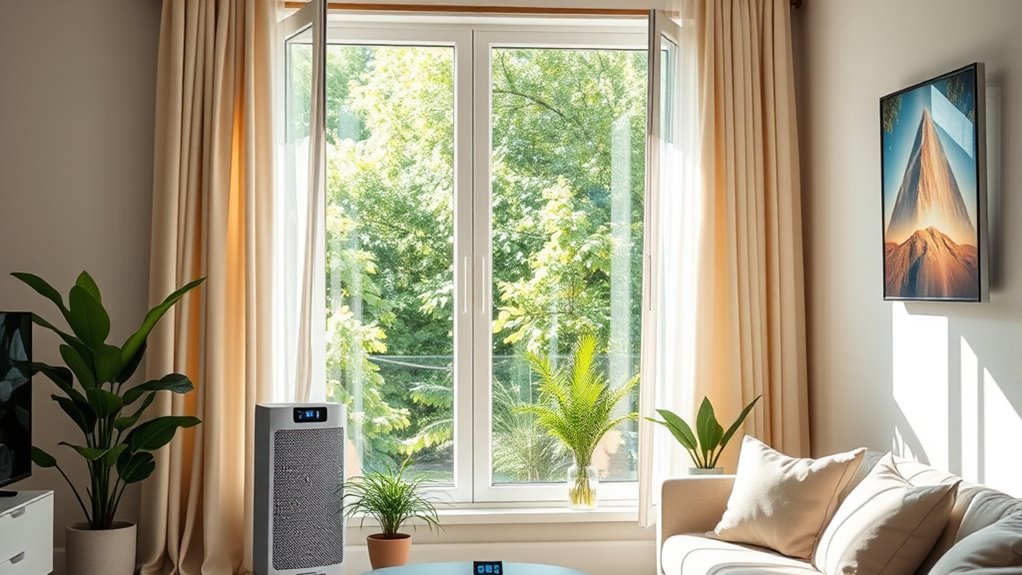
Improving ventilation is one of the most effective ways to reduce indoor air pollutants and enhance air quality. You can increase air exchange by opening windows regularly, which helps remove stale air and pollutants. Proper window placement is vital; aim to open windows on opposite sides of your home to create cross-ventilation, boosting airflow. Use vents or exhaust fans in kitchens and bathrooms to eliminate moisture and odors efficiently. Avoid blocking vents or windows, as this restricts airflow. If natural ventilation is limited, consider installing adjustable vents or vents with screens to maintain airflow without letting in dirt or pests. Additionally, understanding home ventilation systems can help you optimize airflow and indoor air quality effectively. Regularly inspecting and cleaning vents and filters ensures they function properly and continue to improve air exchange. Proper maintenance of ventilation components is essential for sustained indoor air quality improvement. To maximize benefits, regularly check and maintain ventilation components to ensure they operate properly and continue to improve air exchange. Consistent, strategic window opening and ventilation practices keep indoor air fresh and healthier for you and your family.
Utilizing Air Purification Technologies

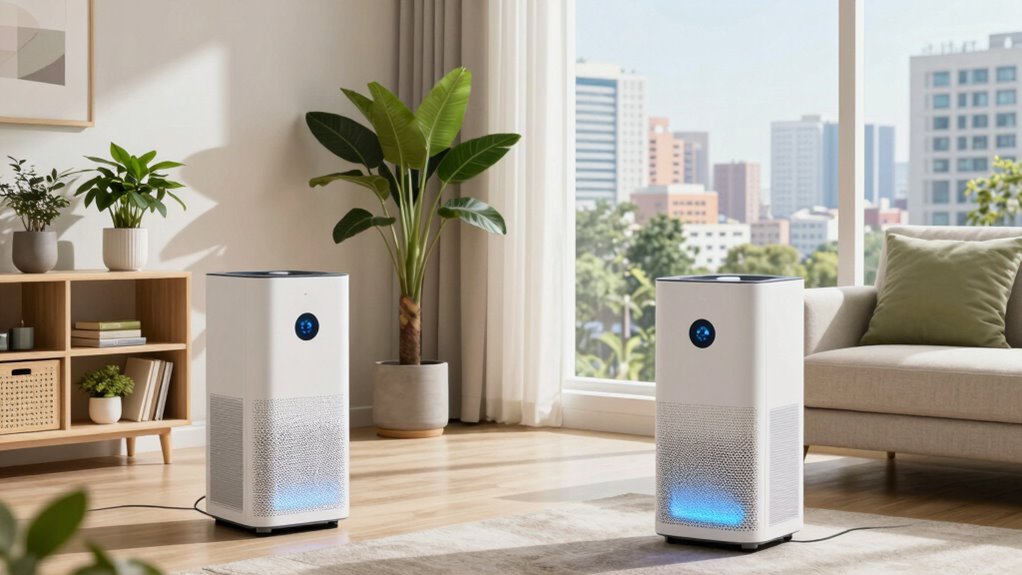
While good ventilation helps remove many indoor pollutants, it might not eliminate all airborne contaminants. That’s where air purification technologies come in. To maximize their benefits, you need to choose an air purifier with high air purifier efficiency, capable of filtering out dust, allergens, and airborne pathogens effectively. Regular filter maintenance is essential; neglecting filters can reduce efficiency and allow pollutants to circulate. Be sure to follow the manufacturer’s instructions for replacing or cleaning filters to keep your air purifier working at peak performance. Additionally, consider devices with HEPA filters, as they are proven to trap small particles. Using these technologies consistently will markedly improve your home’s air quality, creating a healthier environment for you and your family. Understanding indoor air quality is key to making informed choices about air purification. Proper placement of air purifiers in high-traffic areas can further enhance their effectiveness. Furthermore, awareness of specific odors, such as ear wax odor, can help identify underlying health issues that might affect indoor air quality, prompting timely cleaning or medical attention. Incorporating air quality sensors can also help monitor and maintain optimal indoor conditions. Enhancing awareness of indoor air quality factors can support better health outcomes and more effective air purification strategies.
Managing Humidity and Contaminants
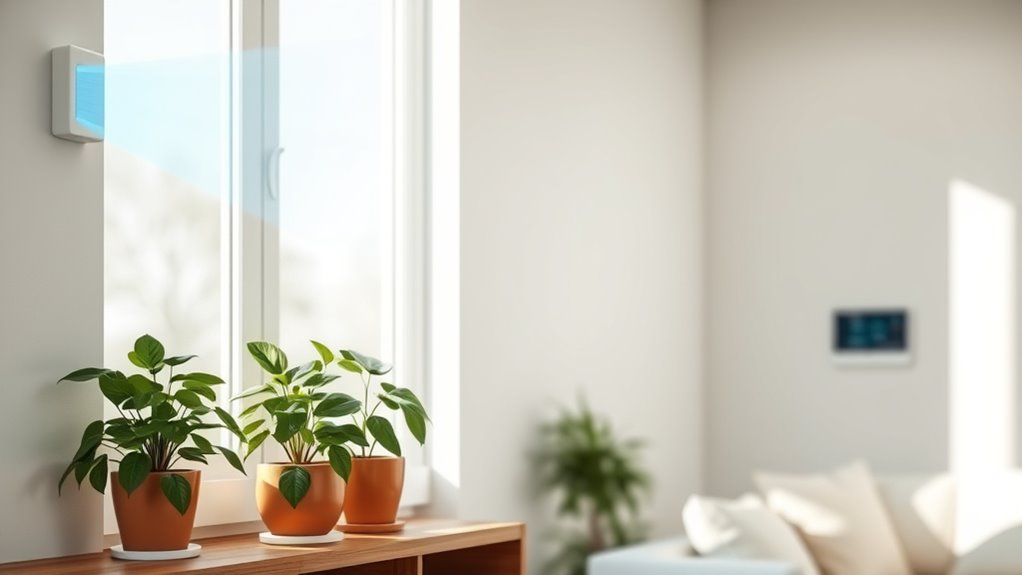
Controlling humidity levels is essential for reducing indoor contaminants and preventing mold growth. Proper humidifier maintenance helps guarantee your device functions efficiently, avoiding excess moisture that fosters mold. To maintain ideal humidity, keep levels between 30-50%, using a hygrometer to monitor. Monitoring humidity is crucial for ensuring a healthy indoor environment. Use the following table to understand key ideas:
| Action | Benefit |
|---|---|
| Regular humidifier cleaning | Prevents mold and bacteria buildup |
| Managing ventilation | Reduces airborne contaminants |
| Fixing leaks | Limits excess moisture intrusion |
| Using dehumidifiers | Controls high humidity areas |
| Monitoring field‑of‑view | Ensures optimal indoor air quality and airflow |
Additionally, ensuring proper airflow helps prevent stagnant air and moisture buildup, which can contribute to mold growth and indoor pollutants. Proper air circulation also supports the effectiveness of humidity control measures, creating a healthier indoor environment. Proper ventilation systems are vital for maintaining consistent air quality and preventing indoor air stagnation.
Maintaining a Healthy Indoor Environment
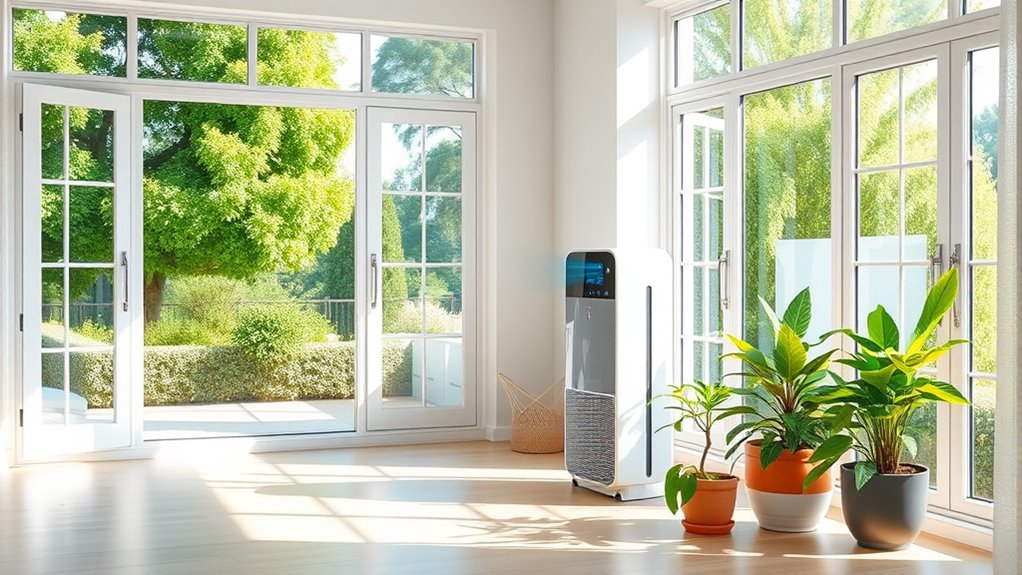
Maintaining a healthy indoor environment is essential for protecting your comfort and health. One way to do this is by understanding the benefits of indoor plants, which can naturally improve air quality by filtering toxins and increasing humidity. Incorporating plants into your home adds aesthetic appeal and enhances air quality benefits. Regular air quality testing helps you identify pollutants and contaminants that may go unnoticed, enabling you to take timely corrective actions. This proactive approach aligns with air quality testing strategies emphasized in home environment management. It also allows you to evaluate the effectiveness of your vacuum cleaners, which play a vital role in removing dust and allergens from your living space. Implementing proper ventilation techniques can further reduce indoor pollutants and improve air circulation. This allows you to take targeted actions, such as improving ventilation or reducing sources of indoor pollution. Keep your living spaces well-ventilated and free of clutter to minimize dust and allergens. Additionally, choosing vetted materials for furniture and finishes can further reduce indoor pollutants. Maintaining a clear understanding of indoor air quality allows you to implement effective strategies for a healthier home environment. By staying proactive with air quality testing and leveraging the natural benefits of indoor plants, you create a safer, healthier environment for yourself and your family.
Frequently Asked Questions
How Often Should I Replace Air Filters for Optimal Air Quality?
You should replace your air filter every 1 to 3 months for ideal air quality. Regular air filter maintenance keeps your indoor air fresh and prevents dust, allergens, and pollutants from circulating. If you have pets or allergies, consider changing filters more frequently. Check your filter monthly, especially during peak seasons, to guarantee it’s working efficiently. This routine helps maintain a healthier, fresher indoor environment for you and your family.
Are Natural Air Purifiers Effective for Removing Indoor Pollutants?
Natural purification through houseplants can help improve indoor air quality, but their plant efficacy varies. While some plants like snake plants and pothos effectively remove certain pollutants, they shouldn’t be your sole solution. You need a combination of natural purification and proper ventilation for best results. Remember, plants support air quality, but active filtration and regular cleaning are more reliable for removing indoor pollutants efficiently.
What Are the Signs of Poor Indoor Air Quality in My Home?
You might notice constant allergies, sneezing, or coughing, which are signs of poor indoor air quality. Studies show that indoor air can be 2-5 times more polluted than outdoor air. Look out for airborne allergens like dust and pet dander, or mold growth on walls and ceilings, which can cause respiratory issues. If these signs persist, it’s time to improve ventilation and reduce sources of indoor pollutants.
Can Houseplants Significantly Improve Indoor Air Quality?
Yes, houseplants can substantially improve indoor air quality. Beneficial plants like pothos, snake plants, and peace lilies are known for their air purification abilities. They absorb toxins, increase humidity, and improve overall air circulation. By adding these plants to your home, you create a healthier environment, reduce airborne pollutants, and enjoy fresher, cleaner air. Just ensure proper care to maximize their beneficial effects.
How Does Indoor Air Quality Affect Overall Health and Well-Being?
Indoor air quality directly impacts your overall health and well-being by affecting your respiratory health and reducing exposure to airborne toxins. When the air is clean, you breathe easier, sleep better, and experience fewer allergy symptoms. Conversely, poor air quality can lead to fatigue, headaches, and long-term health issues. By maintaining good indoor air quality, you protect your lungs, boost your immune system, and enhance your daily comfort and energy.
Conclusion
By taking these simple steps, you can turn your home into a invigorating breeze. Think of your indoor environment as a garden; with careful attention and proactive care, it can flourish with clean, healthy air. Don’t wait for pollutants to take root—act now to optimize your air quality. Your home’s air is the foundation of your well-being, so make every breath you take a revitalizing gust rather than a burden.