
To make the ‘Clean Enough’ System work for you, set realistic, consistent schedules that fit your lifestyle, like weekend mornings or evenings. Break chores into small, manageable steps and assign specific days for deep cleaning tasks, using simple tools to save time. Incorporate quick daily habits like wiping counters or tidying up to keep things manageable. Stay motivated by celebrating small wins and tracking progress; if you keep adapting, you’ll build a sustainable routine that sticks.
Key Takeaways
- Establish consistent weekly scheduling with specific days and times, using reminders to build routine habits.
- Break cleaning tasks into manageable steps and assign them to designated days for systematic progress.
- Use simple, effective tools like microfiber cloths and all-purpose sprays for quick, efficient cleaning sessions.
- Incorporate quick daily habits like wiping surfaces and tidying clutter to maintain cleanliness with minimal effort.
- Track progress and celebrate small wins to stay motivated and adapt routines as needed for sustainability.
Setting Realistic Expectations for Your Weekly Routine

Setting realistic expectations for your weekly routine is essential to avoid burnout and stay motivated. You’ll want to recognize that your home doesn’t need to be spotless every day; instead, aim for consistent, manageable progress. Prioritize tasks that make the biggest difference, like cleaning high-traffic areas or tackling clutter hotspots. Be honest about your schedule and energy levels, and don’t overcommit. Accept that some days will be more productive than others, and that’s okay. Incorporating music therapy integration can help create a calming environment that makes cleaning feel less burdensome. Additionally, understanding the concept of free floating can encourage you to maintain a flexible approach, allowing your routine to adapt to changing circumstances. By setting achievable goals, you’ll reduce frustration and build sustainable habits. Remember, the goal isn’t perfection but creating a clean enough environment that feels comfortable and manageable for you. Incorporating a consistent routine can help maintain these habits over time. Studies support that predictive validity enhances the effectiveness of habits, so adjusting your expectations as needed can further improve your routine. Adjust your expectations as needed, and celebrate your progress along the way.
Breaking Down Tasks Into Manageable Chunks
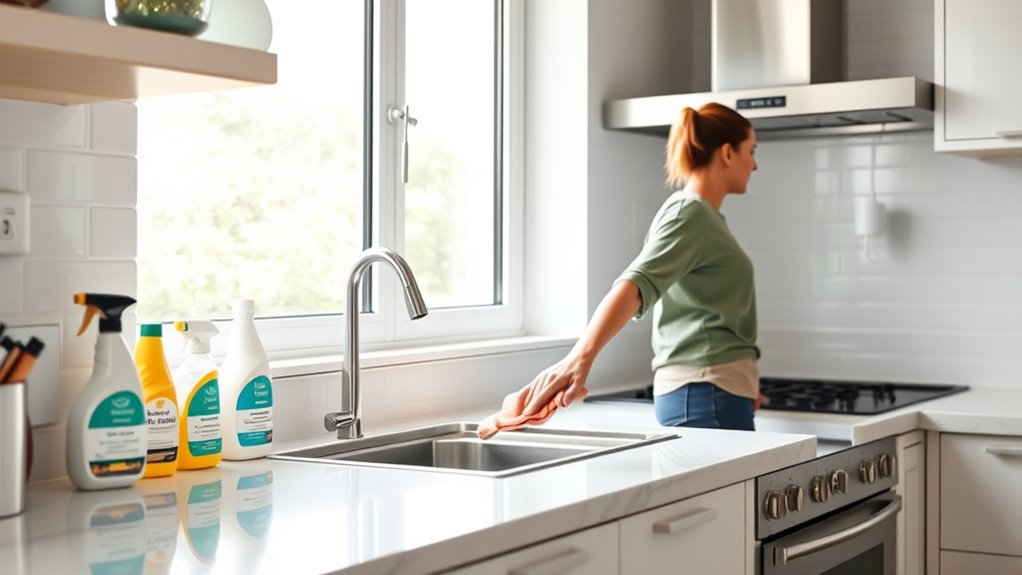
To make cleaning feel less overwhelming, start by prioritizing your essential tasks and assigning specific days for each. Break larger tasks into smaller, manageable steps so you can focus on one thing at a time. This approach keeps you organized and helps you stay motivated as you see steady progress. Incorporating simple, practical solutions can also make maintaining your routine easier and more sustainable. Additionally, adopting energy-efficient cleaning tools aligns with sustainable practices and can reduce your overall effort. Being mindful of sustainable routines ensures your cleaning habits support environmental goals while keeping your home tidy. Incorporating diversification strategies from your investment knowledge can inspire flexible and adaptable cleaning schedules that evolve with your needs. Exploring cost-effective cleaning methods can further enhance your routine without stretching your budget.
Prioritize Essential Tasks
Have you ever felt overwhelmed by a long to-do list? It’s common when tackling household chores. Instead of trying to do everything at once, focus on what’s truly essential. Ask yourself, which tasks make the biggest impact on your home’s cleanliness? Prioritize those first. For example, regularly cleaning the kitchen sink or bathroom can prevent bigger messes later. Don’t get sidetracked by less critical tasks like organizing drawers or dusting shelves—these can wait. By identifying and concentrating on high-priority chores, you make steady progress without feeling overwhelmed. Understanding herbal properties can also help you choose the most effective cleaning remedies naturally. This approach keeps your routine manageable and ensures you stay consistent, giving your home a cleaner, more organized feel without the stress of trying to do it all at once. Incorporating simple, natural solutions can also enhance cleaning effectiveness and contribute to a healthier living environment. Additionally, focusing on core cleaning tasks helps maintain your home’s hygiene without overextending yourself. Recognizing the importance of routine can further support your efforts in establishing long-term cleanliness habits. Building a cleaning schedule can also help you stay on track and make your routines more manageable.
Assign Specific Days
Breaking down your cleaning tasks into specific days makes the process more manageable. By assigning certain chores to particular days, you avoid feeling overwhelmed and stay consistent. For example, dedicate Mondays to vacuuming and dusting, Wednesdays to bathroom cleaning, and weekends to laundry or deep cleaning projects. This approach creates a routine that’s easy to follow, helping you build habits without sacrificing your free time. Keep your schedule realistic by focusing on a few tasks each day, rather than trying to do everything at once. Use a planner, calendar, or checklist to track what’s assigned to each day. Incorporating regular appliance maintenance into your routine can also help prevent unexpected breakdowns, keeping your home running smoothly. Additionally, scheduling monthly deep cleans ensures that your home stays thoroughly maintained over time. Establishing a consistent cleaning schedule can make your chores feel less burdensome and more routine. To further streamline your efforts, consider setting reminders or alarms, which can reinforce your cleaning habits and ensure tasks aren’t overlooked. Integrating time management strategies can optimize your cleaning routine and make it more efficient. Over time, this system guarantees your home stays clean without turning cleaning into a weekly chore marathon.
Break Tasks Into Steps
When facing a large cleaning task, dividing it into smaller, manageable steps makes the process less intimidating. Instead of thinking about cleaning the entire house all at once, break it down into specific areas or tasks. For example, focus on one room, then move to the next. Inside each room, list the key tasks—dusting, vacuuming, wiping surfaces—then tackle them one at a time. This approach helps you stay focused and prevents feeling overwhelmed. It also allows you to see progress quickly, boosting your motivation. Remember, tackling a big job in small chunks makes it easier to stay consistent and complete your routine without burnout. Breaking tasks into steps transforms a formidable project into achievable, manageable actions. Additionally, maintaining cleanliness and proper hygiene in your space can contribute to your overall well-being and make regular cleaning easier over time. Incorporating proper care of skin and surfaces can further ease the cleaning process, reducing buildup and grime. Recognizing the importance of trust can also motivate you to stay committed to your routine, ensuring your environment remains healthy and inviting. Incorporating consistent auditory processing strategies into your routine can enhance your ability to focus on cleaning tasks and stay organized. Implementing AI-powered cleaning tools can enhance your efficiency and help maintain your space with less effort.
Choosing the Right Days and Times for Cleaning
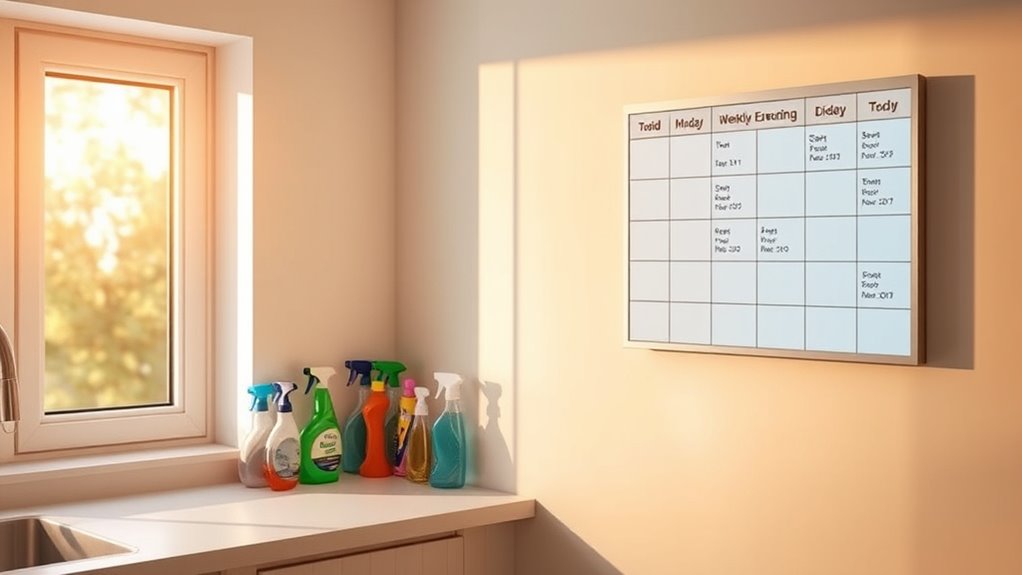
Choosing the right days and times for cleaning helps you stay consistent and avoid burnout. Look for windows in your schedule when you’re least likely to be interrupted or rushed. By establishing ideal cleaning windows, you turn routine chores into manageable habits. Identifying optimal times for cleaning can also help you make the most of your available energy and focus.
Consistent Scheduling Habits
Establishing consistent cleaning schedules requires selecting the right days and times that fit seamlessly into your routine. Find moments when you’re naturally available or less busy, ensuring cleaning becomes a regular habit. Consistency helps prevent chores from piling up and builds a sense of accomplishment. To reinforce this, consider these tips:
- Pick specific days each week, like Saturday mornings or Sunday evenings
- Set fixed times to help routines become automatic
- Adjust your schedule if your week varies often
- Use reminders or calendar alerts to stay on track
- Keep your cleaning sessions short and focused for better adherence
Optimal Cleaning Windows
Finding the right days and times for cleaning often depends on your daily rhythm and schedule. Identify moments when you feel most energized or least busy—perhaps early mornings, lunch breaks, or evenings. Aim for consistent windows that fit naturally into your week, like Saturday mornings or Sunday evenings. Avoid times when you’re rushed or distracted, as rushing can lead to incomplete tasks or frustration. If your schedule varies, consider short, focused cleaning sessions on different days rather than one long session. Prioritize tasks based on household activity—clean high-traffic areas during peak use. Flexibility is key; adjust your cleaning windows as your routine shifts, ensuring the process remains manageable and stress-free. The goal is to create a routine that feels natural and sustainable.
Incorporating Quick Daily Habits to Maintain Cleanliness

Incorporating quick daily habits is a simple yet effective way to keep your space consistently clean. Small, intentional actions prevent clutter from piling up and surfaces from becoming dirty. To make this easier, consider adding these habits to your routine:
Quick daily habits make cleaning effortless and keep clutter at bay.
- Wipe down kitchen counters and sinks after cooking or cleaning
- Put away clothes and belongings immediately
- Sweep high-traffic areas briefly each day
- Tidy up bathroom surfaces after use
- Spot-clean spills or messes as they happen
These quick tasks take just a few minutes but have a big impact on maintaining a tidy home. They help you stay on top of dirt and clutter, reducing the need for long cleaning sessions later. Consistency is key—these habits make cleanliness effortless and sustainable.
Using Simple Tools and Products to Save Time
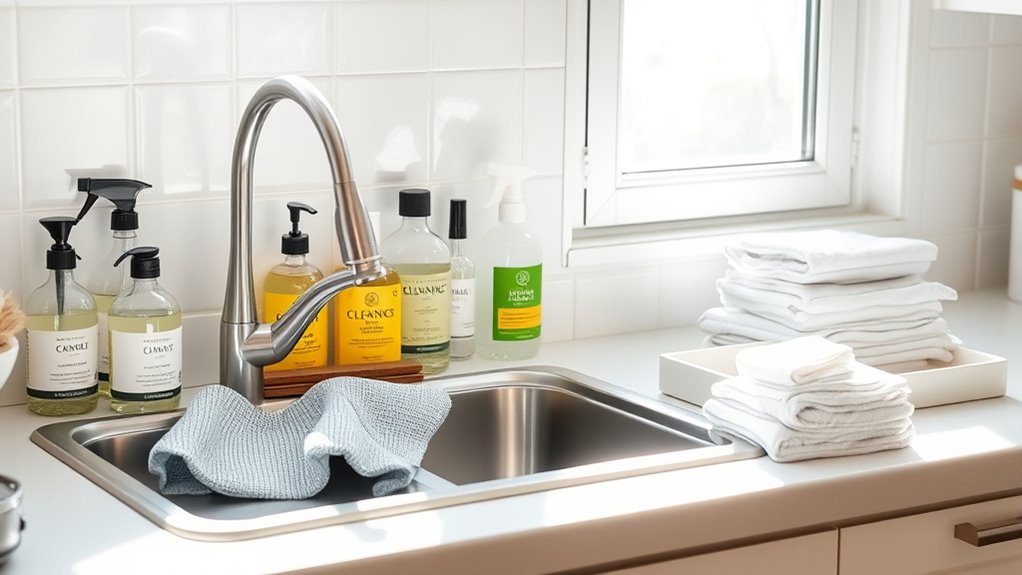
Using simple tools and products can dramatically cut down your cleaning time by making tasks more efficient. You don’t need fancy gadgets or harsh chemicals—just the basics that get the job done quickly. A microfiber cloth cleans dust faster than paper towels, and a versatile all-purpose spray simplifies your routine. Keep your cleaning supplies minimal: a spray bottle, microfiber cloth, scrub brush, and a squeegee are enough for most tasks. Here’s a quick comparison:
| Tool/Product | Benefit |
|---|---|
| Microfiber cloth | Quick, streak-free cleaning |
| All-purpose spray | Cuts through grime easily |
| Scrub brush | Tackles stubborn stains |
| Squeegee | Fast window and mirror cleaning |
| Multi-use sponge | Versatile and budget-friendly |
Stick to these simple tools to save time and keep your routine smooth.
Staying Motivated and Tracking Your Progress

Have you ever wondered why some cleaning routines feel more rewarding than others? Staying motivated is key to consistency. To keep your energy high, track your progress with simple methods like checklists or a cleaning journal. Celebrate small wins to boost your confidence. Set clear, achievable goals to see tangible results. Use visual cues, such as a clean space photo, to remind yourself of your progress. Additionally, consider these tips:
Staying motivated in cleaning boosts confidence and keeps routines rewarding.
- Break tasks into manageable chunks
- Reward yourself after completing routines
- Share your goals with a friend for accountability
- Reflect weekly on what’s working well
- Adjust goals as needed to stay challenged
Adjusting Your Routine as Your Home and Schedule Change
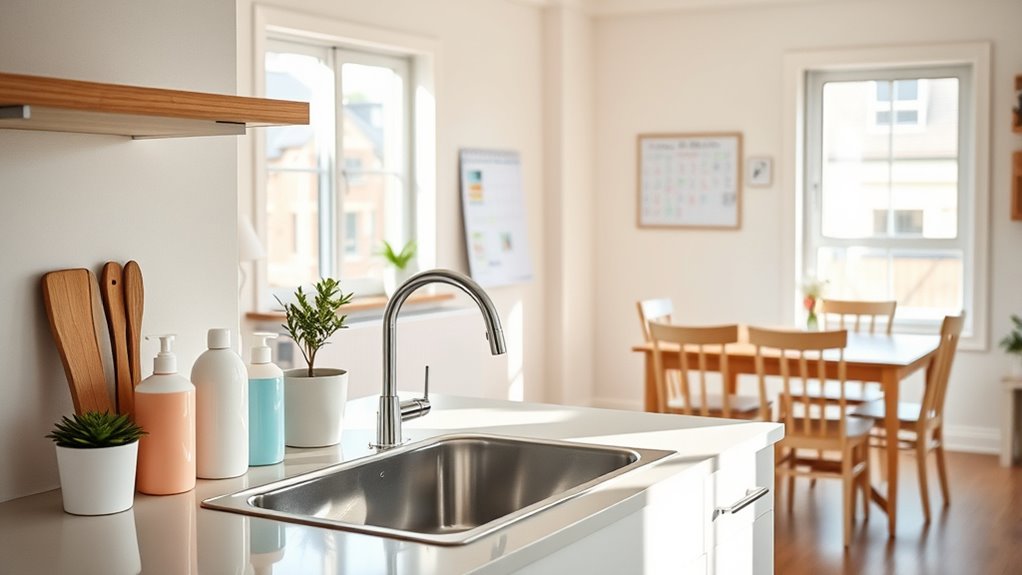
As your home and schedule evolve, your cleaning routine should adapt to stay effective and manageable. Life changes—new job, kids, or moving—can shift your priorities and available time. Regularly reassess what tasks are essential and adjust your schedule accordingly. If you’re busier, focus on high-impact chores like tidying common areas or doing quick daily wipe-downs. When you have more free time, add deeper cleaning tasks. Don’t be afraid to tweak your routine to fit your current circumstances. Flexibility keeps cleaning from feeling overwhelming or neglected. Remember, the goal is consistency, not perfection. By adjusting as needed, you ensure your routine remains sustainable and effective, helping you maintain a clean, comfortable home amidst ongoing changes.
Frequently Asked Questions
How Can I Handle Unexpected Cleaning Emergencies?
When unexpected cleaning emergencies happen, act quickly by gathering your supplies and focusing on the most visible areas first. Keep a spray cleaner and microfiber cloth handy for quick spot cleans. Prioritize safety, and don’t get overwhelmed—deal with the mess efficiently, then schedule a more thorough cleanup later. Staying calm and prepared helps you handle surprises smoothly, keeping your home clean without stress.
What Should I Do if I Miss a Scheduled Cleaning Day?
Missing a scheduled cleaning day is like losing your footing on a trail—don’t panic. You should reschedule that cleaning session as soon as possible, treating it like a detour rather than a dead end. Adjust your routine by shifting tasks to the next day or spreading them out over the week. Stay flexible and remind yourself that consistency is about progress, not perfection. Keep moving forward, one step at a time.
How Do I Involve Children in the Routine Effectively?
You can involve children in the routine by giving them simple, age-appropriate tasks like picking up toys or wiping surfaces. Make it fun by turning chores into a game or setting a timer for quick clean-up races. Praise their efforts to keep them motivated, and establish a consistent schedule so they know when it’s their turn. This way, cleaning becomes a shared activity rather than a chore.
What Are Some Cost-Effective Cleaning Tools I Can Use?
Think of your cleaning tools as a trusty toolbox. You don’t need fancy gadgets; basic items like microfiber cloths, a spray bottle with homemade cleaner, and a budget-friendly mop work wonders. Repurpose old toothbrushes for tight spots and use vinegar and baking soda for effective, low-cost cleaning. These simple, cost-effective tools make your routine efficient without breaking the bank, keeping your home fresh and tidy.
How Can I Maintain Motivation Long-Term?
To stay motivated long-term, set small, achievable goals and celebrate your progress. Keep your cleaning routine simple and consistent, so it doesn’t feel overwhelming. Find ways to make cleaning more enjoyable, like listening to music or podcasts. Track your accomplishments to stay inspired, and remind yourself of the benefits, like a cleaner, more relaxing home. Remember, consistency beats perfection, so keep moving forward even if some days are tougher.
Conclusion
Think of your cleaning routine as tending a garden. By setting realistic goals, breaking tasks into manageable steps, and staying consistent, you nurture a space that blossoms with freshness. Quick daily habits are your watering can, keeping everything vibrant. As your schedule shifts, adjust your care just like seasons change. With patience and small efforts, your home will flourish—a beautiful, welcoming sanctuary you’re proud of, every week.