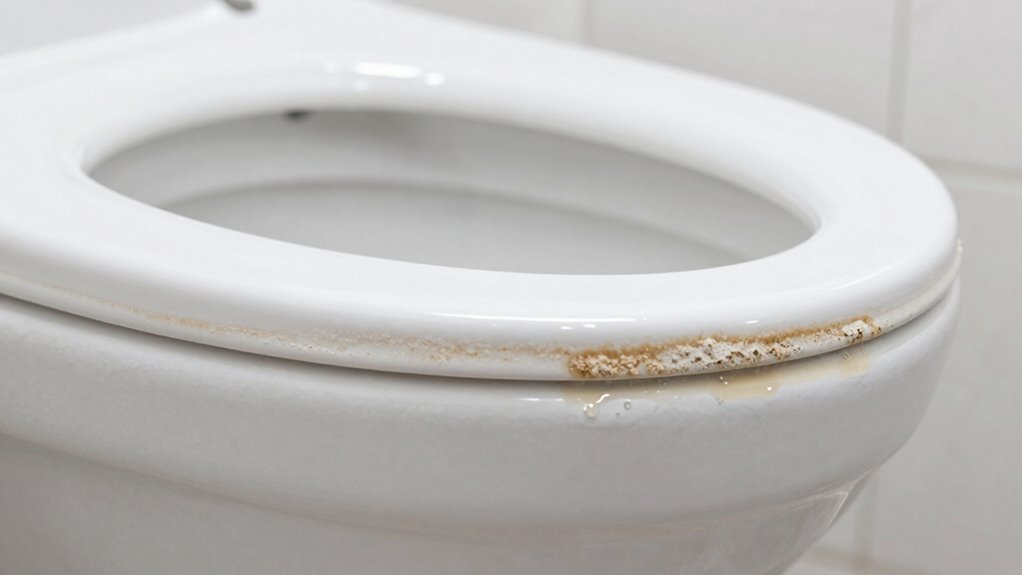

To tell whether your toilet ring is caused by hard water deposits or biofilm, look closely at its appearance and feel. Hard water rings are usually pale, rough, and crusty, while biofilm appears darker, slimy, and may have a fuzzy texture. Smell can also help—biofilm often smells foul. Examining these clues can help you choose the right cleaning approach. Keep going to discover simple ways to eliminate each type effectively.
Key Takeaways
- Hard water deposits appear as pale, rough, crusty rings tightly attached to the porcelain surface.
- Biofilm is darker, slimy, greasy, and may have a fuzzy or slick texture.
- Test with vinegar: mineral deposits dissolve easily, biofilm resists or requires disinfectants.
- Mineral buildup feels flaky and chalky; biofilm feels slimy and foul-smelling.
- Visual cues: crusty, pale ring indicates minerals; dark, greasy layer suggests biofilm.
Have you ever noticed that stubborn ring around your toilet bowl seems impossible to remove? It’s frustrating, isn’t it? That ring could be caused by hard water deposits or biofilm buildup, and figuring out which one it is can help you decide the best cleaning approach.
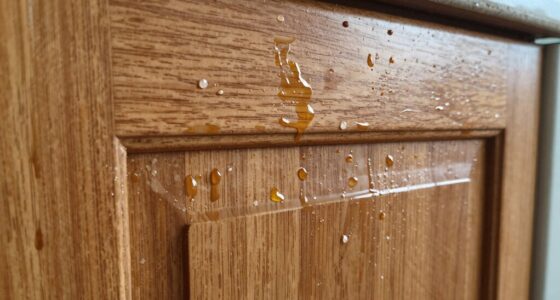
If the ring looks rough, chalky, or crusty, it’s likely due to hard water deposits. Hard water contains minerals like calcium and magnesium, which build up over time when water evaporates. These mineral deposits cling to the porcelain, creating a stubborn ring that’s often resistant to regular cleaning. You might notice that scrubbing with standard bathroom cleaners doesn’t get rid of it, and the ring feels rough or flaky to the touch. Hard water deposits tend to form a pale or whitish ring that sits firmly on the surface, especially in areas with mineral-rich water. To confirm it’s hard water deposits, try applying a vinegar solution; if it dissolves easily, that’s a good sign it’s mineral buildup.
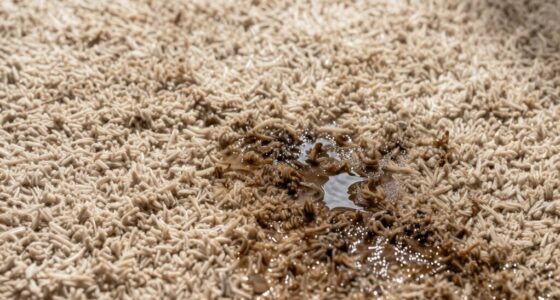
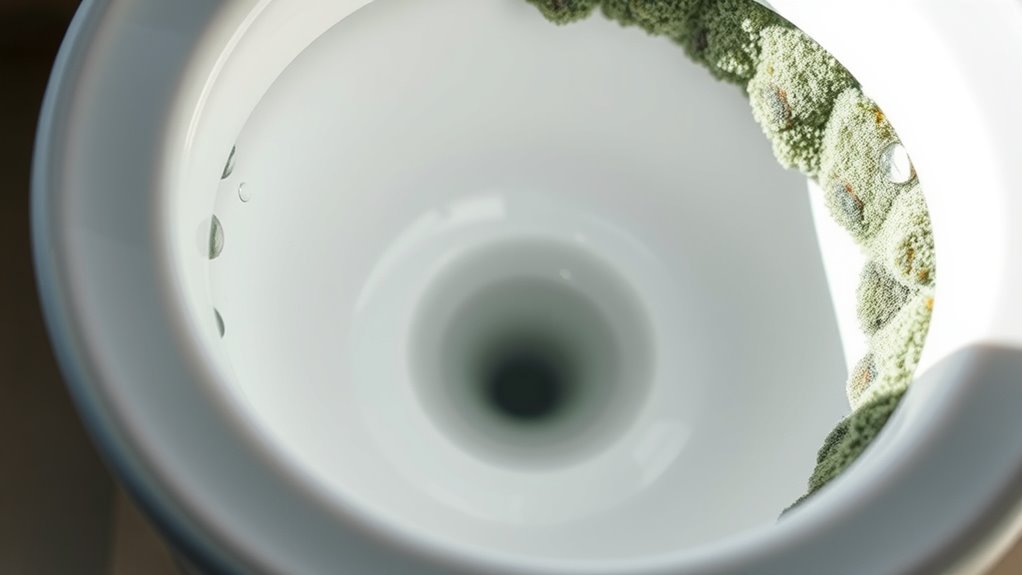
On the other hand, biofilm buildup appears as a slimy, greasy layer that sticks to the surface of the toilet bowl. It often has a darker appearance—sometimes greenish or brownish—and can have a fuzzy or slick texture. Biofilm is a mix of bacteria, fungi, and other microorganisms that thrive in moist environments like your toilet. Unlike mineral deposits, biofilm isn’t just a surface stain; it’s a living or semi-living layer that can cause odors and even health concerns if left unchecked. If you notice a slimy feel and a persistent, foul smell, it’s probably biofilm. Cleaning biofilm requires more than just vinegar; you’ll need disinfectants or specialized biofilm removers to break down the microbial layer effectively.
Understanding the difference is essential because it guides how you clean. Hard water deposits typically respond well to acids like vinegar or commercial mineral removers. Biofilm, however, demands stronger disinfectants or enzymatic cleaners to eliminate the microbial layer completely. Sometimes, a stubborn ring can be a combination of both, requiring a two-step cleaning process.
Identify if ring is mineral or microbial to choose effective cleaning methods.
In essence, pay close attention to the texture, appearance, and smell of the ring. Is it flaky or crusty? Vinegar may dissolve it. Is it slimy or smelly? You’re likely dealing with biofilm, which needs a deeper cleaning. Identifying whether it’s hard water deposits or biofilm helps you choose the right tools and products to get rid of that pesky ring once and for all.

Tikom Robot Vacuum and Mop Combo, 5000Pa Robotic Vacuum Cleaner, 150 Min Max, App & Remote Control, Ideal for Hard Floor, Carpet, Pet Hair, Self-Charge(G8000 Max)
5000Pa Strong Suction: Robot Vacuum With 5000Pa suction power, it effortlessly removes pet hair, dust, and debris from...
As an affiliate, we earn on qualifying purchases.
Frequently Asked Questions
Can Vinegar Effectively Remove Biofilm From Toilet Rings?
Vinegar can be effective for biofilm removal from toilet rings, especially if you use it regularly. Its acidity helps break down the slimy buildup caused by biofilm. To maximize vinegar efficacy, pour undiluted vinegar around the ring and let it sit for at least 30 minutes before scrubbing. Consistent use of vinegar can keep biofilm buildup under control and maintain a cleaner toilet.
Does Hard Water Cause More Persistent Toilet Rings Than Soft Water?
Yes, hard water causes more persistent toilet rings than soft water because of its high mineral content. These minerals, like calcium and magnesium, interact with the toilet bowl chemistry, forming stubborn deposits that cling to surfaces. When water contains more minerals, it leaves behind more deposits during evaporation or rinsing, making the rings harder to remove. Soft water, with fewer minerals, results in less buildup and easier cleaning.
Are There Specific Cleaning Agents Better for Biofilm Removal?
Think of cleaning agents as your toolkit—some are better suited for biofilm, like chemical cleaners that penetrate stubborn layers, while natural solutions like vinegar and baking soda gently lift grime. For biofilm removal, chemical cleaners with disinfectants work faster and more effectively, but natural solutions are eco-friendly and safer for daily use. Choose based on the severity of the growth and your preference for chemical or natural approaches.
How Often Should I Clean My Toilet to Prevent Ring Buildup?
You should clean your toilet at least once a week to prevent ring buildup. Maintaining a consistent cleaning schedule helps keep hard water deposits and biofilm at bay, reducing the chances of stubborn rings forming. Use appropriate cleaning agents that target mineral deposits and biofilm, and don’t forget to scrub under the rim and inside the bowl thoroughly. Regular cleaning is key to ring prevention and keeping your toilet fresh.
Can a Water Softener Eliminate Toilet Rings Entirely?
A water softener can considerably reduce toilet rings, but it might not eliminate them entirely. Water softening helps by removing minerals that cause hard water stains, making toilet maintenance easier. However, regular cleaning remains essential to keep rings at bay. To truly minimize buildup, combine water softening with routine scrubbing and proper maintenance. This approach ensures your toilet stays cleaner longer, giving you a fresher, more inviting bathroom environment.

LEVOIT Humidifiers for Bedroom Large Room Home, (6L) Cool Mist Top Fill Essential Oil Diffuser for Baby & Plants, Smart App & Voice Control, Rapid Humidification & Auto Mode - Quiet Sleep Mode, Gray
𝙀𝙛𝙛𝙤𝙧𝙩𝙡𝙚𝙨𝙨 𝙍𝙚𝙡𝙞𝙚𝙛 𝙁𝙧𝙤𝙢 𝘿𝙧𝙮 𝘼𝙞𝙧: Designed for ultimate comfort, this humidifier effectively covers rooms up to 505 ft²...
As an affiliate, we earn on qualifying purchases.
Conclusion
Now that you’ve uncovered the truth behind toilet rings, you’re better equipped to solve this bathroom mystery. Whether it’s stubborn biofilm or relentless hard water deposits, knowing the difference can save you hours of scrubbing and frustration. Think of this ring as the ultimate bathroom villain, and now you hold the power to defeat it. With the right tools and knowledge, you’ll banish it forever—your throne room will shine brighter than a diamond in the sky!
LEVOIT - Humidifiers for Bedroom - Quiet (3L Water Tank) - Cool Mist/Top Fill/Essential Oil Diffuser/25Watt - Home/Large Room - 360° Nozzle - Rapid Ultrasonic Humidification for Baby Nursery/Plant
𝗟𝗔𝗥𝗚𝗘 𝟯𝗟 𝗪𝗔𝗧𝗘𝗥 𝗧𝗔𝗡𝗞: Still be bothered by congestion, coughing, or dry mouth when sleeping? With a 25W...
As an affiliate, we earn on qualifying purchases.

Dreo Smart Humidifiers for Bedroom, Top Fill 4L Supersized Humidifier Large Room with 28 dB, 36H Runtime, Touch/APP/Voice Control, Nightlight, Cool Mist Humidifiers for Baby, Plants, Indoor, Black
𝐏𝐫𝐞𝐜𝐢𝐬𝐞 𝐀𝐮𝐭𝐨 𝐇𝐮𝐦𝐢𝐝𝐢𝐭𝐲, 𝐕𝐨𝐢𝐜𝐞 & 𝐀𝐩𝐩 𝐂𝐨𝐦𝐦𝐚𝐧𝐝: Stop guessing the right humidity. With enhanced sensing precision for more...
As an affiliate, we earn on qualifying purchases.