Using too much laundry detergent can cause residue buildup on your clothes and inside your washing machine. This leaves fabrics stiff, dull, and prone to fraying or pilling, while residue traps dirt, odors, and oils, making your clothes look dingy and feel rough. It can also damage your machine, leading to clogs, odors, and mechanical issues over time. To avoid these problems, learn how proper amounts protect your clothes and extend your washer’s life.
Key Takeaways
- Excess detergent leaves residue that makes clothes stiff, dull, and rough, reducing their appearance and comfort.
- Overuse traps dirt, oils, and odors, causing clothes to become dingy and less fresh even after washing.
- Residue buildup can weaken fabric fibers, leading to fraying, pilling, and increased wear over time.
- Too much soap causes machine clogs, odors, and mechanical strain, accelerating equipment damage and reducing lifespan.
- Excess detergent contributes to environmental pollution and water waste, harming ecosystems and increasing washing costs.
The Effects of Excess Laundry Detergent on Fabric Quality
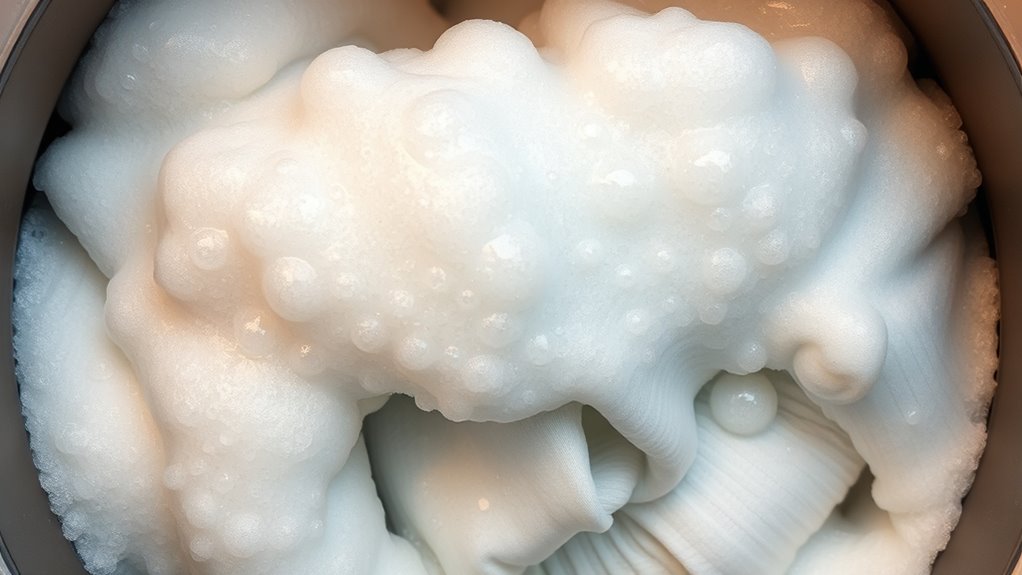
When you use too much laundry detergent, it can seriously damage your fabrics. Excess soap leaves a thick residue that clings to fibers, making clothes stiff and less comfortable. Over time, the buildup weakens fabric fibers, causing them to fray or tear more easily. This residue also traps dirt and oils, preventing proper cleaning and leading to dull, dingy clothes. Bright colors can fade faster because the detergent’s harsh chemicals break down dyes. Additionally, heavy soap on delicate fabrics causes pilling and fabric pucker, ruining the garment’s appearance. Proper detergent dosage is essential to prevent these issues and extend the life of your clothes. Regular use of the wrong amount of detergent can also impact filtration and pump protection, leading to decreased efficiency of your washing machine. Using the correct amount of detergent can also help maintain your machine’s performance and longevity, saving you money on repairs and replacements. Overall, using too much detergent not only harms your clothes’ look but also shortens their lifespan, making you replace them more often than necessary.
How Overdosing Can Damage Your Washing Machine
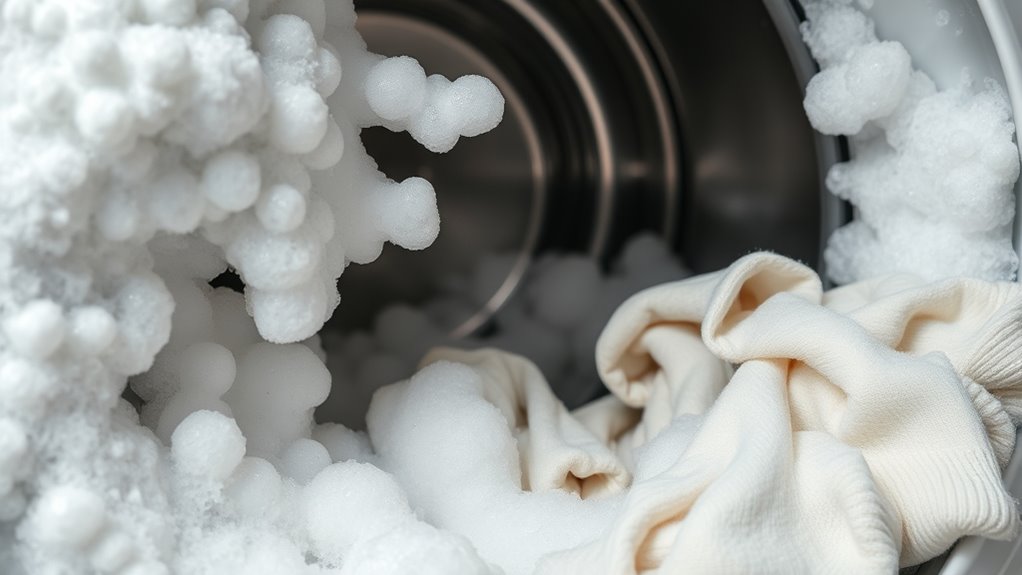
When you use too much detergent, it can cause corrosion of your washing machine’s parts over time. This excess buildup also puts extra mechanical strain on the motor and other components. As a result, your machine may wear out faster or break down sooner than expected. Additionally, the thermal behavior of the machine can be affected, leading to inefficient operation and potential damage. Using excessive soap can also clog filters, impairing the machine’s ability to drain properly and increasing the risk of malfunctions. Moreover, the detergent residue can linger inside the drum and hoses, further contributing to mechanical issues. This buildup can also promote mold and mildew growth, which can cause unpleasant odors and health concerns. Over time, this buildup can create long-term problems that are costly to repair.
Corrosion of Components
Overdosing your washing machine with too much detergent can lead to serious corrosion of its internal components. Excess soap leaves behind residue that can break down metal parts, such as the drum, agitator, and water inlet valves. This buildup can also promote mold and bacteria growth, further compromising your machine’s hygiene and performance. The detergents’ chemicals react with metal surfaces, causing rust and deterioration over time. Understanding detergent chemistry can help you choose the right amount and type of soap for your machine. Additionally, improper detergent dispersal can cause uneven cleaning and leave behind more residues that contribute to corrosion. This corrosion weakens the structural integrity of your machine, increasing the risk of leaks and mechanical failure. You might notice corrosion as rust spots or mineral build-up inside the drum or around seals. The more detergent you use, the higher the chance of damaging these essential parts. Proper detergent application ensures better cleaning results and minimizes residue buildup. Prevent corrosion by using the recommended amount of detergent and ensuring your machine is properly maintained. Regular cleaning and proper maintenance can help prevent buildup and extend your washer’s lifespan. This knowledge about machine maintenance practices is essential for preserving your appliance’s longevity and performance.
Increased Mechanical Strain
Using too much detergent forces your washing machine’s components to work harder than they’re designed to handle. The excess soap creates more friction and resistance during the wash cycle, making the motor and drum strain unnecessarily. As the machine struggles to rotate and agitate, it puts extra pressure on the belts, bearings, and suspension system. Over time, this increased mechanical stress can cause parts to wear out faster or even break. The overloaded load also causes uneven distribution of weight, which can lead to vibrations and damage the internal components. Constant strain from detergent overload can shorten your washing machine’s lifespan and lead to costly repairs. To keep your machine functioning properly, always follow the recommended detergent amounts and avoid overloading. Additionally, performance ratings based on suction power and durability can be affected if the machine is subjected to frequent mechanical stress. Proper maintenance and avoiding excessive detergent use enhance machine longevity and help prevent costly repairs. Regularly checking and cleaning the wash drum and filters can also reduce buildup and mechanical issues, further extending the lifespan of your appliance.
Recognizing Signs of Soap Residue and Build-Up
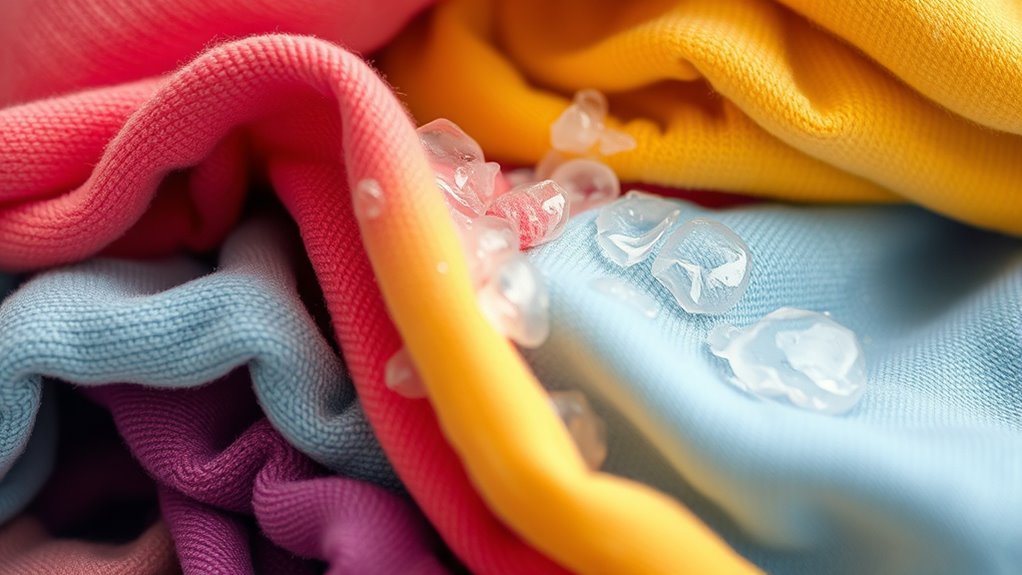
Have you noticed your clothes still feel dingy or appear dull even after washing? That’s often a sign of soap residue and build-up. You might see streaks or spots on your garments, especially on darker fabrics. Pay attention to a greasy or filmy layer that feels slick or sticky when you touch your clothes. Over time, this buildup can trap dirt and odors, making your laundry less fresh. You may also notice your clothes are stiff or rough, rather than soft and comfortable. If you’re re-washing the same items without success, it’s likely residue is lingering. Recognizing these signs early helps you take steps to strip away the excess soap and restore your clothes’ natural brightness and softness. Additionally, understanding detergent overuse can help prevent future issues and keep your wardrobe looking its best. A good understanding of residue removal techniques can greatly improve laundry results and extend the life of your garments.
The Environmental Impact of Using Too Much Detergent
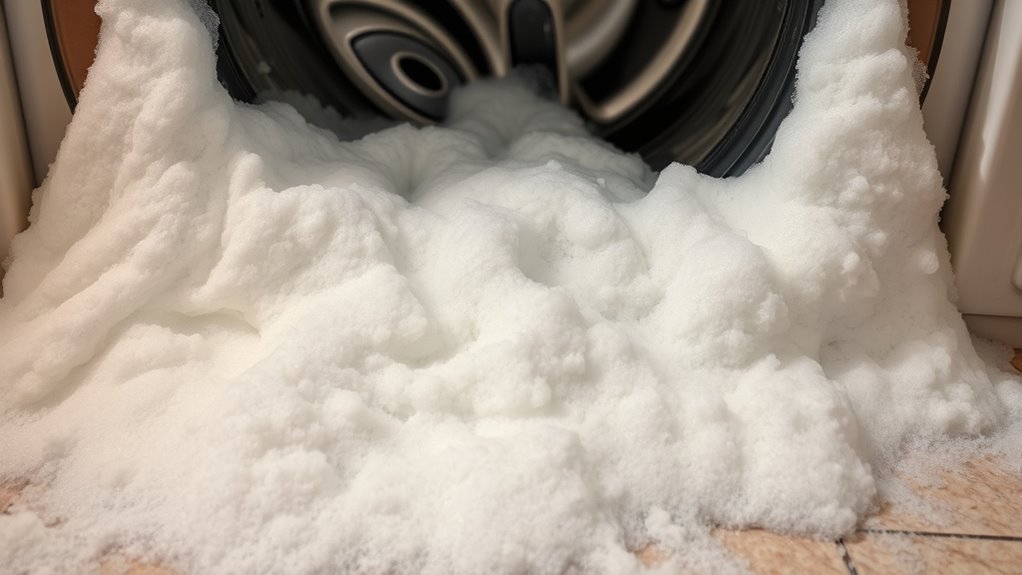
When you use too much detergent, it doesn’t just affect your clothes—it also harms the environment. Excess soap overwhelms water treatment systems, making it harder to break down and removing harmful chemicals inefficiently. This leads to pollutants entering rivers and lakes, affecting aquatic life and ecosystems. Additionally, overuse of detergent increases water consumption, as more rinsing is needed to remove residue. The production and disposal of extra detergent also contribute to pollution and waste. Furthermore, the ingredients in detergents can contain non-halal components or additives that are not compliant with Islamic dietary laws, which underscores the importance of choosing environmentally and ethically conscious products. To minimize these impacts, selecting eco-friendly detergents can significantly reduce chemical runoff and environmental harm. Being mindful of detergent formulation helps ensure that your choices support both personal and planetary health. Recognizing the importance of water conservation practices can further reduce the ecological footprint associated with laundry routines.
Proper Laundry Detergent Measurements for Optimal Results
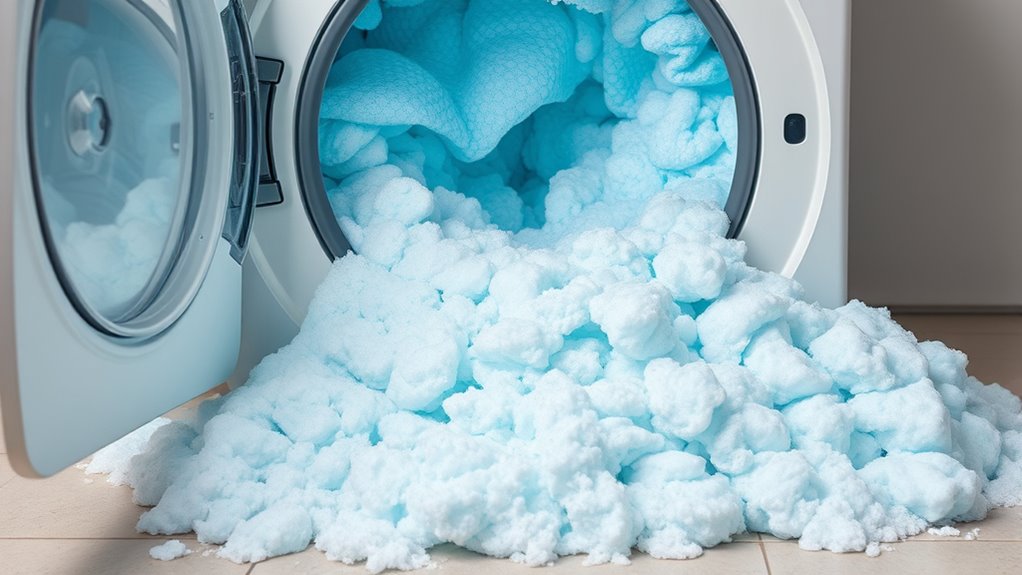
To achieve clean clothes without wasting detergent, measuring your laundry detergent accurately is essential. Follow the instructions on your detergent’s packaging, as recommended amounts vary by brand and load size. Use a measuring cup or the cap provided to ensure precision. For standard loads, typically use about 1 to 2 tablespoons of liquid detergent or the amount indicated on the scoop for powder. Larger loads may require slightly more, but avoid exceeding the recommended dose. Over-measuring can lead to soap residue buildup and poorer cleaning. Under-measuring, on the other hand, may leave clothes unclean. Always check your washing machine’s manual for specific guidance. Proper measurement maximizes cleaning power while preventing detergent waste and potential damage to your clothes and machine. Using energy-efficient appliances can enhance overall laundry effectiveness and sustainability. Additionally, selecting the right detergent type for your washing needs can further improve results and protect your fabrics.
Tips for Avoiding Overuse and Maintaining Fresh, Clean Clothes
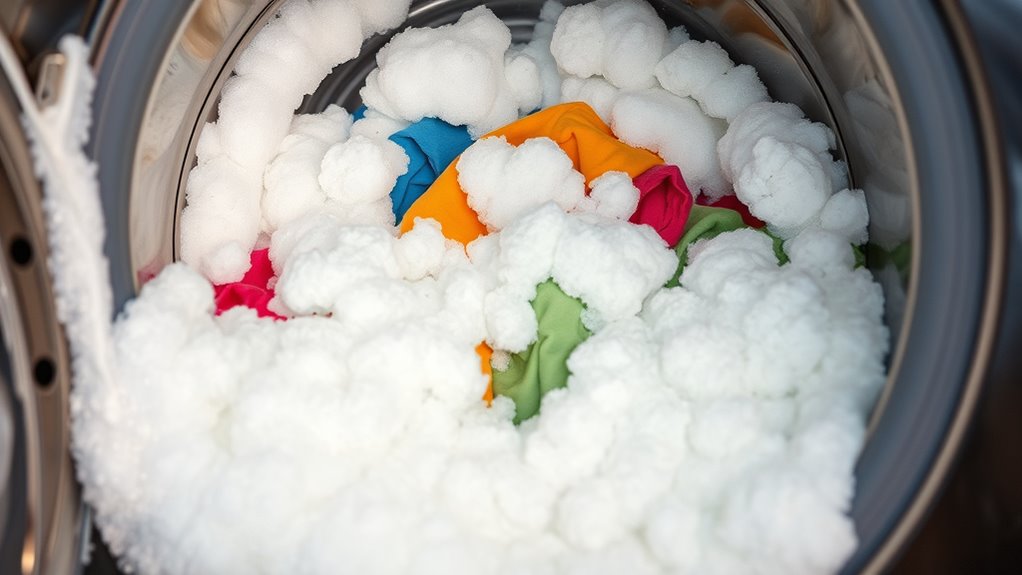
To keep your clothes fresh and avoid overusing detergent, it’s important to measure carefully and follow the instructions on the label. Using the right amount and water temperature helps prevent buildup and keeps your laundry effective. Paying attention to these simple tips guarantees cleaner, brighter clothes every time.
Measure Detergent Precisely
Using the right amount of detergent is essential for effective cleaning and preventing overuse. Too much soap can leave residue, cause odors, and damage fabrics. To measure precisely, always use the cap or scoop provided, and follow the recommended amounts for your load size. Avoid guessing or eyeballing, as this leads to overuse. Proper measurement guarantees your clothes get thoroughly cleaned without excess soap lingering. It also helps keep your washing machine in good condition, saving you money on repairs. Remember, small adjustments can make a big difference.
- Use the correct wash cycle for your load
- Adjust detergent based on soil level and water hardness
- Keep your measuring tools clean and dry
- Regularly check your machine’s detergent instructions for accuracy
Follow Manufacturer Instructions
Following the manufacturer’s instructions on your detergent packaging helps you avoid overuse and keeps your clothes smelling fresh and clean. Using too much detergent can cause residue buildup and odor issues, while following the recommended amount guarantees effective cleaning without damage. Always check the label for specific measurements based on load size and soil level. To stay consistent, consider using a measuring cup or dispenser. Here’s a quick guide:
| Load Size | Detergent Amount | Special Instructions |
|---|---|---|
| Small (1-2 lbs) | 1-2 tbsp | Use less for lightly soiled clothes |
| Large (3-5 lbs) | 2-4 tbsp | Adjust if heavily soiled |
| Extra Large | 4-6 tbsp | Follow heavily soiled clothing guidelines |
Adhering to instructions helps your clothes stay fresh longer.
Use Proper Water Temperature
Choosing the right water temperature for your laundry can prevent detergent overuse and help keep your clothes looking fresh. Using hot water for everything can lead to excess detergent residue, while cold water may not remove dirt effectively. Adjust the temperature based on fabric type and soil level to optimize cleaning without waste. Proper water temperature also helps preserve clothing fibers and colors, reducing the need for repeated washes.
- Hot water boosts stain removal but consumes more energy
- Cold water saves energy and prevents color fading
- Use warm water for everyday laundry and delicate fabrics
- Always follow garment care labels for best results
Frequently Asked Questions
Can Laundry Detergent Overdose Cause Allergic Reactions?
Yes, laundry detergent overdose can cause allergic reactions. When you use too much detergent, residue can stay on your clothes, irritating your skin or triggering allergies. You might notice redness, itching, or hives after wearing the affected clothes. To prevent this, use the recommended amount of detergent, rinse clothes thoroughly, and consider hypoallergenic options if you have sensitive skin. Being cautious helps protect you from unwanted allergic reactions.
Does Using Too Much Detergent Affect Fabric Color Longevity?
Using too much detergent can dull your fabric colors over time. Imagine a vibrant shirt gradually fading to a dull shade—that’s what excess soap can do. It leaves behind residue that traps dirt and dulls the fabric’s brightness. To keep your clothes looking fresh and colorful, stick to the recommended amount. Less soap often means cleaner, brighter clothes and longer-lasting color.
Are There Health Risks From Inhaling Soap Residues?
Inhaling soap residues can pose health risks, especially if you’re exposed frequently or for long periods. You might experience respiratory irritation, coughing, or sore throat. People with asthma or allergies are more vulnerable. To stay safe, make certain good ventilation during laundry and avoid inhaling fumes directly. If you notice persistent symptoms, consult a healthcare professional. Proper rinsing and using the right amount of detergent help minimize these risks.
How Does Detergent Overdose Impact Septic Systems?
You might think a little extra detergent won’t hurt, but overdosing damages your septic system. Excess soap kills beneficial bacteria that break down waste, causing backups and clogs. This leads to costly repairs and environmental harm. So, avoid using more than the recommended amount. Your system relies on balanced bacteria, and overdosing throws that balance off, risking long-term damage and costly maintenance.
Can Excess Soap Damage Dryer Components Over Time?
Excess soap can indeed damage your dryer components over time. When you use too much detergent, it creates more suds that can clog vents, filters, and the lint trap. This buildup forces the dryer to work harder, which can lead to overheating and wear on parts like the drum, motor, and belts. Regularly overloading with detergent also increases the risk of residue buildup, reducing your dryer’s efficiency and lifespan.
Conclusion
Using too much laundry detergent can harm your clothes, your washing machine, and the environment. For example, a homeowner once noticed their whites turning gray and their washer breaking down sooner than expected—both signs of detergent overuse. By measuring your detergent properly and avoiding excess, you keep your clothes fresh, protect your appliances, and help the planet. Stick to recommended amounts and enjoy cleaner, brighter laundry every time.