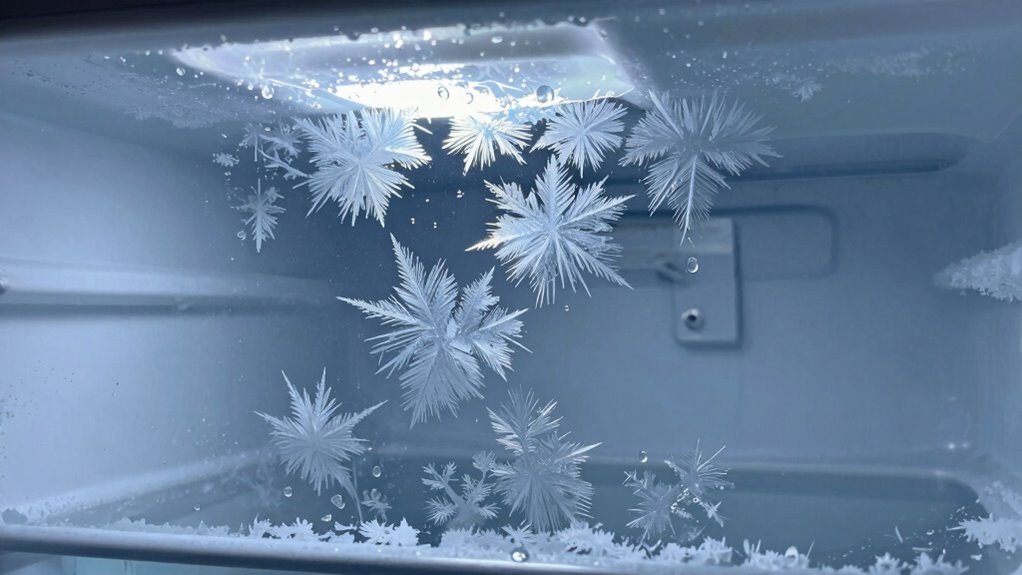

Frost build-up in your freezer happens when moist air enters, condenses, and freezes on cold surfaces. To slow it down, make sure vents are unobstructed, check door seals regularly, and keep door openings to a minimum. Maintaining a steady temperature around 0°F (-18°C) also helps prevent fluctuations that cause frost. Proper organization prevents airflow blockages, reducing frost formation. If you continue, you’ll discover more tips to keep your freezer frost-free and efficient.
Key Takeaways
- Ensure proper airflow by avoiding vent blockages and organizing items to prevent restricted circulation.
- Regularly inspect and clean door seals to prevent warm, moist air leaks into the freezer.
- Minimize door openings and open the door quickly to reduce moisture entry.
- Maintain a consistent temperature around 0°F (-18°C) to prevent condensation and frost formation.
- Perform routine maintenance, including cleaning vents and seals, to promote efficient operation and slow frost buildup.
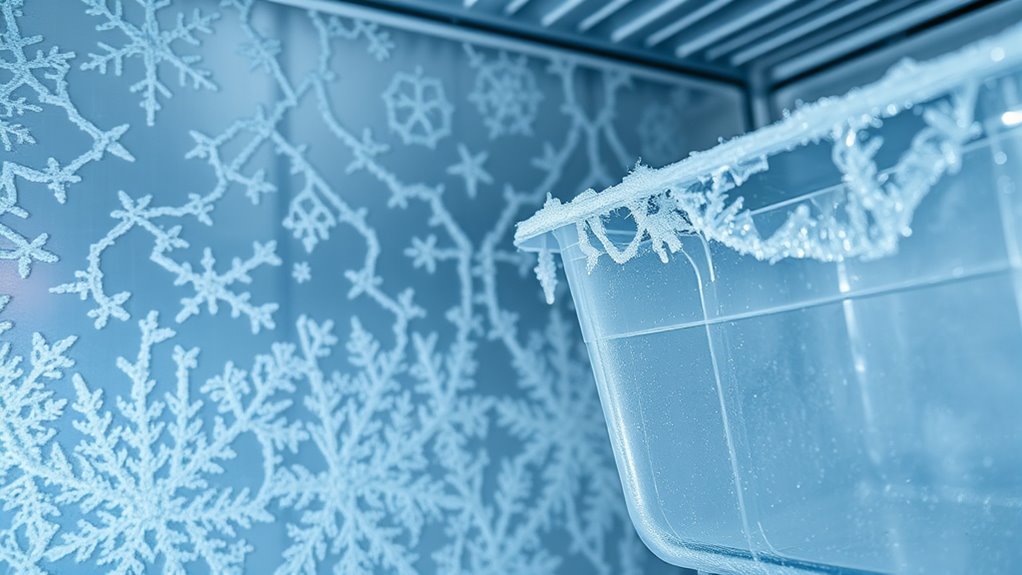
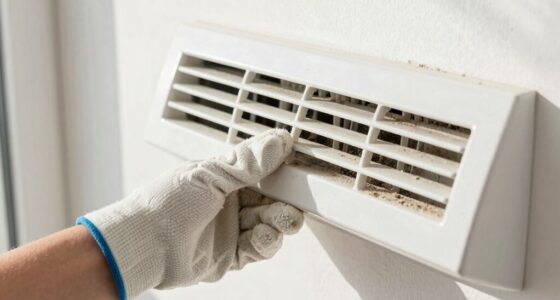
Freezer frost build-up occurs when moisture in the air inside your freezer freezes on the walls and shelves, often leading to inefficient cooling and reduced storage space. One of the main culprits is airflow restriction, which prevents the cold air from circulating properly. When airflow is blocked or hindered, warm, moist air enters and condenses on cold surfaces, creating frost. To keep airflow unobstructed, avoid overloading your freezer, which can block vents or fans that circulate air. Regularly check for items that are blocking air vents and rearrange as needed to maintain proper circulation. Proper airflow ensures the cold air reaches all parts of your freezer evenly, reducing the chances of frost forming in corners or near door seals. Additionally, ventilation considerations play a vital role in maintaining consistent airflow and preventing frost buildup.
Proper airflow prevents frost buildup by ensuring even cooling and avoiding vent blockages.
Another essential factor is door seal integrity. If the door seal isn’t airtight, warm, moist air constantly leaks into the freezer whenever you open the door. This influx of moisture increases the likelihood of frost buildup. Over time, door seals can become cracked, torn, or loose, diminishing their effectiveness. To prevent this, inspect the door seals regularly for signs of damage or debris that may prevent a tight seal. Clean the seals with warm, soapy water to remove any dirt or residue that could compromise their integrity. If you notice cracks or gaps, replacing the seal promptly will help keep moisture out and maintain a consistent, cold environment inside your freezer.
You should also be mindful of how often and how long you open the freezer door. Every time you do, warm air enters, bringing moisture that contributes to frost formation. Try to open the door only when necessary, and keep it closed as much as possible. When you do open it, do so quickly to minimize exposure to warm air. Additionally, setting the temperature correctly—usually around 0°F (-18°C)—helps your freezer operate efficiently, reducing the chances of frost buildup caused by temperature fluctuations.
In essence, controlling airflow restriction and maintaining door seal integrity are key to slowing down frost accumulation. Ensuring vents are clear and seals are intact keeps warm, moist air out, allowing your freezer to operate efficiently and stay frost-free longer. Regular maintenance, proper organization, and mindful usage help you prevent frost buildup and extend the lifespan of your appliance, keeping your frozen goods in top condition.
Contour Legacy Cool Leg & Knee Foam Support Pillow for Side Sleepers Soothing Relief for Back, Hips, Knees, Joints, Nerves & Muscles
ORTHOPEDIC LEG PILLOW TO HELP REDUCE BACK, HIP, LEG, KNEE & SCIATICA NERVE DISCOMFORT- As a side sleeper,...
As an affiliate, we earn on qualifying purchases.
Frequently Asked Questions
Can Using the Wrong Storage Containers Cause Frost Buildup?
Yes, using the wrong storage containers can cause frost buildup. If you choose containers made from poor storage container material or that don’t seal effectively, moisture can escape and freeze, creating frost. To prevent this, opt for well-sealing, airtight containers designed for freezers. Properly sealed, airtight containers keep moisture out, reducing frost formation and keeping your frozen goods fresh longer.
How Does Frequent Door Opening Influence Frost Formation?
Frequent door opening disrupts your freezer’s air circulation and causes temperature fluctuations, leading to more frost formation. Every time you open the door, warm air enters, raising the temperature and creating moisture that condenses on cold surfaces. This moisture then freezes, forming frost. To slow this process, try to open the door less often, keep it closed as much as possible, and make sure the door seals tightly to maintain consistent temperature and airflow.
Does the Age of the Freezer Affect Frost Accumulation?
Yes, the age of your freezer affects frost accumulation. As your freezer ages, its components may wear out, leading to less efficient insulation and more frost buildup. Regular maintenance, like defrosting and checking seals, becomes even more essential to slow this process. Following a consistent maintenance schedule extends your freezer’s lifespan and minimizes frost formation, ensuring it runs efficiently and keeps your food fresh longer.
Are There Specific Foods That Promote Frost Buildup?
Certain frost promoting foods, like unwrapped leftovers, fresh produce, and liquids in open containers, cause frost to build up faster. Foods that cause frost release moisture into the freezer, which then freezes on the walls. To slow frost buildup, keep foods sealed tightly, avoid overcrowding, and wipe off excess moisture before storing. This minimizes moisture released into the freezer, helping prevent excessive frost formation and maintaining ideal freezer performance.
How Often Should I Defrost My Freezer to Prevent Frost?
Think of your freezer like a car’s windshield—regular defrosting keeps ice from fogging up. You should defrost your freezer every 3 to 6 months as part of your maintenance schedule. This helps prevent frost buildup, making it run efficiently and extending its lifespan. If you notice ice more than a quarter-inch thick, it’s time to defrost sooner. Consistent maintenance keeps your freezer running smoothly and prevents frost from taking over.
Everlasting Comfort Memory Foam Knee Pillow for Side Sleepers – Sciatica Pain Relief Pillow, Removable Strap Support – Leg Pillows for Sleeping Alignment, Knees, Back & Hip Cushion
ORTHOPEDIC KNEE PILLOW FOR SIDE SLEEPERS - RELIEVES PRESSURE & PROMOTES ALIGNMENT: Sleeping on your side can cause...
As an affiliate, we earn on qualifying purchases.
Conclusion
Think of your freezer like a garden that needs careful tending. When frost builds up, it’s like weeds taking over—slowly choking out efficiency and space. By keeping the door sealed tight and defrosting regularly, you’re pruning away those icy weeds. With a little effort, you’ll keep your freezer running smoothly, preserving your food and saving energy. Stay attentive, and your appliance will serve you well, like a well-tended garden in full bloom.
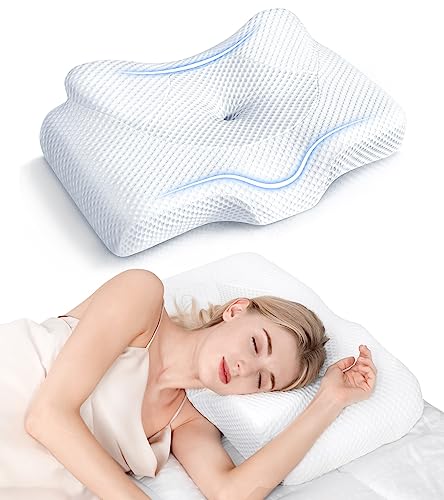
Osteo Cervical Pillow for Neck Pain Relief, Hollow Design Odorless Memory Foam Pillows with Cooling Case, Adjustable Orthopedic Bed Pillow for Sleeping, Support for Side Back Sleepers
【STOP! THE NECK PAIN & SLEEPLESS NIGHTS ARE OVER!】After years of discomfort, you've found salvation at last! Meet...
As an affiliate, we earn on qualifying purchases.

Cervical Neck Pillow for Pain Relief - Ergonomic Pillow Side Sleeper Pillow for Sleeping, Orthopedic Bed Pillow Neck Support Pillow, Contour Memory Foam Pillows for Side Back Stomach Sleepers
[CERVICAL NECK PILLOW FOR NECK SUPPORT] Combining traditional bed pillow comfort with contour pillow support, our butterfly pillow...
As an affiliate, we earn on qualifying purchases.