If you want to keep your kitchen cleaner, dishcloths are the better choice because they dry faster and resist bacterial buildup when cared for properly. Unlike sponges, which hold moisture longer and can harbor germs, dishcloths can be washed regularly and dry quickly, reducing bacteria growth. This makes them more hygienic overall. Want to discover more tips on choosing the best cleaning tools? Keep exploring to find out what works best for you.
Key Takeaways
- Dishcloths dry faster and are easier to wring out, reducing bacterial growth compared to sponges which retain moisture longer.
- Regular washing of dishcloths keeps them cleaner and less prone to bacteria buildup than sponges.
- Sponges tend to develop tears and saturation quickly, increasing the risk of bacterial proliferation.
- Dishcloths are more durable and maintain hygiene over time with proper care.
- Proper hygiene practices favor dishcloths over sponges for staying cleaner during frequent use.
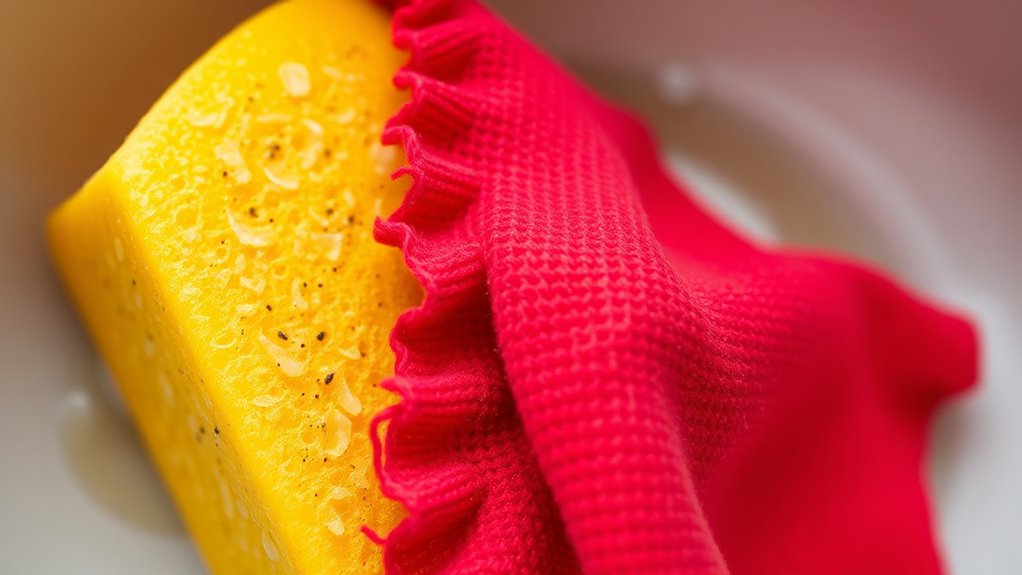
When it comes to cleaning dishes, many people wonder whether a dishcloth or a sponge is the better choice. Both tools have their advantages, but understanding their cleaning effectiveness and durability can help you decide which one suits your needs best. A dishcloth, typically made from cotton or linen, excels at scrubbing away food particles and soaking up water. Its woven fibers create a textured surface that can tackle stubborn stains more efficiently than a sponge. Because of this, a dishcloth often provides superior cleaning effectiveness for wiping down counters, dishes, and even appliances. You can easily rinse it out and reuse it multiple times, making it a practical option for everyday cleaning tasks. Additionally, Free Floating materials allow for better air circulation, helping dishcloths dry faster and stay cleaner between uses.
On the other hand, sponges are known for their versatility and ability to reach into narrow spaces, such as between dishware or around sink edges. Their soft, porous structure allows them to hold soap and water longer, which can make scrubbing more effective on greasy or baked-on residues. However, sponges tend to harbor bacteria more quickly due to their porous nature. This brings us to the durability comparison: dishcloths are generally more durable over time. They can withstand frequent washing and are less likely to develop deep-set bacteria if washed properly. A well-maintained dishcloth can last for weeks or even months, provided you wash it regularly in hot water. Sponges, conversely, tend to break down faster, especially if used heavily or for stubborn grime. They may develop tears or become too saturated, leading to decreased cleaning effectiveness and increased bacterial growth.
Another aspect to consider is hygiene. Dishcloths, when washed thoroughly and frequently, tend to stay cleaner than sponges. The ability to wring out excess water and dry quickly means they dry faster, reducing bacteria build-up. Sponges, by design, retain moisture longer, which creates an ideal environment for bacteria to multiply. This means you’d need to replace sponges more often to prevent germs from spreading. To consider, if your priority is cleaning effectiveness combined with durability, a dishcloth is often the better option. It offers a more thorough clean and lasts longer with proper care. Sponges are convenient and good for specific tasks, but they require frequent replacement and careful hygiene practices to stay safe and effective. Choosing between them depends on your cleaning habits and what you value most in your dishwashing routine.

LEVOIT Air Purifiers for Home Large Room Up to 1875 Ft² with Washable Pre-Filter, AHAM VERIFIDE, Air Quality Monitor, HEPA Sleep Mode for Allergies, Pet Hair in Bedroom, Vital 200S-P, White
𝐖𝐇𝐘 𝐂𝐇𝐎𝐎𝐒𝐄 𝐀𝐇𝐀𝐌 𝐕𝐄𝐑𝐈𝐅𝐈𝐃𝐄 𝐏𝐑𝐎𝐃𝐔𝐂𝐓𝐒: AHAM (Association of Home Appliance Manufacturers) is an ANSI-accredited organization that sets strict...
As an affiliate, we earn on qualifying purchases.
Frequently Asked Questions
Which Cleaning Tool Dries Faster After Use?
A sponge generally dries faster after use because its material comparison shows it absorbs less water and has better airflow. Sponges are often made from porous synthetic materials that allow moisture to evaporate quickly, reducing drying time. In contrast, dishcloths, typically made of cotton or linen, retain more water and take longer to dry. So, if quick drying is your priority, a sponge is the better choice.
Are There Eco-Friendly Options for Dishcloths or Sponges?
Yes, you can find eco-friendly options like dishcloths and sponges made from biodegradable materials such as bamboo, cellulose, or plant-based fibers. Reusable options are also great because they reduce waste and last longer, making them more sustainable. Look for products labeled as biodegradable or biodegradable and reusable, so you can clean effectively while minimizing environmental impact. Switching to these options helps protect the planet and keeps your kitchen eco-friendly.
How Often Should I Replace My Dishcloth or Sponge?
Ever wondered how often you should replace your dishcloth or sponge? Typically, you should switch them out every one to two weeks. Maintaining a consistent cleaning schedule helps prevent bacteria buildup. Do you notice lingering smells or stains? Those are signs it’s time for a fresh one. Regular replacement guarantees your dish cleaning tools stay hygienic and effective, reducing the risk of cross-contamination in your kitchen.
Can Dishcloths or Sponges Harbor Harmful Bacteria?
Yes, dishcloths and sponges can harbor harmful bacteria because of bacterial growth and germ harboring. When you leave them damp or don’t clean and replace them regularly, bacteria multiply quickly. To reduce risks, wash sponges often, disinfect dishcloths frequently, and replace both every one to two weeks. Proper drying and regular cleaning help keep your kitchen safer and minimize germ harboring.
Do Dishwasher-Safe Sponges Clean Better Than Hand-Washed Ones?
Dishwasher-safe sponges clean better than hand-washed ones because dishwasher efficiency guarantees higher temperatures and thorough rinsing, removing more bacteria and grime. Plus, these sponges tend to have greater sponge durability, allowing them to withstand multiple cleaning cycles without degrading. You’ll find that dishwasher cleaning extends your sponge’s lifespan and keeps it more hygienic, making it a smarter choice for maintaining a cleaner kitchen environment.

LEVOIT Air Purifier for Home Allergens Pet Hair in Bedroom, Covers Up to 1073 ft² by 56W High Torque Motor, AHAM VERIFIDE, 3-in-1 Filter with HEPA Sleep Mode, Remove Dust Smoke Odor, Core300-P, White
WHY CHOOSE AHAM VERIFIDE AIR PURIFIERS: AHAM (Association of Home Appliance Manufacturers) is an ANSI-accredited organization that sets...
As an affiliate, we earn on qualifying purchases.
Conclusion
So, when it comes to staying clean, your dishcloth might just beat the sponge—no need to turn into a modern-day Marie Antoinette with a teapot full of bleach. Just remember to wash your cloth regularly and let it dry thoroughly, and you’ll keep germs at bay. Think of it as a little slice of the Victorian age in your kitchen—simple, effective, and quite the upgrade from the days of yore. Keep it clean, and your dishes will thank you!

LEVOIT Air Purifier for Home Large Room Up to 1073Ft² with Air Quality Monitor, AHAM VERIFIDE, Smart WiFi, Washable Pre-Filter, HEPA Sleep Mode for Pets, Allergies, Dust, Pollen, Vital 100S-P, White
𝐖𝐇𝐘 𝐂𝐇𝐎𝐎𝐒𝐄 𝐀𝐇𝐀𝐌 𝐕𝐄𝐑𝐈𝐅𝐈𝐃𝐄 𝐀𝐈𝐑 𝐏𝐔𝐑𝐈𝐅𝐈𝐄𝐑𝐒: AHAM (Association of Home Appliance Manufacturers) is an ANSI-accredited organization that sets...
As an affiliate, we earn on qualifying purchases.

KNKA Air Purifier for Home Bedroom Large Room Up to 1,695 Ft² in 1 Hr, HEPA Air Cleaner with Washable Pre-Filter, AQI Display, ECO Mode, Sleep Mode, Pet Mode for Pets, Dust, Pollen, APH4000
𝐇𝐢𝐠𝐡 𝐂𝐀𝐃𝐑 𝐕𝐚𝐥𝐮𝐞: This air purifier provides reliable performance with a Smoke/Dust/PM2.5 CADR of 226 CFM (384 m³/h)...
As an affiliate, we earn on qualifying purchases.