To improve indoor air quality and reduce allergy triggers, start by cleaning high-touch surfaces like doorknobs and light switches. Dust from top to bottom, beginning with ceiling fans and light fixtures, then move down to walls, baseboards, and furniture. Clearing clutter first makes dusting easier and more thorough. Regularly vacuum and replace air filters for the best results. Keep going to discover more effective tips for allergen-free cleaning routines.
Key Takeaways
- Start dusting from high surfaces like ceilings and fans to prevent recontamination downwards.
- Declutter and organize spaces to access surfaces easily and reduce dust buildup.
- Focus on high-touch areas such as door handles and light switches daily with microfiber cloths or wipes.
- Dust from top to bottom, including walls, moldings, and baseboards, to contain dust and allergens.
- Regularly clean upholstery, drapes, and air filters to minimize allergen accumulation and improve air quality.
Prioritize High-Traffic and Often-Touched Surfaces
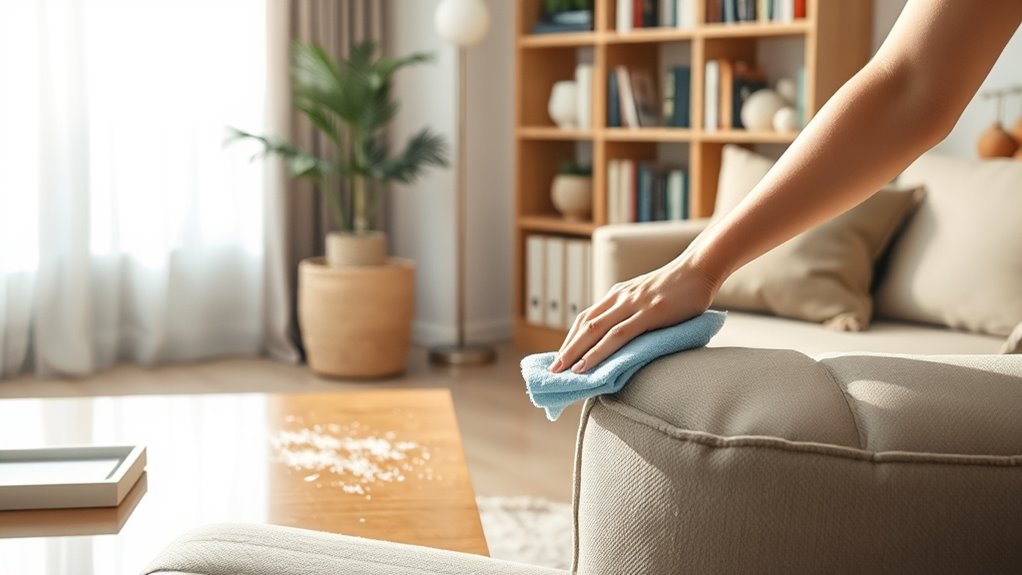
Since high-traffic and frequently touched surfaces are common sources of allergens, maintaining regular cleaning of them is vital. Your focus should be on areas like door handles, light switches, tabletops, and remote controls. These spots accumulate dust, bacteria, and allergens quickly and are touched multiple times daily. Use a microfiber cloth or disinfectant wipes to wipe down these surfaces at least once a day. Pay attention to areas you touch often, as they can transfer allergens to your hands and spread throughout your home. Regular cleaning reduces allergen buildup and minimizes airborne particles that can trigger allergies. Additionally, understanding the Dusting order can help you develop a more systematic approach to cleanliness, ensuring no area is overlooked. Implementing a proper dusting sequence ensures more thorough removal of dust and allergens from all surfaces. Incorporating efficient cleaning techniques can further enhance allergen control.
Dust From Top to Bottom to Prevent Recontamination

Dust tends to settle on higher surfaces first, so starting your cleaning from the top guarantees you remove the most accumulated allergens before they fall onto lower areas. Begin by wiping down shelves, picture frames, and crown molding to catch dust at its peak. Use a microfiber cloth or a vacuum with a brush attachment to trap dust effectively. As you work downward, dust furniture, windowsills, and baseboards to prevent recontamination. This method ensures dust doesn’t fall onto freshly cleaned surfaces, reducing airborne allergens. Keep these in mind:
Start cleaning from the top to prevent dust from falling onto cleaned surfaces and reduce allergens.
- Dust ceiling corners and top of cabinets
- Wipe down high shelves and ledges
- Clean lampshades and light fixtures
- Vacuum or dust window frames and sills
- Remember that airborne allergens can settle quickly, so thorough dusting in order is essential for allergy relief. Additionally, proper vacuum maintenance ensures maximum removal of allergens from your home environment. Incorporating HVAC filtration can further improve air quality by capturing microscopic particles. Using a consistent dusting order minimizes allergen spread and keeps your home cleaner longer. Regularly replacing or cleaning your HVAC filters enhances their effectiveness in trapping dust and allergens, creating a healthier living space.
Start With Ceiling Fans and Light Fixtures
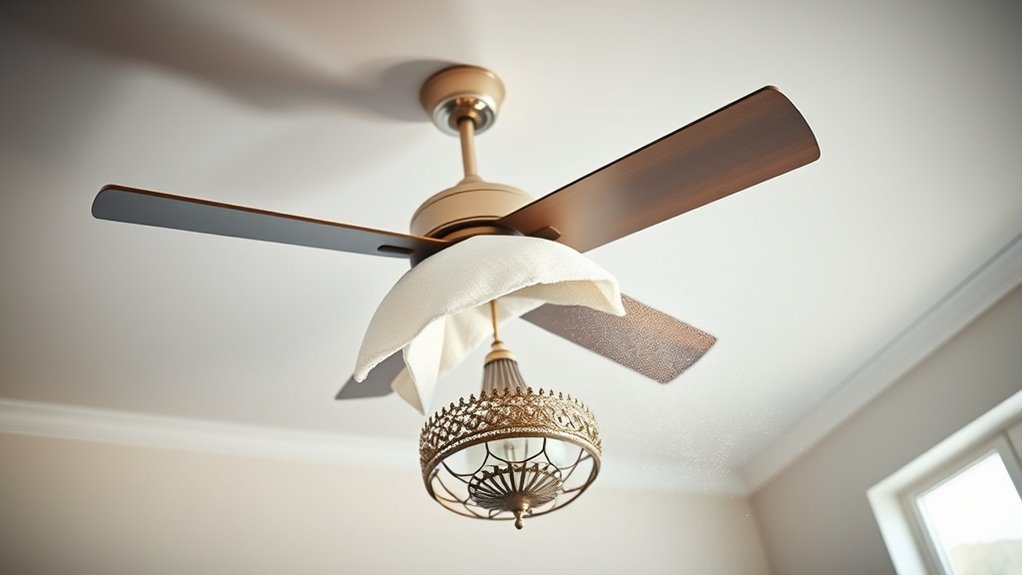
Ceiling fans and light fixtures often trap dust and dirt that can worsen allergy symptoms. When you clean these surfaces first, you improve indoor air quality and reduce recontamination. Using effective dusting techniques guarantees you remove debris thoroughly and keep your home healthier. Additionally, employing smart‑home integrations can help you schedule regular cleaning and monitor dust levels more efficiently. Incorporating routine maintenance ensures these areas stay cleaner over time and minimizes allergen buildup. Regularly checking and maintaining air purifier filters also supports ongoing air quality improvements in your home, especially since filter replacement is essential for optimal performance. Staying consistent with cleaning schedules further helps prevent dust accumulation and maintains a healthier environment.
Dirt Accumulation on Fixtures
Over time, ceiling fans and light fixtures can gather a surprising amount of dust and dirt, which not only dulls their appearance but can also circulate allergens throughout your home. This buildup can be stubborn, especially in hard-to-reach spots. Regular cleaning prevents dust from falling onto furniture and floors, reducing allergens in the air. When you clean these fixtures, you’ll notice a brighter, fresher look in your rooms. Dust tends to settle on the blades, light covers, and mounting brackets. Neglecting these areas allows dirt to accumulate, making cleaning more difficult later. To keep your fixtures allergen-free, make sure to:
- Wipe down fan blades with a damp cloth
- Clean light covers gently with a microfiber cloth
- Dust mounting brackets and chains
- Remove and wash any removable parts
- Proper upkeep of fixtures ensures they stay free of dust and allergens over time.
Impact on Indoor Air Quality
Regularly cleaning ceiling fans and light fixtures plays a crucial role in maintaining good indoor air quality. Dust and allergens tend to settle on these surfaces, becoming airborne when the fan spins or lights are turned on. If left uncleaned, this dust circulates throughout your home, aggravating allergies and respiratory issues. By wiping down or vacuuming these fixtures regularly, you reduce the amount of particulate matter in the air. This simple step prevents dust buildup from becoming a source of indoor pollution. Additionally, keeping fixtures clean minimizes the spread of allergens from surface to air. As a result, the air you breathe becomes cleaner, healthier, and less likely to trigger allergy symptoms. Consistent maintenance of ceiling fans and light fixtures is essential for a healthier indoor environment. Incorporating natural cleaning methods can further enhance air quality by reducing chemical exposure. Using air filtration can also help capture remaining dust particles that may resurface over time. Furthermore, understanding indoor air quality helps emphasize the importance of routine cleaning in preventing respiratory problems. Regular cleaning routines also help prevent the accumulation of dust mites, which are common indoor allergens. Being aware of airborne allergens can motivate more thorough and frequent cleaning practices.
Effective Dusting Techniques
To effectively reduce dust and allergens, start your cleaning routine by targeting ceiling fans and light fixtures first. These areas collect a lot of dust that easily circulates when disturbed. Use a microfiber duster or a damp cloth to remove dust from the blades and fixture surfaces. Make sure to turn off the fans and lights before cleaning to avoid accidents. For best results, wear a mask and gloves to minimize exposure. Keep a step stool handy for hard-to-reach spots. Regular cleaning prevents dust buildup and improves air quality.
- Use a microfiber cloth or duster for quick removal
- Turn off appliances before cleaning to ensure safety
- Wear a mask to avoid inhaling dust particles
- Reach high spots with a sturdy step stool
Clear Out Clutter Before Dusting Surfaces
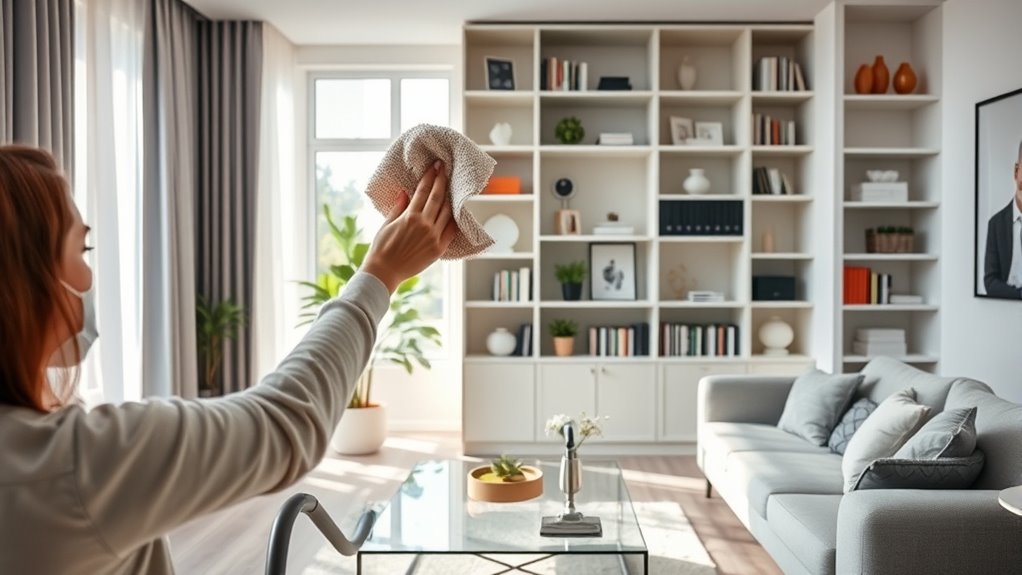
Before you dust, clear out clutter to improve air quality and make the process easier. Organize your items strategically so dust doesn’t settle on unnecessary surfaces. A tidy space helps reduce allergens and keeps your home cleaner longer. Incorporating sound vibrations during cleaning routines can further enhance the removal of dust particles and promote a healthier environment. Consistent auditory feedback can also reinforce effective cleaning habits and improve overall air quality.
Declutter for Better Air
Clearing out clutter creates a cleaner environment and makes dusting more effective. When surfaces are cluttered, dust settles on objects, making it harder to remove. By decluttering, you reduce hidden dust and allergens, improving air quality. Imagine removing piles of magazines, toys, and unused items from shelves and tables. This opens up space for thorough cleaning and prevents dust buildup. Visualize tossing out or storing away unnecessary items in boxes or bins. A tidy area means less dust trapped in clutter, making your dusting efforts more successful. Plus, it’s easier to reach corners and crevices where dust hides. Decluttering not only simplifies cleaning but also creates a healthier, allergen-free environment for you to breathe easier. Incorporating essential oils for respiratory health, such as eucalyptus or peppermint, can further enhance air quality and support allergy relief.
Organize Items Strategically
Organizing your items strategically guarantees your cleaning efforts are more effective. Before you start dusting, clear away clutter that blocks access to surfaces. Put away unnecessary items so you can reach every corner easily. Group similar objects together, like books or decorative items, to streamline your process. This not only speeds up cleaning but also reduces the chance of spreading dust and allergens. Consider storing items in closed containers or bins to trap dust and prevent it from circulating. As you declutter, you create a cleaner environment that’s easier to maintain. When surfaces are clear, dusting becomes more thorough and less frustrating. Plus, a clutter-free space reduces hidden dust reservoirs, making your allergy-proofing efforts more successful. Additionally, using organized storage solutions can help maintain a tidy environment over time.
Tackle Wall and Ceiling Dust Accumulations
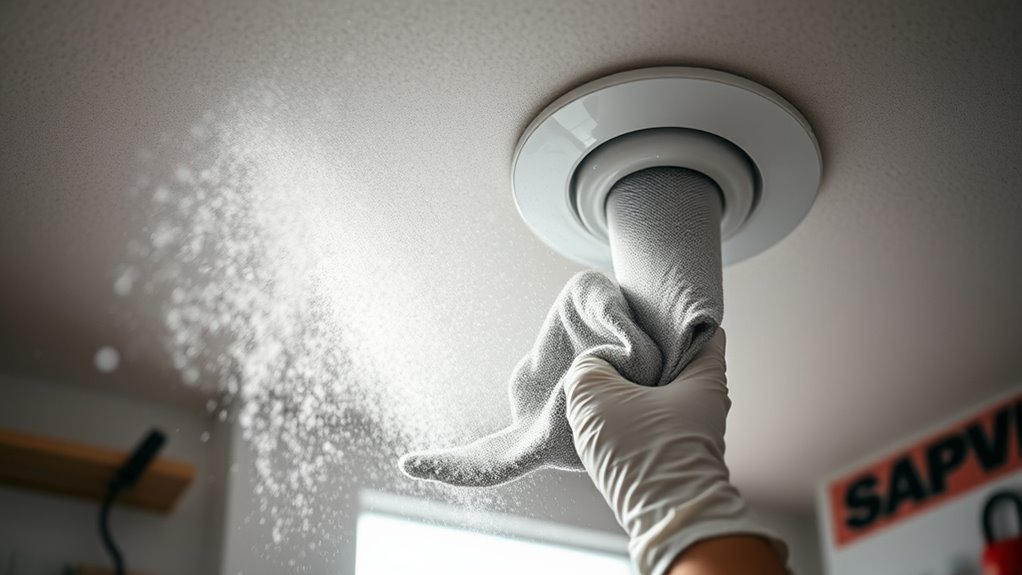
Walls and ceilings often collect dust that can trigger allergy symptoms, especially in areas with limited ventilation. Dust buildup here can worsen allergies and reduce indoor air quality. To tackle this, start by dusting high surfaces with a microfiber cloth or extendable duster. Use a vacuum with a soft brush attachment for ceiling corners and moldings. For stubborn spots, lightly dampen your cloth to trap dust effectively. Pay attention to ceiling fans and light fixtures, cleaning them thoroughly. Keep windows open when possible to improve airflow and help dust settle. Regular maintenance prevents excessive buildup. Remember, dust on walls and ceilings can linger unseen, so consistent cleaning keeps your environment healthier and allergy-friendly.
Focus on Upholstered Furniture and Drapes
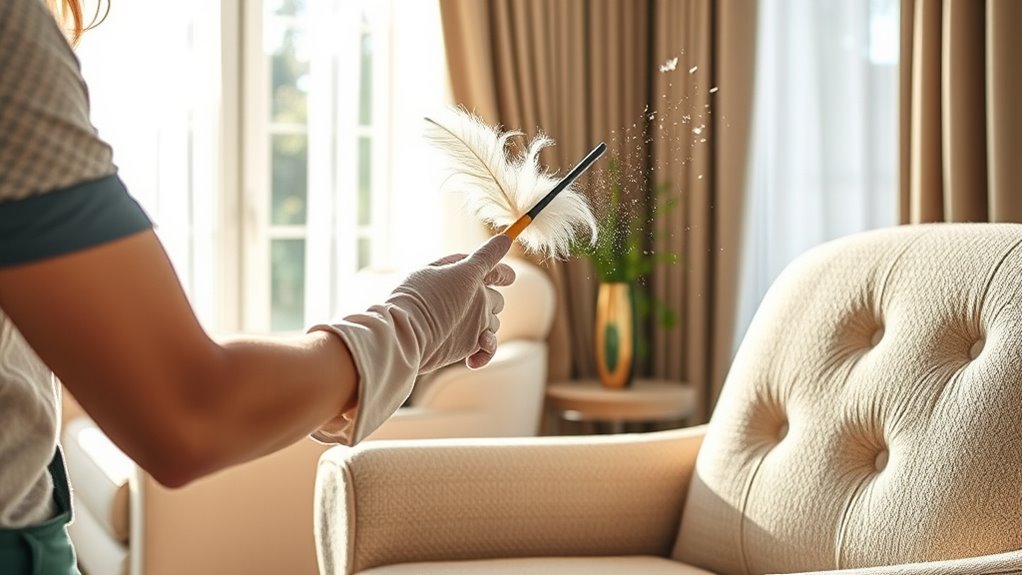
Upholstered furniture and drapes can harbor significant amounts of dust, pet dander, and allergens that worsen allergy symptoms. To reduce these irritants, start by vacuuming upholstery and drapes thoroughly with a HEPA-filter vacuum. Use the upholstery attachment to reach deep into cushions and fabric surfaces. For drapes, consider removing and washing them if possible, following the care instructions. If washing isn’t an option, gently vacuum or use a microfiber cloth to wipe them down. Pay special attention to folds and pleats where dust can accumulate. Regular cleaning prevents allergen buildup and improves indoor air quality. Remember, consistency is key—incorporate this step into your routine to keep allergens at bay and create a healthier living environment.
Pay Attention to Baseboards and Molding

Since dust and allergens tend to settle on baseboards and molding, it’s important to include them in your cleaning routine. These areas often go unnoticed but can harbor a significant amount of dust, pet dander, and dirt. Regularly wiping them down helps reduce allergen buildup and improves indoor air quality. Use a damp microfiber cloth or a gentle dusting tool to capture dust effectively. Pay attention to corners and crevices where dust collects. For stubborn spots, a mixture of mild soap and water works well. Remember, thorough cleaning of these surfaces prevents allergens from circulating and settling elsewhere. Keeping baseboards and molding clean makes a noticeable difference in creating a healthier, allergy-friendly environment.
Regularly clean baseboards and molding to reduce dust, pet dander, and improve indoor air quality.
- Wipe with a microfiber cloth or duster
- Focus on corners and detailed areas
- Use a mild soap solution for stubborn grime
- Regularly clean to prevent dust accumulation
Finish With Vacuuming and Air Purification Steps
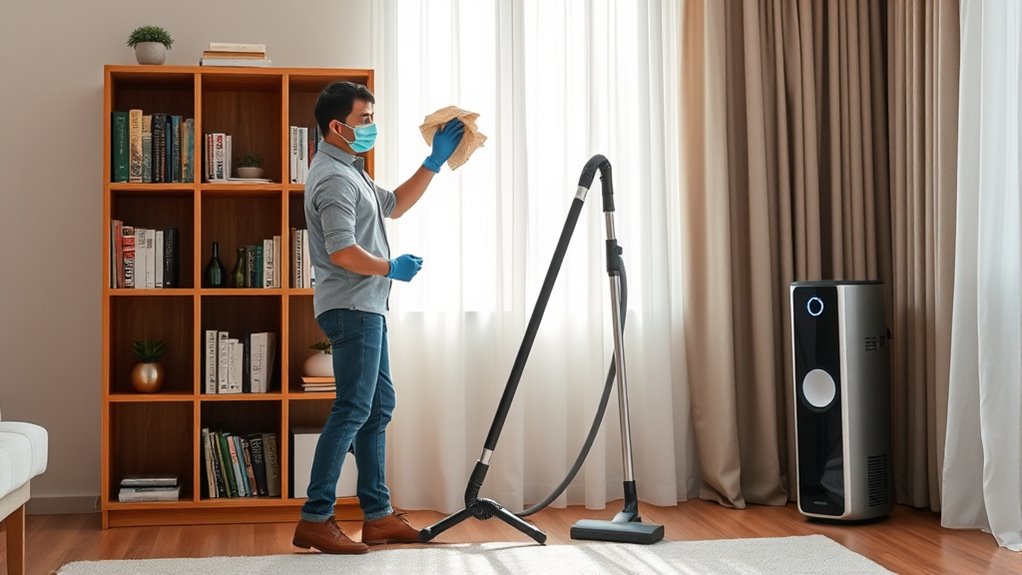
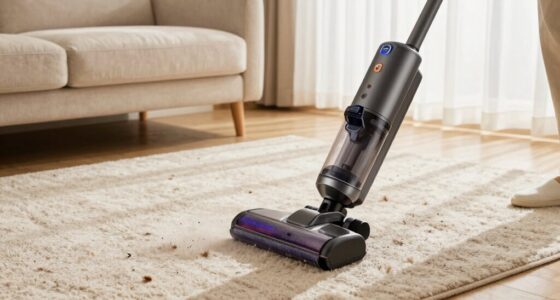
After cleaning your baseboards and molding, the next step is to thoroughly vacuum the entire space. Use a vacuum with a HEPA filter to trap allergens effectively. Focus on carpets, rugs, furniture, and curtains, as these hold dust and pet dander. Move slowly to pick up embedded particles. Once vacuuming is complete, turn to air purification. Run an air purifier equipped with a HEPA filter to remove airborne allergens, dust mites, and pet dander. Keep windows open if possible to increase airflow. This step helps ensure that airborne particles don’t settle after cleaning. Combining thorough vacuuming with air purification considerably reduces allergens in your environment, providing relief and creating a healthier space for allergy sufferers.
Frequently Asked Questions
How Often Should I Dust to Reduce Allergy Symptoms Effectively?
You should dust at least once a week to reduce allergy symptoms effectively. Regular dusting prevents the buildup of dust mites, pet dander, and other allergens that can trigger reactions. Focus on surfaces like shelves, furniture, and vents, using a damp cloth to trap dust rather than spreading it around. If you notice increased allergy symptoms, consider dusting more frequently, especially during allergy season or when you have pets.
What Tools Are Best for Dusting Delicate Surfaces?
You should use a soft microfiber cloth or a gentle feather duster for delicate surfaces. Microfiber cloths trap dust effectively without scratching, making them ideal for glass, electronics, and ornate items. Feather dusters are light and gentle, ideal for intricate details. Always dust lightly, moving in a consistent direction, and avoid harsh chemicals or rough materials that could damage fragile surfaces. This approach keeps your delicate items clean without harm.
Can Dusting Help Improve Indoor Air Quality Significantly?
Yes, dusting can considerably improve your indoor air quality. When you dust regularly, you remove dust, pet dander, and allergens that circulate in the air. Proper dusting techniques, like starting from high surfaces and working down, prevent redistributing debris into the air. Using the right tools, such as microfiber cloths and HEPA-filter vacuums, guarantees you trap more particles, making your living space healthier and allergen-free.
Are There Eco-Friendly Cleaning Products Suitable for Allergy-Prone Homes?
Yes, there are eco-friendly cleaning products perfect for allergy-prone homes. Look for natural options like vinegar, baking soda, and plant-based detergents, which effectively clean without harsh chemicals. These products help reduce airborne irritants and are safer for your family and the environment. Always check labels for allergy-friendly certifications, and consider using products with minimal synthetic fragrances to prevent allergic reactions.
How Do I Prevent Recontamination After Dusting?
To prevent recontamination after dusting, you should keep your home well-ventilated by opening windows or using an air purifier. Wear a mask and gloves during cleanup to prevent spreading dust. Regularly wash your linens, curtains, and vacuum with a HEPA filter. Stay consistent with your cleaning routine, and avoid clutter that traps dust. These steps help keep allergens at bay and maintain a cleaner, healthier space.
Conclusion
Following this dusting order not only cleans effectively but also helps reduce allergy triggers. Some say dusting from top to bottom prevents recontamination, and evidence suggests it’s true—dust naturally settles downward. By starting with high surfaces and finishing with vacuuming, you minimize airborne particles. Implementing this routine can make a real difference in allergy relief, proving that a strategic cleaning approach isn’t just a myth but a simple, effective way to breathe easier at home.