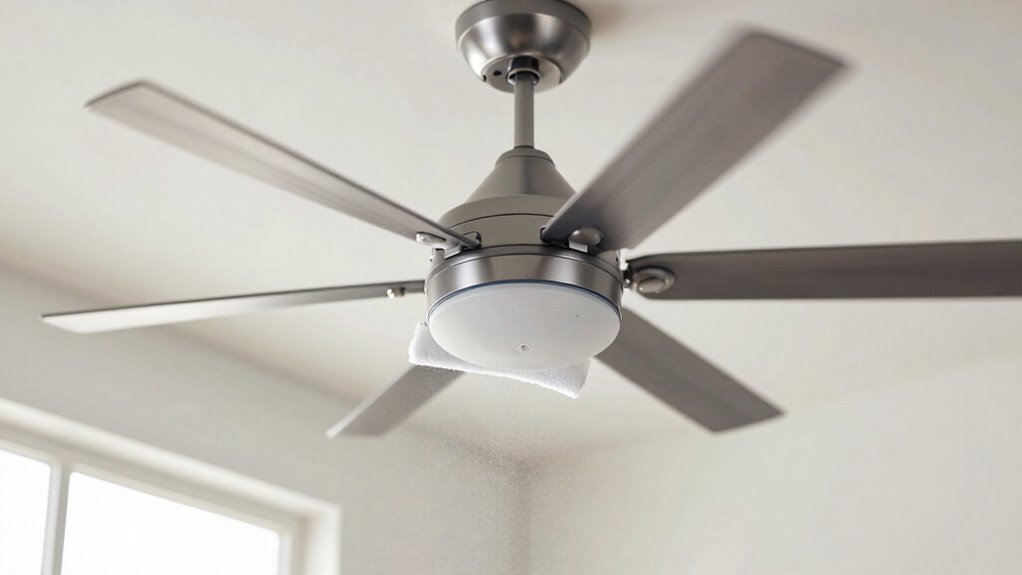

To clean ceiling fan dust safely without a dust shower, turn off the fan and let the blades stop completely. Use a microfiber duster to gently sweep from the center outward, minimizing airborne dust. For stubborn spots, lightly dampen a soft cloth or sponge and carefully wipe the blades. Avoid harsh chemicals and excessive moisture to protect electrical parts. If you’d like tips to make your cleaning even easier and cleaner, keep exploring further.
Key Takeaways
- Turn off the fan and wait for blades to stop before cleaning to prevent accidents.
- Use a microfiber duster to gently sweep dust from the center outward, minimizing airborne particles.
- Lightly dampen a soft cloth or sponge for stubborn dust, and wipe blades carefully to contain dust.
- Avoid using harsh chemicals and excess moisture to protect electrical components and fan finishes.
- Regularly clean fans every few weeks to reduce dust buildup and improve indoor air quality safely.
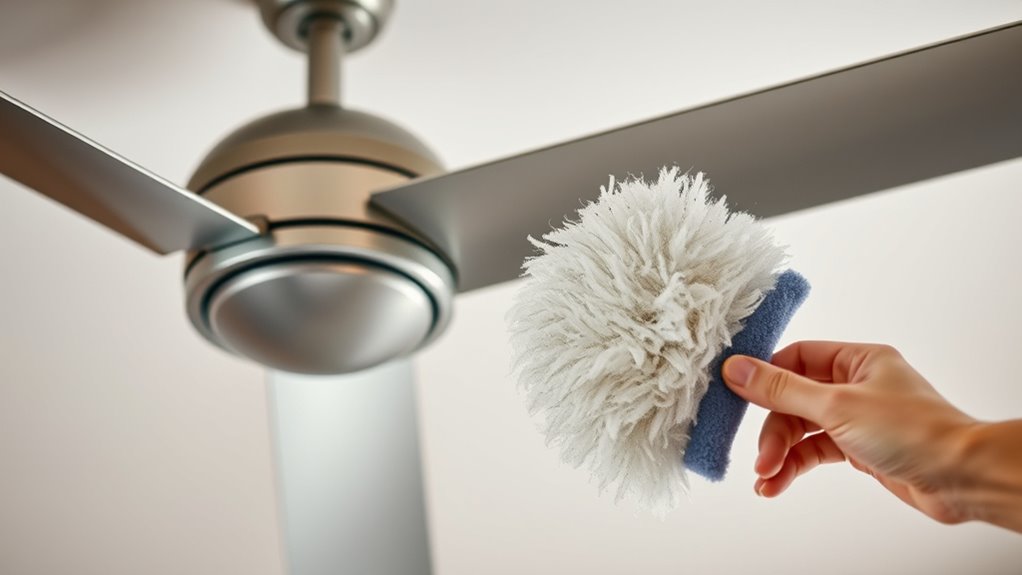
Have you ever wondered how much dust is lurking on your ceiling fan? It’s easy to overlook, but that layer of dust can considerably impact your indoor air quality. When you turn on the fan, those tiny particles get circulated throughout your space, aggravating allergies and respiratory issues. The good news is, cleaning your ceiling fan doesn’t have to turn into a dusty mess. With the right cleaning tools and a steady approach, you can keep your fan dust-free and improve your air quality without the airborne chaos that often accompanies dusting.
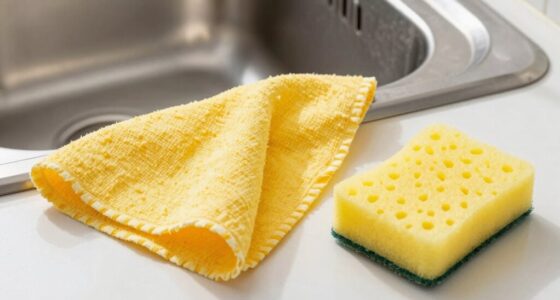
Start by gathering your cleaning tools. A microfiber duster is ideal because it traps dust rather than spreading it around. For a deeper clean, a step stool or ladder helps you reach the blades safely. You might also want a spray bottle filled with a mild cleaning solution, like water mixed with a few drops of dish soap, and a soft cloth or sponge. These tools make cleaning more efficient and less messy. Avoid using harsh chemicals that could damage your fan’s finish or release fumes into your home.
Use a microfiber duster and soft cloth for a safe, effective ceiling fan cleaning.
Before you begin, turn off the ceiling fan and let the blades come to a complete stop. This ensures safety and prevents blades from spinning unexpectedly. Use your microfiber duster to gently sweep each blade, starting from the center and working outward. If you notice stubborn dust or grime, lightly dampen your cloth or sponge and wipe the blades carefully. This method prevents dust from becoming airborne and settling elsewhere in your room. For the motor and light fixtures, use a dry cloth or a lightly dampened one to remove dust, avoiding excess moisture that could damage electrical components.
As you clean, be mindful of the air quality in your home. Dust can linger in the air, contributing to respiratory issues or allergies. Regular maintenance, like dusting your ceiling fan every few weeks, helps keep these particles in check. When you’re finished, turn the fan back on to see how much cleaner and fresher the air feels. Your home’s environment improves, and you reduce the amount of dust that circulates in your living space.
Frequently Asked Questions
Can I Use a Vacuum Without a Brush Attachment for Cleaning?
Yes, you can use a vacuum without a brush attachment for cleaning, but it’s not ideal. Without specialized cleaning tools like vacuum attachments, you might struggle to effectively remove dust and debris, especially from delicate or hard-to-reach areas. Using the right cleaning tools guarantees thorough cleaning and prevents damage. If you only have a basic vacuum, be gentle and consider investing in proper attachments for better results.
How Often Should I Replace Ceiling Fan Blades for Optimal Cleaning?
You should replace ceiling fan blades every 10 to 15 years to guarantee ideal cleaning and maintain fan lifespan. Over time, blades accumulate dust, dirt, and grease, which can affect airflow and efficiency. Regularly inspecting your blades helps you spot signs of wear or damage early. If you notice cracks, warping, or persistent dirt buildup despite cleaning, it’s time for blade replacement to keep your fan functioning smoothly and safely.
Are There Eco-Friendly Cleaning Solutions Suitable for Ceiling Fans?
Think of eco-friendly solutions as a gentle rain that cleans without harm. You can use natural cleaning agents like vinegar, baking soda, or lemon juice to safely clean your ceiling fan. These natural options effectively remove dust and grime while being environmentally friendly. By choosing eco-friendly solutions, you protect your home and the planet, making your cleaning routine both safe and sustainable.
What’s the Safest Way to Clean Ceiling Fan Remote Controls?
For safe remote control cleaning, turn off the device first. Use a soft, slightly damp cloth with a gentle, eco-friendly cleaner or plain water. Avoid harsh chemicals. For dust removal techniques, gently wipe the buttons and surface, paying attention to crevices. If needed, use a soft brush or compressed air to dislodge dust. Always dry thoroughly before using the remote again to prevent damage.
Is It Necessary to Turn off the Fan Before Cleaning the Blades?
Ever wondered if you should turn off your fan before cleaning? For fan safety and cleaning precautions, it’s best to switch off the fan first. This prevents accidental injuries and guarantees the blades don’t spin unexpectedly. Turning off also helps you clean more thoroughly without the risk of dust flying everywhere. Always prioritize safety—turn off the switch to avoid any mishaps during your cleaning routine.
Conclusion
Now that you know how to clean your ceiling fan safely, imagine it as giving your home a gentle gust of fresh air. When I first tried it, I thought it would be a messy chore, but with these tips, it became quick and almost relaxing—like clearing away cobwebs from your mind. Regular cleaning keeps the dust at bay and your space feeling fresh. So, grab your tools and enjoy a dust-free, breezy home without the shower!