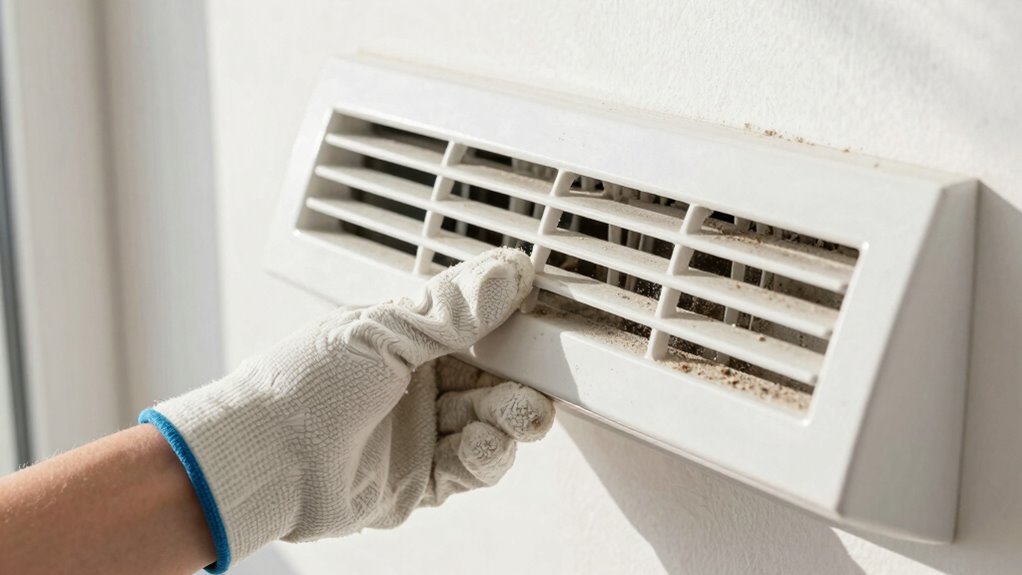

To safely clean your air vents and registers yourself, start by turning off your HVAC system. Remove vent covers and wash them with warm, soapy water, making sure they’re completely dry before reinstalling. Use a vacuum with a hose attachment to clear dust and debris inside the ducts, and gently brush stubborn dirt with a duct cleaning brush or extendable duster. To keep your home healthy, follow proper safety tips and consider professional help for heavy mold or buildup. Keep going to discover more effective techniques.
Key Takeaways
- Turn off the HVAC system before beginning any cleaning process to ensure safety.
- Remove vent covers and wash with warm, soapy water, then dry thoroughly before reinstalling.
- Use a vacuum with a hose attachment to gently remove dust and debris from duct openings.
- Wipe surrounding wall or ceiling areas to eliminate dust, cobwebs, and surface dirt.
- Replace filters regularly and seal leaks around vents to improve airflow and indoor air quality.

Regularly cleaning your air vents and registers is essential for maintaining good indoor air quality and ensuring your HVAC system runs efficiently. When you prioritize duct maintenance, you help prevent the buildup of dust, dirt, and other debris that can compromise airflow and system performance. One of the key benefits of routine cleaning is allergen removal. Over time, allergens like pollen, pet dander, mold spores, and dust mites accumulate inside your ductwork and vents, circulating throughout your home whenever your HVAC system operates. By addressing these contaminants, you can reduce allergy symptoms and improve overall indoor air quality.
Regular vent cleaning improves air quality and HVAC efficiency by reducing dust, allergens, and debris buildup.
You don’t need professional tools or extensive experience to perform safe and effective cleaning of your air vents and registers. Start by turning off your HVAC system to prevent dust from spreading while you work. Remove the vent covers and registers, using a screwdriver if necessary. Once removed, you can wash them with warm, soapy water to eliminate surface dust and grime. Be sure to dry them thoroughly before reinstalling to avoid introducing moisture that could promote mold growth. While the covers are off, take the opportunity to wipe down the surrounding wall or ceiling area to eliminate stubborn dust or cobwebs.
For the ducts themselves, a simple but effective method involves using a vacuum cleaner with a hose attachment. Carefully insert the hose into the duct opening and run it to suck out loose debris. If you notice significant dust buildup or suspect mold, you might consider using a specialized duct cleaning brush or extendable duster to loosen the dirt before vacuuming. Be cautious not to damage the ductwork or push debris further inside. For more thorough allergen removal, consider replacing any disposable filters in your HVAC system regularly, as these trap airborne particles and prevent them from recirculating. Additionally, understanding the importance of contrast ratio can help you better evaluate the quality of your home’s air circulation systems and filters.
You can also enhance your duct maintenance routine by changing filters frequently and sealing leaks around your vents to ensure ideal airflow. Regularly cleaning your vents and registers not only improves indoor air quality but also prolongs the lifespan of your HVAC system by reducing strain. Remember, safety is paramount—avoid using harsh chemicals or excessive moisture, and handle all components gently. With consistent effort, you can keep your air vents clean and allergen-free, creating a healthier, more comfortable environment for everyone in your home.

Westinghouse 4000 Peak Watt Super Quiet Dual Fuel Portable Inverter Generator, Remote Electric Start, Gas & Propane Powered, RV Ready, CO Sensor, Parallel Capable
4000 Peak Watts and 3300 Rated Watts at Less Than 3% THD – Telescoping Handle – Gas or...
As an affiliate, we earn on qualifying purchases.
Frequently Asked Questions
How Often Should I Clean My Air Vents and Registers?
You should clean your air vents and registers every 1 to 3 months, depending on dust accumulation indicators like visible dust buildup or increased allergies. Regular vent cleaning frequency helps maintain air quality and system efficiency. If you notice more dust or musty odors, it’s time to clean sooner. Keep an eye on dust levels, and clean your vents regularly to prevent buildup and guarantee fresh indoor air.
Can I Use Household Cleaning Products Safely on Vents?
Using household cleaners on vents is like adding fuel to a fire; it can cause more harm than good. Stick to gentle, non-abrasive cleaners, and always check vent safety guidelines. Avoid harsh chemicals that might damage your ductwork or leave residues. Instead, opt for mild soap and water or specialized vent cleaning products. This way, you keep your vents clean without risking damage or safety issues.
Is It Necessary to Wear Protective Gear While Cleaning?
Yes, you should wear protective gear while cleaning vents to guarantee safety. Gloves and a mask help prevent contact with dust, mold, or debris that may be harmful. Safety precautions like eye protection also reduce risks from cleaning solutions or airborne particles. Taking these simple steps keeps you safe and makes the cleaning process more effective, allowing you to avoid irritation or health issues during your vent maintenance.
What Are Signs That My Vents Need Professional Cleaning?
You notice an unusual musty smell or increased dust around your vents, which suggests your vents might require professional cleaning. If you see visible vent dust buildup, mold growth, or persistent allergies despite regular cleaning, it’s time to call in experts. These signs indicate deeper issues that DIY cleaning can’t fully address. Addressing mold growth promptly ensures healthier indoor air and prevents costly repairs down the line.
Can I Prevent Dust Buildup in Vents With Regular Maintenance?
Yes, you can prevent dust buildup in vents with regular DIY cleaning and vent maintenance. Make it a habit to check and clean your vents every few months by removing dust and debris with a vacuum or a damp cloth. Regularly replacing or cleaning filters also helps keep dust from circulating. Staying consistent with these simple steps guarantees your vents stay clean and your indoor air quality improves.

WEN Quiet and Lightweight 4800-Watt Dual Fuel RV-Ready Electric Start Portable Inverter Generator with Fuel Shut Off and CO Watchdog (DF480iX)
224cc dual-fuel engine runs on both gasoline (4800 surge watts, 4000 rated watts) and propane (4320 surge watts,...
As an affiliate, we earn on qualifying purchases.
Conclusion
Cleaning your air vents and registers is like giving your home a breath of fresh air—literally. I once ignored mine for years, until coughing fits became common. After a quick clean, I noticed a real difference in air quality. Just like tuning a guitar keeps it sounding perfect, regular cleaning keeps your HVAC system running smoothly and your home healthier. So, take a little time—you’ll be surprised how much fresher your space feels.

Westinghouse 11000 Peak Watt Tri-Fuel Portable Inverter Generator, Remote Start, Transfer Switch Ready, Gas/Propane/Natural Gas Powered, Low THD, Safe for Electronics, Parallel Capable, CO Sensor
THE BEST OF BOTH WORLDS: The Westinghouse iGen11000TFc is a tri fuel generator with all the benefits of...
As an affiliate, we earn on qualifying purchases.

Westinghouse 5000 Peak Watt Super Quiet Portable Inverter Generator, Remote Electric Start with Auto Choke, Wheel & Handle Kit, RV Ready, Gas Powered, Parallel Capable
5000 Peak Watts and 3900 Rated Watts at Less Than 3% THD; Telescoping Handle; Gas Powered; Remote Start...
As an affiliate, we earn on qualifying purchases.