Watts measure the instant power your light or appliance uses, while watt-hours show the total energy consumed over time. If your device has a high watt rating, it draws more power at any moment, but long usage affects watt-hours more. To keep your lights on efficiently, understand both numbers—they help you gauge energy needs and costs. Keep exploring, and you’ll discover how these figures impact your energy bills and choices.
Key Takeaways
- Watts measure the real-time power a light uses, indicating immediate energy consumption.
- Watt-hours show the total energy used over a specific period, determining overall usage.
- Higher watts mean brighter lights but also higher instant energy demand; watt-hours accumulate with usage time.
- Effective lighting depends on balancing wattage (brightness) and watt-hours (total energy consumed).
- Monitoring both helps manage electricity costs and ensure lights stay on as desired.
What Is a Watt and How Is It Measured?

A watt is a unit of power that measures how quickly energy is used or produced. It indicates the rate at which electrical energy is consumed or generated in a device. When you see a light bulb labeled as 60 watts, it means the bulb uses 60 joules of energy every second. You can measure watts with a device called a wattmeter, which records the rate of energy flow in an electrical circuit. Watts are essential for understanding how much power your appliances need to operate. They help you compare the energy consumption of different devices. Knowing the wattage can also guide you in choosing energy-efficient appliances, saving you money on electricity bills. Overall, watts give you a clear picture of a device’s power usage at any moment. Additionally, understanding wattage is important in the context of Quality Assurance, as it ensures devices perform reliably and efficiently under various conditions. Recognizing the power rating of appliances can help prevent overloads and optimize energy use. This knowledge can also assist in calculating energy consumption over time to better manage your electricity usage. Understanding power consumption patterns can further aid in making informed decisions about your energy use and reducing costs.
Understanding Watt-Hours and How They Are Calculated

To understand watt-hours, you need to know that they measure the total amount of energy used or produced over time. You calculate watt-hours by multiplying the power in watts by the duration in hours. For example, if a device consumes 100 watts and runs for 3 hours, it uses 300 watt-hours of energy. This measurement shows how much energy a device consumes or generates over a specific period. Watt-hours are essential for understanding your energy bills and how long appliances can run before needing more power. To accurately determine watt-hours, track the device’s wattage and the hours it operates. Monitoring energy consumption patterns can help you better plan your power needs and improve overall efficiency. Additionally, understanding energy efficiency can help you reduce waste and optimize your energy use. Recognizing power ratings can also assist you in selecting appliances that match your energy supply capabilities. Being aware of your body’s energy needs can further help in managing your overall energy consumption effectively, especially when considering the holistic approach used in herbalism to support overall well-being.
The Relationship Between Watts and Watt-Hours
Understanding the relationship between watts and watt-hours is essential because they describe different aspects of energy. Watts measure the rate at which your device consumes power at any moment, like how fast a light bulb uses energy. Watt-hours, on the other hand, show the total energy used over a period, such as how much energy a bulb consumes in an hour. If you know a bulb’s wattage, you can estimate its energy use over time by multiplying watts by hours. For example, a 60-watt bulb running for 5 hours uses 300 watt-hours of energy. This relationship helps you understand not just how powerful a device is, but also how much energy it consumes over time, which directly impacts your electricity bill. Additionally, contrast ratio plays a crucial role in determining the quality of images produced by projectors, affecting your overall viewing experience. Recognizing the energy consumption patterns of your appliances can help you manage your electricity usage more effectively.
Why Wattage Matters When Choosing Light Bulbs

Wattage directly influences how bright a light bulb appears and how much energy it consumes. Higher wattage bulbs produce more light but also use more power, which affects your electricity bill and energy efficiency. Selecting the right wattage helps you balance brightness with savings. For example, a 60-watt bulb offers a certain level of brightness, while a 100-watt provides more light. Consider this table to compare common wattages:
| Wattage | Brightness (Lumens) | Energy Use (kWh/year) |
|---|---|---|
| 40W | 450 lumens | Low |
| 60W | 800 lumens | Moderate |
| 75W | 1100 lumens | Higher |
| 100W | 1600 lumens | Highest |
| 150W | 2600 lumens | Very high |
Choosing wisely verifies you get the right light without wasting energy. Additionally, energy-efficient lighting options can help you achieve desired brightness while reducing power consumption. Being aware of energy consumption is essential for optimizing your electricity usage and saving money over time.
How to Read Energy Labels and What the Numbers Mean

When you look at energy labels, you’ll see numbers that tell you how much power a device uses and how much energy it consumes over time. Understanding these ratings helps you compare appliances and make smarter choices. By learning to interpret these figures, you can better manage your energy use and save money. Additionally, being aware of affiliate marketing practices can help you understand how product recommendations might influence your choices. Recognizing the significance of energy efficiency ratings can further guide you toward selecting appliances that deliver optimal performance while minimizing energy consumption. Considering wave and wind energy sources can also expand your understanding of sustainable power options beyond traditional electricity consumption. Being familiar with these ratings empowers you to choose appliances that balance performance and energy consumption, leading to more sustainable living. Moreover, understanding the benefits of supporting renewable energy can inspire environmentally conscious decisions that contribute to a greener future.
Deciphering Energy Labels
Energy labels provide a quick snapshot of a device’s efficiency and power consumption, but they can seem confusing at first glance. To decipher them, start by looking at the wattage, which shows the device’s power use when operating. Next, check the energy efficiency rating or star system—more stars mean better efficiency. The annual energy consumption figure, usually in kilowatt-hours (kWh), indicates how much energy the device uses over a year, helping you estimate running costs. Sometimes, labels include additional details like operating voltage or water usage, depending on the product. Focus on understanding the primary numbers: the power (watts) and annual energy consumption. These figures are especially useful for comparing different devices and understanding energy efficiency ratings, which can significantly impact long-term costs. Together, these figures help you compare devices and choose options that save energy and reduce costs.
Understanding Power Ratings
Understanding how to read energy labels starts with knowing what the power ratings tell you about a device. Power ratings, usually in watts (W), indicate how much energy a device consumes in a moment. To interpret these numbers effectively:
- Look for the wattage figure—this shows the device’s power draw.
- Check the estimated annual energy consumption, often in kilowatt-hours (kWh), to gauge overall usage.
- Review the operating voltage and current, which help determine compatibility with your electrical system.
- Note any efficiency ratings or labels, like ENERGY STAR, indicating better energy performance.
- Recognizing trends in energy consumption can help consumers make more sustainable choices aligned with ESG considerations. Being aware of the difference between watts and watt-hours can help you better understand energy consumption patterns over time. Additionally, understanding filter maintenance and proper usage can reduce unnecessary energy use and extend the life of your devices. Monitoring power efficiency can also assist in selecting appliances that conserve energy and lower operating costs. Furthermore, being aware of long-term energy costs helps in planning budgets and reducing overall expenses.
These details help you compare devices, estimate running costs, and understand how much energy each device needs to operate. Clear understanding of power ratings empowers you to make smarter energy decisions.
Interpreting Energy Consumption
Have you ever looked at an energy label and wondered what all those numbers really mean? To understand energy consumption, focus on the kilowatt-hours (kWh) figure. This number shows how much energy the appliance uses over time. For example, if a device consumes 1 kWh, it used that amount of energy during operation. The label may also list power ratings in watts, which tell you the device’s immediate energy usage. To estimate running costs, multiply the energy consumption (kWh) by your electricity rate. Keep in mind, a higher wattage doesn’t always mean higher costs if the device runs for less time. Learning how to read these numbers helps you compare appliances and manage your energy bills more effectively. Understanding energy measurement units empowers you to make smarter decisions about your home energy use.
Calculating Your Energy Consumption With Watt-Hours

Ever wonder how to accurately measure the energy your appliances use? To do this with watt-hours, start by noting the wattage of your device. Then, consider how long you run it each day. Multiply these two numbers to find the daily energy consumption. For example:
- Find the appliance’s wattage (e.g., 60W).
- Record daily usage time (e.g., 4 hours).
- Multiply wattage by hours (60W × 4 hours = 240Wh).
- Calculate monthly or yearly consumption by multiplying daily Wh by the number of days.
The Impact of Wattage and Watt-Hours on Your Electricity Bill
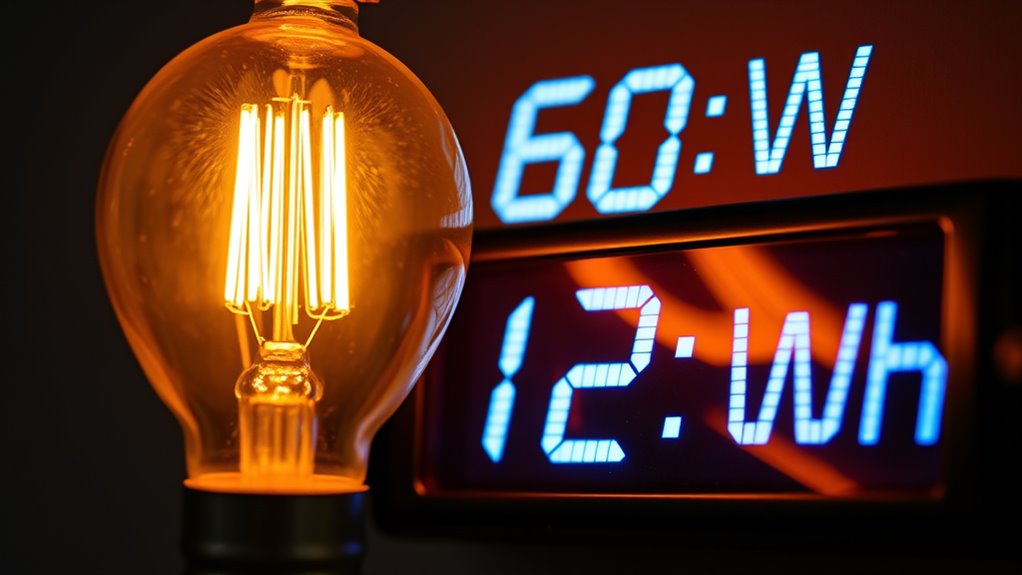
Your electricity bill directly reflects how much energy your appliances consume, and both wattage and watt-hours play key roles in shaping those costs. Higher wattage appliances use more power instantly, increasing your bill if used frequently. Watt-hours measure total energy consumption over time; the longer an appliance runs, the more watt-hours it accumulates. For example, a 60-watt bulb running for 10 hours consumes 600 watt-hours, adding to your bill. Understanding this helps you see how energy use impacts costs—more watt-hours mean higher charges. By choosing devices with lower wattage or limiting usage time, you can reduce your energy consumption and save money. Recognizing the relationship between wattage and watt-hours allows you to manage your electricity costs more effectively.
Comparing Energy Usage of Different Devices

Different devices consume varying amounts of energy depending on their wattage and how long they operate. To compare their energy use effectively, consider these factors:
- Wattage: Higher wattage devices, like space heaters, use more energy per hour than lower wattage devices, such as LED bulbs.
- Usage time: Running a device longer increases total energy consumption, regardless of wattage.
- Duty cycle: Some devices cycle on and off; understanding this helps estimate actual energy use.
- Efficiency: More efficient devices deliver the same performance while using less power, reducing overall consumption.
Tips for Reducing Your Home’s Power Consumption
Reducing your home’s power consumption begins with simple, intentional changes. Start by switching to energy-efficient LED bulbs—they use less wattage and last longer. Unplug devices when you’re not using them, as many draw power even in standby mode. Adjust your thermostat by a degree or two to save on heating and cooling costs. Use smart power strips to easily turn off multiple devices at once. Wash clothes in cold water and air dry whenever possible. Keep your home well-insulated to reduce heating and cooling needs. Regularly clean filters on HVAC systems to maintain efficiency. By making these small adjustments, you reduce unnecessary energy use, lower your utility bills, and extend the lifespan of your appliances, all while contributing to a more sustainable environment.
Practical Examples of Watts and Watt-Hours in Daily Life
You use watts and watt-hours every day without even realizing it. For example, a typical light bulb’s wattage shows how much power it consumes, while a battery’s capacity tells you how long it can power your devices. Understanding these examples helps you see the actual energy costs of your appliances and daily routines.
Light Bulb Usage
Understanding how watts and watt-hours relate to light bulb usage makes it easier to manage your energy consumption. For example, a typical LED bulb uses about 10 watts, meaning it consumes 10 watt-hours of energy per hour. If you keep it on for 5 hours, that’s 50 watt-hours. To compare different bulbs:
- Incandescent bulbs often use 60 watts, consuming 60 watt-hours per hour.
- Compact fluorescents typically use 14-15 watts for the same brightness.
- LED bulbs provide efficiency, using fewer watts for equivalent brightness.
- Running a 10-watt bulb for 10 hours results in 100 watt-hours, helping you estimate costs and usage. By understanding these figures, you can choose bulbs that save energy and reduce your electricity bills effectively.
Battery Capacity Examples
Battery capacity is a practical way to see how watts and watt-hours apply to everyday devices. For example, a typical smartphone has a battery capacity of around 10 to 15 watt-hours, meaning it stores enough energy to operate for several hours depending on usage. A portable power bank with a capacity of 20,000 milliamp-hours (mAh) at 3.7 volts equals approximately 74 watt-hours, allowing you to charge your phone multiple times. Similarly, a small solar power bank might have a capacity of 50 watt-hours, providing power for small devices during outages. Larger batteries, like those in electric vehicles, can have capacities exceeding 60,000 watt-hours (60 kWh), powering a car for hundreds of miles. These examples show how watt-hours quantify stored energy, helping you gauge device runtime and energy needs.
Appliance Energy Costs
Knowing the wattage of your appliances helps estimate their energy costs and how long they can run. For example, a 60-watt light bulb uses 0.06 kWh per hour, affecting your electricity bill. To better understand, consider these points:
- A 1500-watt microwave uses 1.5 kWh in an hour, costing more than a small device.
- A 100-watt TV consumes 0.1 kWh per hour, impacting daily energy use.
- Running a 50-watt LED bulb for 8 hours uses 0.4 kWh.
- A refrigerator with a 200-watt compressor cycles on and off, totaling about 1.5 kWh daily.
Frequently Asked Questions
How Do Watts and Watt-Hours Affect My Overall Energy Costs?
Watts and watt-hours directly impact your energy costs because watts measure how much power your devices use at any moment, while watt-hours track the total energy consumption over time. When you run appliances, higher wattage or longer usage increases your bill. To save, choose energy-efficient devices, turn off unused electronics, and monitor your usage. This way, you can control costs by managing both the power level and duration of device operation.
Can Two Devices With the Same Wattage Consume Different Amounts of Energy?
Two devices with the same wattage can consume different amounts of energy. You see, wattage measures how much power a device uses at any moment, but energy consumption depends on how long you run it. So, if one device runs for hours and another for minutes, they’ll use different amounts of energy. Duration determines your total energy use, making both wattage and time key to understanding consumption.
Why Do Some Energy Labels Include Both Watts and Watt-Hours?
You’ll see both watts and watt-hours on energy labels because watts show how much power a device uses at any moment, while watt-hours indicate total energy consumption over time. Knowing both helps you understand efficiency and running costs. For example, a device with a low watt rating but long usage can still consume significant energy. This info helps you compare devices and make smarter choices for your energy use.
How Can I Estimate My Monthly Electricity Bill Using Watt-Hours?
To estimate your monthly electricity bill using watt-hours, first find the watt-hour usage of each device you use regularly. Add up all the watt-hours to get your total monthly consumption. Then, multiply this total by your utility’s rate per kilowatt-hour (divide your rate by 1,000 to convert to watt-hours). This gives you an approximate cost, helping you manage your energy expenses effectively.
Are LED Bulbs More Efficient in Terms of Watts or Watt-Hours?
LED bulbs are more efficient because they use fewer watts to produce the same amount of light. This means you consume less power per hour, saving you money over time. While watt-hours measure total energy used, watts indicate energy consumption rate. So, when choosing bulbs, look for lower wattage LEDs, as they give you bright light with less energy, making them the most efficient option for your home.
Conclusion
Understanding watts and watt-hours helps you make smarter choices about your energy use. Did you know that switching to LED bulbs can save you up to 75% on lighting costs? By paying attention to these numbers, you can keep your lights on without wrecking your budget. So, next time you buy a bulb or check your energy bill, remember these two figures—they’re your key to brighter, more efficient living.