
Your fridge’s label often underestimates its power needs because starting watts—also called surge watts—are much higher than running watts. When the compressor kicks in, it draws a spike of energy that can be 3 to 7 times its usual power, which many overlook. This difference is vital when choosing a generator or inverter. Keep exploring to understand how to accurately determine your fridge’s true power requirements and prevent overloads.
Key Takeaways
- Fridge labels often show only running watts, omitting the higher starting surge needed at startup.
- Starting watts can be 3 to 7 times higher than running watts due to compressor inrush current.
- Manufacturers may understate power needs, leading to confusion about true power requirements.
- Proper generator sizing requires accounting for both running and starting wattages to prevent overloads.
- Understanding the difference helps avoid appliance damage and ensures reliable operation during startup.
Understanding Power Ratings on Appliances

Understanding power ratings on appliances is essential because they tell you how much energy an appliance needs to operate. When you look at the label or manual, you’ll see a number measured in watts. This rating indicates the typical amount of power the appliance consumes during normal use. It helps you estimate energy costs and determine if your power supply can handle the load. Keep in mind, though, that the number on the label isn’t always the whole story. Some appliances have different power requirements at startup versus during continuous operation. Knowing these ratings allows you to compare appliances accurately and guarantee your electrical system can support your needs without overloading. It’s a crucial step in understanding how appliances draw power and how to manage your energy consumption effectively. Understanding power consumption patterns is also key to choosing the right appliances and avoiding electrical issues. Additionally, being aware of the power demands during startup can prevent circuit overloads and ensure safe operation.
The Difference Between Running and Starting Watts
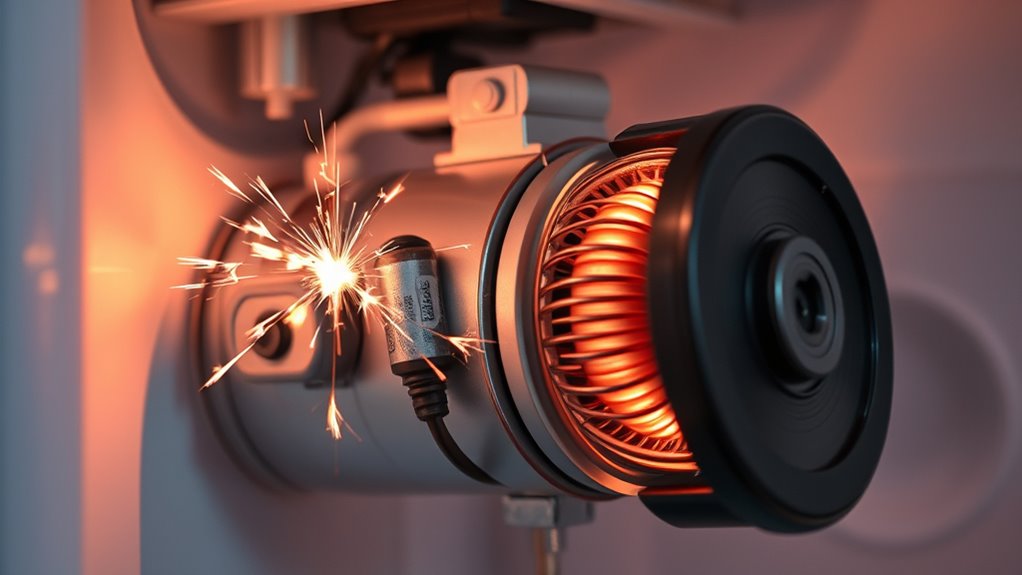
The difference between starting and running watts is crucial for understanding how appliances draw power. When you plug in an appliance, you may notice it demands more power at the moment it starts up than during normal operation. This surge, called starting watts, is higher because the motor or compressor needs extra energy to overcome inertia. Once running, the appliance consumes less power, known as running watts. Understanding this difference helps you select the right generator or power source. Here’s a quick comparison:
| Aspect | Starting Watts | Running Watts |
|---|---|---|
| Power demand | Higher at startup | Steady during operation |
| Duration | Short-lived | Continuous |
| Typical appliances | Refrigerators, ACs | Lights, TVs |
| Importance | Ensures proper startup | Maintains normal function |
Knowing these distinctions prevents overloads and ensures your appliances operate smoothly. Being aware of starting vs. running watts is crucial for avoiding potential electrical issues. Additionally, selecting a generator with appropriate surge capacity can protect your appliances from damage during startup. Proper understanding of power needs helps optimize your setup and avoid costly mistakes. Recognizing the initial power surge can also assist in planning electrical system upgrades or troubleshooting startup problems. Understanding appliance power requirements allows for better compatibility with backup power solutions, ensuring reliable operation during outages.
Why Fridges Require More Power Initially
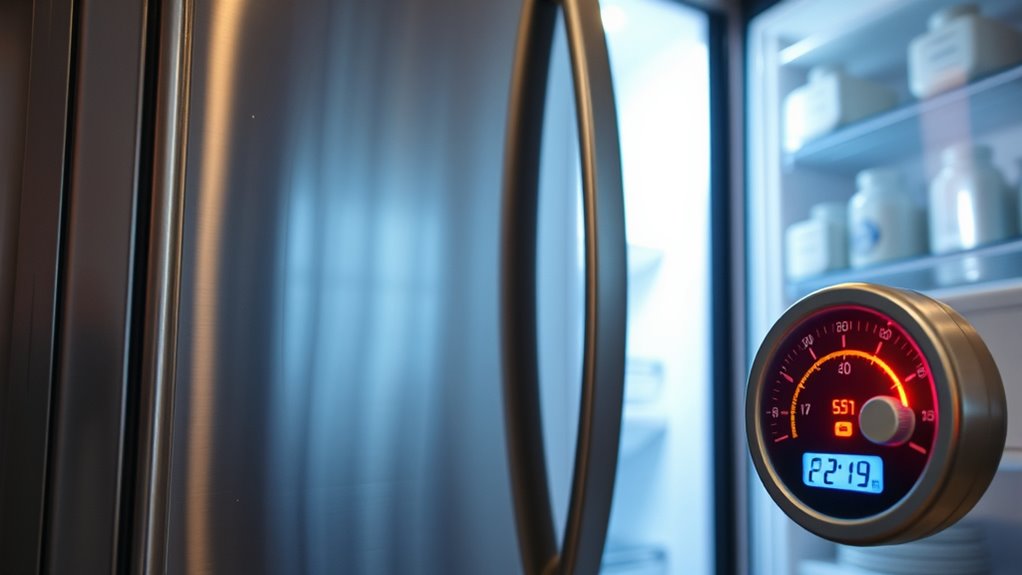
When you turn on a fridge, it needs a surge of power to start the compressor. This initial spike, caused by the compressor startup surge and inrush current effect, results in a peak power draw. Understanding these factors helps explain why fridges draw more power at startup compared to when they’re running normally. Additionally, the initial electrical load involved in overcoming motor inertia contributes to this power discrepancy. Recognizing the power consumption differences during startup can aid in better energy management and appliance selection. Being aware of modern toilet technology can also help in choosing appliances that are energy-efficient and environmentally friendly. Knowing how energy-efficient appliances are designed can further optimize your energy use and reduce overall consumption, especially when selecting appliances with smart energy features.
Compressor Startup Surge
You’ll notice that refrigerators draw a lot more power when they first turn on, and that’s because of the compressor’s startup surge. When the compressor kicks in, it needs a burst of extra energy to overcome inertia and start moving. This surge happens because the motor’s coils and components require higher voltage temporarily. As a result, your fridge demands more electrical current at startup than during steady operation. Understanding power surge helps prevent overloading circuits and ensures proper appliance sizing. The compressor’s motor needs a quick jolt of power to start spinning. Inrush current can be 3 to 7 times higher than running current. The surge is brief but intense, lasting just a few milliseconds to seconds. It’s essential to account for this when sizing your power supply. Additionally, electrical load management is crucial for avoiding circuit breaker trips during startup. This initial spike doesn’t reflect the fridge’s normal ongoing power use.
Power Draw Peak
Have you ever noticed that your fridge seems to work harder right after it turns on? That’s because it experiences a power draw peak, where its electrical consumption temporarily spikes above normal running levels. When the compressor kicks in, it needs extra energy to overcome inertia and get moving. This initial surge isn’t just about starting the motor; it also involves energizing components like the fan and defrost system. During this peak, the fridge pulls more current than it does during steady operation. This burst of power is essential to restart the refrigeration cycle efficiently. Once all components reach their operating state, the power draw levels out to a consistent, lower rate as the fridge maintains temperature. Understanding this peak helps explain why starting watts often seem higher than running watts. Knowing about power surges can help you better estimate your appliance’s energy needs and avoid overloading circuits. Recognizing the importance of power management can further assist in optimizing your energy consumption. Additionally, the electric motor within the compressor requires this surge to function properly during startup. Being aware of these power fluctuations can help in selecting appropriate backup power solutions.
Inrush Current Effect
The inrush current effect explains why your fridge demands more power at startup. When you turn it on, the compressor motor initially requires a surge of electricity to overcome inertia and start spinning. This spike, called inrush current, can be 3 to 7 times higher than its normal running power. It’s essential to understand because this sudden power draw can impact your electrical system and affect device performance. Factors influencing inrush current include the motor type, compressor design, and temperature conditions. motor startup dynamics play a significant role in the magnitude of the inrush current. Additionally, understanding power factor helps in assessing how efficiently the electrical power is used during this surge. Proper circuit protection is vital for managing these surges and preventing electrical issues. Being aware of this helps you choose appropriate circuit protection and avoid unexpected power issues. Recognizing power requirements is crucial for ensuring your electrical system can handle the initial surge without issues. For example, electrical system capacity can determine whether your home can accommodate such power spikes without tripping breakers.
How to Calculate the Correct Power Needs for Your Refrigerator

To determine the right power for your refrigerator, start by checking its power ratings on the label or manual. You’ll also need to estimate the startup surge, which is typically higher than the running wattage. Knowing both numbers helps guarantee you select a power source that can handle your fridge’s needs without issues. Additionally, understanding Traditional Indonesian Home Decor Principles can inspire aesthetic choices that complement your appliance setup. For optimal safety and efficiency, it’s also beneficial to consider AI-powered energy management systems, which can help monitor and optimize your household’s power consumption.
Understanding Power Ratings
Understanding how to read and calculate power ratings is essential for selecting the right generator for your refrigerator. Power ratings tell you the amount of electricity your fridge requires to operate properly. You’ll find these ratings on the appliance’s label, usually expressed in watts (W) or volt-amperes (VA). To ensure your generator can handle your fridge’s needs, distinguish between running watts and starting watts. Running watts cover continuous operation, while starting watts account for brief surges. When calculating, consider both values for accuracy. Here are key points to keep in mind:
- Check the appliance’s label for wattage information
- Differentiate between running and starting wattages
- Add extra capacity for future or additional appliances
- Use the higher starting watt value for calculations
- Always choose a generator with a margin above your calculated needs
Estimating Startup Surge
Estimating your refrigerator’s startup surge is essential for selecting a generator that can handle brief power spikes. To do this, check your appliance’s label or user manual for the starting wattage, which is usually higher than the running wattage. If you can’t find this info, a common rule is to multiply the running watts by 2 or 3. For example, if your fridge runs at 200 watts, expect a startup surge of 400 to 600 watts. You should add this surge to the running wattage to determine the minimum generator capacity needed. Remember, choosing a generator that can handle this initial spike ensures your refrigerator runs smoothly without tripping your power source or causing damage. Accurate estimates prevent under or over-sizing your generator.
The Risks of Underestimating Starting Watts
Underestimating the starting watts your equipment requires can lead to serious problems, from damaging your power source to causing unexpected shutdowns. When you don’t account for the initial surge, your generator or inverter may become overloaded, risking hardware failure. It can also cause your appliance to turn off suddenly, disrupting your operations. Additionally, underestimating can:
- Damage sensitive components in your equipment
- Shorten the lifespan of your power source
- Increase the risk of overheating
- Void warranties due to improper use
- Lead to higher energy costs from inefficient operation
Ignoring the true starting watt needs might seem harmless, but it can create costly repairs and unreliable performance. Always ensure you accurately estimate this surge to protect your devices and keep everything running smoothly.
Choosing the Right Generator or Inverter for Your Fridge

Choosing the right generator or inverter for your fridge is essential to guarantee reliable operation and avoid damage. First, determine your fridge’s running wattage, which is usually listed on the label or in the manual. Then, identify its starting wattage, often higher than the running wattage. Select a generator or inverter that can handle the highest starting wattage comfortably—ideally 20-25% above it. This ensures the power source can handle initial surge without strain. Consider the size and portability you need, as well as fuel efficiency and runtime. Avoid undersized units that can’t meet startup demands, and steer clear of overly large ones that waste energy. Proper matching ensures your fridge runs smoothly and prolongs the lifespan of both your appliance and power source.
Common Mistakes When Assessing Appliance Power Requirements

When evaluating the power requirements of your appliances, it’s common for people to make simple mistakes that can lead to inadequate or excessive capacity. These errors can cause your generator or inverter to underperform or waste energy.
Here are common mistakes to avoid:
- Relying solely on the appliance’s labeled wattage without considering startup power
- Ignoring the difference between running and starting watts
- Forgetting to include surge requirements for appliances with motors
- Not accounting for power fluctuations or spikes
- Using outdated or inaccurate specifications from unreliable sources
Tips for Ensuring Reliable Fridge Operation During Power Fluctuations
Power fluctuations can disrupt your fridge’s performance, but you can minimize these issues with a few proactive steps. First, consider installing a surge protector designed for appliances. This device absorbs sudden voltage spikes, preventing damage and ensuring consistent power flow. Next, plug your fridge into a dedicated outlet to avoid overloads caused by other devices. Regularly check your home’s wiring and electrical system to identify potential problems before they cause interruptions. If power fluctuations are frequent, think about investing in an uninterruptible power supply (UPS) or a voltage stabilizer. These tools help maintain steady voltage levels, reducing strain on your fridge’s compressor. By taking these precautions, you’ll improve your fridge’s reliability and extend its lifespan, even during unpredictable power conditions.
Practical Examples of Power Calculations for Household Appliances
Understanding how to calculate the power consumption of household appliances helps you better manage energy use and prevent overloads. To do this, check the appliance’s label for wattage or amperage, then multiply by voltage if needed. For example, a 200-watt blender running for 3 hours uses 600 watt-hours (Wh).
Learn to estimate household appliance energy use to manage power efficiently and prevent overloads.
Here are practical examples:
- Refrigerator: Starting wattage may be 600W, but running is around 150W.
- Microwave: Uses about 1000W, but only for short bursts.
- Fan: Typically consumes 50-75W during operation.
- Television: Usually around 100W, depending on size.
- Vacuum cleaner: Starts at 1200W but runs at 800W.
Knowing these helps you avoid overloads and optimize your energy use efficiently.
Frequently Asked Questions
How Do Temperature Changes Affect Fridge Power Consumption?
Temperature changes impact your fridge’s power consumption because when the environment gets warmer, your fridge works harder to maintain a cool temperature. Conversely, in cooler surroundings, it uses less energy. You might notice increased energy bills during hot weather, as the compressor runs more frequently. To save power, keep your fridge in a consistently cool spot, avoid opening it unnecessarily, and make sure door seals are tight.
Can Using Energy-Efficient Fridges Reduce Starting Watts?
Think of an energy-efficient fridge as a sprinter who conserves energy during a race, requiring less effort to start and keep going. Yes, using these fridges can markedly reduce starting watts because they’re designed to handle initial power surges more smoothly. This means your fridge uses less energy during startup, easing your power load and saving you money on energy bills over time.
Do Inverter Generators Handle Fridge Startup Surges Better?
Yes, inverter generators handle fridge startup surges better. They produce clean, stable power that adapts to sudden increases in electricity demand, unlike traditional generators that struggle with surges. When your fridge kicks on, an inverter generator smoothly manages the surge without dropping voltage or shutting down. This makes it a reliable choice, especially if you want to prevent appliance damage or interruptions during power fluctuations.
What Maintenance Impacts a Fridge’s Power Requirements?
Forget about mysterious power needs—your fridge’s maintenance impacts them more than you think. If you ignore cleaning the coils, the compressor works harder, drawing more power. A worn door seal makes the compressor run longer, increasing energy use. Regularly defrost and check components to keep the fridge running efficiently. Neglecting these simple tasks forces your appliance to consume extra watts, making your energy bills and fridge work harder than necessary.
Are There Smart Appliances That Automatically Adjust for Power Needs?
Yes, many smart appliances automatically adjust their power needs. They use sensors and adaptive technology to optimize energy use based on demand, preventing unnecessary power draw. You’ll find smart fridges, washers, and HVAC systems that learn your routines and tweak their operation for efficiency. This means you save on energy bills and reduce wear and tear, making your appliances more reliable and environmentally friendly without you having to do anything manually.
Conclusion
So, next time your fridge claims it only needs a “tiny” amount of power, remember it’s probably lying—just like your ex who promised they’d call. Underestimating those starting watts could leave you in the dark when you need your cold snacks the most. Don’t be that person scrambling for a bigger generator. Know your appliances, or risk being caught cold—literally—when power suddenly plays hide and seek. Stay smart, stay powered!