To accurately size a portable power station for your home, start by listing all devices you want to run and checking their wattage ratings. Add up their continuous and surge power needs, then factor in future expansion with a safety margin of 20-25%. Also, consider battery capacity for runtime and port size for portability. For a detailed approach, you’ll find how to calculate from start to finish, enabling you to choose the right size confidently.
Key Takeaways
- List all essential devices, note their wattage and startup surges, then sum continuous and surge wattages for accurate capacity.
- Include a safety margin of 20-25% to accommodate future needs and prevent overloads.
- Convert total wattage into watt-hours to determine the battery capacity required for desired runtime.
- Choose a power station that supports surge wattage and offers features for sensitive electronics protection.
- Consider recharge options like solar, AC, and car chargers to ensure flexibility and sustainability.
Assess Your Power Needs and Device List
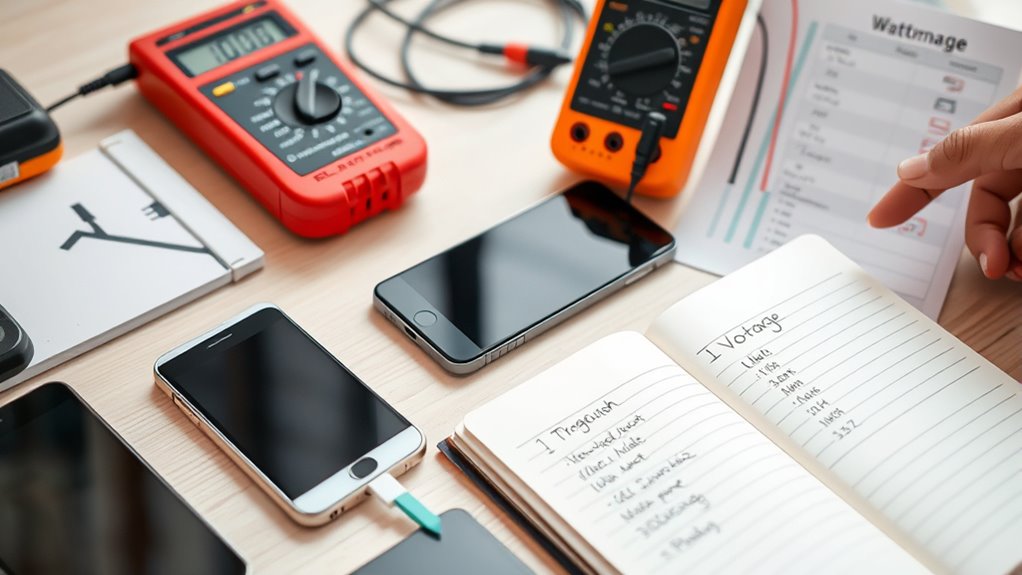
Before choosing a portable power station, you need to determine your actual power requirements. Start by listing all the devices you plan to run, including lights, phones, laptops, small appliances, and medical equipment. Check each device’s wattage rating, usually found on the label or in the manual. Add up these wattages to get a clear idea of your total power needs. Remember to account for startup surges on devices like refrigerators or power tools, which can draw more power initially. Prioritizing essential devices helps prevent overestimating your needs, ensuring you choose a station that comfortably supports your daily or emergency power requirements. Additionally, understanding the contrast ratio of projectors can help you select the right equipment for optimal viewing in your home cinema setup. This step is vital for selecting the right size and avoiding unnecessary expenses or power shortages. To accurately assess your needs, consider consulting home electrical load calculations or using a power consumption meter for precise measurements. For a more comprehensive understanding, reviewing your lease options may also provide insight into available solutions for temporary or backup power needs. It’s also helpful to look into support breakfast options, such as quick energizing snacks or meals, to keep your energy levels steady during power outages or while setting up your system. Moreover, choosing the right oil for your equipment can help maintain efficiency and extend the lifespan of your portable power station’s internal components.
Calculate Total Wattage and Surge Requirements

To choose the right power station, you need to know your devices’ total wattage and surge needs. Make sure to add up the continuous power requirements and account for any startup surges that happen when devices turn on. This process involves understanding power capacity and how it relates to your total energy needs. It guarantees your power station can handle everything safely and reliably. Understanding power capacity is essential to ensure your setup meets all your essential needs without overloading the system. Additionally, considering load calculations helps you determine the appropriate size and ensures your system remains safe during peak demands. Employing knowledge of herbalism practices can also inspire innovative ways to incorporate natural solutions for energy efficiency or recovery, enhancing your overall setup. Recognizing system efficiency can also contribute to more sustainable and cost-effective power management.
Determine Continuous Power Needs
Understanding your home’s power needs starts with calculating both the total wattage of the devices you’ll run and their surge requirements. Add up the wattages of all appliances and electronics you plan to use simultaneously. This total gives you the continuous power your power station must supply. Be sure to include everything from lights and chargers to larger appliances like refrigerators or sump pumps. Remember, some devices draw more power at startup, so knowing their surge wattage helps ensure your power station can handle brief power spikes without issues. Keep in mind that your goal is to select a unit that can comfortably support your steady-state power needs while providing some margin for safety. Accurate calculations prevent underestimating and ensure reliable, uninterrupted power supply.
Account for Startup Surges
When estimating your power needs, it’s essential to account for startup surges, since many appliances draw considerably more power when they first turn on. To do this effectively, follow these steps:
- Identify the running wattage of each device.
- Find the surge wattage listed on the appliance’s label or manual.
- Add the highest surge wattage to the continuous wattage for each device.
- Sum these totals to determine your total wattage and surge capacity requirement.
- Understanding surge capacity helps ensure your power station can handle the initial power draw without overloads. Additionally, considering electric power generation principles can inspire more efficient energy management strategies for your setup. Being aware of surge demands can help you select a power station that provides reliable performance for all your devices.
This approach ensures your portable power station can handle initial power spikes without overloads. Remember, neglecting surge requirements can lead to appliance malfunction or shutdowns during startup. Planning for surges guarantees reliable power and prevents surprises when appliances turn on.
Understand Battery Capacity and Run Time Expectations
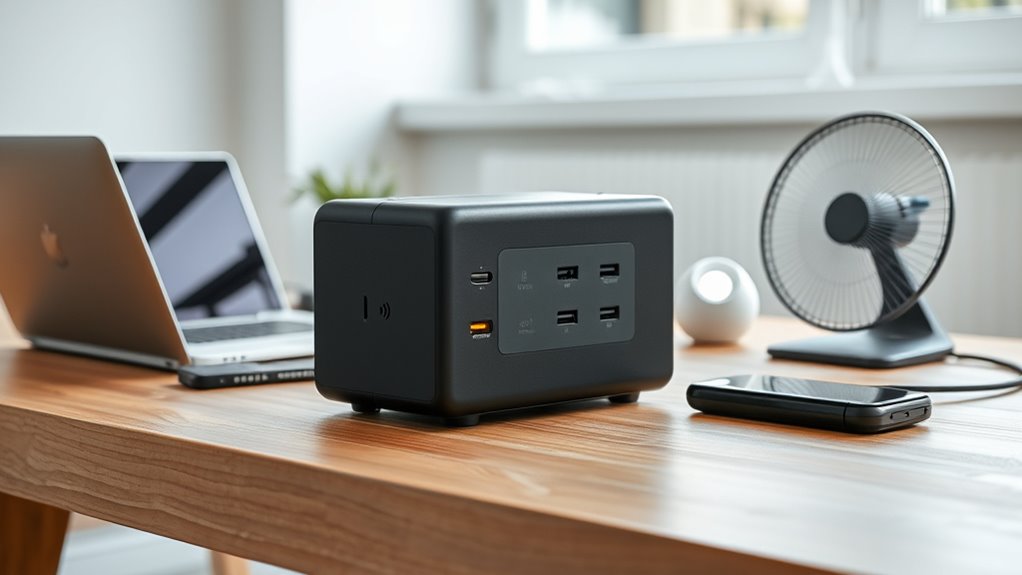
To make sure your portable power station meets your needs, you need to understand how much power your devices require and how long the battery can support them. By calculating your total power needs, you can estimate how long the battery will last during an outage. This process is similar to load‑planning tools that help determine the appropriate capacity for your backup power. Knowing the power consumption of each device allows for a more accurate assessment of your backup needs and prevents under or overestimating your station’s capabilities. Accurately assessing power needs is essential for selecting the right station that provides reliable, adequate backup for your essential devices. Additionally, understanding the battery capacity of the station will give you a clearer idea of its endurance during extended outages. Being aware of long‑term runtime expectations ensures you select a power station that can sustain your needs over extended periods without recharging.
Calculating Power Needs
Calculating your power needs is essential to choosing the right portable power station for your home. First, list all devices you plan to run, noting their wattage. Second, add up these wattages to find your total power draw. Third, determine how long each device will run daily to estimate energy consumption. Fourth, convert your total wattage into watt-hours by multiplying by usage hours, giving you a clear picture of the capacity you’ll need. Additionally, understanding your power station features can help ensure it meets your specific energy demands. This process guarantees you select a power station that can handle your essential devices without overestimating or underestimating. Recognizing the importance of battery capacity and run time expectations helps you make informed decisions based on your actual energy needs. By understanding your total power requirements and daily usage, you can confidently choose a station that provides reliable backup power when needed. Considering smart home integration can also optimize your energy management and device coordination. For example, knowing about filtration systems can help you select a station that supports sensitive electronics safely. Additionally, reviewing power management features can help maximize your station’s efficiency during outages.
Estimating Battery Duration
Once you’ve determined the total power your devices require, it’s important to understand how long a portable power station can keep them running. Battery capacity, measured in watt-hours (Wh), directly influences runtime. To estimate how long your devices will run, divide the station’s capacity by the total wattage of your devices. For example, a 600 Wh station powering a device consuming 60 W will last roughly 10 hours. Keep in mind, actual runtime may be lower due to factors like efficiency losses and battery aging. Always add a buffer to your calculations to guarantee reliable power during outages. By understanding these figures, you can better plan for your needs and select a power station that will provide the run time you expect. Understanding battery efficiency can help set realistic expectations for performance.
Consider Portability and Size Constraints
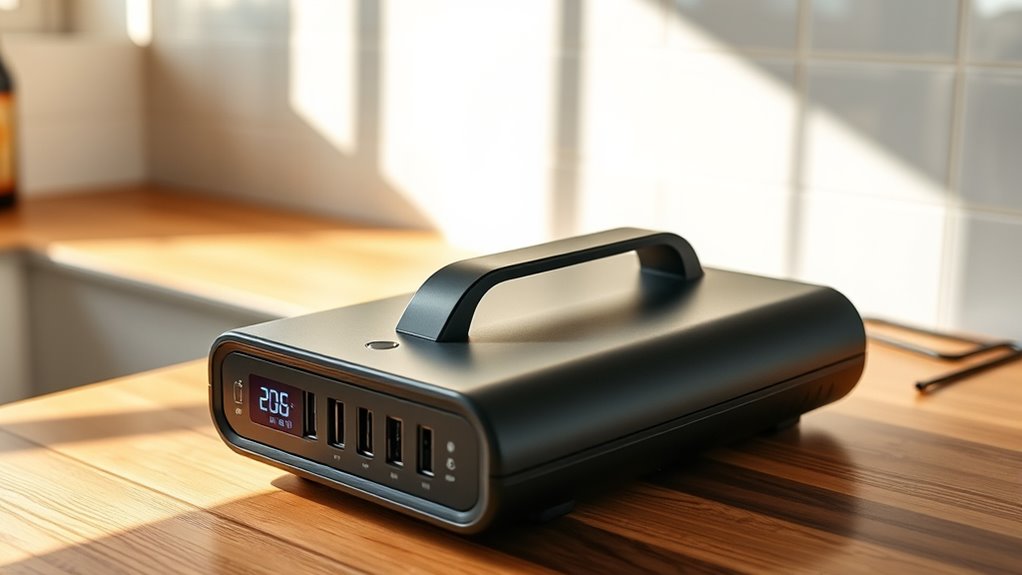
When choosing a portable power station, it’s essential to think about how easily you can carry and store it. Consider these factors:
- Weight – Heavier units may offer more capacity but can be difficult to transport.
- Dimensions – Compact models fit easier in storage spaces and carry bags.
- Handle Design – Ergonomic handles make lifting and moving smoother.
- Storage Space – Make certain you have enough room for the station when not in use.
Balancing size and portability helps you pick a unit that’s practical for your needs. If you plan to move it frequently, prioritize lighter and smaller options. For occasional use, larger models might be suitable. Always align your choice with how and where you’ll use the station.
Evaluate Charging Options and Input Power Sources
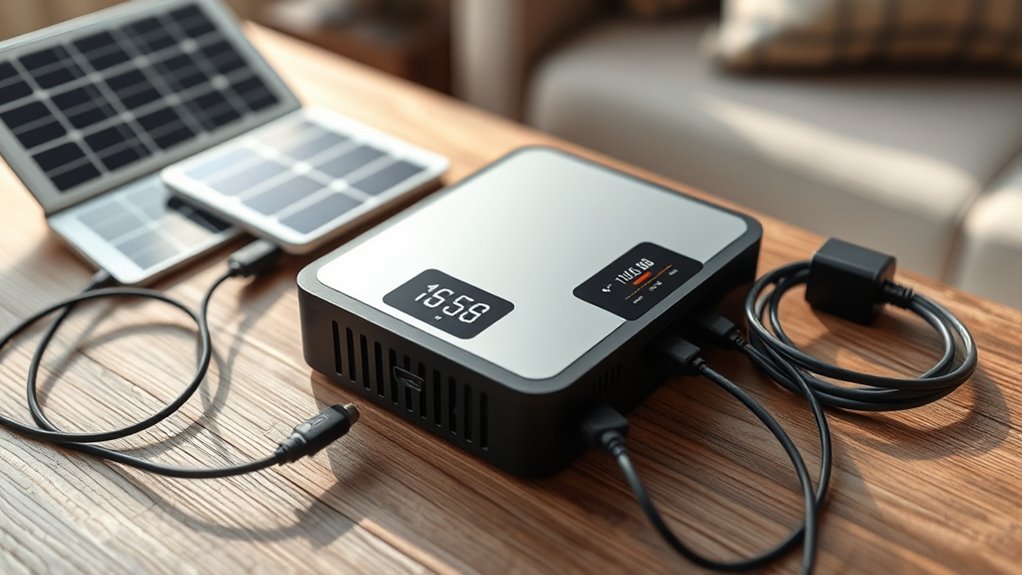
Evaluating your charging options and input power sources is essential to guarantee your portable power station meets your energy needs reliably. You should consider how you’ll recharge it daily and during emergencies. Solar panels offer a clean, renewable source, but their output depends on sunlight availability. AC wall outlets provide fast, consistent charging but require access to a power grid. Car chargers are useful for on-the-go recharging, especially during travel or power outages. Check the input wattage of your power station to ensure your existing sources can handle it without strain. Combining multiple charging methods can increase flexibility and reliability. Remember, the charging options should align with your typical energy usage patterns, and the input power sources must be capable of supporting your station’s recharging demands efficiently.
Factor in Safety Margins and Future Expansion
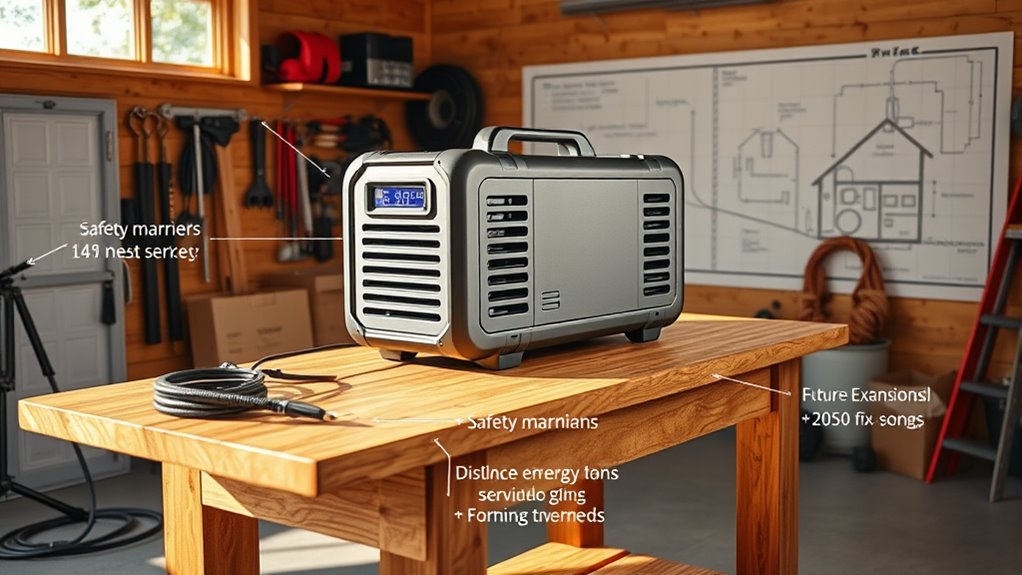
In planning your portable power station setup, it’s important to incorporate safety margins to prevent overloads and guarantee reliable operation. Start by adding a buffer of about 20-25% to your total estimated power needs. Next, consider future expansion by reserving extra capacity for additional devices or increased usage. Third, evaluate the surge power requirements of appliances that need brief bursts of energy and ensure your station can handle these surges. Finally, regularly reassess your setup as your power needs evolve, adjusting capacity accordingly. This approach helps you avoid unexpected shutdowns, ensures longevity, and keeps your system flexible for future needs. By factoring in safety margins and potential growth, you create a resilient, adaptable power solution that supports your home comfortably.
Compare Features and Additional Functionalities
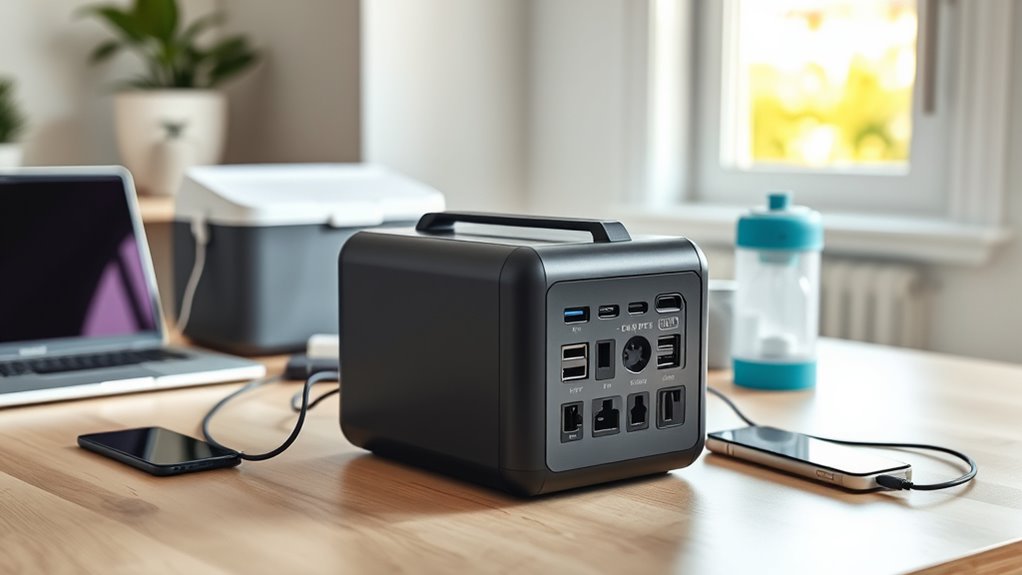
Comparing features and additional functionalities helps you choose a portable power station that best fits your needs. Start by examining the outlets available—whether AC, USB, or DC ports—and guarantee they match the devices you plan to power. Look for features like fast charging, pass-through charging, and optional solar compatibility, which can enhance usability. Some stations include LCD screens displaying real-time data such as battery life, power consumption, and charge cycles, helping you monitor performance easily. Additional functionalities like wireless charging pads, multiple charging options, and rugged designs for outdoor use can add convenience and versatility. By evaluating these features, you ensure your chosen power station provides the right mix of power, convenience, and adaptability for your specific situation.
Make an Informed Decision Based on Your Analysis

After analyzing the features and functionalities of different portable power stations, you’re now ready to make an informed decision. Focus on how well each option meets your specific needs. Consider these key steps:
- Match power capacity to your essential devices and expected usage.
- Evaluate run-time to ensure it covers your typical outage duration.
- Check weight and portability for easy handling and placement.
- Review additional features like charging options and safety protections.
Frequently Asked Questions
How Often Should I Recharge My Portable Power Station?
Think of your portable power station as a garden that needs regular watering. You should recharge it once the battery drops to about 20-30%, especially after heavy use, to keep it ready for emergencies. If you’re not using it often, recharge every few months to maintain battery health. Regular recharging guarantees your station is always prepared, just like watering keeps your garden vibrant and ready to bloom.
What Maintenance Is Required for Optimal Performance?
You should regularly inspect and clean your portable power station, keeping it free of dust and debris. Follow the manufacturer’s guidelines for battery calibration and avoid deep discharges to prolong its lifespan. Keep vents unobstructed, and store it in a cool, dry place when not in use. Also, periodically check for firmware updates to guarantee peak performance and safety. Proper maintenance helps your power station run smoothly when you need it most.
Can I Connect Multiple Units for Increased Capacity?
Yes, you can connect multiple portable power stations to increase capacity. Many units support daisy-chaining through parallel ports or compatible adapters, allowing you to expand power output for larger appliances or longer backup times. Just make certain the units are designed for parallel use and follow the manufacturer’s instructions closely to avoid damaging your devices or the units themselves. Always verify compatibility before attempting to connect multiple power stations.
How Do Environmental Factors Affect Battery Life?
Environmental factors like temperature, humidity, and exposure to sunlight can considerably impact your battery’s lifespan. You’ll want to keep your power station in a cool, dry place, as excessive heat accelerates battery aging, while cold temperatures can reduce performance temporarily. Avoid direct sunlight and high humidity to prevent corrosion and damage. Proper storage and handling help guarantee your battery stays healthy and lasts longer, giving you reliable power when you need it most.
Are There Any Warranties or Service Plans Available?
You’ll find most portable power stations come with warranties ranging from one to three years, giving you peace of mind. Think of it like a safety net — if your device unexpectedly falters, the warranty catches you. Service plans are often available too, offering maintenance or upgrades. Always check the specific brand’s policies. For example, some companies even offer 24/7 customer support, ensuring you’re never left in the dark.
Conclusion
By following these steps, you’ll confidently choose the right portable power station for your home. Imagine having all your essential devices powered smoothly during outages or outdoor adventures—doesn’t that peace of mind make the effort worthwhile? When you assess your needs, compare options, and plan for the future, you guarantee a reliable, efficient energy solution. Are you ready to stop guessing and start powering with certainty?