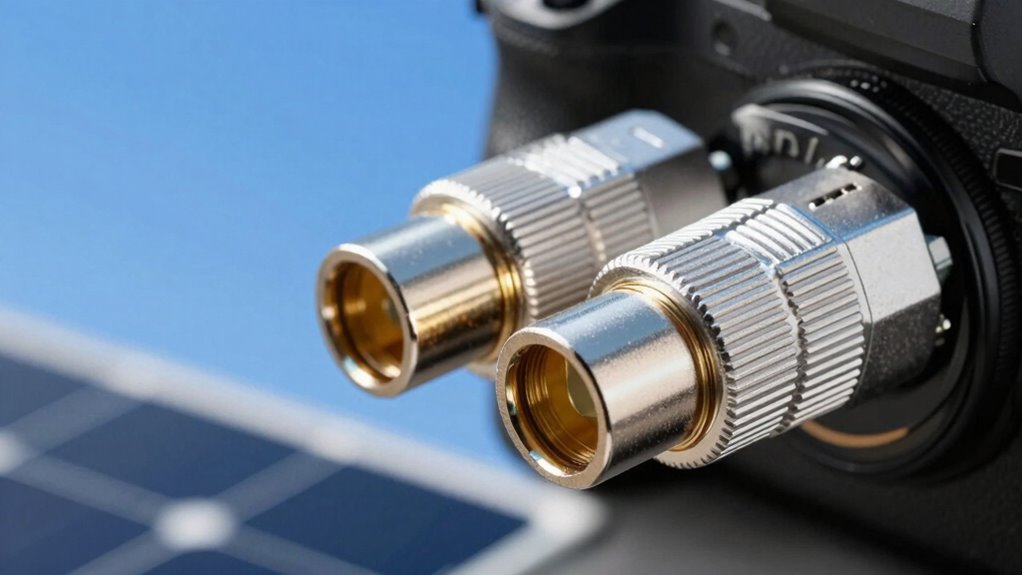
MC4 connectors are small but essential parts that link solar panels securely and efficiently. They consist of male and female components with metal pins, locking clips, and waterproof gaskets that safeguard against moisture and dirt. These weatherproof connectors guarantee safe, high-voltage, high-current connections while making installation simple and quick. Properly maintained, they boost system reliability and lifespan. To understand how these tiny parts work together and improve solar performance, keep exploring their design and features.
Key Takeaways
- MC4 connectors are weatherproof, high-voltage connections that link solar panels securely for efficient power transfer.
- They consist of male and female parts with internal metal contacts, locking tabs, and sealing gaskets.
- Designed for outdoor use, they resist UV rays, moisture, and corrosion, ensuring system longevity.
- Proper installation involves a secure click and routine maintenance like cleaning contacts and inspecting for damage.
- These connectors enable quick, tool-free setup, improving safety, reliability, and performance of solar power systems.

BougeRV 12 PCS Solar Connectors with Spanners Solar Panel Cable Connectors 6 Pairs Male/Female(10AWG)
6 pairs solar panel connectors Male & Female + 6 pairs solar connector pins (male & female) +…
As an affiliate, we earn on qualifying purchases.
As an affiliate, we earn on qualifying purchases.
What Are MC4 Connectors and Their Role in Solar Systems
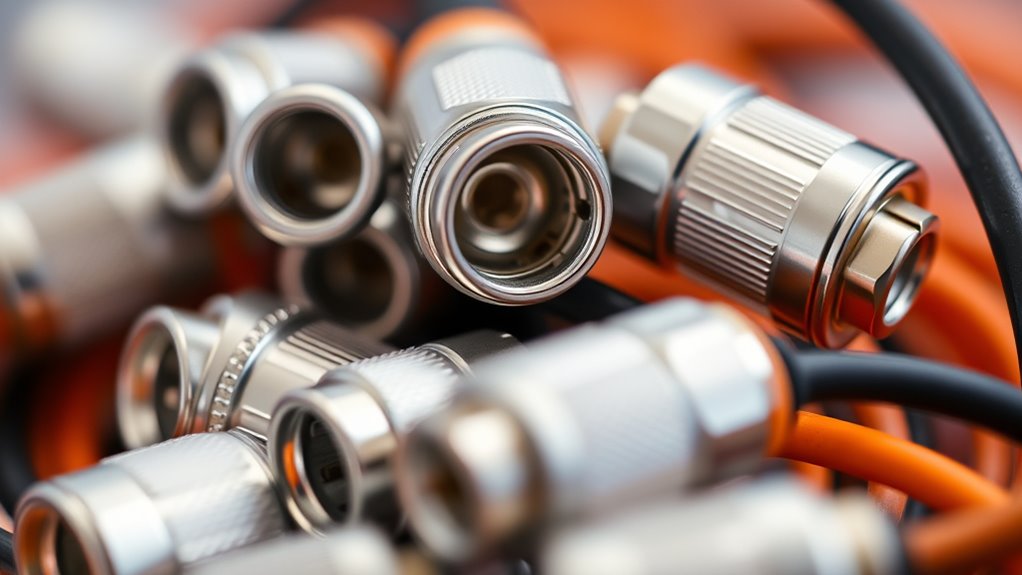
MC4 connectors are specialized electrical connectors used to connect solar panels together in a solar power system. Their main role is to create a secure, weather-resistant link between panels, ensuring efficient power transfer. You’ll find them on most modern solar setups because they simplify installation and maintenance. MC4 connectors are designed to handle high voltages and currents, making them ideal for outdoor use where exposure to the elements is inevitable. They ensure a reliable connection that minimizes energy loss and prevents accidental disconnections. When connecting multiple panels, MC4 connectors allow you to easily link them in series or parallel configurations. Additionally, they are engineered to meet safety standards for outdoor electrical connections, which is crucial for system reliability and safety. Their compatibility with various solar components and ease of use contribute to a more efficient installation process. Properly rated connectors also help prevent voltage overloads, ensuring long-term system durability. These connectors are also designed for durability to withstand environmental stresses such as UV radiation and temperature fluctuations. Their weather resistance features make them especially suitable for outdoor solar installations, increasing system longevity. Overall, they’re essential for building a safe, efficient, and durable solar energy system.

TerraSitze Waterproof Solar Cable Gland Entry Housing Solar Junction Box Fit for roof Panels on RV Boat, Camper, Van, Building, Garage, Shack, with 10Ft 10AWG Solar Extension Cable Connector
【Upgraded Weatherproof Design】 Solar panel connectors is pre-assembled with 10Ft 10AWG wire, save a pair of waterproof glands,…
As an affiliate, we earn on qualifying purchases.
As an affiliate, we earn on qualifying purchases.
How Do MC4 Connectors Work? Key Features and Functionality
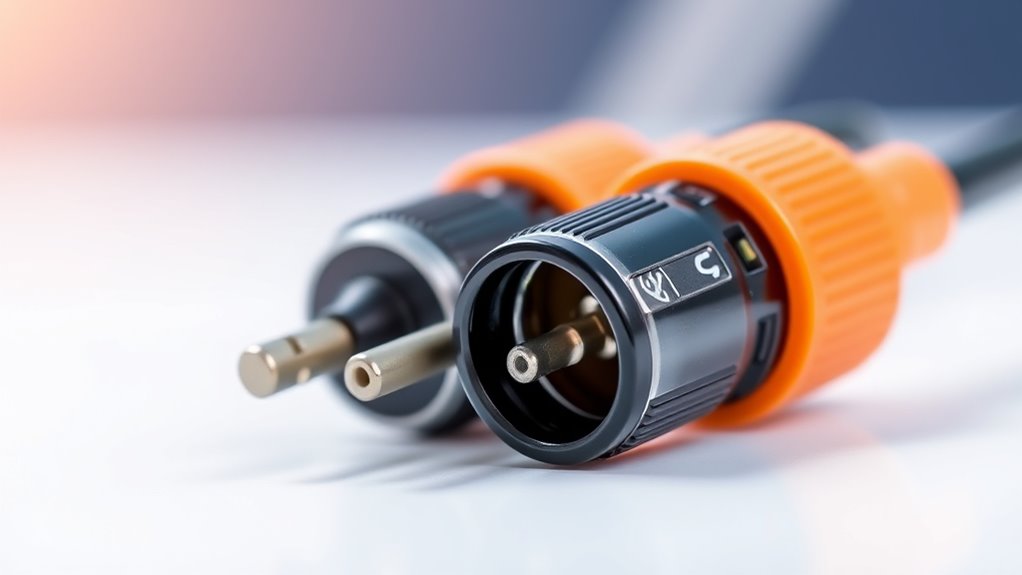
MC4 connectors work by securely connecting solar panels to each other and to your system through a simple yet effective connection mechanism. Their waterproof design guarantees they stay sealed and protected in outdoor conditions, preventing moisture from causing issues. When connected, electrical conductivity is maintained through metal contacts that facilitate efficient power transfer with minimal loss. Additionally, the use of high-quality materials ensures durability and long-term performance in various environmental conditions. The design simplicity of MC4 connectors allows for quick and reliable installation, making them a popular choice in solar energy systems. Their compatibility with standard solar components further enhances ease of use and system integration. Moreover, understanding Youngster Choice in related fields highlights the importance of reliable connection systems in various applications, emphasizing the role of system compatibility in ensuring seamless operation.
Connection Mechanism Details
Ever wondered how MC4 connectors guarantee a secure and reliable connection in solar power systems? It all comes down to their precise connection mechanism. When you insert the male pin into the female socket, the internal metal contacts make firm contact, ensuring minimal resistance and a stable electrical flow. The locking tab then clicks into place, preventing accidental disconnection. The spring-loaded design applies consistent pressure, maintaining a tight fit even as temperatures fluctuate. The connector’s design ensures that the connection stays intact over time, resisting loosening due to vibrations or movement. Plus, the molded housing keeps the internal components aligned properly, reducing the risk of misconnection. Proper application of connectors is essential for safety and efficiency in solar setups. Additionally, the materials used in MC4 connectors are typically resistant to environmental factors like UV rays and moisture, which helps prolong their lifespan and maintain performance. The design also incorporates environmental resistance features that safeguard against harsh weather conditions, ensuring reliable operation in outdoor installations. These features collectively contribute to the durability and long-term functionality of the connectors, making them a vital component in solar energy systems. To further enhance their longevity, manufacturers often incorporate corrosion resistance properties into the materials used. Overall, this mechanism guarantees a secure, durable, and efficient connection, essential for ideal solar system performance.
Waterproof Design Features
To guarantee reliable performance in outdoor environments, MC4 connectors incorporate robust waterproof design features that protect against moisture and dirt ingress. These features include sealing gaskets, weatherproof housings, and snug locking mechanisms that ensure a tight fit. These design elements are crucial for maintaining the electrical integrity of the connections even in challenging weather conditions. The design prevents water from penetrating the connection point, maintaining electrical integrity even in rain or snow. The connectors are also made with durable, UV-resistant materials that withstand harsh conditions. Additionally, the material selection is carefully engineered to resist degradation from prolonged sun exposure and environmental stressors. Properly designed waterproof features also contribute to system longevity, ensuring the solar setup remains dependable over time. Understanding the importance of connector compatibility can further optimize installation and performance. To better understand, here’s a quick overview:
| Feature | Function | Benefit |
|---|---|---|
| Sealing Gaskets | Block water entry | Protects internal components |
| Weatherproof Housing | Shields connection from elements | Enhances durability |
| Locking Mechanism | Ensures tight connection | Prevents accidental disconnection |
| UV-Resistant Material | Withstands sun exposure | Extends lifespan |
| Durable Construction | Maintains integrity over time | Reliable outdoor use |
Electrical Conductivity Process
The electrical conductivity process in MC4 connectors relies on precise metal-to-metal contact that guarantees efficient power transfer. When you connect the male and female parts, the metal surfaces press tightly against each other, creating a secure connection. This contact minimizes resistance and allows electrons to flow smoothly from your solar panel to the system. The connectors use conductive materials like copper or aluminum with a coating to prevent corrosion. As you tighten the connector, the metal surfaces deform slightly to ensure a snug fit. This tight contact reduces energy loss and maintains consistent performance over time. Proper connection and maintenance are key to keeping the conductivity high, ensuring your solar power system runs efficiently and reliably. Additionally, understanding the importance of secure connections can help prevent potential performance issues caused by poor contact or corrosion.

EXBKAMY 32 PCS Solar Panel Connectors MC4, 16 Pairs Male/Female + 2 Wrenches IP67 Waterproof 1000V/30A Solar Connectors,for Solar Power Systems (10AWG)
【Superior Conductivity & Maximum Efficiency】 Constructed with precision tinned copper pins and premium PPO insulation, these connectors minimize…
As an affiliate, we earn on qualifying purchases.
As an affiliate, we earn on qualifying purchases.
The Components and Design of MC4 Connectors
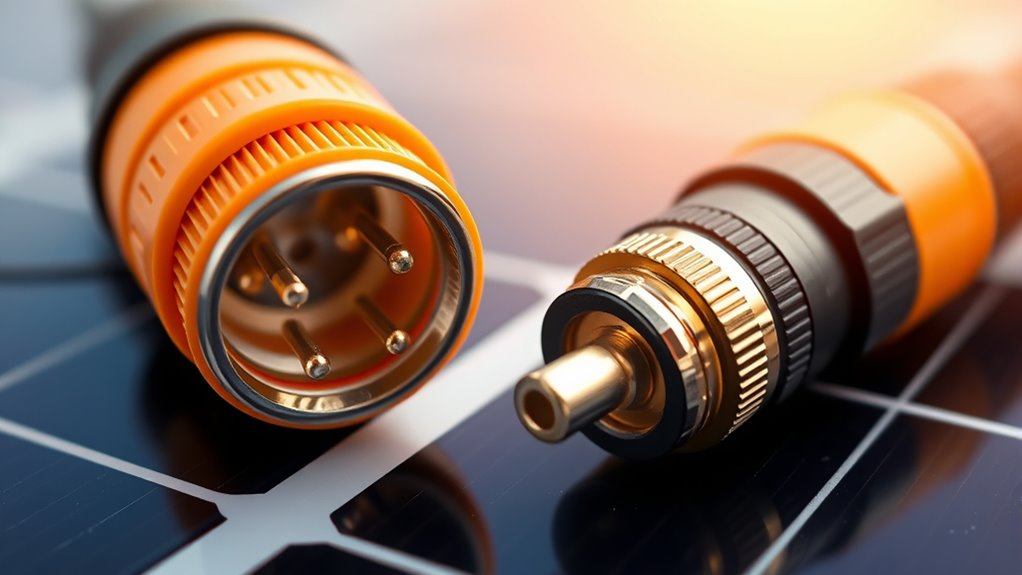
MC4 connectors are designed with specific components that guarantee reliable and secure connections in photovoltaic systems. Their main parts include a male and female connector, a sealing gasket, and a locking mechanism. The male connector features a metal pin that inserts into the female socket, ensuring a solid electrical contact. The sealing gasket provides waterproofing and prevents dirt or moisture from entering. The locking mechanism secures the connection, preventing accidental disconnection. These components work together to maintain durability and efficiency. Visualize it like this:
- Metal pin and socket for stable electrical contact
- Rubber sealing gasket for waterproof protection
- Locking clip to secure the connection
This thoughtful design ensures your solar system remains safe and functional over time. Additionally, understanding how component integration enhances overall system reliability helps users appreciate the importance of each part in maintaining performance. Proper connector maintenance can further extend the lifespan of your solar setup and ensure consistent energy output. Maintaining these connection components regularly is essential for optimal system performance and longevity.
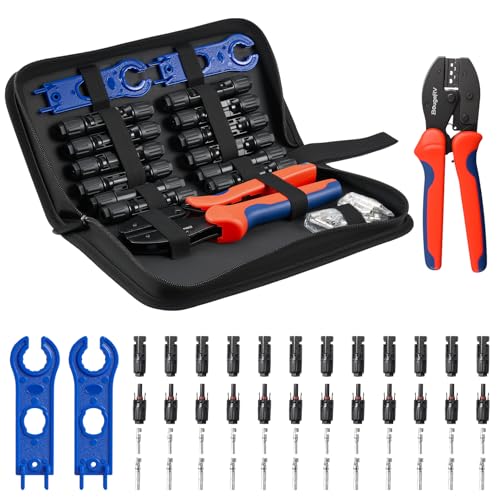
BougeRV Solar Crimper Tool Kit – Crimper, 12 Pairs Connectors, 2 Spanner Wrench for 14-10 AWG Solar Panel Cable Wire Crimping PV Assembly and Installation
Complete Tool Kit: BougeRV compact and affordable solar crimper tool kit includes a wire crimper, a pair of…
As an affiliate, we earn on qualifying purchases.
As an affiliate, we earn on qualifying purchases.
Benefits of Using MC4 Connectors in Solar Installations
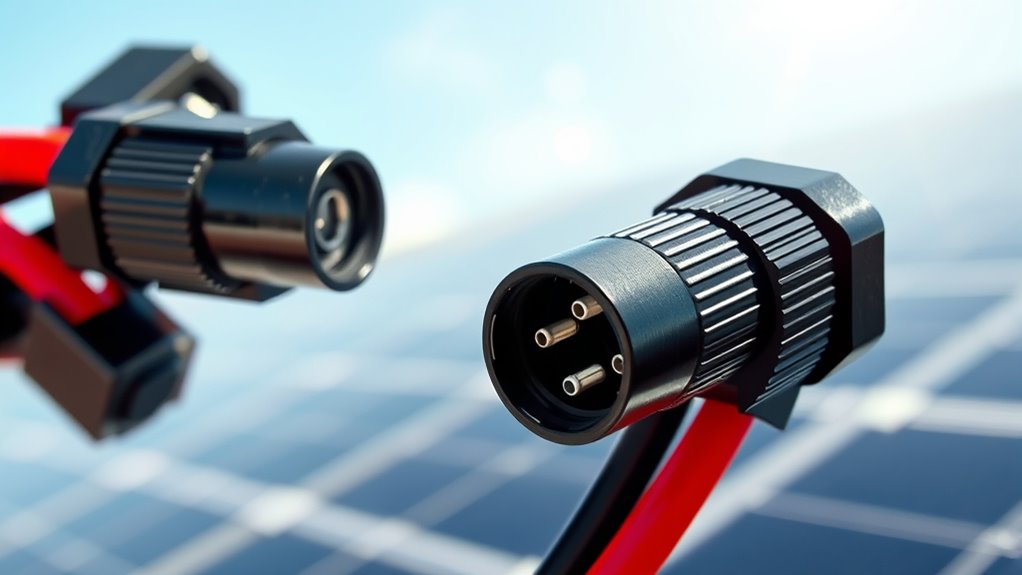
Using MC4 connectors in your solar installation offers several advantages that enhance both safety and performance. They provide a secure, weatherproof connection that resists corrosion and environmental damage, ensuring long-term reliability. These connectors are designed for quick, tool-free connections, making installation faster and reducing labor costs. Their standardized design promotes compatibility across different panels and systems, simplifying maintenance and future upgrades. Additionally, MC4 connectors help prevent accidental disconnections and electrical faults, minimizing safety risks like short circuits or fires. They also enable efficient, low-loss power transfer, maximizing energy output from your solar system. Proper installation practices further ensure your system operates safely and efficiently. Overall, using MC4 connectors guarantees a dependable, efficient, and safer solar setup, saving you time and money while increasing system longevity.
Compatibility and Types of MC4 Connectors
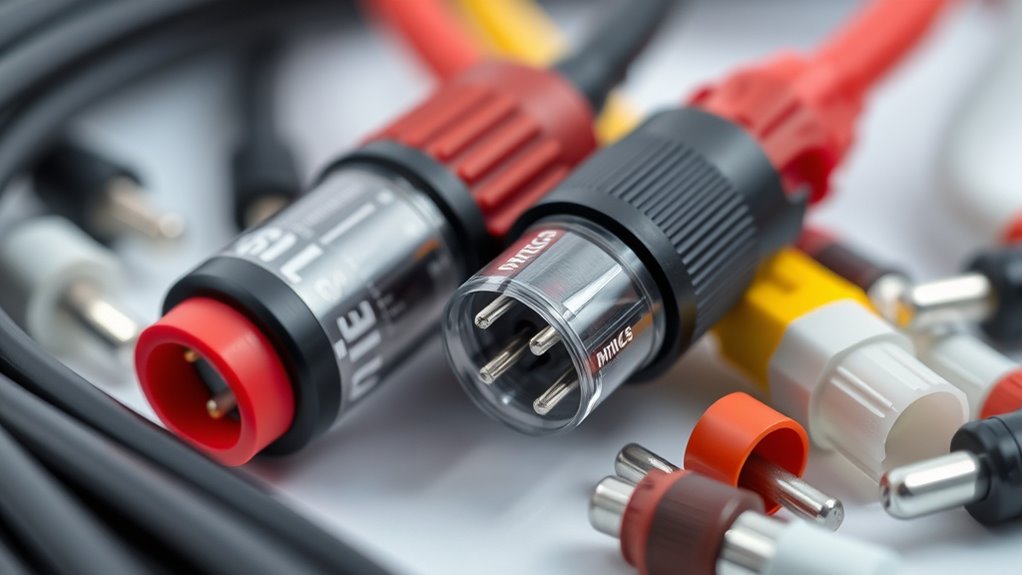
MC4 connectors work with a variety of solar panel types, making them adaptable for different setups. You’ll find several connection designs, each suited to specific installation needs. Understanding these options helps guarantee compatibility and a secure connection in your system.
Compatible Solar Panel Types
Because solar panels come in various types and configurations, it’s important to guarantee compatibility with MC4 connectors. Most standard monocrystalline and polycrystalline panels are designed to work seamlessly with MC4 connectors, making installation straightforward. These panels usually feature pre-installed MC4-compatible junction boxes or connectors. However, some specialized panels, such as flexible or thin-film types, may not have MC4 connectors built-in and might require adapters or modifications. To ensure compatibility, look for panels with these features:
- Pre-installed MC4 connectors or compatible junction boxes
- Standardized terminal sizes for easy connection
- Clear manufacturer specifications confirming MC4 compatibility
Verifying these aspects helps prevent connection issues and ensures your solar setup remains efficient and safe.
Varieties of Connection Designs
Different connection designs within MC4 connectors guarantee compatibility across various solar setups, offering options suited for different installation needs. You’ll find standard single-contact connectors for straightforward systems and multi-contact variants for more complex arrangements. Some designs feature locking mechanisms to make certain of a secure, weatherproof connection, reducing the risk of disconnection or corrosion. There are also versions with extended cables or different contact sizes to match specific panel or inverter requirements. Additionally, specialized connectors accommodate different wire gauges or enable branching, allowing you to customize your solar array efficiently. This variety ensures you can select the right MC4 connector type for your system’s size, complexity, and environmental conditions, making solar installations more reliable and adaptable.
Installing and Maintaining MC4 Connectors for Optimal Performance
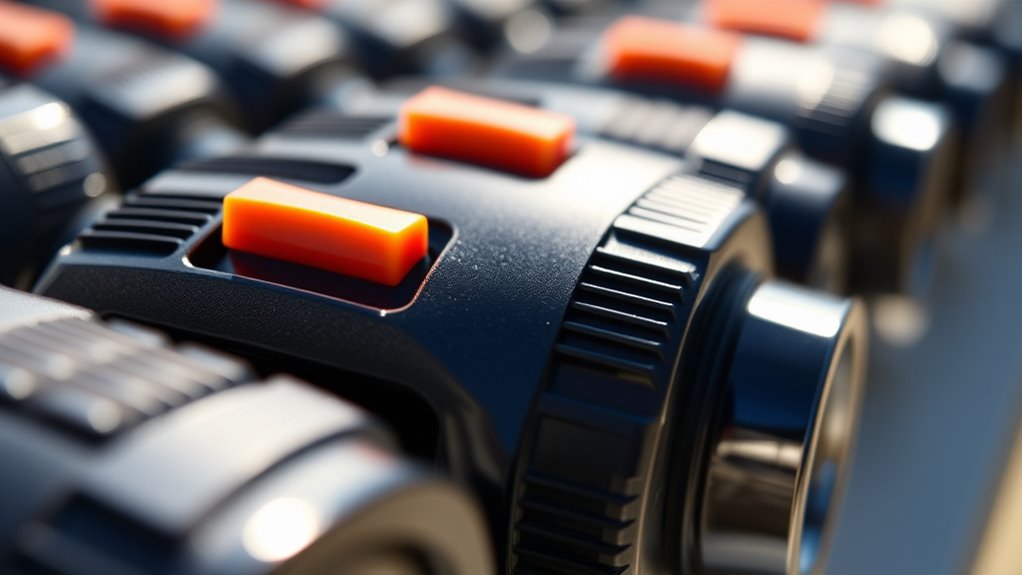
Proper installation and regular maintenance are essential to guarantee MC4 connectors deliver reliable, long-lasting performance. When installing, ensure you firmly connect the male and female parts until they click securely. Use a torque wrench to tighten connections to the manufacturer’s recommended specifications, preventing both loose contacts and damage. Regular inspections are vital—check for corrosion, dirt, or damage that could impair conductivity. If needed, clean the connectors with a soft cloth and a contact cleaner suitable for electrical components. Consider these maintenance steps to keep your system running smoothly:
Proper installation and maintenance ensure MC4 connectors perform reliably over time.
- Inspect for corrosion, dirt, or corrosion buildup
- Clean connectors with appropriate contact cleaner
- Re-tighten connections if loose or damaged
Consistent care helps prevent issues, guaranteeing your solar system performs at its best over time.
Common Issues and Troubleshooting With MC4 Connectors
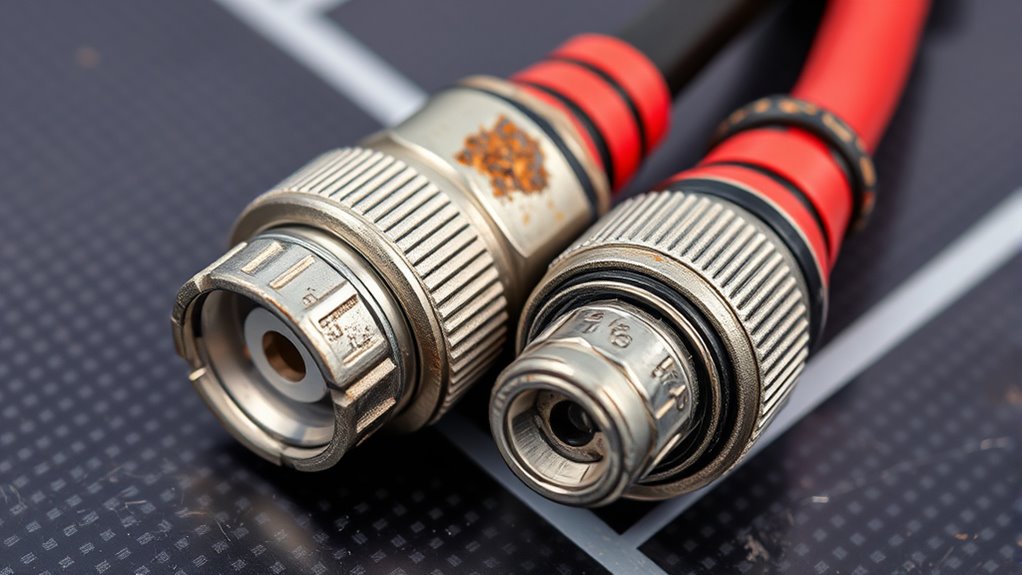
Even with careful installation and maintenance, issues can still arise with MC4 connectors that affect your solar system’s performance. One common problem is poor connections, which can cause voltage drops and reduce energy output. Loose or improperly fitted connectors are often the culprit. Corrosion or dirt buildup on the contact points can also hinder conductivity, leading to system inefficiencies. Additionally, damaged seals or cracked housings may allow moisture in, risking short circuits or corrosion. Troubleshooting starts with inspecting the connectors visually for corrosion, dirt, or damage. Tighten loose connections carefully, and clean contacts with a non-abrasive cloth if needed. If damage is evident, replacing the faulty connector guarantees your system operates safely and efficiently. Regular checks help prevent minor issues from escalating.
Future Developments and Innovations in Solar Connectors
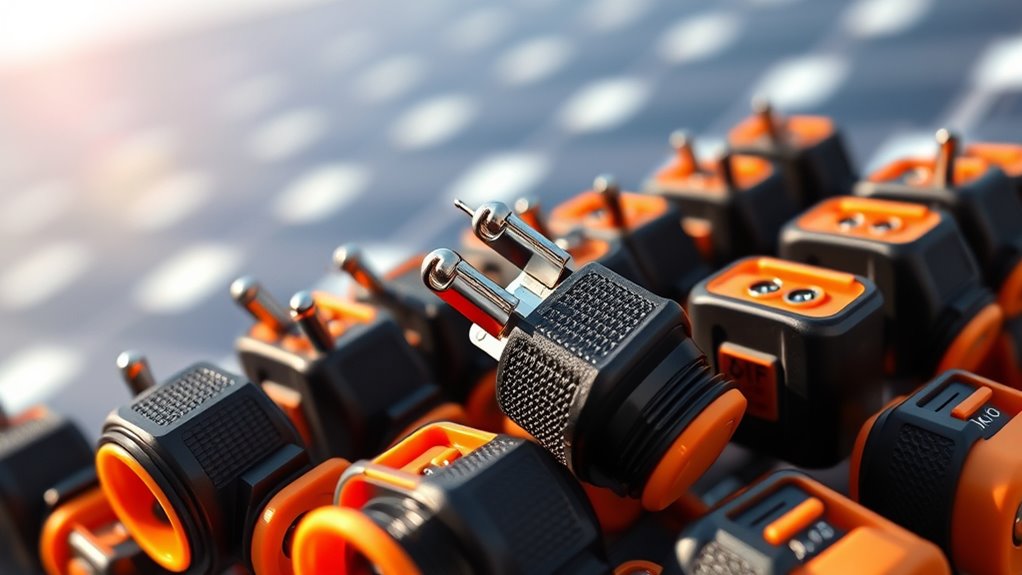
Advancements in solar connector technology are driving more efficient, durable, and user-friendly solutions to meet the growing demands of solar energy systems. Future innovations focus on enhancing safety, reducing installation time, and improving performance under extreme conditions. Expect connectors with integrated smart features, such as real-time monitoring and self-diagnostic capabilities, to become more common. Additionally, new materials and designs aim to increase longevity and resistance to corrosion, ensuring long-term reliability. You’ll also see efforts toward standardization across different systems, making installations more seamless. These developments will simplify maintenance and expand the versatility of solar setups. As a result, solar connectors will become even more reliable, easier to work with, and better suited to diverse environments, helping you optimize your solar energy investments.
Frequently Asked Questions
Are MC4 Connectors Suitable for All Types of Solar Panels?
Yes, MC4 connectors are suitable for most solar panels, especially standard residential and commercial panels. They’re designed to work with the common connectors used in solar installations, guaranteeing a secure and weatherproof connection. However, if your panels have different connector types or unique specifications, you might need adapters or different connectors. Always check your panel’s compatibility and manufacturer recommendations to ensure a proper, safe connection.
How Do MC4 Connectors Handle Extreme Weather Conditions?
Coincidentally, MC4 connectors are designed to handle extreme weather conditions effectively. You’ll find they’re weatherproof, resistant to UV rays, and sealed against moisture and dirt. When installed properly, they maintain a secure connection even during heavy rain, snow, or high winds. Their robust design guarantees longevity and reliable performance, giving you peace of mind that your solar system stays functional regardless of environmental challenges.
Can MC4 Connectors Be Reused or Recycled?
Yes, you can reuse MC4 connectors if they’re still in good condition, ensuring they maintain a proper seal. However, recycling them isn’t always straightforward since they contain plastic and metal components. You should check local recycling rules, as some facilities accept these connectors, while others don’t. When reusing, make sure to inspect for damage or corrosion to maintain safe and efficient connections in your solar setup.
What Safety Precautions Should Be Taken When Installing MC4 Connectors?
Think of installing MC4 connectors like handling a delicate spider’s web—you need steady hands and caution. Always wear insulated gloves to prevent shocks, turn off the solar system before working, and double-check connections for proper fit. Keep tools insulated, avoid pinching wires, and work in dry conditions. Following these safety steps guarantees your installation is safe, efficient, and keeps your solar system functioning flawlessly.
Are There Any Certifications Required for MC4 Connectors?
Yes, you should look for MC4 connectors that have relevant certifications like UL, IEC, or TUV. These certifications confirm the connectors meet safety, durability, and performance standards. When selecting connectors, verify they are certified for your specific solar setup and local regulations. Using certified connectors helps prevent electrical failures, ensures safety, and guarantees compatibility with your solar system, giving you peace of mind during installation and operation.
Conclusion
Now that you understand MC4 connectors, think of them as the tiny bridges powering your solar dreams. They’re the unsung heroes, quietly weaving sunlight into your daily life. With proper care and knowledge, they’ll keep your system humming smoothly, like a well-tuned orchestra. Embrace these small but mighty parts, and watch your solar journey shine brighter every day—because in the world of solar energy, even the smallest connectors make the biggest difference.