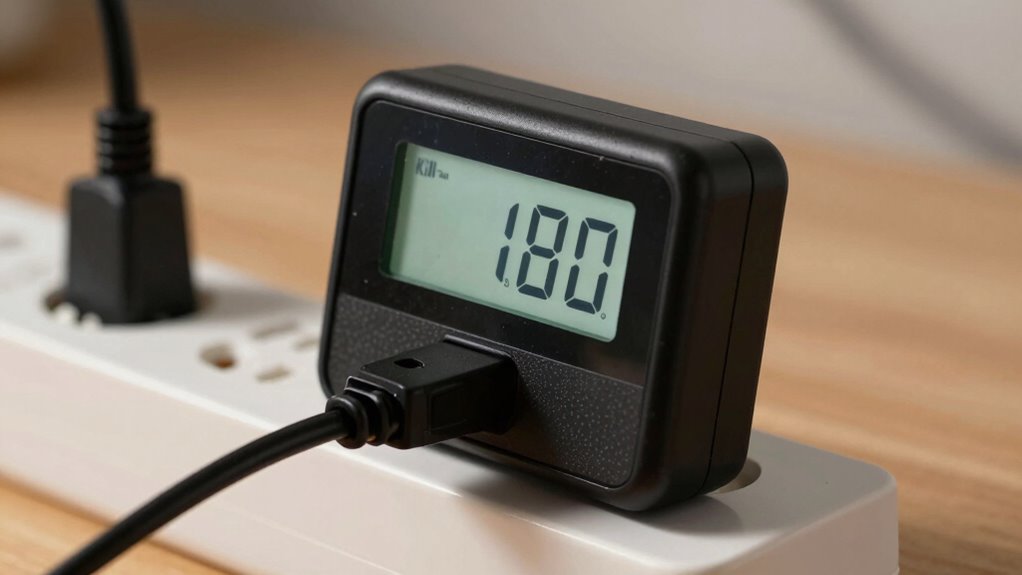

To measure real power use accurately, plug your device into a Kill‑A‑Watt meter, which displays real-time energy consumption without guesswork. These meters provide immediate, precise data on how much power appliances draw during normal operation, and many also record total energy used over time. Using one is simple and effective, making it easy to identify energy hogs and make smarter choices. Keep going to discover more tips on maximizing your energy efficiency.
Key Takeaways
- Plug the device into the Kill-A-Watt meter, then connect your appliance to accurately measure real-time power consumption.
- Turn on the appliance and read the instantaneous wattage displayed on the meter for real power use.
- Use the meter’s cumulative energy tracking feature to monitor total consumption over a specific period without guesswork.
- Record measurements during typical operation to obtain an accurate understanding of actual power use.
- Compare readings across devices to identify high energy consumers and optimize your household energy efficiency.

A Kill-A-Watt meter is a handy device that helps you monitor and measure the energy consumption of household appliances and electronics. By plugging your devices into the meter, you gain immediate insight into how much power they draw during normal operation. This real-time data is essential for improving energy efficiency because it reveals exactly which appliances are consuming the most power. Instead of guessing, you can make informed decisions about whether to replace, upgrade, or adjust how you use certain devices. For example, if your old refrigerator or entertainment system is drawing excessive power, you can consider energy-efficient replacements or limit their usage to save on electricity bills. Device monitoring becomes straightforward and accurate with these meters, allowing you to identify hidden energy hogs that might be running 24/7 without your knowledge.
Using a Kill-A-Watt meter simplifies the process of understanding your household’s energy footprint. You no longer need to rely solely on utility bills or vague estimates. Instead, you get concrete data on how much energy individual appliances use in real-time, which is crucial for making smarter choices. If you notice a device consistently consumes more energy than expected, you can decide whether to replace it with a more efficient model or adjust usage habits. For instance, unplugging devices when not in use or switching to energy-efficient alternatives can markedly reduce your overall consumption. This targeted approach to device monitoring helps you optimize energy use without sacrificing comfort or convenience.
Moreover, the Kill-A-Watt meter provides more than just instantaneous readings; many models track cumulative energy consumption over time. This feature allows you to analyze patterns, such as whether certain appliances use more power during specific periods or after prolonged use. Consequently, you can plan your energy-saving strategies around these insights. Understanding the real power use of your devices enables you to prioritize upgrades and identify inefficient appliances. This not only saves money but also contributes to a greener, more sustainable household. Additionally, having detailed data on your devices’ power consumption can help in selecting projectors with optimal contrast ratio and energy efficiency, which is especially useful if you’re aiming to build an energy-conscious home theater system. By regularly monitoring your devices, you develop habits that enhance energy efficiency and reduce waste.
Frequently Asked Questions
Can Kill‑A‑Watt Meters Measure Current Draw of Appliances?
Yes, Kill‑A‑Watt meters can measure the current draw of appliances, but you need to verify their compatibility first. They typically measure real power and voltage, then calculate current indirectly. Keep in mind measurement limitations, such as accuracy issues with certain appliances, especially those with variable loads or electronic components. For precise current readings, confirm your meter supports the specific appliance type and understand its measurement constraints.
How Accurate Are Kill‑A‑Watt Meters for Long-Term Energy Monitoring?
You’ll find that Kill‑A‑Watt meters offer decent accuracy for short-term monitoring, but their long-term precision can vary. To improve reliability, perform accuracy testing periodically and consider calibration methods, such as comparing readings with a more advanced meter. Keep in mind that environmental factors and device aging may impact measurements over time. Regular calibration guarantees you get consistent, trustworthy data for your energy monitoring needs.
Do Kill‑A‑Watt Meters Work With All Electrical Voltages Worldwide?
Like a chameleon adapting to its environment, a Kill‑A‑Watt meter adjusts to different voltages, but only within its specified range. It generally works with international standards, supporting voltages from around 110V to 240V. However, you should always check your device’s voltage compatibility before plugging it in. If it isn’t designed for your local voltage, it might not work correctly or could get damaged.
Can These Meters Detect Power Surges or Fluctuations?
Yes, kill‑a‑watt meters can detect power surges and voltage fluctuations. When you use one, it monitors real-time changes in voltage and power draw, alerting you to sudden surges or dips. While they don’t specifically diagnose all fluctuations, they help you identify abnormal power events. Keep in mind, for detailed surge detection, you might need a specialized surge protector, but these meters give you a good indication of voltage fluctuations.
Are There Any Safety Concerns Using Kill‑A‑Watt Meters With High-Power Devices?
You should exercise caution with high-power devices when using Kill‑A‑Watt meters. Confirm electrical safety by checking the device’s maximum load rating and avoiding overloading the meter. Compatibility is key; some meters aren’t designed for high wattage or surge-prone equipment, which could cause overheating or damage. Always follow manufacturer instructions and consider consulting an electrician if you’re unsure about electrical safety or device compatibility with high-power appliances.
Conclusion
By using a Kill‑A‑Watt meter, you can accurately track your device’s power consumption and make smarter energy choices. For example, imagine noticing your old refrigerator uses more power than expected, costing you extra each month. With the meter, you can identify inefficiencies and decide whether to replace it. This simple tool empowers you to save money and reduce your carbon footprint by understanding exactly how much energy your appliances use.