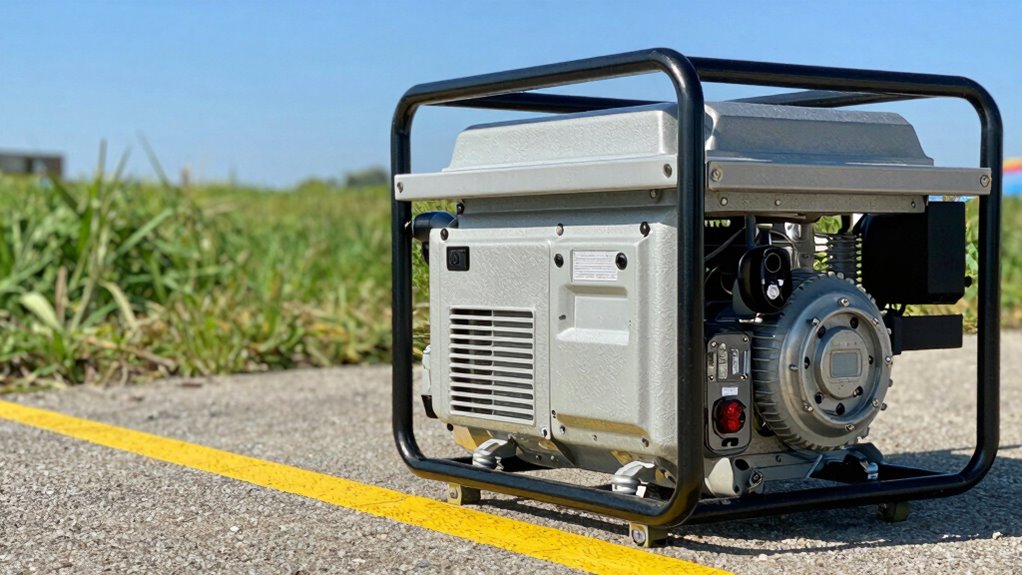
To prevent carbon monoxide risks, you need to place your generator at least 20 feet away from your home in an open, unobstructed area. Keep it on a level, sturdy surface and avoid hiding it under overhangs or near vents and windows. Proper ventilation is key, so never move it too close or into enclosed spaces. If you follow this simple distance rule, you considerably reduce danger. Keep going to learn more tips for safe setup and operation.
Key Takeaways
- Maintain a minimum distance of at least 20 feet between the generator and your home to prevent carbon monoxide entry.
- Place the generator on a sturdy, level surface away from windows, doors, and vents to ensure proper ventilation.
- Avoid installing the generator under overhangs, decks, or enclosed spaces that trap exhaust fumes.
- Use a tape measure or measuring wheel to verify the proper distance during setup.
- Incorporate remote monitoring and CO detectors for additional safety beyond physical placement.
Understanding the Importance of Proper Generator Placement

Proper generator placement is crucial because it directly impacts the safety, efficiency, and longevity of your equipment. If you place your generator too close to your home or enclosed spaces, you risk carbon monoxide buildup, which can be deadly. Proper placement ensures good ventilation, allowing fumes to dissipate safely into the open air. It also helps prevent overheating and reduces noise disturbances. A well-placed generator minimizes the risk of fire hazards, keeps it accessible for maintenance, and guarantees it operates at maximum efficiency. By choosing the right location, you extend your generator’s lifespan and protect your household from potential dangers. Remember, thoughtful placement isn’t just about convenience — it’s about safeguarding your home and everyone inside. Generator placement rules are essential for avoiding dangerous CO buildup and ensuring safe operation. Additionally, consulting local building codes and safety regulations can help ensure your setup complies with all safety standards, including considerations for proper ventilation. Ensuring proper airflow around your generator is vital for safe operation and compliance with safety guidelines. Also, understanding the distance test can help you determine the safest placement for your generator in any environment.
The Basic Principle Behind the Distance Test

To guarantee your generator is placed safely, understanding the basic principle behind the distance test is essential. The core idea is simple: keep the generator far enough away from your home to prevent dangerous carbon monoxide buildup. This distance minimizes the risk of CO leaking into enclosed spaces, protecting you and your loved ones. Ensuring proper generator placement is crucial for preventing harmful fumes from entering your home. Additionally, considering outdoor ventilation can help disperse exhaust gases more effectively, further reducing the risk of CO exposure. Proper airflow and ventilation strategies play a vital role in maintaining safe conditions around your generator. Moreover, adhering to European cloud innovation principles can inspire safer, more efficient placement techniques that prioritize environmental and user safety. Proper site assessment helps identify optimal locations that maximize safety and airflow, further reducing potential hazards.
How to Measure Safe Distance From Your Home
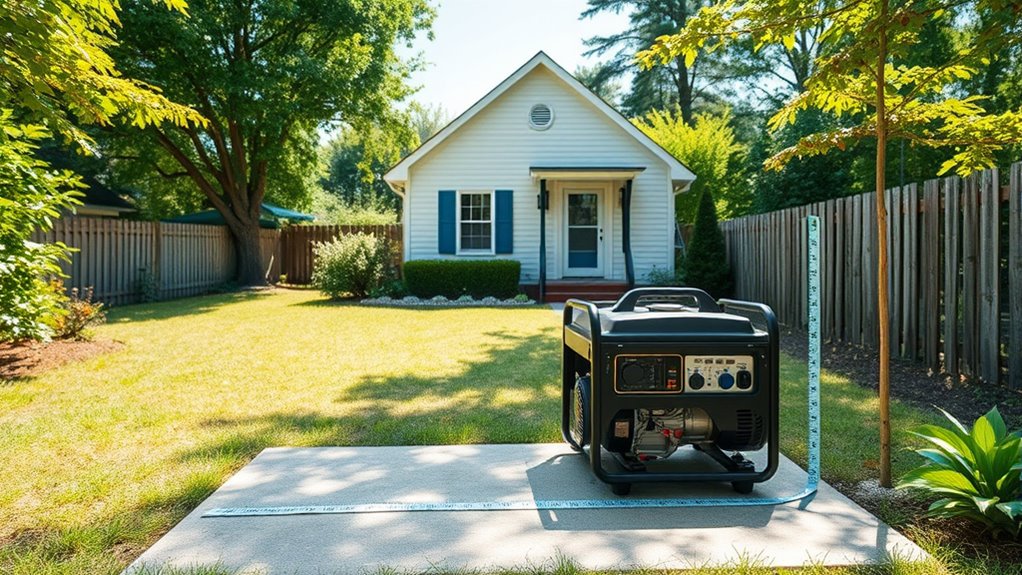
Measuring the safe distance for your generator is straightforward if you follow a few simple steps. First, find a clear, open area outside your home, ideally on a flat surface. Use a tape measure or a measuring wheel to determine the distance from the generator’s placement point to your home’s exterior wall. Guarantee the distance meets or exceeds the recommended safety guidelines, typically at least 20 feet, but check your local codes for specific requirements. Mark the spot with a stake or flag so you can easily verify the distance. Keep in mind that obstacles like overhangs or vents can influence safe placement, so position your generator where airflow isn’t obstructed. Proper generator placement is essential to avoid dangerous CO buildup inside your home, ensuring safety for everyone. Additionally, ensure the generator is located in a well-ventilated area to promote proper airflow and prevent CO accumulation. Being aware of emission guidelines helps ensure your setup remains compliant and safe. Regularly inspecting your generator’s ventilation system can further help prevent CO risks and maintain safety standards. Proper installation procedures also play a critical role in ensuring safe operation and minimizing hazards.
Additional Safety Tips for Generator Positioning
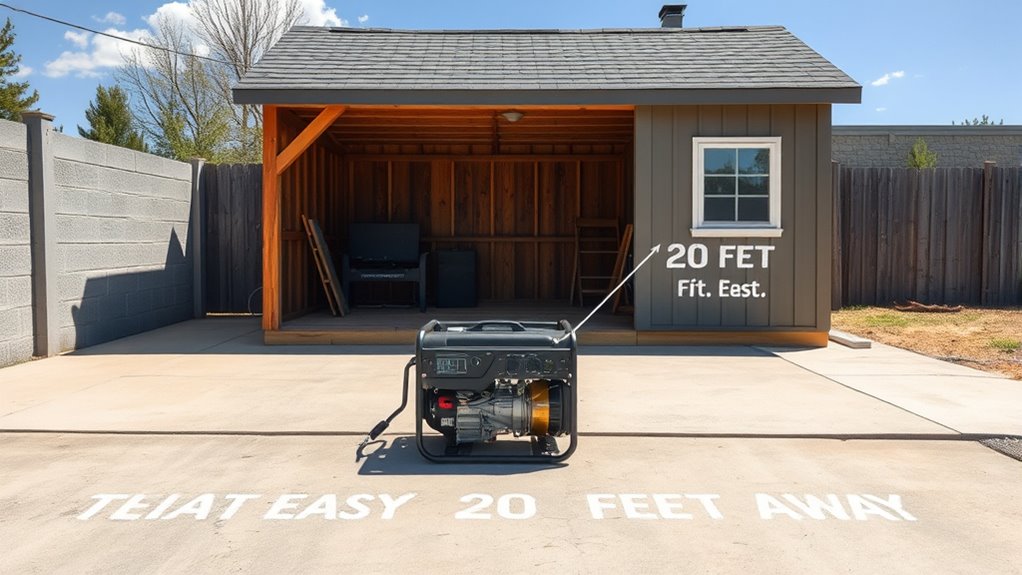
Ensuring your generator is positioned safely involves more than just maintaining the correct distance from your home. You should also consider airflow, weather conditions, and nearby vents or windows. Proper placement prevents dangerous fumes from seeping into your living space and reduces the risk of fire or damage. Take these extra precautions:
Proper generator placement ensures safety from fumes, weather, and fire hazards.
- Keep the generator on a sturdy, level surface to prevent tipping.
- Shield it from rain or snow to avoid electrical hazards.
- Maintain clear space around the unit for ventilation.
- Ensure it’s away from open windows, doors, or vents to prevent CO buildup indoors.
- Remember that connected home technology and proper placement work together to enhance safety and monitor conditions remotely. Incorporating remote monitoring systems can further improve safety by alerting you to any issues promptly. Additionally, regularly testing your carbon monoxide detectors ensures early warning in case of potential leaks. Paying attention to ventilation requirements can significantly reduce the risk of carbon monoxide poisoning indoors. Considering proper generator placement as part of your safety plan helps ensure optimal airflow and minimizes hazards.
Common Mistakes to Avoid When Placing Your Generator
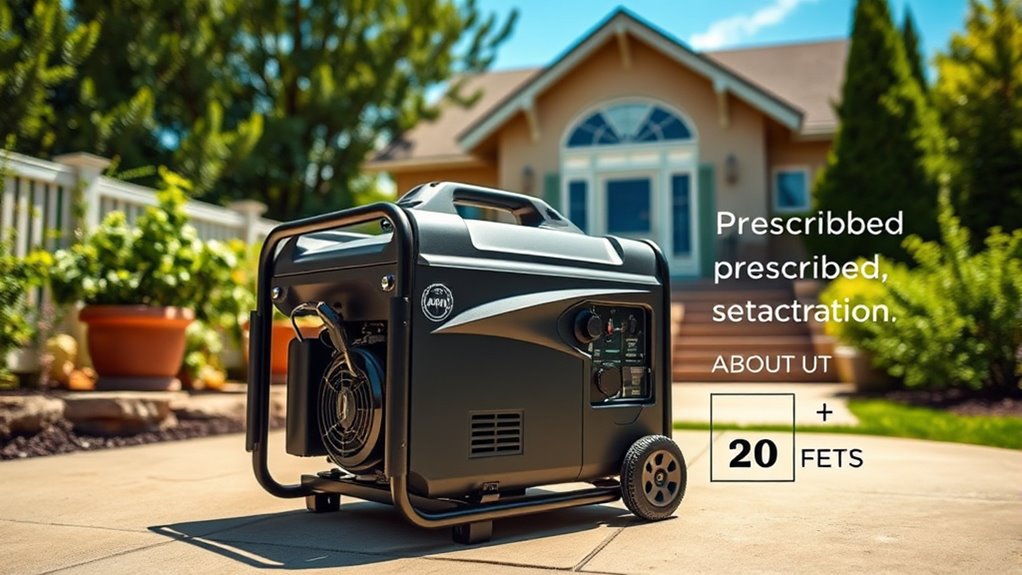
One common mistake is placing the generator too close to your home or other structures. This increases the risk of carbon monoxide buildup inside your house, which can be deadly. Always follow the recommended minimum distance—at least 20 feet—between your generator and any windows, doors, or vents. Never assume that a small distance is enough; CO fumes can seep into your home even from a distance. Another mistake is ignoring local regulations or manufacturer instructions, which specify safe placement. Also, avoid placing the generator in enclosed spaces or under overhangs, as this traps exhaust fumes. Proper placement is vital for safety, so double-check your setup to ensure it’s far enough away and positioned correctly. Your goal is to protect yourself and your loved ones from dangerous CO exposure. Remember to consider generator placement guidelines to maintain safe distances and prevent hazardous fumes from entering your living space. Additionally, understanding the sound healing science behind proper placement can help minimize noise disturbances and ensure safety.
Frequently Asked Questions
Can Generator Placement Affect Indoor Air Quality?
Yes, generator placement can affect indoor air quality. If you place a generator too close to your home, it can produce carbon monoxide and other fumes that might seep inside, risking your health. Always make sure you position your generator outdoors, away from vents and windows, and follow safety guidelines. Proper placement helps prevent indoor air contamination and keeps you safe from CO poisoning.
Are There Specific Regulations for Generator Distances in Different Regions?
Yes, there are specific regulations for generator distances in different regions. For example, the National Fire Protection Association recommends keeping generators at least 20 feet away from windows and doors, but local codes can vary. You should always check with your local authorities or building codes, as failing to follow regional regulations can lead to safety hazards, legal issues, and increased risk of carbon monoxide poisoning.
How Does Weather Impact Generator Safety Distances?
Weather greatly influences generator safety distances because wind, rain, and snow can affect carbon monoxide dispersion. When it’s windy, you should place your generator further away from your home to prevent CO buildup in enclosed spaces. Rain and snow can cause electrical issues, so make certain the area is dry and well-ventilated. Always check weather conditions before setting up your generator, and adjust your placement accordingly for ideal safety.
What Types of Generators Require Different Placement Considerations?
You should consider different placement rules for portable, standby, and inverter generators. Portable units need more distance from your home to prevent carbon monoxide buildup, while standby generators, often larger, require even greater clearance for safe operation and maintenance. Inverter generators are usually smaller and safer to place closer but still need proper ventilation. Always follow manufacturer guidelines and local codes to guarantee safe operation and reduce CO risk.
Is There a Recommended Maintenance Schedule Based on Placement?
You should follow a maintenance schedule based on your generator’s placement. Regularly inspect it for debris, corrosion, and damage, especially if it’s outdoors or in a humid area. Check oil, filters, and spark plugs every 50-100 hours of use, or at least annually. Keep ventilation clear and ensure exhaust systems are in good condition. Proper maintenance depending on placement helps prevent malfunctions and reduces CO risk.
Conclusion
Remember, proper placement safeguards your home, your health, and your peace of mind. Measure the distance, follow the guidelines, and avoid common mistakes. Prioritize safety, prioritize caution, and prioritize peace of mind. By understanding the rules, respecting the space, and practicing safety, you’ll ensure your generator serves you well without risking your safety. Stay vigilant, stay informed, and stay safe—because when it comes to generator placement, safety always comes first.