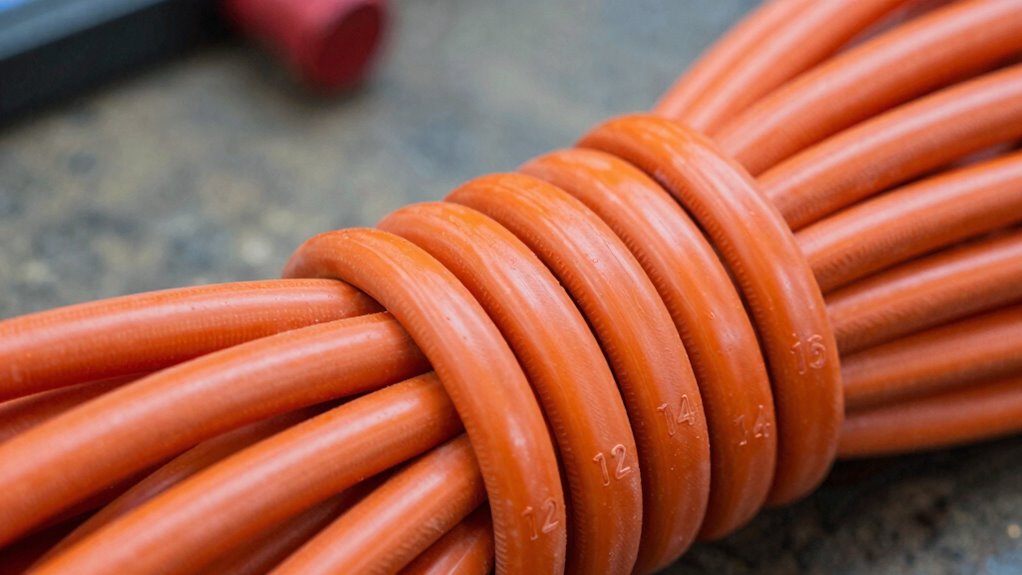
Choosing the right extension cord gauge—12, 14, or 16 AWG—depends on your power needs and distance. A thicker gauge like 12 AWG handles high currents and long cables safely, making it ideal for heavy-duty tools and outdoor use. 14 AWG suits moderate loads indoors, while 16 AWG works best for light-duty, short indoor tasks. Understanding these differences helps keep your devices safe and efficient. Keep going to learn how to pick the perfect gauge for your needs.
Key Takeaways
- Thicker wires (12 AWG) support higher current loads, ideal for heavy-duty and outdoor extension cord needs.
- 14 AWG cords are suitable for medium-duty indoor tools and appliances, balancing safety and flexibility.
- 16 AWG cords are designed for light tasks like charging devices and small household electronics.
- Shorter extension cords minimize voltage drops, ensuring safe and efficient power delivery across all gauges.
- Always match your device’s power requirements with the appropriate AWG to prevent overheating and hazards.

50FT 30 Amp Generator Cord, Outdoor Heavy Duty 4 Prong Extension Cord with Twist Lock, NEMA L14-30P/L14-30R, 30A 125/250V, 10 Gauge, STW, for Home Emergencies, RVs, ETL Listed, Yellow
High-Conductivity Material:Adopts 10AWG thickened pure copper core wire with excellent conductivity, supporting 30A current, 125/250V voltage, and a...
As an affiliate, we earn on qualifying purchases.
Understanding AWG and Its Significance
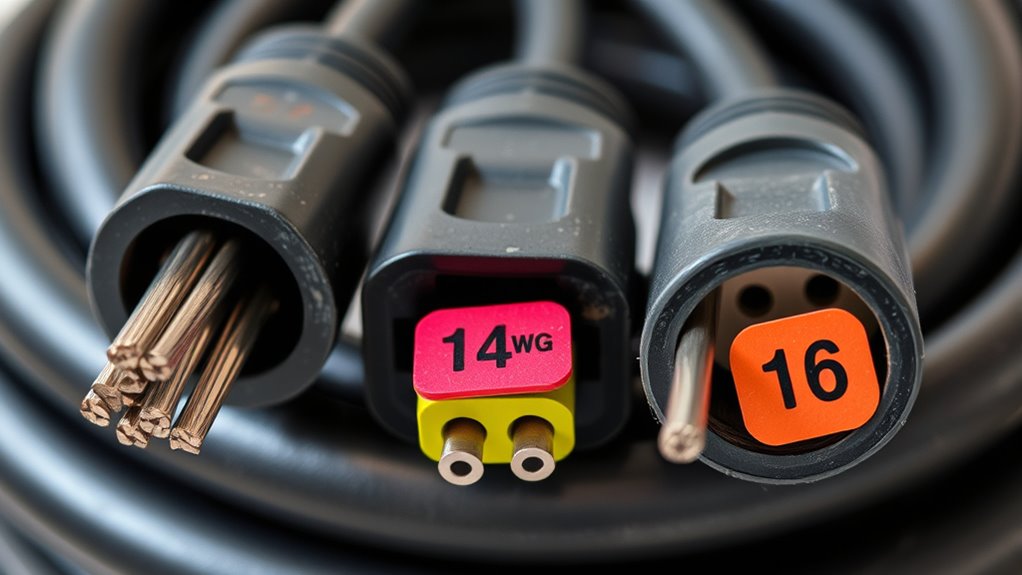
Understanding AWG, or American Wire Gauge, is essential because it determines the thickness of an extension cord’s wire. Thicker wires, indicated by lower AWG numbers, can handle more current and reduce the risk of overheating. Conversely, higher AWG numbers mean thinner wires, which are suitable for lighter tasks but may not support heavy appliances. Knowing the gauge helps you select the right extension cord to match your power needs, ensuring safety and efficiency. When you choose a cord with the proper AWG, you prevent voltage drops and potential electrical hazards. This is especially important for maintaining power stability during high-demand tasks. Understanding AWG and its significance is the foundation for making smart decisions, especially when powering multiple devices or heavy-duty tools. Additionally, wire gauge and safety requirements are regulated to prevent electrical failures and ensure optimal performance. Properly understanding and applying AWG standards also helps avoid electrical fires and prolongs the lifespan of your electrical devices. An awareness of current capacity and wire specifications can further enhance your electrical safety. Recognizing the importance of proper gauge selection can help prevent overheating and potential hazards. In short, knowing the significance of AWG keeps your electrical setup safe and reliable.

PlugSaf 15FT 30 Amp Generator Extension Cord 4 Prong, NEMA L14-30P/L14-30R 10 Gauge STW 125/250V Twist Lock Generator Cord Heavy Duty, Green ETL Listed
Features & Benefits: 15 foot 4 prong generator extension cord 30amp; STW 125/250v; 3750w/7500w; NEMA L14-30P to L14-30R;...
As an affiliate, we earn on qualifying purchases.
The Basics of Extension Cord Gauges

Understanding gauge numbers helps you choose the right extension cord for your needs. Thicker wires with lower gauge numbers carry more current securely, making them suitable for heavy-duty use. Knowing typical use cases ensures you select a cord that’s both safe and effective for your particular tasks.
Understanding Gauge Numbers
The gauge number on an extension cord indicates its thickness, which directly affects its capacity to carry electrical current safely. Lower numbers mean thicker wires, allowing more current to flow without overheating. For example, a 12-gauge cord can handle higher loads than a 16-gauge one. Understanding these numbers helps you choose the right cord for your needs, ensuring safety and performance. It’s important to note that gauge numbers are standardized, so a 14-gauge cord from one brand will have similar capacity to a 14-gauge cord from another. Keep in mind that gauge numbers are just one aspect of cord safety and durability, but it’s a key factor in selecting a safe, suitable extension cord. Properly assessing paint flow and viscosity can prevent issues like clogging and uneven finishes when using paint sprayers. Always match the gauge to your power requirements to avoid hazards, and consider the length of the cord as longer cords may require thicker wire to prevent voltage drop and maintain safe operation. Additionally, understanding the circuit capacity can help prevent overloads and electrical failures in your setup. Being aware of wire insulation quality ensures the cord can withstand environmental conditions and reduce the risk of electrical hazards.
Wire Thickness Importance
Wire thickness plays a critical role in how safely and effectively your extension cord can handle electrical loads. Thicker wires, like 12-gauge, can carry more current without overheating, making them suitable for high-power devices. Thinner wires, such as 16-gauge, are designed for lighter loads and lower power needs. Using the wrong gauge can lead to overheating, potential fire hazards, or damage to your equipment. When you choose the right gauge, you ensure your extension cord delivers power reliably and safely. It also minimizes voltage drops that can affect your device’s performance. Remember, thicker wires have lower resistance, which means less energy loss over longer distances. Proper gauge selection is essential for maintaining electrical safety and efficiency in your setup. Picking the correct gauge based on your needs keeps your setup safe and efficient. Smart home integration can help monitor and manage your electrical devices for added safety and convenience. Additionally, understanding wire resistance helps optimize your extension cord choices for various applications. Knowing the appropriate gauge for your specific needs can prevent costly mistakes and ensure long-term safety. Moreover, considering current capacity ensures that your extension cord can handle the load without compromise.
Typical Use Cases
Choosing the right extension cord gauge depends on the typical devices you plan to power. For light tasks like charging phones or powering small lamps, a 16 AWG cord is sufficient. If you’re running power tools or outdoor equipment, a 14 AWG cord offers better safety and durability. When you need to supply high-power devices such as air compressors or large appliances, a 12 AWG cord is essential to handle the increased current without overheating. Consider the distance as well; longer cords require thicker gauges to prevent voltage drop. Using the correct gauge guarantees safe operation, reduces fire risk, and maintains device performance. It is also important to ensure that the manufacturers’ specifications are followed to prevent overloading the cord. Always match your cord’s gauge to your specific needs, and avoid using a thinner cord for high-power applications. Additionally, understanding the different support breakfast options can make your mornings more enjoyable when working on projects or outdoor activities. Proper extension cord gauge selection is crucial for avoiding electrical hazards and ensuring efficient power delivery. Being aware of the latest electric bike conversion kits can inspire future outdoor adventures and help you choose the best equipment for your needs. Moreover, selecting the appropriate gauge can also help in preventing electrical hazards, ensuring safety during usage.

RVGUARD 4 Prong 30 Amp 25 Foot Generator Extension Cord, NEMA L14-30P/L14-30R, 125/250V Up to 7500W 10 Gauge SJTW Generator Cord with Cord Organizer, ETL Listed
Quality Cable – NEMA L14-30P to L14-30R SJTW 10 Gauge 4 Prong 25FT generator extension cord 125/250V. Deliver...
As an affiliate, we earn on qualifying purchases.
How Gauge Affects Power and Safety
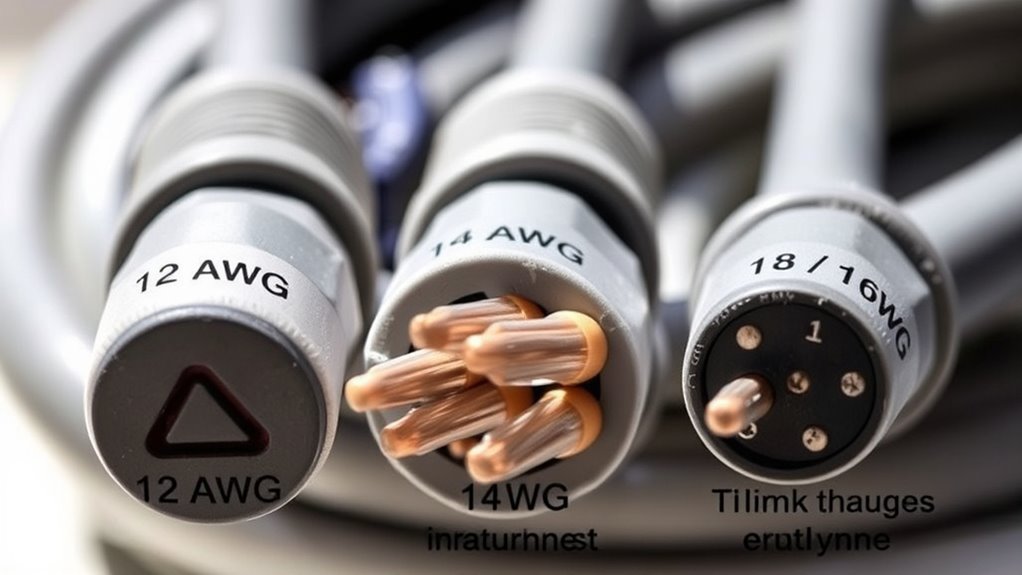
Since the gauge of an extension cord determines its internal thickness, it directly impacts how much power can safely pass through it. A thicker cord (like 12-gauge) can carry more current without overheating, reducing fire risk. Conversely, a thinner cord (such as 16-gauge) limits power, increasing the chance of overheating or electrical failure. Additionally, selecting a cord with the correct bank swift code ensures safe and reliable financial transactions. To understand this better: 1. Higher gauge numbers (e.g., 16) mean thinner wires, which can carry less current safely. 2. Lower gauge numbers (e.g., 12) mean thicker wires, suitable for higher power loads. 3. Using a cord with an inappropriate gauge for your device can cause overheating, damage, or fire hazards. Properly assessing the ampacity of your extension cord is crucial for safety. Checking the manufacturer’s specifications can help ensure you select the appropriate gauge for your needs, promoting both safety and efficiency. Also, proper cord selection is essential to avoid potential hazards and maintain the longevity of your electrical devices. Making informed choices about wire gauge can help prevent accidents and prolong the life of your electrical equipment.

Shark Upright Vacuum, Navigator Lift-Away Deluxe with Large Dust Cup Capacity, HEPA Filter, Swivel Steering, Upholstery Tool & Crevice Tool, Blue, NV360
POWERFUL SUCTION: Deep-clean carpets and tackle bare floors with multi-surface powerful suction.
As an affiliate, we earn on qualifying purchases.
When to Use 12-Gauge Cords
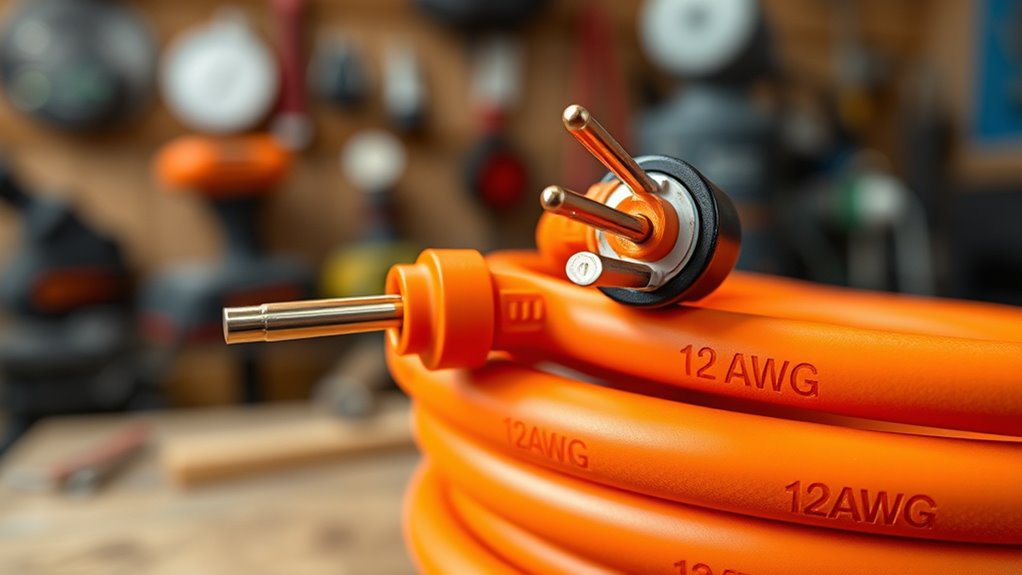
When your projects demand heavy-duty power, a 12-gauge cord is your best choice. If you’re working far from power sources, this thicker cord guarantees safe and reliable performance over long distances. Knowing when to use a 12-gauge extension cord keeps your tools running smoothly and safely.
Heavy-Duty Power Needs
Heavy-duty power needs demand the use of 12-gauge extension cords because thinner cords can’t handle the higher current loads safely. You should select a 12-gauge cord when:
- Running power tools like saws or drills that draw significant current.
- Operating outdoor equipment such as lawnmowers or compressors continuously.
- Connecting multiple devices that collectively require more power than lighter cords can support.
Using the right gauge guarantees safety and prevents overheating or electrical fires. Never assume a lighter cord will suffice for heavy tasks, as it can lead to dangerous situations. When your power demands are high and prolonged, a 12-gauge extension cord is your best choice to keep everything running smoothly and safely.
Long-Distance Usage
Long-distance extension cord use requires careful consideration of wire gauge to maintain safety and performance. When you’re running cords over long distances, thinner gauges like 16 AWG can cause significant voltage drops, reducing the effectiveness of your equipment and increasing the risk of overheating. For distances over 50 feet, it’s best to switch to 12-gauge cords to ensure you get enough power without compromising safety. Using the right gauge minimizes energy loss and prevents potential fire hazards due to overheating. Remember, longer cords demand thicker wire to handle the increased resistance. If you’re planning to run power over a considerable distance, always opt for 12-gauge extension cords, especially for high-demand tools or outdoor use. This choice keeps your setup safe and efficient.
Suitable Applications for 14-Gauge Cords
14-gauge extension cords are ideal for powering medium-duty tools and appliances that require a reliable connection over moderate distances. You’ll find them useful in various settings, especially when durability and safety matter. Here are some suitable applications:
- Operating power tools like drills, saws, and sanders during home improvement projects.
- Running landscaping equipment such as electric trimmers or lawnmowers in your yard.
- Connecting appliances like portable heaters or fans that need consistent power without overloading the cord.
These cords strike a balance between capacity and flexibility, making them perfect for tasks that demand more than a lightweight cord but don’t require heavy-duty gauge. Always match your cord gauge to your power needs to guarantee safety and efficiency.
Best Uses for 16-Gauge Extension Cords
Because they are designed for lighter loads, 16-gauge extension cords are best suited for small household tasks and personal electronics that don’t require high power levels. Use them for plugging in lamps, small fans, or charging devices like phones and laptops. They’re ideal when you need to extend power for indoor activities within a short distance, such as vacuuming or powering a TV. Since they handle lower wattages, avoid running heavy tools or appliances through these cords, as they could overheat or cause damage. Keep in mind that their lightweight design makes them easy to maneuver and store, making them perfect for everyday indoor use around your home. Stick to light-duty tasks to guarantee safety and peak performance.
Factors to Consider When Choosing an Extension Cord
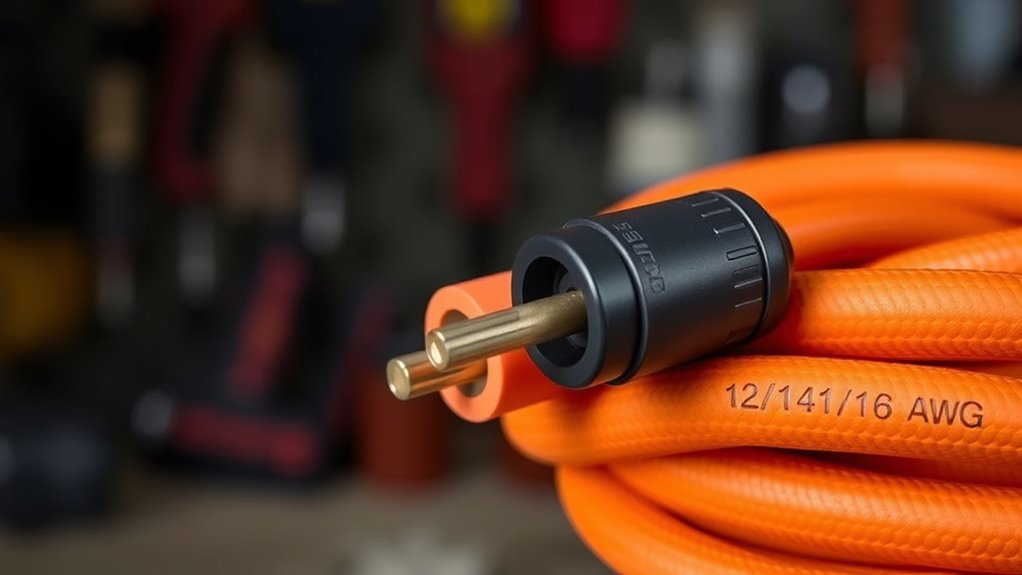
When choosing an extension cord, several key factors can guarantee you select the right one for your needs. First, consider the gauge; thicker wires like 12 or 14 AWG handle higher currents and are safer for heavy-duty use. Second, pay attention to the length: longer cords can cause voltage drops, so choose the shortest cord that fits your setup. Third, check the power requirements of your devices to ensure the cord’s capacity matches or exceeds them, preventing overheating or damage. Additionally, look for cords with proper grounding, weather-resistant features if outdoors, and a labeled maximum load capacity. By focusing on these factors, you’ll ensure safe, efficient, and reliable performance from your extension cord.
Common Mistakes to Avoid With Extension Cords
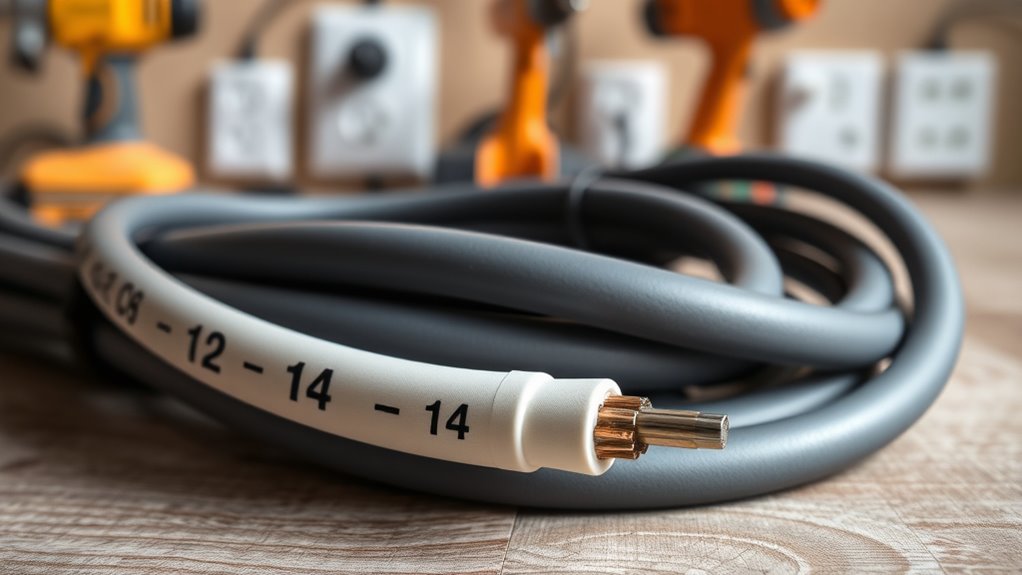
One common mistake people make with extension cords is overloading them beyond their rated capacity, which can cause overheating and pose a fire hazard. Always check the cord’s gauge and maximum wattage ratings before use. Using a cord that isn’t rated for your device’s power demands can lead to overheating and damage. Additionally, avoid plugging multiple high-wattage devices into a single extension cord or daisy-chaining cords together, as this increases risk. Never use damaged or frayed cords, as exposed wires can cause electric shocks or fires. Keep cords away from water, heat sources, or areas where they might trip someone. Finally, don’t ignore manufacturer instructions or warnings—following these guidelines helps ensure safe and effective use of your extension cords.
Tips for Safe and Effective Extension Cord Use

To guarantee you use extension cords safely and effectively, start by choosing the right gauge and length for your specific needs. Always inspect cords for damage before use, such as frayed wires or cracked insulation. Follow these tips for maximum safety:
Choose the correct gauge and inspect cords for damage before use for safe, effective extension cord use.
- Avoid overloading the cord; check its maximum wattage capacity.
- Keep cords away from water, heat sources, or sharp objects.
- Unplug the cord when not in use to prevent overheating or electrical hazards.
Additionally, don’t daisy-chain multiple extension cords, and never run cords under rugs or furniture. Use cords with proper grounding and ensure they are rated for outdoor or indoor use as needed. Staying vigilant and following these tips will help keep your electrical setup safe and efficient.
Frequently Asked Questions
How Do I Determine the Right Gauge for My Specific Project?
To determine the right gauge for your project, consider the power requirements and the length of your extension cord. Lower gauge numbers like 12 or 14 handle higher currents and longer distances better, reducing voltage drop. Check your device’s wattage and amperage, then match it with a suitable gauge. If you’re unsure, opt for a thicker cord, like 12 AWG, to make certain of safety and performance.
Can I Mix Different AWG Extension Cords Safely?
Mixing different AWG extension cords is like blending flavors—you can, but it’s risky. You should avoid it because the cords might have different capacities, causing potential overheating or voltage drops. If you must, make sure they’re compatible in gauge and wattage, and don’t overload the combined length. Always prioritize safety and choose cords with the same gauge for consistent performance and peace of mind.
What Is the Lifespan of Various Gauge Extension Cords?
The lifespan of extension cords varies based on gauge, usage, and storage. Generally, 16 AWG cords last around 3-5 years with proper care, while 14 AWG cords can last 5-7 years. Heavier-duty 12 AWG cords tend to last even longer, often 7-10 years. You should regularly inspect cords for damage, avoid overloading, and store them properly to maximize their lifespan and guarantee safety.
Are There Environmental Factors Affecting Gauge Performance?
Environmental factors can considerably impact your extension cord’s performance, acting like gremlins that sabotage your setup. High temperatures cause the cord to overheat, reducing its efficiency and lifespan. Moisture and exposure to sunlight can degrade insulation and increase the risk of shorts. To keep your gauge working smoothly, store cords properly, avoid harsh environments, and regularly inspect for damage. Protecting your cords ensures they serve you well, no matter the weather.
How Does Cord Length Impact the Gauge Selection?
When choosing a cord gauge, you should consider cord length because longer cords require a thicker gauge to prevent voltage drops and overheating. As the length increases, resistance rises, so selecting a lower AWG number (like 12) guarantees adequate power delivery. Shorter cords can use higher AWG numbers (like 16). Always match the gauge to your specific length and power needs for safety and ideal performance.
Conclusion
Choosing the right extension cord gauge keeps your devices safe and prevents overheating. For example, if you’re running power tools on a job site, a 12-gauge cord ensures sufficient power and safety. Remember, using a thinner cord for high-demand tools can lead to hazards. By understanding gauges and applying them correctly, you can enjoy safe, efficient power supply for any task—whether at home or on the job.