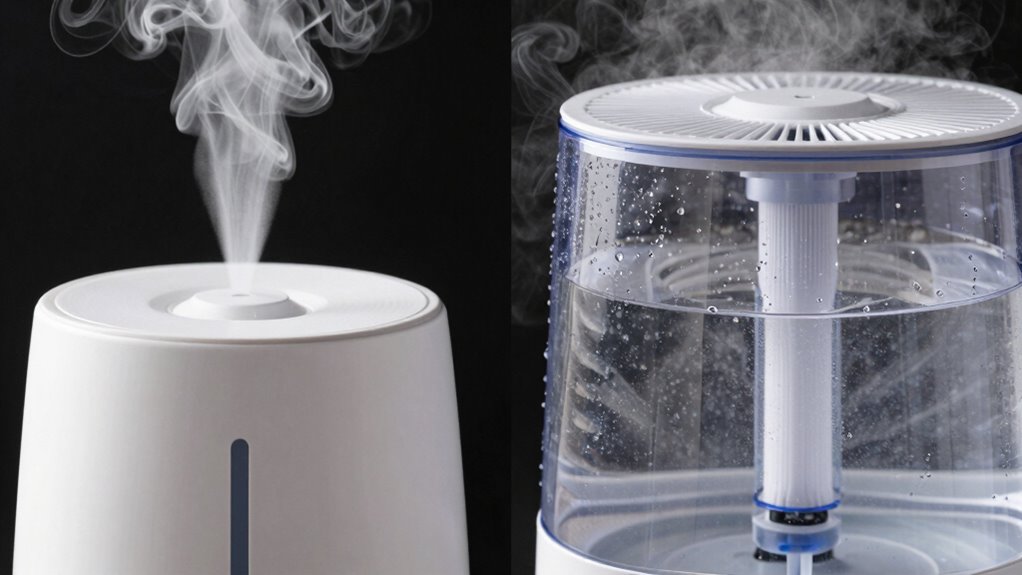
Ultrasonic and evaporative humidifiers differ in how they produce moisture: ultrasonic models use vibrating diaphragms to create a quick, quiet mist, while evaporative units use a fan and wick filter for steady, self-regulating humidity. Both require regular cleaning to prevent bacteria buildup and mineral deposits, which can affect air quality and device efficiency. Knowing these differences helps you choose the right one, and understanding maintenance guarantees you get the best performance over time.
Key Takeaways
- Ultrasonic humidifiers operate quietly, produce mist quickly, and are energy-efficient, but require regular cleaning to prevent mineral dust dispersal.
- Evaporative humidifiers self-regulate humidity, are generally quieter, and use filters that need periodic replacement for optimal performance.
- Proper cleaning prevents mold, bacteria, and mineral buildup, ensuring safe, efficient operation of both ultrasonic and evaporative models.
- Using distilled water minimizes mineral deposits and reduces cleaning frequency, extending device lifespan and improving air quality.
- Regular maintenance, including cleaning and filter changes, is essential to prevent device malfunctions and maintain healthy indoor humidity.
Understanding How Ultrasonic and Evaporative Humidifiers Work
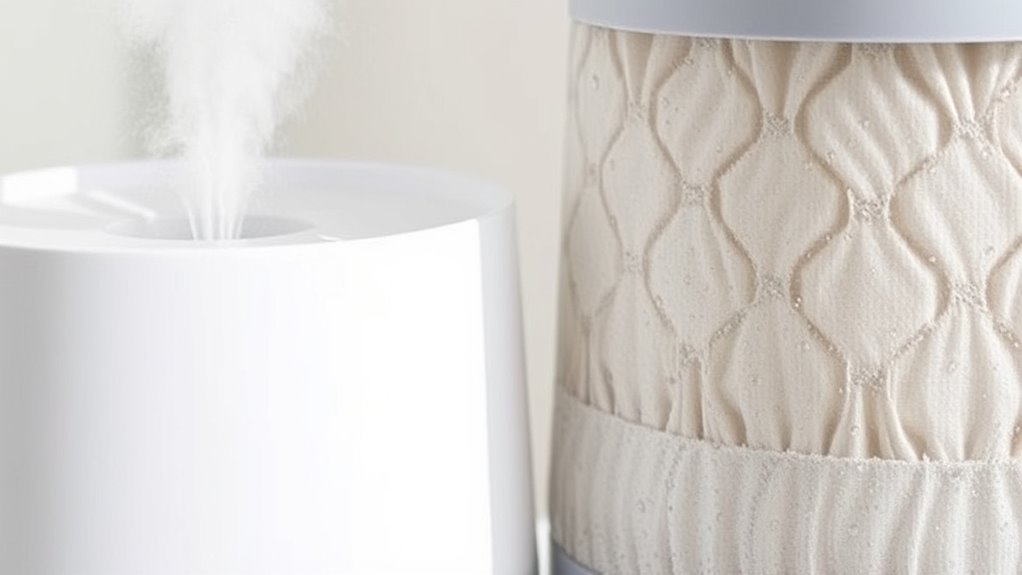
Ultrasonic and evaporative humidifiers operate using different mechanisms to add moisture to the air. With ultrasonic models, a vibrating metal diaphragm creates ultrasonic waves that break water into tiny particles, producing a cool mist that’s released into the room. These humidifiers are quiet and energy-efficient, making them popular choices. Evaporative humidifiers, on the other hand, use a wick filter soaked in water. A fan blows air through the moist filter, causing water to evaporate naturally into the air. This process self-regulates humidity levels—if the air gets too moist, evaporation slows down. Both types effectively increase humidity, but their methods differ markedly, affecting maintenance, noise levels, and how quickly they can add moisture to your space. Understanding the mechanisms behind each type helps users choose the best option for their needs. Additionally, selecting a humidifier with an appropriate contrast ratio can improve performance in different room conditions. Recognizing the humidification process is essential for optimizing comfort and maintaining air quality. A clear understanding of humidifier maintenance can also extend the lifespan of your device and ensure it functions efficiently.
Key Benefits of Ultrasonic Humidifiers

One of the main advantages of ultrasonic humidifiers is their quiet operation, making them ideal for bedrooms, offices, or any space where noise can be disruptive. They use high-frequency vibrations to produce mist, which means no moving parts like fans or pumps, reducing noise remarkably. These humidifiers are energy-efficient, consuming less power while delivering effective humidity. They also tend to be compact and lightweight, so you can easily move them around your home or workspace. Ultrasonic models often have adjustable settings, allowing you to control humidity levels precisely. Additionally, they can produce a fine, cool mist quickly, helping you relieve dry skin, congestion, and other dry-air issues more efficiently. Overall, ultrasonic humidifiers offer a blend of quiet operation, portability, and convenience. Proper cleaning is essential to prevent the buildup of bacteria and mineral deposits, ensuring the humidifier remains safe and effective. Regular filter maintenance can also help improve performance and prolong your device’s lifespan.
Advantages of Evaporative Humidifiers
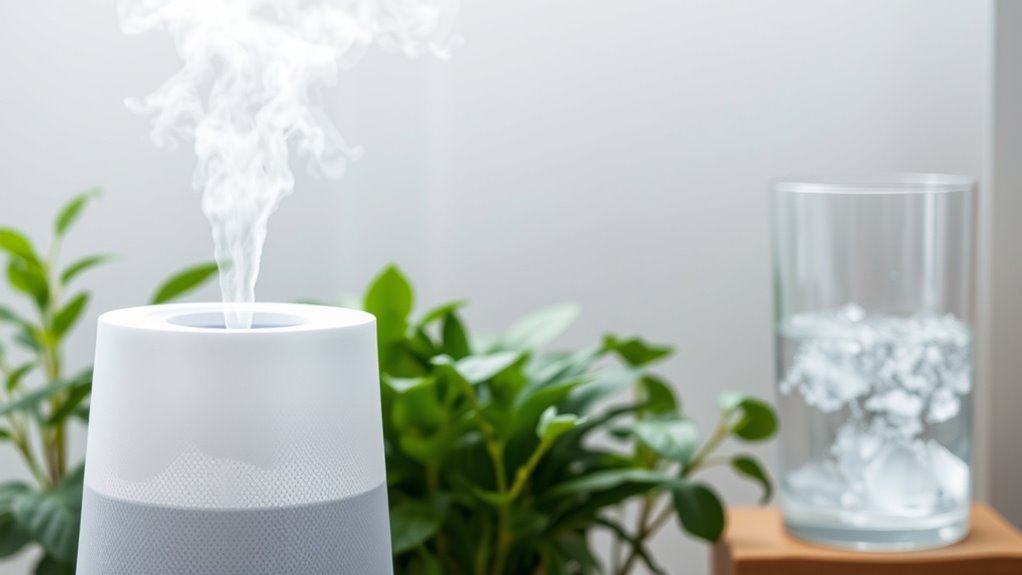
Evaporative humidifiers naturally respond to the room’s humidity levels, making them highly effective at maintaining consistent moisture without over-humidifying. They use a wick filter to draw in dry air, then pass it through a water-saturated pad, adding moisture before releasing it back into the room. This self-regulating process means you won’t have to constantly monitor or adjust settings, reducing the risk of excessive humidity. Additionally, evaporative units tend to be quieter, as they rely on natural evaporation rather than ultrasonic vibrations. They’re also less likely to disperse mineral dust into the air, especially when paired with a good filter. Overall, they’re reliable, low-maintenance options that help keep your indoor environment comfortably humid without the fuss of overdoing it. Because they naturally adjust to humidity levels, they are often considered more energy-efficient, and their self-regulating operation minimizes energy waste. They also tend to be less prone to bacterial growth since the water is exposed to air movement rather than ultrasonic vibrations.
Comparing the Performance and Efficiency of Both Types
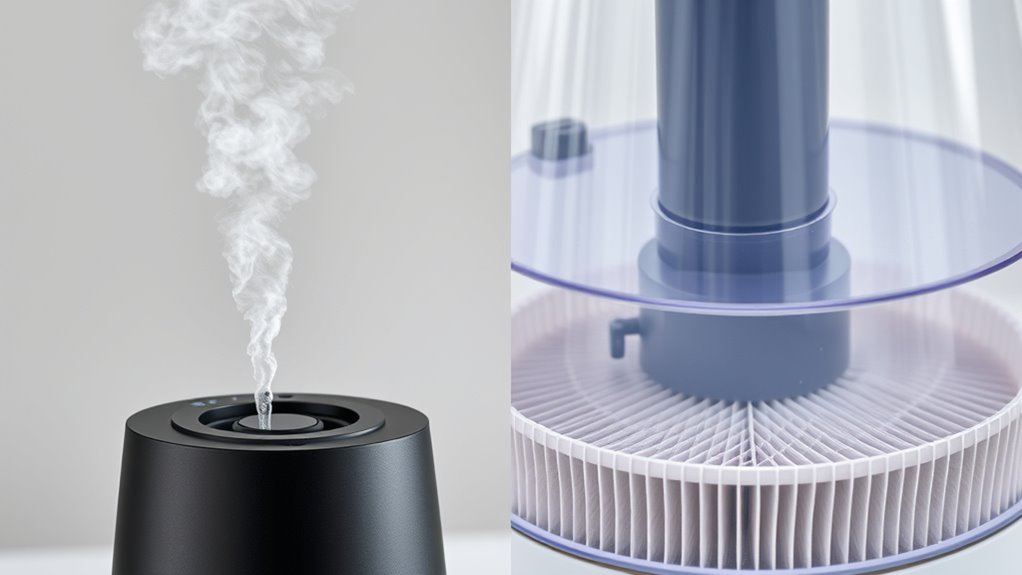
When comparing humidifier types, you’ll notice differences in how quickly they add moisture and the energy they use. Evaporative models often operate more efficiently and require less power, but they may need more regular maintenance. Understanding these factors helps you choose a humidifier that matches your needs for performance and longevity. Additionally, considering the essential oils used in diffusing humidifiers can enhance the overall air quality and health benefits of your device. For those seeking optimal performance, researching humidifier technology can provide insights into the latest innovations that improve efficiency and user experience. Being aware of the maintenance requirements of each type ensures you keep your humidifier functioning effectively over time. Moreover, selecting a model with proper filtration can help reduce allergens and contaminants, further improving air quality.
Humidification Speed Differences
Understanding the differences in humidification speed between various humidifier types is essential for choosing the right device for your needs. Ultrasonic humidifiers typically produce mist quickly, often reaching high humidity levels within minutes. Evaporative models tend to be slower but provide steady, consistent moisture output. Your choice depends on how fast you need the room humidified and the size of the space.
| Humidifier Type | Approximate Speed |
|---|---|
| Ultrasonic | Rapid, minutes to reach desired humidity |
| Evaporative | Slower, takes longer but steady |
| Suitable for | Quick humidification, small rooms |
| Better for | Continuous, consistent humidity |
Energy Consumption Levels
Have you ever wondered which humidifier type is more energy-efficient? Ultrasonic humidifiers generally use less power because they rely on high-frequency vibrations to produce mist, often consuming around 30-50 watts. Evaporative models tend to use more energy since they depend on a fan to evaporate water, typically consuming 50-100 watts. While ultrasonic units are more energy-friendly, they can sometimes run continuously without much cost increase. Evaporative humidifiers, however, may require more energy due to their fans and the need to keep the wick and filter moist. If you’re looking to save on power, ultrasonic humidifiers are a better choice. But remember, efficiency also depends on usage habits and room size, so choose based on your specific needs. Regular maintenance, including cleaning and replacing filters, can also improve efficiency and prolong the lifespan of your humidifier filter maintenance. Additionally, selecting models with energy-saving features can help reduce power consumption further. Monitoring power consumption levels can help you make more informed decisions about which humidifier suits your energy-saving goals. In some cases, investing in a unit with a smart control system can optimize energy use based on room conditions and user settings.
Maintenance and Longevity
Ultrasonic humidifiers generally require less maintenance and tend to last longer if properly cared for, making them a convenient choice for many users. Their simple design means fewer moving parts and less frequent cleaning, reducing the risk of mold and mineral buildup. Regularly changing the water and cleaning the tank prevents bacteria growth and maintains efficiency. In contrast, evaporative models have a wick filter that needs frequent replacement, which adds to ongoing maintenance. Over time, mineral deposits can clog evaporative units, potentially shortening their lifespan if not cleaned regularly. Both types benefit from consistent upkeep, but ultrasonic models often prove more durable with less effort. Proper maintenance extends the lifespan of either humidifier, ensuring you get the best performance and value from your investment. Additionally, understanding the maintenance costs of different models can help you choose the most suitable humidifier for your needs. Regular cleaning routines and using distilled water can further improve the performance and lifespan of your device. Recognizing the maintenance requirements of each type can help you plan for ongoing care and avoid unexpected repairs. Implementing proper cleaning techniques can significantly enhance the longevity and efficiency of your humidifier, especially when considering factors like mineral buildup which can impair functionality.
Common Challenges and Maintenance Needs

Maintaining a humidifier can be challenging because neglecting regular cleaning and upkeep often leads to mold growth, mineral buildup, and decreased efficiency. Mold can develop quickly in moist environments, posing health risks, while mineral deposits clog filters and vents, reducing output. You might notice musty odors or visible buildup if you skip cleaning. Evaporative models are prone to clogging due to mineral deposits from hard water, requiring frequent descaling. Ultrasonic units can disperse mineral dust into the air if not properly maintained, potentially affecting air quality. Regularly replacing filters, cleaning water tanks, and using distilled water can help prevent these issues. Staying proactive with basic maintenance ensures your humidifier functions effectively and remains safe for your living space. Additionally, understanding humidifier maintenance and proper cleaning techniques can significantly extend the device’s lifespan. Proper cleaning techniques are essential for preventing mold and mineral buildup, ensuring safe operation.
Why Regular Cleaning Is Essential for All Humidifiers
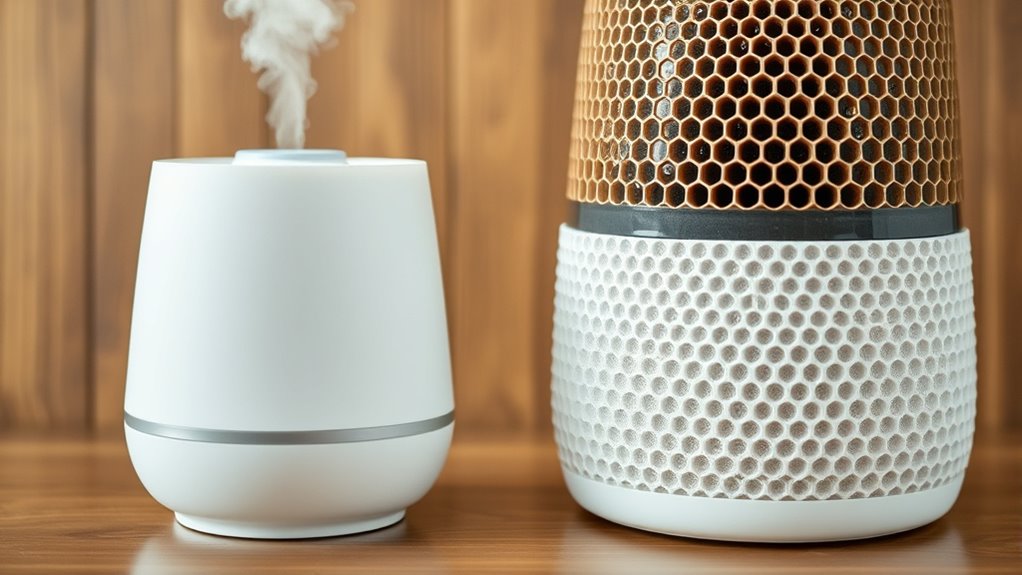
Neglecting regular cleaning can quickly turn a humidifier into a source of health issues and reduced performance. Bacteria, mold, and mineral deposits build up inside, releasing allergens and germs into the air you breathe. Over time, mineral buildup can clog components, decreasing efficiency and increasing energy use. Failure to clean also causes unpleasant odors and cloudy water. Regular cleaning guarantees your humidifier remains safe, effective, and hygienic. It prevents mold growth and mineral deposits that can compromise air quality and damage the device. By maintaining a cleaning routine, you extend your humidifier’s lifespan and protect your health. Skipping this step might seem minor, but it can lead to significant issues, making it essential to clean your humidifier often and thoroughly.
Tips for Properly Maintaining Your Humidifier
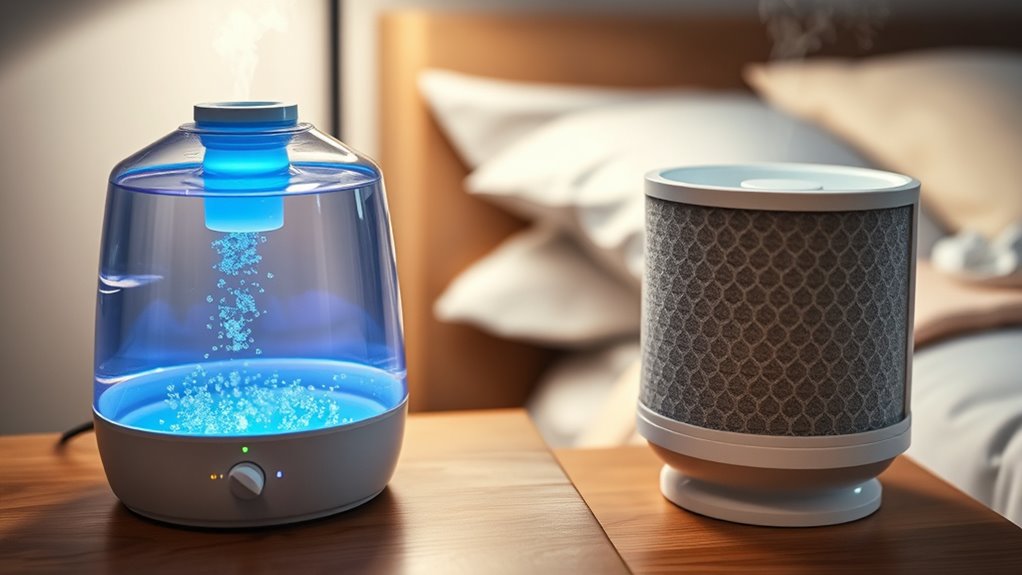
To keep your humidifier working well, stick to a regular cleaning schedule and clean it at least once a week. Always use distilled water to reduce mineral buildup and prevent bacteria growth. Don’t forget to replace filters often to guarantee peak performance and air quality.
Regular Cleaning Schedule
Establishing a regular cleaning schedule for your humidifier is essential to keep it functioning effectively and guarantee the air you breathe stays healthy. You should clean your device at least once a week, more often if you notice mineral buildup or mold. Start by unplugging the humidifier, then empty any remaining water. Use a mild detergent or vinegar to scrub all surfaces, including the tank and base, ensuring you remove any deposits or bacteria. Rinse thoroughly to eliminate residue. Dry all parts completely before reassembling to prevent mold growth. Regular cleaning prevents mold, bacteria, and mineral buildup, which can compromise air quality and damage your humidifier. Consistency is key to maintaining ideal performance and ensuring the air in your space remains clean and safe.
Use Distilled Water
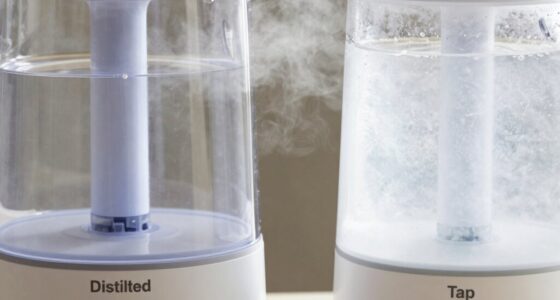
Using distilled water in your humidifier is one of the simplest ways to reduce mineral buildup and keep your device running smoothly. Regular tap water contains minerals that can leave deposits inside your humidifier, which may lead to clogs and decreased efficiency. By opting for purified water, you eliminate most mineral content, minimizing buildup and reducing the need for frequent cleaning. This not only extends the lifespan of your humidifier but also ensures the mist it produces remains clean and safe to breathe. Always refill your humidifier with fresh distilled water and avoid using tap water or mineral-rich sources. This simple step helps maintain peak performance and keeps your indoor air healthier. Remember, using the right water is a key part of proper humidifier maintenance.
Replace Filters Often
Replacing filters regularly is essential for keeping your humidifier functioning effectively and safely. Over time, filters collect dust, minerals, and bacteria, which can reduce efficiency and spread germs if not changed. Check your manufacturer’s instructions for recommended replacement intervals, usually every one to three months. Neglecting to replace filters can lead to mold growth, foul odors, and decreased air quality. When replacing, ensure you turn off and unplug the device first. Remove the old filter carefully, dispose of it properly, and install a new one according to the manufacturer’s directions. Regular filter changes maintain peak humidification, improve air purity, and extend your humidifier’s lifespan. Make replacing filters a routine part of your maintenance to enjoy clean, healthy moisture in your space.
Choosing the Right Humidifier for Your Home
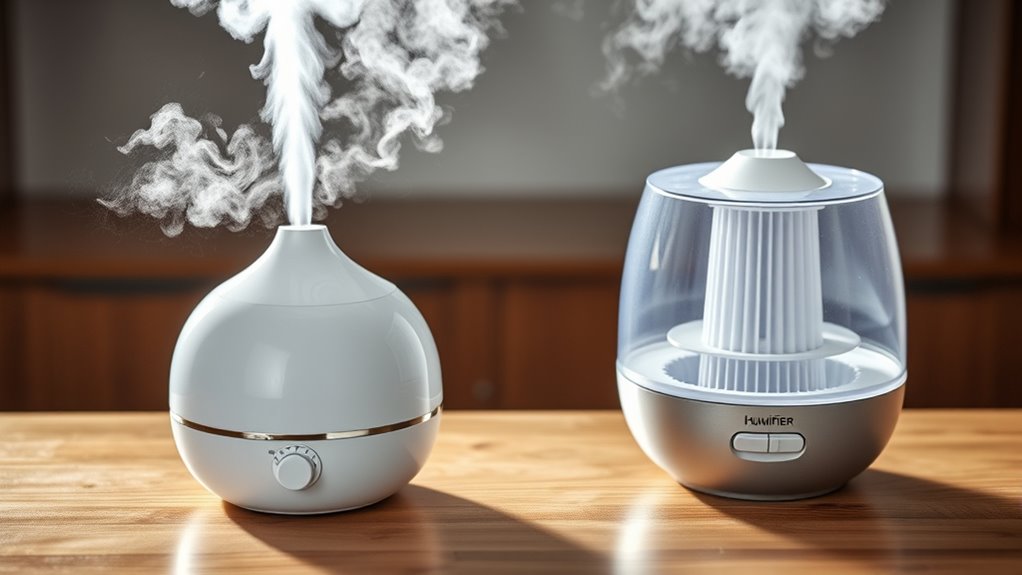
Choosing the right humidifier for your home depends on understanding your specific needs and the size of the space you want to humidify. If you have a small bedroom or office, a compact ultrasonic unit might be enough, offering quiet operation and quick humidity adjustments. For larger areas or whole-house humidification, an evaporative humidifier can cover more square footage and maintain steady humidity levels. Consider your lifestyle—if you prefer low maintenance, an evaporative model with a wick filter may be ideal, but it requires regular cleaning. Conversely, ultrasonic humidifiers are generally easier to clean but may produce white dust if not properly maintained. Matching your needs with the right type ensures effective, safe, and hassle-free humidification for your home.
Frequently Asked Questions
Which Humidifier Type Is Best for Allergy Sufferers?
You should choose an evaporative humidifier if you’re an allergy sufferer. These units use a wick filter to trap dust, mold, and allergens, preventing them from circulating in the air. Unlike ultrasonic models, they tend to produce less fine mist, which means fewer airborne particles. Regularly cleaning the filter and reservoir is essential to maintain their effectiveness and prevent mold buildup, keeping your air cleaner and healthier.
Can Ultrasonic Humidifiers Produce White Dust?
Yes, ultrasonic humidifiers can produce white dust. This happens when minerals in tap water are broken into tiny particles by the ultrasonic vibrations, then dispersed into the air along with moisture. To prevent this, you should use distilled or filtered water, which contains fewer minerals. Regular cleaning is also essential to avoid mold and bacteria buildup, ensuring healthier, cleaner humidity in your space.
How Often Should I Replace the Filter in an Evaporative Humidifier?
Think of your evaporative humidifier’s filter as the gatekeeper of clean air—change it regularly to keep everything running smoothly. You should replace the filter about every 1 to 3 months, depending on usage and water quality. Check it frequently for buildup or discoloration, and don’t wait too long, or it’ll become less effective and potentially disperse bacteria or mold. Staying vigilant keeps your humidifier working at its best.
Are Ultrasonic Humidifiers Quieter Than Evaporative Models?
Yes, ultrasonic humidifiers are generally quieter than evaporative models. They use high-frequency vibrations to produce mist, creating minimal noise, making them ideal for bedrooms or offices. Evaporative humidifiers rely on a fan to blow air through a wick filter, which can generate more noise. If noise level matters to you, ultrasonic units offer a quieter operation, allowing for a more peaceful environment while effectively humidifying your space.
What Safety Features Should I Look for in a Humidifier?
Think of safety features as your home’s shield, protecting you from unseen risks. You should look for automatic shut-off when water runs low, which prevents damage and overheating. Also, consider models with sturdy, leak-proof designs, and safety locks to keep children safe. An indicator light for water levels and a reliable filter system help maintain clean air. These features guarantee your humidifier works safely, giving you peace of mind every day.
Conclusion
So, whether you choose ultrasonic or evaporative, remember that cleaning is your secret weapon—otherwise, you might just be breathing in more than you bargained for. Ironically, the best humidifier won’t do its job if neglected, turning a simple device into a breeding ground for mold and bacteria. So, embrace the maintenance routine; after all, clean humidifiers are the real heroes in your home’s comfort, not the fancy tech or high efficiency.