Using only square footage to size your air cleaner can lead to poor results, as it ignores ceiling height and room volume. Higher ceilings mean more air needs filtering, requiring a more powerful unit. Look at airflow ratings like CADR and consider the actual room volume to choose the right size. By understanding these factors, you’ll select an efficient air purifier. Keep exploring how these elements can improve your space’s air quality.
Key Takeaways
- Consider ceiling height and room volume, not just square footage, to select the right air purifier size.
- Check CADR and airflow ratings to match the purifier’s capacity with your room’s air volume.
- Proper placement and airflow circulation are crucial for effective air cleaning, regardless of room size.
- Use room volume calculations (length x width x height) for accurate device sizing instead of relying solely on square footage.
- Prioritize filter type and device design to optimize performance based on specific pollutants and room dynamics.
Why Square Footage Isn’t Always Enough
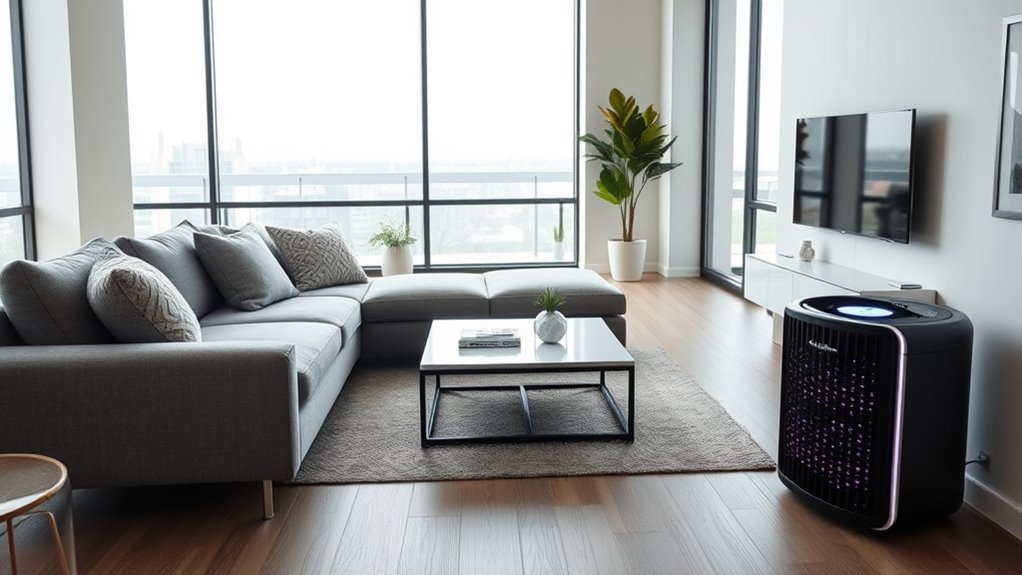
While measuring a room’s square footage provides a useful starting point, it doesn’t tell the whole story when choosing an air cleaner. The size of the space is important, but other factors matter too. For example, ceiling height affects the total volume of air that needs filtering. A room with high ceilings holds more air than a standard-height room of the same square footage. Additionally, furniture, curtains, and other obstructions can impact airflow and filtration efficiency. If you only rely on square footage, you might select a unit that’s too small, leaving your space inadequately purified. Conversely, choosing one that’s too large could be unnecessarily expensive and loud. To get the best air quality, you need to take into account these additional variables alongside square footage, including air volume calculations to ensure proper sizing. Considering air circulation within the room can also help improve overall filtration effectiveness. Proper airflow management ensures that the cleaned air reaches all areas efficiently, maximizing the benefits of your air purifier. Moreover, understanding the air exchange rate can help you select a model that effectively maintains optimal air quality levels in your specific space.
The Importance of Ceiling Height and Room Volume

Square footage alone doesn’t tell the full story when choosing an air cleaner; you also need to contemplate ceiling height and room volume. These factors influence how much air needs filtering and how effectively the unit can clean the space. Higher ceilings mean more air to circulate, requiring a more powerful cleaner. Room volume combines length, width, and height, giving a true sense of space. Consider these points:
Choosing the right air cleaner requires considering ceiling height and room volume, not just square footage.
- A room with tall ceilings needs a unit capable of handling increased volume.
- Low ceilings may allow smaller units to be effective.
- Volume directly impacts air exchange rates and filtration efficiency.
- Ignoring ceiling height can lead to underperforming air cleaners that don’t circulate enough air.
- Room volume is a key measurement that helps determine the appropriate air cleaner capacity for your space, especially when understanding air exchange rates to optimize air quality.
- Evaluating air quality needs based on room volume ensures you select a unit that maintains healthy indoor air standards. Additionally, incorporating knowledge of indoor air quality factors can further refine your choice to achieve optimal results. For example, understanding how air purifier maintenance impacts performance can help you choose a unit that remains effective over time.
Understanding these elements ensures you pick an air cleaner suited to your entire room’s size.
Understanding Airflow and CADR Ratings

Understanding airflow and CADR ratings is essential because they directly measure how effectively an air cleaner can clean a space. CADR, or Clean Air Delivery Rate, indicates how much air an air purifier filters per minute, factoring in dust, smoke, and pollen removal. Higher CADR means faster, more efficient cleaning. Airflow, measured in cubic feet per minute (CFM), shows how much air moves through the device. To compare models effectively, consider both ratings together. Here’s a quick overview:
| Feature | Description | Ideal for |
|---|---|---|
| CADR Rating | Volume of clean air delivered per minute | Larger, polluted areas |
| Airflow (CFM) | Air moving capacity of the purifier | Ensuring proper circulation |
| Filter Type | The filtration technology used | Specific pollutants targeted |
| Room Size | Recommended space based on ratings | Match for your room |
| Noise Level | Sound produced during operation | Quiet environments |
This understanding helps you pick an air cleaner that truly fits your space. Additionally, understanding airflow dynamics can help optimize placement for maximum efficiency, ensuring the air cleaner performs effectively within its rated room size. Proper assessment of air exchange rate is also crucial for maintaining optimal air quality in your space.
Factors That Influence Air Purifier Effectiveness

Several factors can substantially influence how effective an air purifier is in cleaning your space. First, the location matters; placing it in a central spot improves airflow and coverage. Second, the filter type determines its ability to target specific pollutants—HEPA filters are best for allergens and particles. Third, maintenance plays a role; regular filter changes prevent efficiency loss. Fourth, the air circulation within your room affects performance; poor circulation can create stagnant areas where pollutants linger. Paying attention to these factors ensures your air purifier works ideally. Remember, even the best unit can underperform if these aspects aren’t considered. Proper placement, suitable filters, consistent upkeep, and good airflow are critical to maximizing your air purifier’s effectiveness. Additionally, understanding the room size and matching it appropriately to your unit’s capacity ensures optimal performance since proper sizing enhances efficiency. To determine the best fit, consider air purifier sizing guidelines, which help match your unit to your space for optimal results. Recognizing the importance of natural ventilation can also significantly impact overall air quality and purifier effectiveness. Furthermore, understanding the air quality index can help you monitor improvements and decide when to adjust or replace your unit. Moreover, awareness of unit lifespan can guide timely replacements to maintain peak performance.
How to Choose the Right Air Cleaner for Your Space
Choosing the right air cleaner for your space starts with evaluating your specific needs and room size. First, measure your room accurately, considering shape and furniture that might affect airflow. Next, determine the air cleaner’s Clean Air Delivery Rate (CADR) and match it to your room size; a higher CADR means better purification for larger spaces. Think about your main concerns—are you battling allergies, smoke, or odors? This will guide you toward filters like HEPA or activated carbon. Also, consider noise levels and ease of use. For larger rooms, opt for a model designed for bigger spaces, while smaller units suit bedrooms or offices. Making an informed choice guarantees your air cleaner works efficiently and improves your indoor air quality effectively. Additionally, understanding vetted wave and wind concepts can help optimize airflow and filtration efficiency within your space, ensuring you select an air purifier that aligns with air circulation principles. Recognizing the importance of airflow dynamics can further enhance the effectiveness of your chosen device, making sure it distributes purified air evenly throughout the room. Incorporating craftsmanship and design insights can also ensure that your air purifier complements your space aesthetically while functioning optimally. Furthermore, being aware of airflow patterns helps in positioning the unit correctly for maximum coverage and performance.
Frequently Asked Questions
How Does Humidity Affect Air Purifier Performance?
Humidity impacts your air purifier’s performance by affecting how well it captures particles. High humidity can cause particles to clump together, making your purifier work harder and reducing efficiency. Conversely, low humidity may lead to dry air that irritates your respiratory system. To keep your purifier working at its best, monitor humidity levels and consider using a humidifier or dehumidifier as needed, ensuring better air quality indoors.
Can Multiple Small Purifiers Outperform One Large Unit?
Multiple small purifiers can outperform a single large one if you strategically place them around your space. While a large unit covers a bigger area, smaller units target specific zones, improving overall air quality. You get faster, more thorough filtration, especially in rooms with varying conditions. Plus, if one breaks down, others keep working, ensuring continuous clean air. This setup offers flexibility and efficiency you might not get from just one large purifier.
What Maintenance Is Needed for Optimal Effectiveness?
You should regularly check and replace filters as recommended by the manufacturer, usually every 3 to 6 months. Keep the air cleaner clean by wiping down external surfaces and ensuring vents aren’t blocked. Change filters more often if you have pets, allergies, or high pollution levels. Also, inspect for dust buildup and clean internal parts periodically. Proper maintenance keeps your air cleaner running efficiently, ensuring cleaner, healthier air in your space.
Are There Specific Filters Better for Allergies?
Did you know HEPA filters remove up to 99.97% of airborne particles? For allergies, you should look for air cleaners with HEPA filters, as they effectively trap pollen, pet dander, and dust mites. Activated carbon filters can also help reduce odors and VOCs. Combining both filters in your unit maximizes allergy relief, so choose an air cleaner that includes HEPA and activated carbon for the best results.
How Does Room Layout Impact Air Circulation and Purification?
Your room layout greatly impacts air circulation and purification. You should position your air cleaner away from walls and furniture to allow for proper airflow. Open windows when possible to enhance natural ventilation. Avoid cluttered areas that block airflow, and place the purifier centrally for maximum coverage. By optimizing placement and minimizing obstructions, you guarantee better air circulation, which helps your air cleaner more effectively remove allergens and pollutants.
Conclusion
Don’t just rely on square footage when picking an air purifier. The truth is, room volume and ceiling height matter just as much—sometimes more. Airflow and CADR ratings give you a clearer picture of effectiveness. So, challenge the common myth: size isn’t everything. By considering these factors, you’ll choose a cleaner that truly fits your space and keeps the air fresh and healthy. It’s time to think beyond square feet for better results.