
PM2.5 refers to tiny particles that can penetrate deep into your lungs and bloodstream, posing health risks. During dinner, levels spike because cooking releases smoke, grease, and combustion particles, especially with poor ventilation. These particles linger indoors, increasing your exposure. Improving airflow, using air purifiers, and turning on exhaust fans help reduce this risk. If you want to learn more about protecting your home’s air quality, keep exploring how to minimize PM2.5 during meals.
Key Takeaways
- PM2.5 are tiny particles that can penetrate deep into lungs and bloodstream, affecting health.
- Indoor PM2.5 levels rise during cooking due to smoke, grease, and combustion particles released.
- Poor ventilation traps PM2.5, causing concentrations to spike during mealtime.
- Using exhaust fans, opening windows, and air purifiers help reduce indoor PM2.5 during cooking.
- Monitoring and controlling sources of indoor pollution protect your home’s air quality and health.
Understanding PM2.5 and Its Impact on Indoor Air Quality

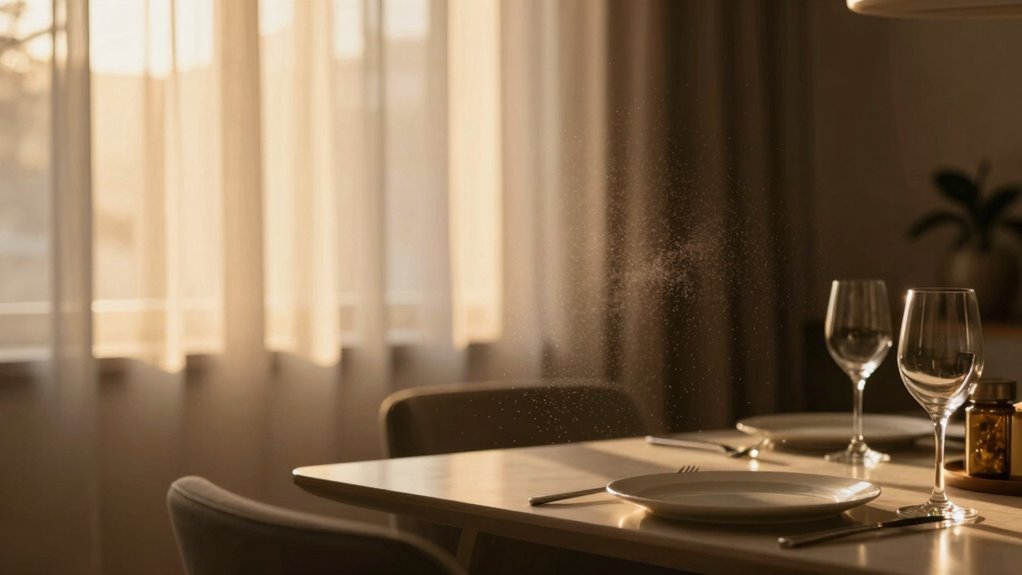
Understanding PM2.5 is essential because these tiny particles can easily penetrate deep into your lungs and even bloodstream, posing serious health risks. When inhaled, they bypass your body’s natural defenses, leading to respiratory issues, cardiovascular problems, and other health concerns. Because of their small size—less than 2.5 micrometers—PM2.5 particles can linger in indoor air for hours or even days, especially if your home isn’t well-ventilated. This means exposure can happen unnoticed, affecting your quality of life and long-term health. Recognizing how these particles impact your indoor air quality helps you take steps to reduce their presence. Improving ventilation, managing sources of indoor pollution, and using air purifiers are effective ways to protect yourself and your family from harmful PM2.5 exposure. Understanding particle size is crucial in assessing how these pollutants behave indoors. Maintaining good indoor air quality is especially important because indoor pollution sources can sometimes contribute significantly to PM2.5 levels, making indoor environments potentially more hazardous than outdoor air. Additionally, indoor air circulation plays a key role in dispersing or concentrating these particles within your living space. Proper air filtration can further help in reducing PM2.5 levels and improving overall air quality indoors. Being aware of air purifier maintenance and ensuring filters are regularly checked and replaced can make a significant difference in controlling indoor PM2.5 levels.
Common Sources of PM2.5 in Residential Environments
Many common activities and household items release PM2.5 particles into the indoor environment, making it important to identify and control these sources. Burning candles, using fireplaces, and smoking indoors generate fine particles that can linger in the air. Certain cleaning products and air fresheners also contribute to PM2.5 levels through chemical emissions. Additionally, dust from carpets, upholstery, and pets can become airborne, especially when disturbed. Household appliances like space heaters and stoves may produce particulate matter, particularly if poorly maintained. Even activities like vacuuming or sweeping can temporarily increase PM2.5 concentrations. Recognizing these sources helps you take steps to reduce indoor pollution, improving air quality and protecting your health. Managing these common contributors is key to maintaining a safer indoor environment. Understanding particle sources is essential for effectively reducing indoor air pollution and safeguarding your well-being. For example, implementing air quality management techniques can significantly decrease indoor PM2.5 levels. Reducing indoor particulate matter is also crucial, as it can have serious health implications over time. Being aware of indoor air pollution sources empowers you to make informed decisions for a healthier home environment, especially since some sources are more prevalent during specific times or activities, such as dinner preparation.
Why PM2.5 Levels Rise During Cooking and Meal Preparation
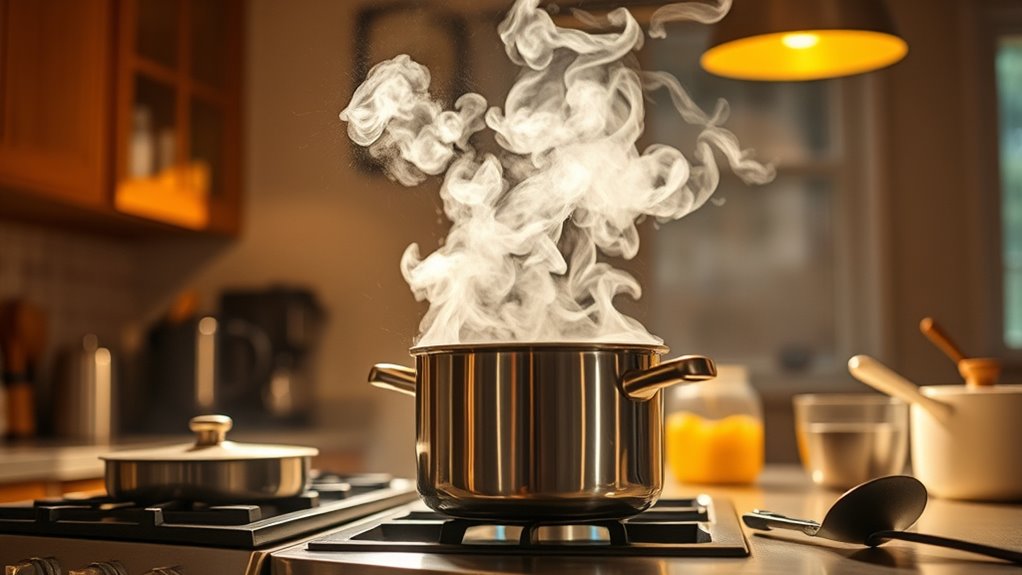
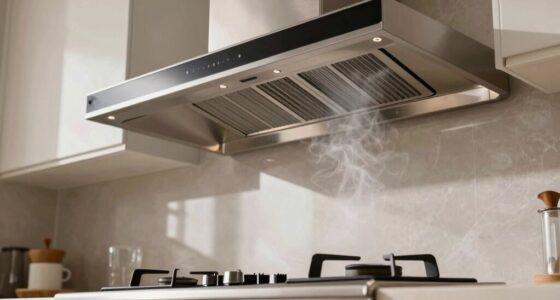
Cooking and meal preparation often cause PM2.5 levels to spike because the heat and combustion processes release tiny particles into the air. When you fry, sauté, or broil food, high temperatures generate smoke and grease particles that become airborne. Gas stoves produce combustion byproducts, such as nitrogen oxides and fine particles, which increase PM2.5 levels. Even boiling or steaming can contribute through the release of moisture and organic compounds. Additionally, certain ingredients, like meats or spices, can produce more particles during cooking. The combination of heat, combustion, and ingredients creates a temporary surge in airborne PM2.5. Without proper ventilation, these particles linger, raising indoor pollution levels and potentially impacting your health and comfort during and after meal prep. Connected equipment such as range hoods and air purifiers can help mitigate these spikes and improve indoor air quality. Regularly ventilating your kitchen by opening windows or using exhaust fans can further reduce indoor PM2.5 levels during cooking.
Health Risks Associated With Elevated PM2.5 Exposure
Exposure to elevated PM2.5 levels during cooking can pose serious health risks, especially if it happens regularly or over long periods. Breathing in these fine particles can irritate your lungs, leading to coughing, wheezing, and shortness of breath. Over time, it increases your risk of developing respiratory conditions like asthma and chronic bronchitis. PM2.5 particles can also enter your bloodstream, causing inflammation and raising your chances of heart disease and stroke. Children, the elderly, and those with existing health issues are particularly vulnerable. Consistent exposure may impair lung development in children and worsen pre-existing conditions. Understanding filtration systems and how they reduce PM2.5 levels at home is vital to protecting yourself from high PM2.5 levels, especially during meal prep, which is *vital* to maintaining long-term health and reducing the risk of serious illnesses. Incorporating air quality monitoring can help you stay aware of fluctuations in PM2.5 and take timely action to improve indoor air. Additionally, ventilation strategies can significantly reduce indoor PM2.5 concentrations during cooking periods. Recognizing indoor air quality as a critical factor allows homeowners to implement targeted solutions for safer living environments.
Practical Strategies to Reduce PM2.5 During Mealtime

To effectively reduce PM2.5 levels during mealtime, you can implement simple but impactful strategies that improve ventilation and minimize particle buildup. First, turn on exhaust fans or range hoods while cooking to vent out airborne particles. Keep windows open if weather permits, creating cross-ventilation to dilute indoor pollutants. Use air purifiers with HEPA filters near the kitchen to trap fine particles. Lastly, avoid overcrowding the kitchen, which can trap smoke and particles indoors. These steps help clear PM2.5 from the air, making your home safer during and after cooking. Remember, consistent use of ventilation and purification is key to keeping indoor air quality high during mealtime. Proper ventilation practices can significantly improve indoor air quality and reduce particle concentration. Implementing these strategies can substantially reduce your exposure to harmful particles and improve indoor air quality, especially when combining effective airflow management with natural landscaping techniques that support cleaner air. Additionally, maintaining regular air filtration can further enhance air quality by continuously removing residual particles.
Frequently Asked Questions
How Can I Measure PM2.5 Levels Accurately at Home?
You can measure PM2.5 levels accurately at home by using a reliable air quality monitor designed for fine particulate matter. Look for devices with laser sensors and real-time readings. Place the monitor in common areas and avoid obstructions. Regularly calibrate it if possible, and keep track of your readings to identify pollution spikes. This proactive approach helps you maintain a healthier indoor environment and respond quickly to air quality issues.
Are Air Purifiers Effective Against PM2.5 During Cooking?
Imagine your home as a sanctuary threatened by invisible enemies during cooking. Yes, air purifiers are effective against PM2.5; they trap tiny particles and improve air quality while you cook. Choose a purifier with a HEPA filter for the best defense. Keep windows open or use exhaust fans to boost their effectiveness. Together, these steps can protect your family from harmful pollutants hiding in the air.
What Specific Cooking Methods Produce the Most PM2.5?
Frying, grilling, and sautéing produce the most PM2.5. When you cook at high temperatures, fats and oils break down into tiny particles that become airborne. Charbroiling or using a grill also releases significant smoke and particles. To reduce PM2.5, you should use lower heat settings, vent your kitchen well, and consider using an air purifier during these cooking methods.
Do Certain Household Items Increase Indoor PM2.5 Levels?
Certain household items can definitely increase indoor PM2.5 levels. For example, burning candles releases tiny particles into the air, especially if they contain synthetic fragrances or paraffin wax. Imagine lighting candles during a cozy evening—those particles can linger and worsen air quality. To keep your home healthier, choose unscented, natural candles or avoid burning candles altogether. Ventilate well to reduce particle buildup and improve indoor air quality.
Can Plants Help Reduce PM2.5 Indoors?
Plants can help reduce indoor PM2.5 levels by absorbing some pollutants through their leaves and roots, improving air quality. However, they aren’t a complete solution and won’t eliminate all airborne particles. To maximize benefits, place a variety of healthy, well-maintained plants in your home, especially in rooms where you cook or spend a lot of time. Remember, good ventilation and air purifiers are essential for effectively lowering PM2.5.
Conclusion
By staying mindful of PM2.5, especially during meals, you’re gently nurturing a healthier home. Simple habits like proper ventilation and choosing safer cooking methods can make a big difference, turning mealtime into a cozy, worry-free experience. Remember, a little extra care during cooking helps keep the air fresh and your loved ones happy. With these small steps, you’re creating a warm, inviting space where everyone can breathe easy and enjoy every bite.