To remove cooking smoke effectively, your kitchen needs a properly installed ventilation system. Range hoods and exhaust fans work by pulling smoke, heat, and odors away from your cooktop, either venting outdoors or recirculating filtered air. Proper placement—like mounting a hood 24-30 inches above the stove—ensures they capture contaminants at their source. Regular maintenance and choosing the right power level keep your system efficient. Keep exploring to learn how to optimize this for your kitchen.
Key Takeaways
- Properly installed range hoods or exhaust fans positioned 24-30 inches above the cooktop effectively capture and remove smoke and odors.
- Vented systems exhaust contaminated air outside, providing superior removal compared to recirculating systems that filter and recirculate air.
- Short, straight ductwork and sealed joints optimize airflow and prevent leaks, enhancing smoke removal efficiency.
- Regular cleaning of filters, ductwork, and vent components maintains optimal system performance and indoor air quality.
- Proper fan size and capacity, matched to kitchen size and cooking habits, are essential for effective removal of cooking smoke.
Understanding Cooking Smoke and Its Components
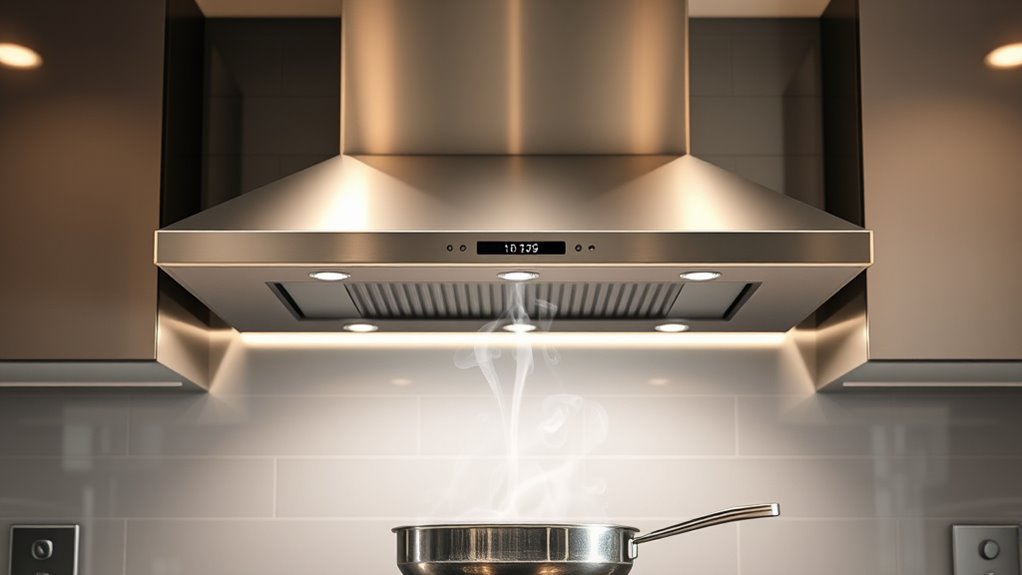
Cooking smoke is a mixture of various particles and gases produced when you heat food. As you cook, tiny particles like grease, oil droplets, and burnt food debris rise into the air. These particles can cling to surfaces or remain suspended in the air, creating a haze. Gases such as carbon monoxide, nitrogen oxides, and volatile organic compounds (VOCs) are also released, which can impact indoor air quality and health. Some particles are microscopic, making them easy to breathe in and potentially harmful over time. Understanding what’s in cooking smoke helps you grasp why proper ventilation is necessary. It’s not just about removing odors; it’s about reducing airborne pollutants that can cause irritation or health issues. Recognizing these components is the first step toward effective kitchen air management.
How Range Hoods Work to Capture and Ventilate Smoke
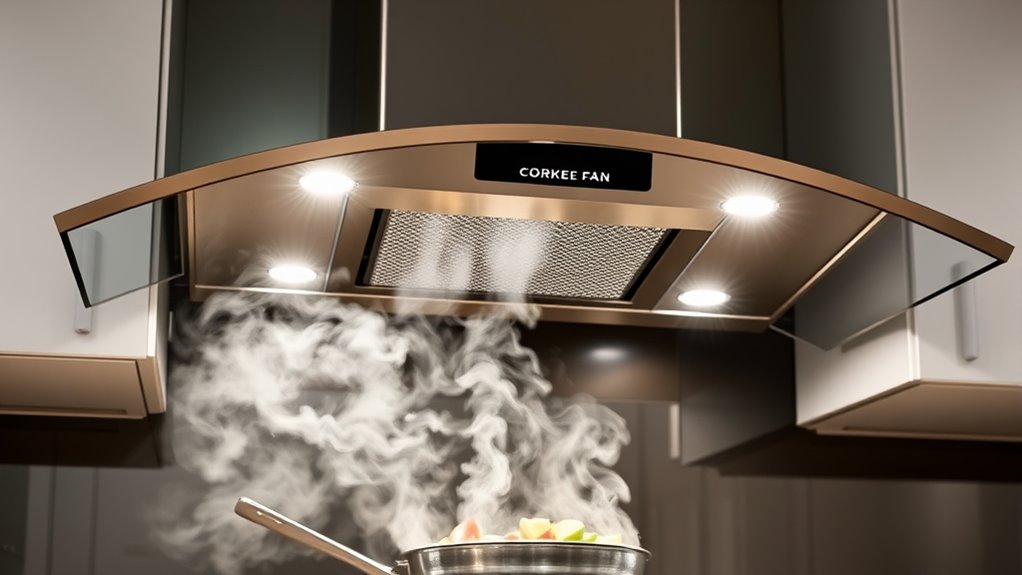
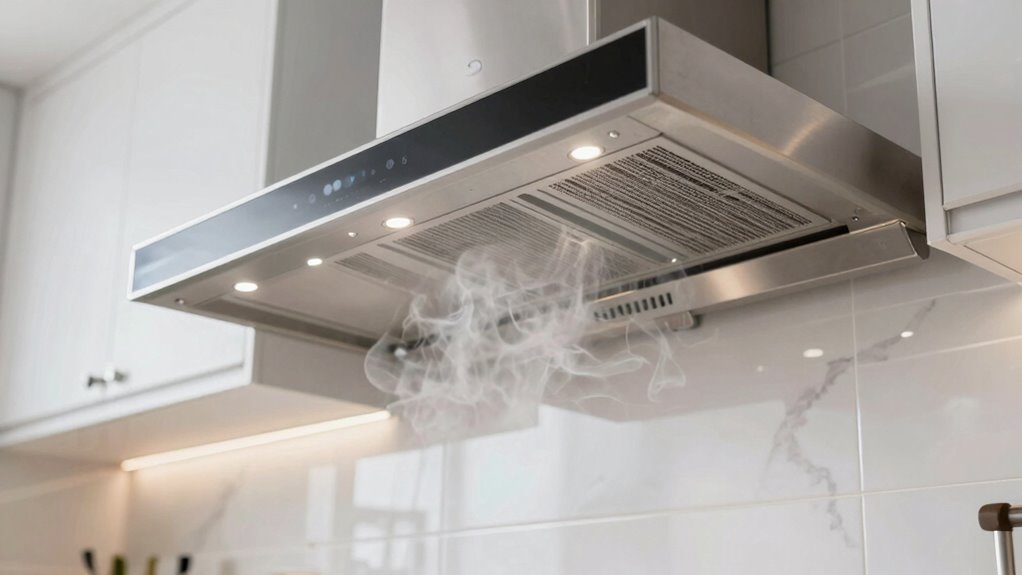
Range hoods are designed to effectively capture and remove smoke, odors, and airborne pollutants generated during cooking. They do this by creating airflow that pulls contaminants away from your cooking surface. The hood’s fan generates suction, drawing in smoke and fumes through a filter or baffle system. The filtered air is then exhausted outside or recirculated after passing through a charcoal filter. To understand how this works, consider the following:
| Component | Function |
|---|---|
| Fan | Creates airflow to pull smoke into the hood |
| Filter/Baffle | Traps grease, particles, and odors |
| Exhaust Path | Vent directs pollutants outside or filters them back in |
| Recirculation Option | Uses charcoal filters to clean air without outdoor venting |
| Airflow Direction | Ensures contaminants move away from your cooking area |
Additionally, proper maintenance of these components is essential to keep the ventilation system working efficiently and effectively for optimal performance. Regularly cleaning or replacing filters can prevent buildup and ensure consistent airflow, which is crucial for efficient smoke removal. Proper airflow management and filter maintenance are key factors in maintaining a clean and healthy kitchen environment. Understanding the causes of airborne pollutants can help in choosing the right ventilation system for your needs. Furthermore, selecting a range hood with the appropriate airflow capacity can significantly improve its effectiveness in smoke extraction.
The Role of Exhaust Fans in Kitchen Ventilation
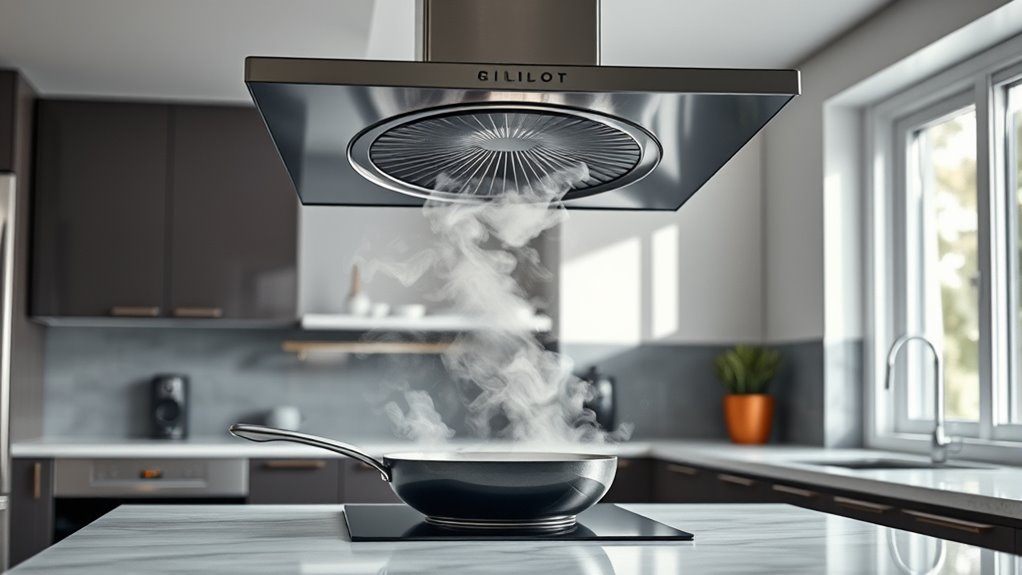
Exhaust fans play a vital role in keeping your kitchen fresh and smoke-free. You can choose from different types like wall-mounted or ceiling-mounted fans, depending on your space. Proper installation guarantees these fans work effectively, so knowing the right tips is necessary. Incorporating modern connected cooking technology can further optimize your ventilation system for better smoke removal and air quality. Additionally, understanding airflow optimization techniques can enhance the performance of your exhaust system and ensure your kitchen remains comfortable and odor-free. Implementing proper duct design is crucial for maximizing airflow efficiency and preventing backdrafts that can compromise ventilation. Moreover, selecting the right security zone info can help protect your home and ensure continuous, efficient operation of your ventilation system.
Types of Exhaust Fans
Choosing the right type of exhaust fan is essential for effective kitchen ventilation. There are several options, each suited to different needs. Wall-mounted fans are common and easy to install, venting directly outside to remove smoke and odors. Ceiling-mounted fans are discreet and ideal for larger kitchens, providing a broad reach. Range hoods, which sit directly above your cooktop, combine fans with filters to trap grease and particles before exhausting air. Inline fans are installed within ductwork, offering quieter operation and high airflow, especially in larger spaces. Proper system sizing and installation are crucial to ensure optimal performance and safety. Additionally, understanding the importance of air exchange rate helps in selecting the most suitable ventilation system for your kitchen. To maximize efficiency, it’s important to consider ventilation capacity and how it matches your cooking activities. Selecting a system with appropriate ventilation effectiveness can significantly improve indoor air quality and comfort. Furthermore, choosing a system with energy efficiency can help reduce operating costs over time.
Proper Installation Tips
Proper installation of your kitchen ventilation system is essential to guarantee it works efficiently and safely. First, make certain your exhaust fan is positioned directly above your cooktop or stove to capture smoke and fumes effectively. Make sure the ductwork is as short and straight as possible, reducing airflow resistance. Seal all joints tightly to prevent leaks that can compromise ventilation. Verify that the fan’s capacity matches your kitchen size and cooking habits. If venting outdoors, confirm the vent cap is clear of obstructions and properly secured. For indoor vents, ensure proper filtration to prevent grease buildup. Regular maintenance of ventilation systems is crucial to keep your fan operating at peak efficiency and extend its lifespan. Additionally, understanding the importance of ventilation system maintenance can extend the lifespan and efficiency of your setup. Confirm that electrical wiring is correct and meets safety standards, as safe electrical connections are vital for preventing hazards. Proper installation maximizes your fan’s performance, ensuring a cleaner, healthier kitchen environment. Ensuring proper installation techniques can also help prevent future issues and costly repairs. Additionally, consulting professional installation services can help identify potential issues early and optimize your system’s performance.
Differences Between Vented and Recirculating Systems
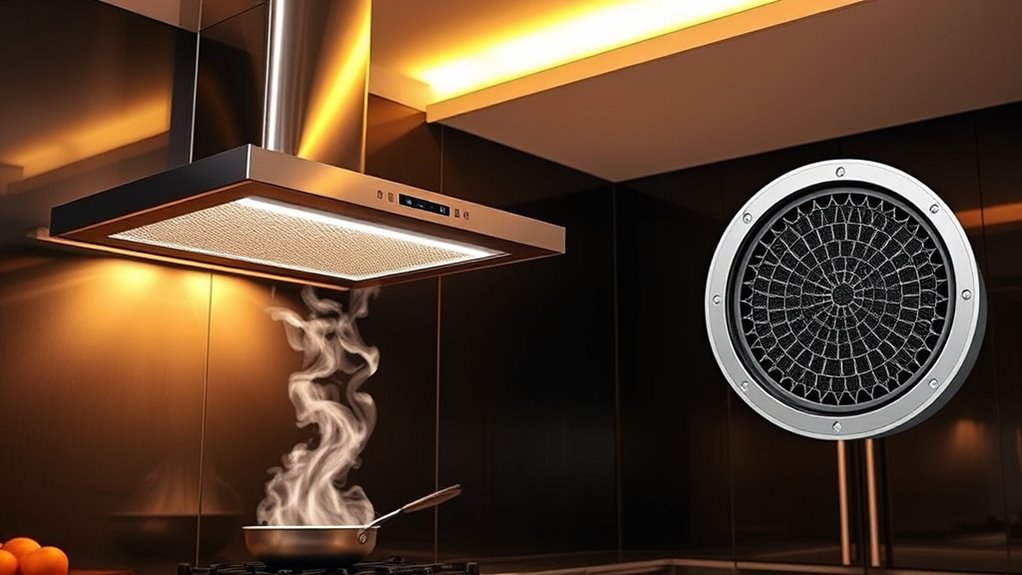
Vented and recirculating kitchen ventilation systems serve the same purpose of removing smoke, odors, and airborne grease, but they operate in fundamentally different ways. Vented systems exhaust air directly outside through ducts, effectively clearing smoke and moisture from your kitchen. This setup requires ductwork and proper installation but provides superior air removal. Recirculating systems, on the other hand, filter air through built-in charcoal or grease filters and then recirculate it back into the room. They don’t need ductwork, making installation easier, but they can be less effective at removing strong odors and high levels of smoke. Your choice depends on your kitchen layout, the level of ventilation needed, and your willingness to maintain filters. Both systems have pros and cons, so consider your specific needs carefully. Understanding airflow dynamics can help you choose the most effective system for your kitchen.
Importance of Proper Ventilation Design and Placement

You need to ensure where you place vents for maximum efficiency. Proper ventilation design ensures smoke, heat, and odors are effectively removed from your kitchen. When you focus on optimal vent placement and thoughtful design, your space stays cleaner and more comfortable. Considering safe installation practices helps prevent issues like leaks or improper airflow that can compromise your ventilation effectiveness. Understanding quality assurance principles can also help in selecting durable and reliable ventilation components. Additionally, selecting appropriate materials that withstand kitchen conditions can extend the lifespan of your ventilation system. Incorporating proper airflow management techniques can further enhance overall system performance and longevity.
Optimal Vent Placement
Choosing the right location for kitchen vents is essential because it directly affects how effectively fumes, smoke, and odors are removed. Proper placement guarantees your vent captures contaminants at their source and prevents them from spreading. Typically, vents should be installed directly above the cooktop or stove, where smoke and fumes originate. Consider factors like ceiling height, the vent’s distance from the cooking surface, and airflow patterns in your kitchen. An improperly placed vent can reduce efficiency and leave you with lingering odors. Use the table below to guide your placement:
| Placement Tip | Why It Matters | Best Practice |
|---|---|---|
| Above the cooktop | Captures fumes at source | Install 24-30 inches above surface |
| Central location | Ensures even removal | Position vent centrally in cooking area |
| Avoid ceiling corners | Prevents dead zones | Mount vents away from walls or corners |
Effective Ventilation Design
Proper ventilation design goes beyond just placing vents in the right spots; it guarantees that airflow effectively removes contaminants and maintains air quality. When designing your kitchen ventilation system, consider how air moves through the space. Proper placement of vents and hoods ensures smoke, grease, and odors are captured before dispersing. You should also think about airflow patterns—creating a consistent flow that pulls pollutants away from your cooking zone. An effective design minimizes dead zones where smoke might linger. Additionally, consider the size and capacity of the vent system; it must match your cooking activities and kitchen size. When ventilation is well-planned, it not only improves air quality but also enhances comfort, making your cooking environment healthier and more enjoyable.
Choosing the Right Fan Size and Power for Your Kitchen
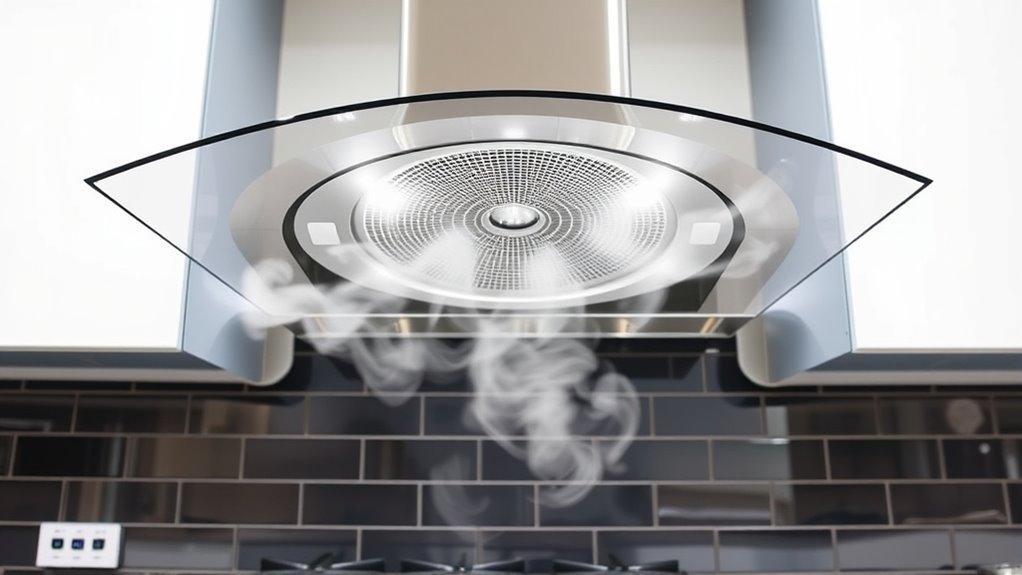
Selecting the right fan size and power is essential to effectively remove smoke, odors, and excess heat from your kitchen. To do this, consider these key factors:
- Cubic Feet per Minute (CFM): Think of CFM as the fan’s capacity to clear air—larger kitchens need higher CFM to keep the space fresh.
- Kitchen Size: Visualize your space—if it’s spacious, a more powerful fan ensures smoke doesn’t linger.
- Cooking Habits: If you frequently fry or cook smoky dishes, opt for a fan with increased power to handle the extra fumes.
Maintenance Tips for Effective Kitchen Ventilation
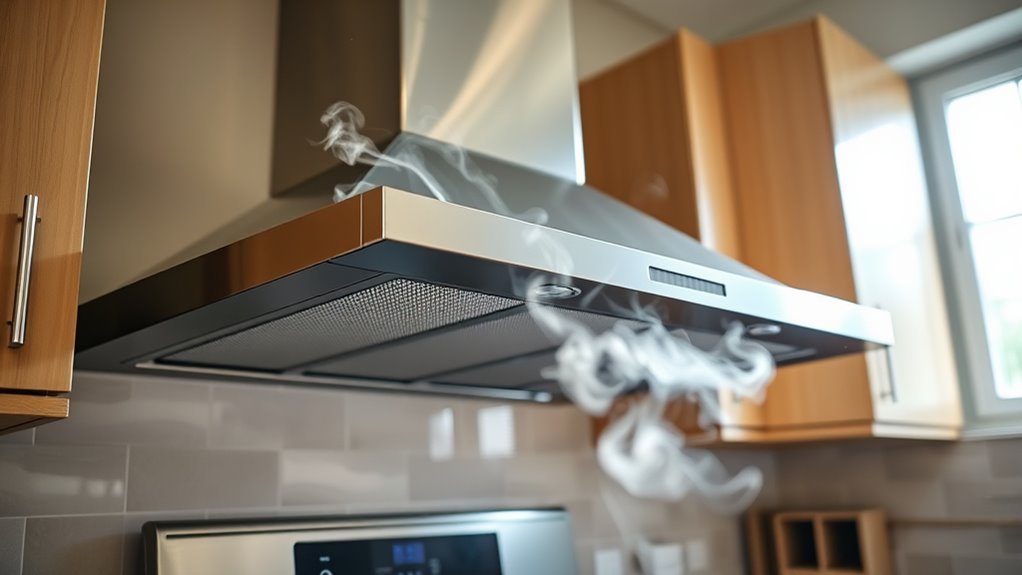
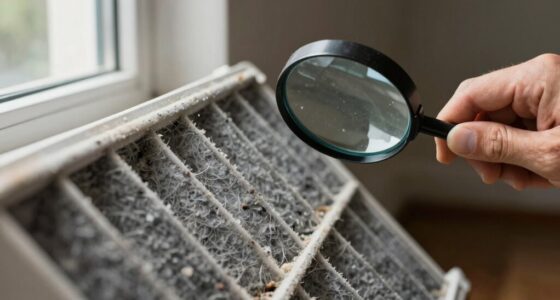
Regular maintenance of your kitchen ventilation system guarantees it operates at peak efficiency, keeping your space free of smoke, odors, and grease buildup. Start by regularly cleaning or replacing filters, as clogged filters can reduce airflow and trap odors. Inspect the ductwork for obstructions or grease accumulation, and clean it annually to prevent fire hazards and maintain airflow. Ensure the fan blades are free from dust and grease—wiping them down with a damp cloth works well. Check that the vent covers and screens are clean and unobstructed. Tighten any loose connections and listen for unusual noises, which may indicate mechanical issues. Proper maintenance not only improves air quality but also extends your system’s lifespan, guaranteeing it continues to remove smoke and odors effectively.
Alternative Ventilation Solutions and Innovations
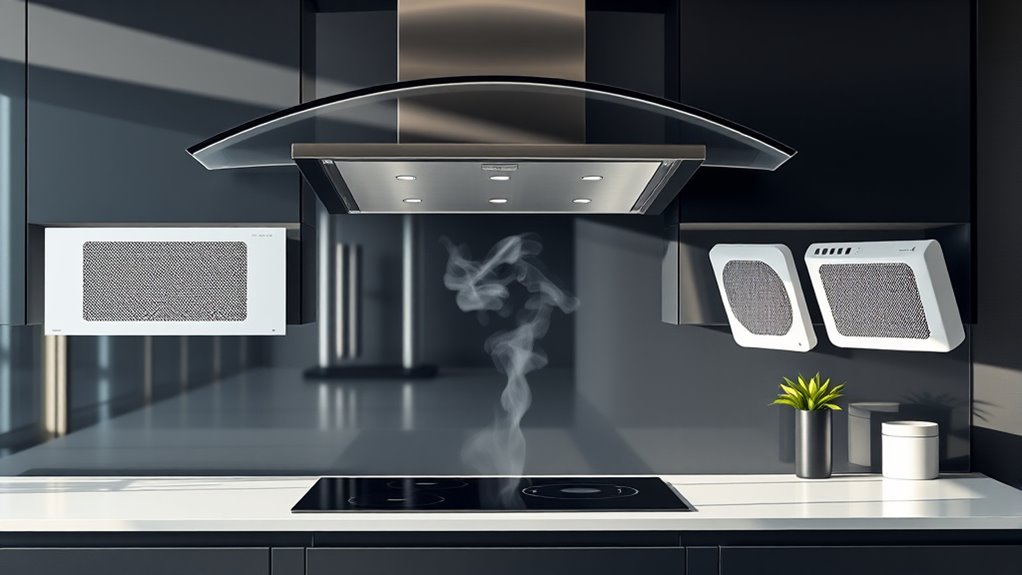
As technology advances, innovative ventilation solutions are emerging to enhance kitchen air quality beyond traditional range hoods and exhaust fans. These modern options are designed to be more efficient and adaptable to your cooking space. For example, you might consider:
- Air Purifying Cooktops – embedded filters that trap smoke and odors directly at the source.
- Smart Ventilation Systems – connected devices that automatically adjust airflow based on cooking activity.
- Localized Extraction Units – portable units that target specific areas, like over the stove, to quickly remove smoke and fumes.
These innovations give you greater control and cleaner air, making your kitchen healthier and more comfortable. They also reduce reliance on bulky, noisy equipment, seamlessly integrating into your cooking environment.
Common Mistakes That Reduce Ventilation Effectiveness
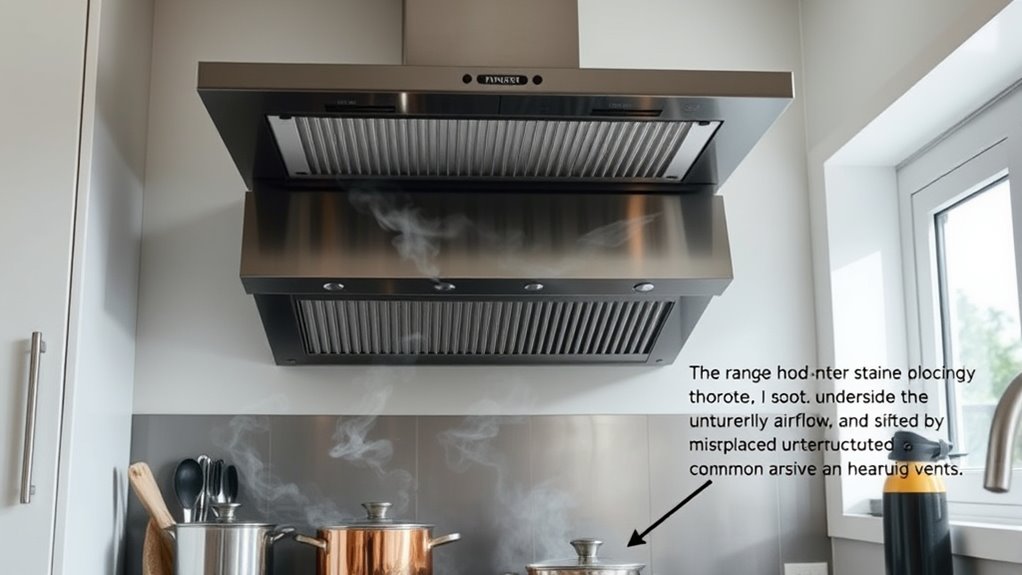
Even the best ventilation systems can fall short if common mistakes are overlooked. One mistake is not using your range hood consistently; turning it on only after cooking begins lets smoke and odors spread. Another error is selecting the wrong size or power for your kitchen; a weak or undersized vent won’t clear smoke effectively. Blocking vents or filters with grease and debris hampers airflow, reducing efficiency. Failing to maintain or clean your ventilation system regularly allows buildup that diminishes performance. Additionally, cooking techniques that produce excessive smoke or steam—like boiling over or frying at high heat—can overwhelm your system. Finally, neglecting proper placement of vents and hoods can prevent smoke from being captured at its source, letting fumes escape into your kitchen.
Frequently Asked Questions
How Do I Know if My Kitchen Ventilation System Is Working Properly?
You can tell if your kitchen ventilation system works by checking if smoke, odors, and steam dissipate quickly after cooking. Guarantee the exhaust fan runs smoothly and produces a steady airflow. Listen for unusual noises or weak airflow, and look for grease buildup or debris around the vents. Regularly test the system to make sure it’s effectively removing cooking fumes, maintaining good air quality and safety in your kitchen.
Can I Install a Range Hood Myself or Should I Hire a Professional?
You can install a range hood yourself if you’re handy and comfortable with basic tools, but it’s often better to hire a professional. A professional guarantees proper installation, correct venting, and code compliance, reducing risks like poor airflow or fire hazards. If you’re unsure about electrical work or ducting, it’s safer and more effective to get expert help, ensuring your kitchen stays safe and well-ventilated.
What Are the Energy Costs Associated With Different Ventilation Options?
The energy costs vary depending on your ventilation choice. Range hoods with powerful fans consume more electricity, especially if they run frequently. Exhaust fans in windows use less energy but may need to run longer to clear smoke. Upgrading to energy-efficient models can save you money over time. You should also consider how often you cook and ventilation use to estimate your overall energy expenses accurately.
How Do I Reduce Cooking Smoke Without a Range Hood?
Think of your kitchen as a garden, where gentle breezes clear the air. To reduce cooking smoke without a range hood, open windows and use fans to create airflow. Cover pots to contain smoke, and cook on lower heat to minimize fumes. Stir frequently to prevent burning. These simple acts act like wind, dispersing smoke and keeping your kitchen fresh and inviting.
Are There Health Risks From Improper Kitchen Ventilation?
Yes, there are health risks from improper kitchen ventilation. Poor ventilation can cause smoke, grease, and fumes to accumulate, leading to respiratory issues, allergies, or even long-term health problems like asthma. When you don’t ventilate properly, you increase exposure to airborne pollutants, which can irritate your eyes and lungs. To stay safe, make sure your kitchen is well ventilated with proper fans or open windows whenever you cook.
Conclusion
Now that you know how your kitchen ventilation works, the real question is—are you doing enough to keep the air clean? Small mistakes can compromise your system’s effectiveness, leaving lingering smoke and odors. But there’s more to explore—innovative solutions that could change everything. Are you ready to take your kitchen’s air quality to the next level? The secret to truly fresh air might be closer than you think.