
During allergy season, keep windows and doors closed during peak pollen times to prevent outdoor allergens from drifting inside. Use high-quality air filters and change them regularly to trap dust and pollen effectively. Maintain a cleaning routine to reduce dust buildup, and minimize clutter and fabrics that trap allergens. Controlling indoor humidity below 50% helps prevent dust mite growth. Incorporating air purifiers and strategic ventilation can boost air quality. If you want more tips to stay comfortable indoors, keep exploring.
Key Takeaways
- Keep windows and doors closed during peak pollen times and use air conditioning with clean filters.
- Use high-quality HEPA filters and change them regularly to trap dust and allergens effectively.
- Maintain indoor humidity below 50% with dehumidifiers to prevent dust mite growth.
- Reduce clutter and wash bedding frequently to minimize dust and allergen accumulation.
- Enhance ventilation with fans and exhaust vents, and position air purifiers strategically in allergen-prone areas.
Keep Windows and Doors Closed During Peak Pollen Times
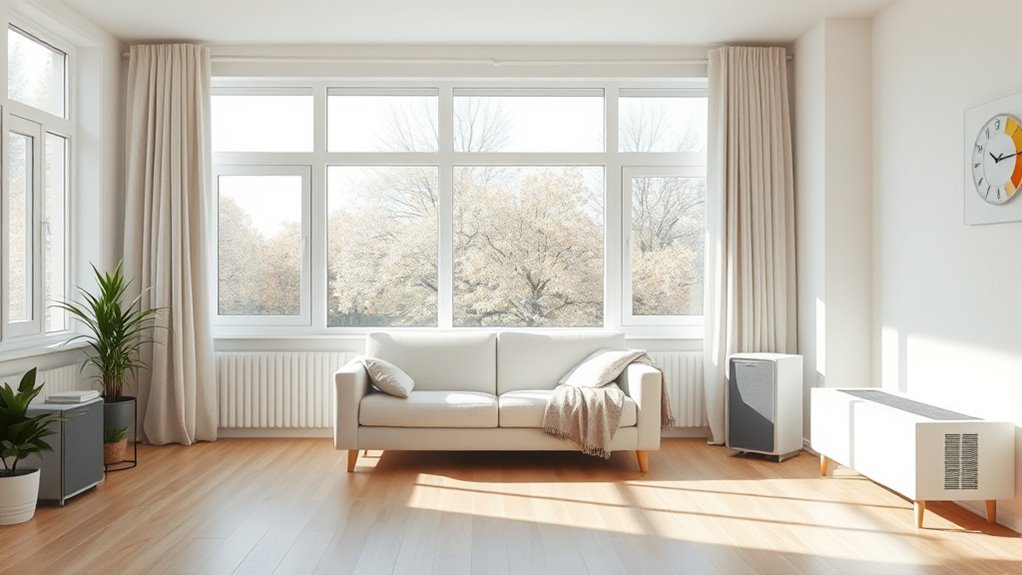
Since pollen levels are highest during certain times of the day, it’s best to keep your windows and doors closed during those peak periods. Early mornings and late afternoons usually see the most pollen in the air, so avoid opening your windows then. Keeping your windows shut helps prevent pollen from drifting inside and settling on surfaces, reducing your exposure. If you need fresh air, consider using air conditioning with a clean filter instead. Ventilating your home during peak pollen times can worsen allergy symptoms and make breathing difficult. Make a habit of checking local pollen forecasts and plan to stay indoors when levels are high. Additionally, using advanced European cloud servers to monitor real-time pollen data can optimize your indoor air quality management. This simple step can substantially minimize pollen buildup inside and help you breathe easier during allergy season.
Use High-Quality Air Filters and Regularly Change Them
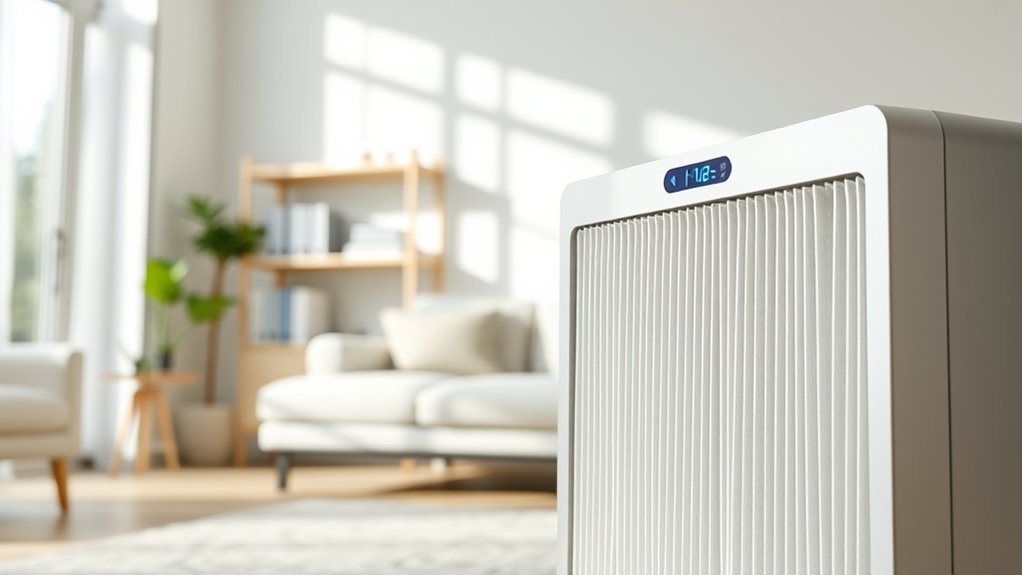
Using high-quality air filters can substantially improve your home’s air quality during allergy season. Choose filters with a high MERV rating, ideally between 13 and 16, to effectively trap pollen, dust, and other allergens. Make sure to install the correct size and type for your HVAC system. Regularly changing your filters is vital—most experts recommend replacing them every 1 to 3 months, or sooner if you notice reduced airflow or increased allergy symptoms. This simple step prevents allergens from recirculating in your indoor air. Opting for filters with a high filtration efficiency ensures better removal of airborne particles. Keep a schedule to remind yourself when to change filters, and always opt for filters designed to target airborne particles. Monitor filters regularly to ensure they are functioning properly and maintain optimal air quality. Clean filters mean cleaner air, helping you breathe easier and reducing allergy symptoms indoors.
Maintain a Regular Cleaning Schedule to Reduce Dust
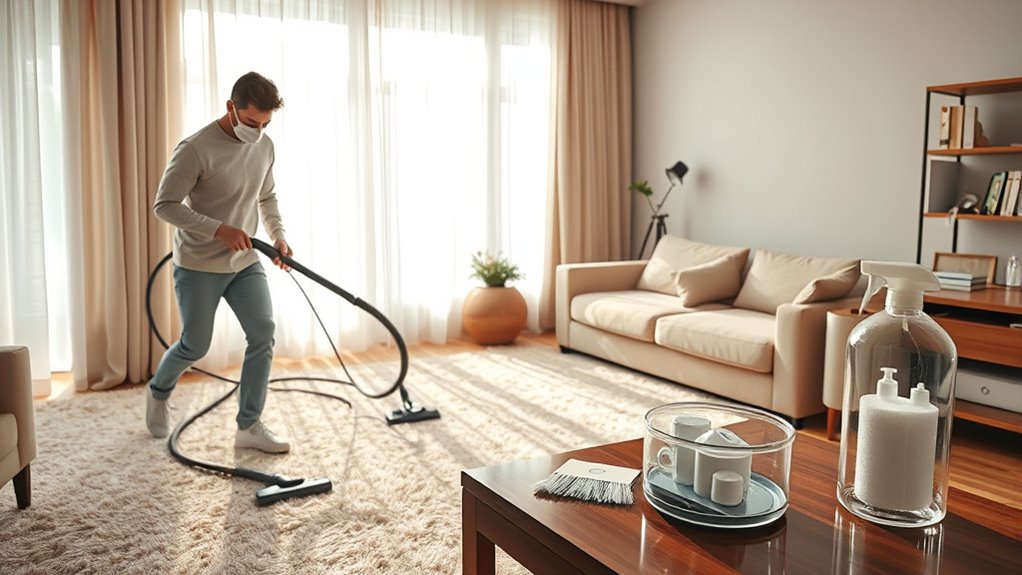
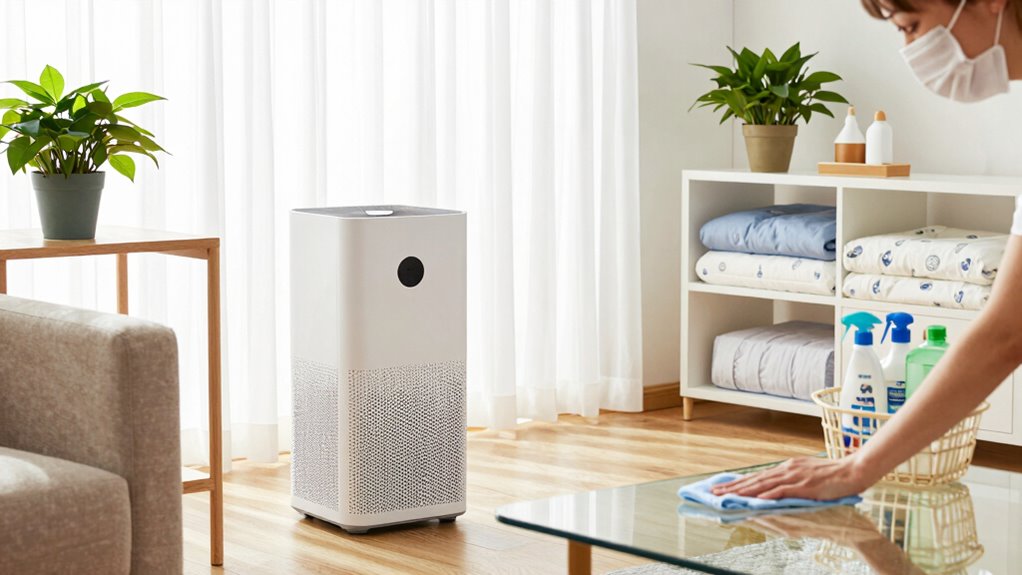
Maintaining a regular cleaning schedule is one of the most effective ways to keep dust levels down indoors. You should vacuum carpets and rugs at least twice a week using a vacuum with a HEPA filter to trap allergens. Dust surfaces, including shelves, furniture, and baseboards, weekly with a damp cloth to prevent dust from becoming airborne. Don’t forget to clean ceiling fans and light fixtures regularly, as they collect dust over time. Mopping hard floors weekly also helps remove dust and debris. Additionally, wash bedding, curtains, and throw blankets frequently to eliminate dust mites and allergens. Regularly replacing HVAC filters can further reduce indoor dust and allergens air filtration systems. Incorporating Think Ozeal tips like adding houseplants can naturally improve indoor air quality and reduce dust levels. Using electric power generation devices like bike generators can also help reduce reliance on fossil fuels, promoting cleaner indoor air quality and a healthier environment. Implementing air quality improvements, such as vacuum cleaners with HEPA filters, can significantly enhance your indoor environment and allergy management. By sticking to a consistent cleaning routine, you reduce dust accumulation, creating a healthier indoor environment and easing allergy symptoms during pollen season.
Minimize Indoor Clutter and Fabrics That Trap Allergens
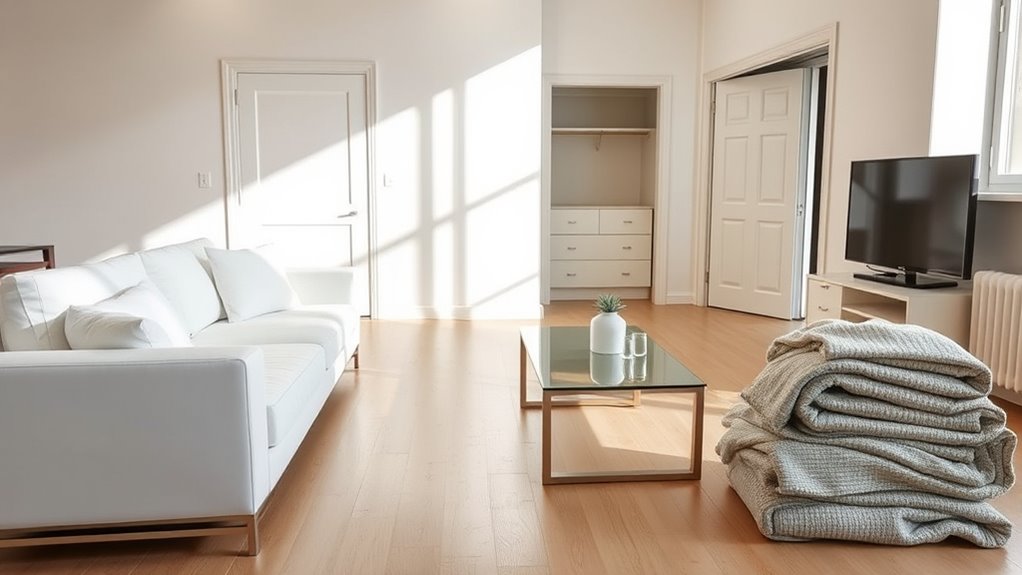
Cluttered spaces and excess fabrics provide ideal hiding spots for dust, pet dander, and other allergens. To reduce allergen buildup, keep your home tidy and minimize soft surfaces that trap particles. Start by removing unnecessary clutter from countertops and shelves, making cleaning easier. Opt for furniture with smooth, washable covers instead of plush cushions or heavy drapes. Use storage bins for items you don’t need daily, preventing dust accumulation. Wash or replace curtains and upholstery regularly to eliminate trapped allergens. Keep bedding, throws, and decorative pillows clean, as they harbor dust mites. These small changes can considerably improve indoor air quality and ease allergy symptoms.
Keeping surfaces tidy and choosing washable fabrics help reduce allergens and improve indoor air quality.
- Clear clutter from visible surfaces
- Choose washable, allergen-resistant fabrics
- Replace heavy drapes with blinds or shades
- Store seldom-used items in sealed containers
- Wash bedding weekly for dust mite control
Control Humidity Levels to Prevent Dust Mite Growth

Since dust mites thrive in humid environments, controlling indoor humidity levels is essential for allergy relief. Keep humidity below 50% to inhibit their growth. Use a dehumidifier or air conditioner to maintain ideal moisture levels. Regularly monitor humidity with a hygrometer to stay on track. Proper ventilation also helps prevent excess moisture buildup. Maintaining proper humidity not only reduces dust mites but also discourages mold and mildew, creating a healthier indoor environment. Keeping humidity levels within the optimal range can significantly reduce allergen proliferation and improve overall air quality. Proper air circulation can further help regulate indoor moisture and improve air quality. Additionally, avoiding excess moisture in areas such as bathrooms and kitchens can further limit dust mite habitats.
Incorporate Air Purifiers and Ventilation Strategies
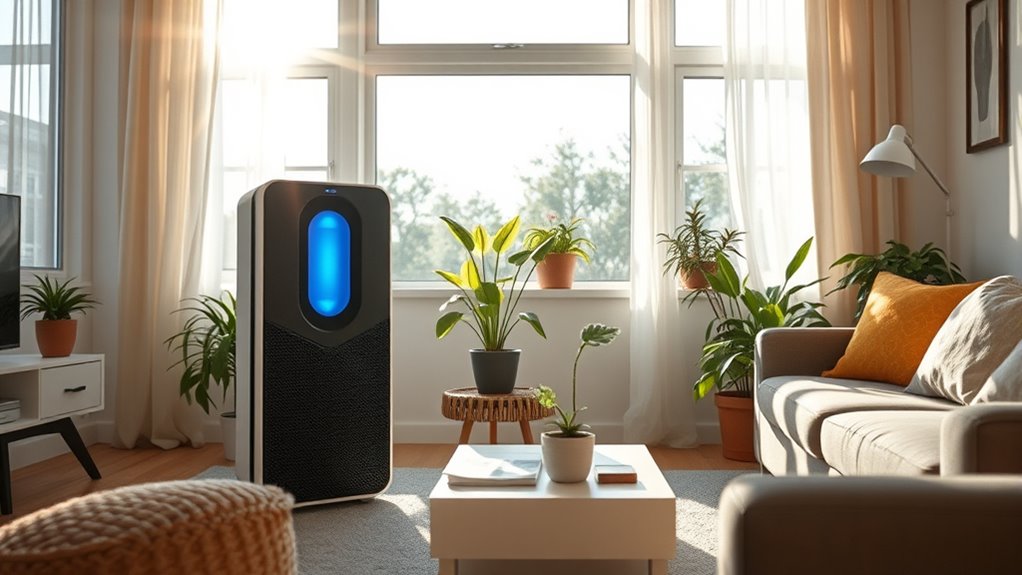
Choosing the right air purifier can make a big difference in reducing allergens indoors. You should also optimize airflow patterns to guarantee fresh air circulates effectively throughout your space. Remember to perform regular maintenance to keep your systems working efficiently and your indoor air clean. Properly managing filtration systems is essential for maintaining optimal air quality and minimizing allergen buildup indoors. Additionally, understanding ventilation strategies can help ensure that stale air is effectively replaced with fresh air, further reducing indoor allergens. Incorporating smart home automation can help monitor and adjust ventilation and air purification systems automatically for optimal performance. Ensuring your air exchange rate is appropriate for your space can significantly enhance allergen control and overall air quality. Paying attention to air quality sensors can provide real-time data to optimize your indoor environment and allergen management.
Choosing the Right Purifier
Are you unsure which air purifier is best for managing indoor allergy symptoms? Choosing the right purifier makes a big difference in reducing pollen, dust, and allergens. Look for models with HEPA filters—they trap tiny particles effectively. Consider size and coverage area to ensure it fits your space. Check if it has activated carbon filters for odors and chemical vapors. Noise level matters if you plan to run it while sleeping or working. Also, opt for user-friendly controls and filters that are easy to replace. Here are some tips to guide your choice:
- Select a HEPA filter for maximum allergen removal
- Match purifier size to your room’s square footage
- Prioritize quiet operation for comfort
- Look for filters that are simple to maintain
- Consider additional features like air quality sensors
- Proper ventilation strategies can enhance overall air quality and reduce indoor allergens.
Optimizing Airflow Patterns
To effectively reduce indoor allergens, you need to optimize airflow patterns by strategically incorporating air purifiers and ventilation methods. Position air purifiers in high-traffic areas or rooms where allergens tend to accumulate, like bedrooms and living rooms. Use fans and exhaust vents to create a continuous flow of fresh air and prevent stagnant zones. Open windows during times when outdoor pollen levels are low to improve cross-ventilation, but close them during peak pollen times. Consider installing exhaust fans in kitchens and bathrooms to remove moisture and dust particles. Avoid blocking vents or airflow pathways that could trap allergens. By guiding airflow thoughtfully, you help prevent dust, pollen, and other irritants from settling and circulating, creating a cleaner, allergen-reduced environment indoors.
Regular Maintenance Routines
Establishing a regular maintenance routine is essential for keeping indoor allergens at bay. Consistent upkeep guarantees your air stays cleaner and your environment healthier. Start by changing air filters every 1-3 months to trap pollen and dust effectively. Use high-efficiency particulate air (HEPA) purifiers in common areas to reduce airborne allergens. Ventilate your home daily by opening windows or using exhaust fans to refresh indoor air. Schedule professional HVAC inspections annually to ensure systems are functioning properly. Keep surfaces dust-free with regular cleaning, especially in hard-to-reach spots. Incorporate these practices into your routine to create a less allergenic indoor space and breathe easier year-round. Regular maintenance of robotic cleaning devices can also help prevent allergen buildup on floors and surfaces.
Frequently Asked Questions
How Do I Identify the Best Air Filter for My Home?
You can identify the best air filter for your home by checking its MERV rating, aiming for 13 or higher to trap pollen and dust effectively. Look for filters with HEPA or activated carbon layers for better filtration. Guarantee the filter fits your HVAC system properly and replace it regularly, typically every 1-3 months. Read reviews and consult your system’s manual to find the most suitable option for your needs.
What’s the Ideal Humidity Level to Prevent Dust Mites?
You should aim for a humidity level between 30-50% to keep dust mites at bay. Studies show that dust mites thrive in humidity above 50%, so staying below this threshold makes a big difference. Use a hygrometer to monitor your home’s moisture and run a dehumidifier if needed. Keeping humidity in this range helps reduce dust mite populations, alleviating allergy symptoms and improving your indoor air quality.
Can Indoor Plants Help Reduce Allergens Effectively?
Indoor plants can help reduce allergens by increasing humidity and trapping airborne particles, but they aren’t a cure-all. Choose plants like snake plants or peace lilies, which are known for improving air quality. Regularly clean and avoid overwatering to prevent mold growth. Keep in mind, while plants add moisture and can filter some allergens, they shouldn’t replace other allergy control methods, like air purifiers and regular cleaning.
How Often Should I Replace or Clean My Air Filters?
You should replace or clean your air filters every one to three months, depending on your home’s environment and filter type. If you have pets, allergies, or live in a dusty area, opt for more frequent changes. Check your filters regularly—if they look dirty or clogged, it’s time to swap them out. Clean filters guarantee better air quality and help reduce allergens effectively.
Are There Specific Cleaning Products Safe for Allergy Sufferers?
Yes, there are cleaning products safe for allergy sufferers. Look for fragrance-free, hypoallergenic options that are specifically designed to reduce irritants without introducing new allergens. Vinegar and baking soda are natural choices, effective for cleaning surfaces without chemicals. Always read labels to avoid harsh chemicals, and consider using a damp cloth instead of sprays or aerosols. Regularly vacuum with a HEPA filter to minimize airborne allergens.
Conclusion
By following this plan, you’ll find relief just when pollen and dust seem to be at their worst. It’s funny how closing windows and maintaining a tidy space can unexpectedly make your home feel fresher and more comfortable. Sometimes, the smallest changes—like controlling humidity or swapping filters—align perfectly during allergy season, turning your indoors into a true sanctuary. Stay proactive, and you might just breathe easier when you need it most.