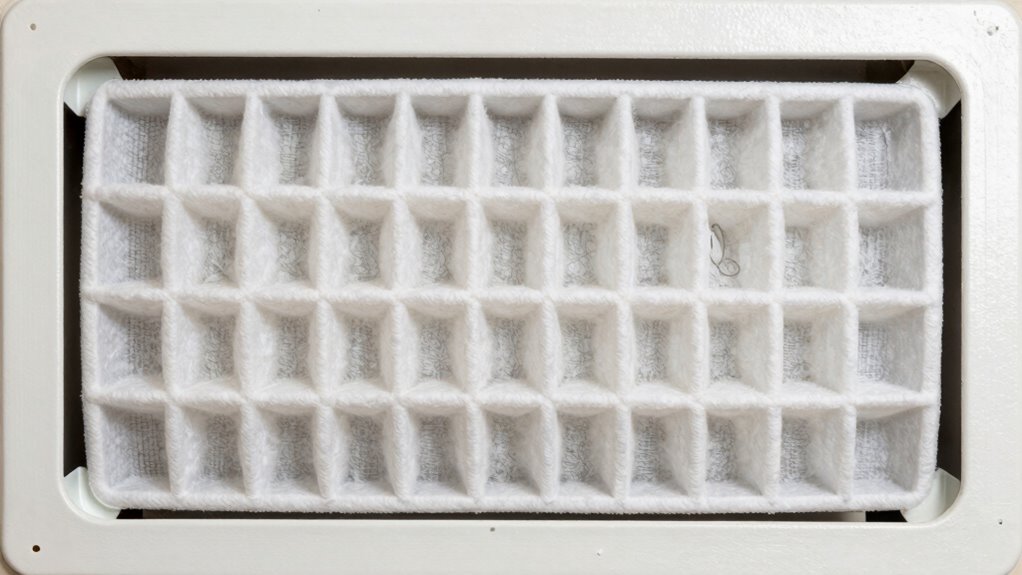

Gaps around your HVAC filter allow unfiltered air to bypass it, reducing system efficiency and indoor air quality. When these gaps exist, your system has to work harder, which can lead to higher energy bills and faster wear on components. Properly fitting filters create a seal that maintains airflow and prevents dust, allergens, and pollutants from slipping through. Keeping the filter snug in place is essential—if you’d like to learn how to guarantee a perfect fit, there’s more to consider.
Key Takeaways
- Gaps around the filter reduce airflow efficiency, causing the system to work harder and increasing energy costs.
- Unfiltered air passing through gaps introduces dust, allergens, and pollutants into indoor spaces.
- Poor fit can lead to uneven heating or cooling, compromising indoor comfort.
- Gaps may cause the HVAC system to run longer, risking damage and decreasing lifespan.
- Properly fitted filters ensure a tight seal, maintaining optimal system performance and indoor air quality.
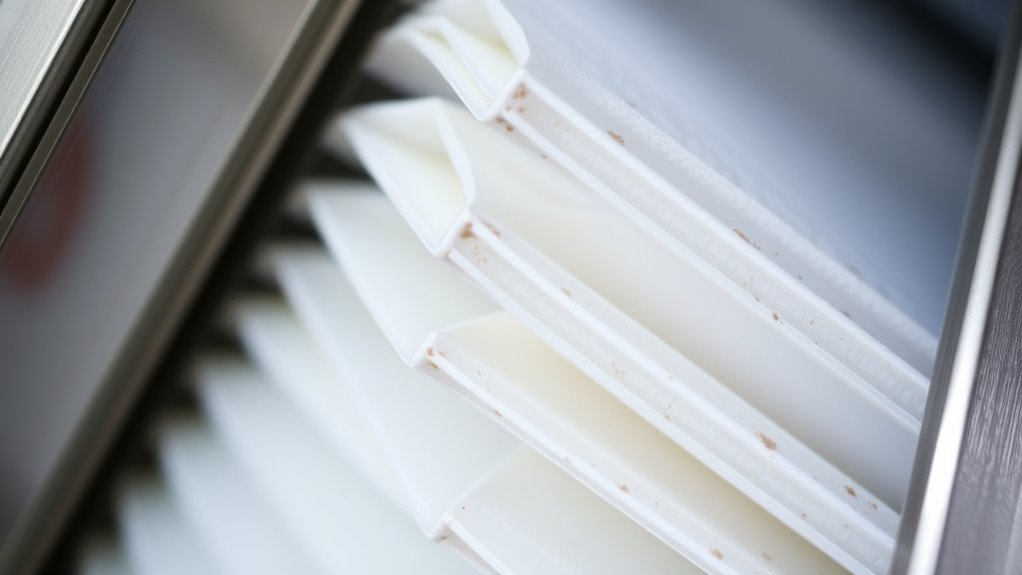
Gaps around your filter can considerably hinder airflow efficiency. When unfiltered air sneaks past the edges, your system struggles to circulate clean air, leading to uneven heating or cooling. This inefficiency can cause your HVAC to run longer than necessary, raising your energy bills and increasing the risk of system breakdowns. Additionally, unfiltered air that bypasses the filter can carry dust, allergens, and other pollutants directly into your living space, reducing indoor air quality. Ensuring a proper fit involves more than just selecting the correct size; it also requires inspecting the filter frame and gasket for damage or deformation. If you notice any cracks or warping, replace the filter immediately to maintain a proper seal. Proper filter fitment is also essential for simplifying maintenance and ensuring reliable operation over time.
A well-fitted filter also makes filter replacement easier and more effective. When the filter fits securely, you can remove and install it without fuss, ensuring it’s seated correctly every time. This reduces the likelihood of leaving gaps that compromise airflow efficiency. Remember, a good rule of thumb is to check your filter regularly—about every one to three months—and replace it promptly. Doing so not only keeps your HVAC system running at peak performance but also enhances your indoor air quality. If you see dust or debris accumulating quickly or notice inconsistent heating or cooling, it might be time to evaluate whether your filter is fitting properly. Taking the time to ensure a secure, snug fit prevents unnecessary strain on your system, saves money on energy bills, and keeps your home healthier and more comfortable. Regular inspection and understanding airflow efficiency can help optimize your system’s performance and longevity.
Frequently Asked Questions
How Often Should I Replace My HVAC Filter?
You should replace your HVAC filter every 1 to 3 months to maintain ideal air quality and energy efficiency. Regular changes prevent dust buildup and gaps around the filter, which can reduce system performance. If you have pets or allergies, consider replacing it more frequently. Staying on top of filter replacements helps your system run smoothly, improves indoor air quality, and saves energy costs over time.
Can a Poorly Fitted Filter Damage My HVAC System?
Yes, a poorly fitted filter can damage your HVAC system. Gaps allow unfiltered air to bypass the filter, causing airflow restriction and putting extra strain on the blower motor. Over time, this can lead to system wear and decreased efficiency. Make sure your filter fits snugly and is made of quality filter material to guarantee proper airflow and protect your HVAC system from unnecessary damage.
What Signs Indicate a Filter Fit Problem?
Think of your HVAC system as a finely tuned orchestra—any off-key note signals trouble. If you notice reduced airflow, unusual dust buildup, or your system runs constantly, these are signs of a filter fit problem. Gaps cause airflow restriction, forcing your unit to work harder, which shortens filter longevity. Stay vigilant for these clues to keep your system running smoothly and efficiently.
Are Custom-Sized Filters More Effective Than Standard Sizes?
Custom-sized filters are generally more effective than standard sizes because they reduce gaps that can compromise filter efficiency. When you opt for custom sizing, you guarantee the filter fits snugly, preventing air leaks and maximizing filtration. This tailored fit helps your HVAC system operate more efficiently, improves indoor air quality, and prolongs filter lifespan. So, if you want ideal performance, custom sizing is a smart choice.
How Do I Check for Gaps Around My Filter?
To check for gaps around your filter, remove it and inspect the seal integrity. Look closely at the edges for any spaces where air might bypass the filter, which can be caused by poor seal or mismatched filter materials. Press the filter back in, ensuring it fits snugly without gaps. Proper fit prevents leaks, maintains filter efficiency, and ensures your HVAC system runs smoothly.
Conclusion
Ensuring your HVAC filter fits snugly isn’t just about efficiency—it can also improve indoor air quality and save you money. Did you know that gaps around your filter can reduce system efficiency by up to 15%? That means higher energy bills and less clean air. So, take a moment to check your filter’s fit regularly. A proper seal keeps allergens out, saves you money, and keeps your home comfortable all year round.