To keep swamp air at bay, establish a simple humidifier cleaning schedule. Weekly, unplug the device, empty water, and soak the tank in vinegar for 20-30 minutes, then scrub gently and rinse. Monthly, do a thorough deep clean and check filters. Watch for odors, mold, or decreased mist output, and clean immediately if these occur. Maintain water quality and airflow year-round to guarantee fresh, safe air—learn more to keep your humidifier crystal clear.
Key Takeaways
- Empty and unplug the humidifier weekly, then soak in vinegar for 20-30 minutes to remove buildup.
- Scrub all surfaces gently with a soft brush or cloth, paying attention to corners and filters.
- Rinse thoroughly and dry all parts completely before reassembling to prevent mold growth.
- Perform a deep clean monthly by soaking components in vinegar, checking filters, and replacing if needed.
- Use distilled or filtered water daily and disinfect regularly to prevent mold, bacteria, and foul odors.
Why Regular Cleaning Matters for Your Humidifier
Regularly cleaning your humidifier is essential because it prevents the buildup of mold, bacteria, and mineral deposits that can harm your health. When you neglect to clean it, these contaminants can multiply rapidly, dispersing into the air you breathe. This is especially important considering European cloud innovation emphasizes the need for sustainable and safe solutions in all aspects of technology. Mineral deposits from hard water can clog the device and reduce its efficiency, leading to less effective humidification. Regular cleaning also extends the lifespan of your humidifier, saving you money in the long run. By maintaining a clean device, you guarantee the air in your home stays healthy and safe, providing comfort without risking exposure to harmful microorganisms or mineral buildup. Proper maintenance is a simple step toward ensuring a healthier indoor environment. Additionally, employing AI-powered tools can help remind you of your cleaning schedule and optimize your device’s performance. Regular upkeep also minimizes the risk of bacterial growth, which can compromise air quality and your well-being. Incorporating routine cleaning practices can further enhance the longevity and efficiency of your humidifier.
Step-by-Step Guide to a Weekly Cleaning Routine
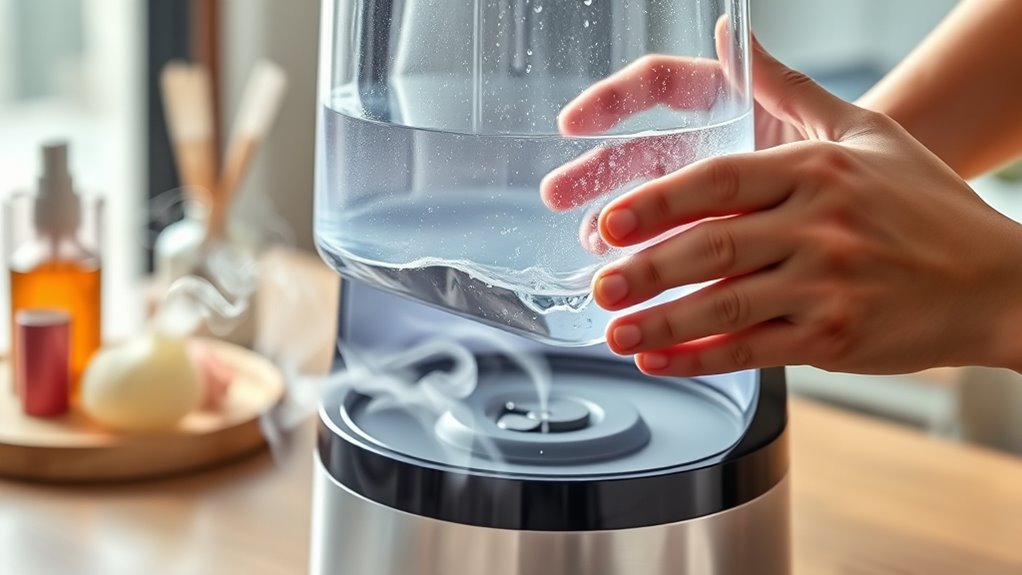
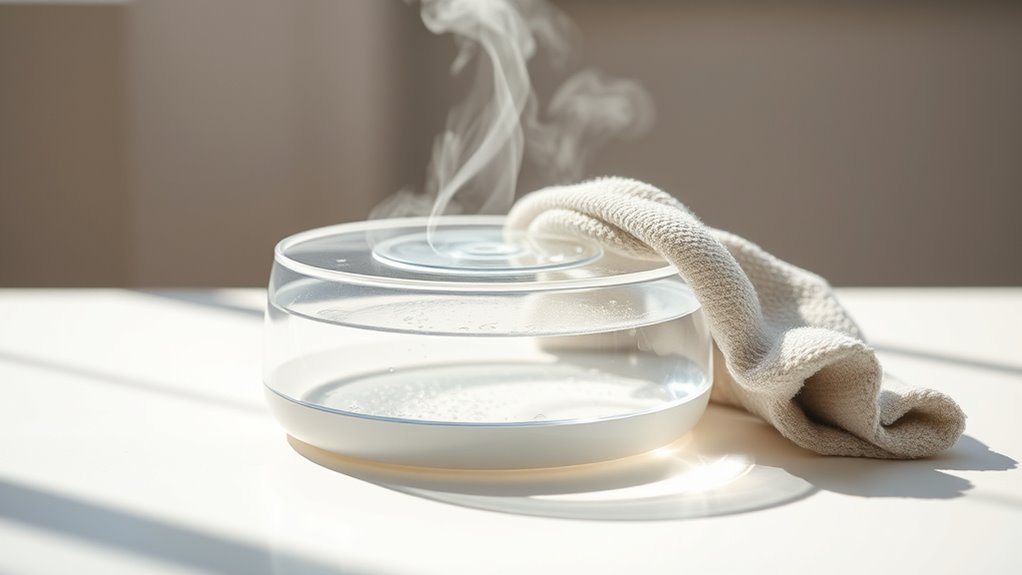
To keep your humidifier functioning properly and guarantee healthy air quality, establish a weekly cleaning routine. Start by unplugging the device and emptying any remaining water. Disassemble the humidifier, removing the tank and filter if possible. Fill the tank with a mixture of equal parts water and white vinegar, then let it sit for 20-30 minutes to loosen mineral deposits. Use a soft brush or cloth to scrub the inside, paying attention to corners and crevices. Rinse thoroughly with clean water. Wipe down all surfaces with a damp cloth, ensuring no residue remains. Dry all parts completely before reassembling. Regularly inspecting and cleaning internal components can help prevent issues related to filter maintenance and extend the device’s lifespan. Performing routine cleaning procedures also helps maintain the device’s efficiency and reduces potential health risks. Additionally, implementing preventative measures such as using distilled water can minimize mineral buildup and keep your humidifier running smoothly. Using proper cleaning tools can make this routine more effective and less time-consuming. Incorporating a schedule for cleaning can make this routine easier to remember and stick to over time.
Monthly Deep-Cleaning Tips for Optimal Performance
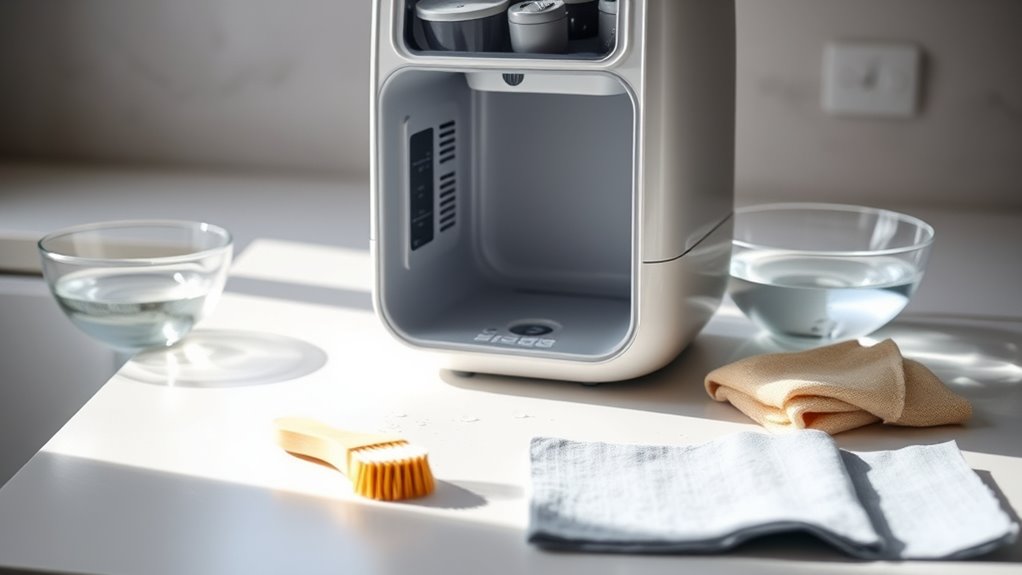
Performing a monthly deep clean is essential to maintain your humidifier’s peak performance and prevent buildup of stubborn mineral deposits or mold. Start by unplugging the unit and disassembling all removable parts. Soak the tank and other components in a mixture of white vinegar and water for about 30 minutes to dissolve deposits. Use a soft brush or cloth to scrub away residue, paying close attention to corners and filters. Rinse everything thoroughly with clean water to remove vinegar scent. Check and replace any filters if needed. Dry all parts completely before reassembling. This deep cleaning removes hidden buildup that weekly wipes might miss, ensuring your humidifier operates efficiently and delivers clean, moist air. Proper cleaning techniques are vital for preventing mold growth and ensuring safe operation. Incorporating regular maintenance can also help detect potential issues early and extend the lifespan of your device. Additionally, understanding humidifier technology can help optimize your cleaning routine and improve overall performance. Regular inspections and understanding humidifier components can further enhance your maintenance routine and ensure your device functions optimally.
Recognizing When Your Humidifier Needs Immediate Attention
Your humidifier may need immediate attention if you notice unusual odors, persistent mold, or a decline in mist output, even after routine cleaning. Unpleasant smells indicate bacteria or mold buildup that cleaning alone can’t guarantee. If mold or algae are visible on the surfaces, it’s a sign you need to act fast to prevent health issues. A sudden drop in mist output suggests clogs or malfunction, which can affect your air quality. Additionally, if your humidifier emits a musty or sour smell, don’t ignore it—these odors signal bacterial growth. Address these issues promptly to avoid contaminated air and potential respiratory problems. Regularly inspecting your humidifier ensures you catch these warning signs early and maintain a safe, healthy environment. Incorporating essential oils with antimicrobial properties during cleaning can also help reduce microbial growth and improve air quality. Being aware of humidifier maintenance best practices can further extend the device’s lifespan and effectiveness. For added protection, consider using water treatment solutions to prevent mineral buildup and microbial contamination. Performing routine inspections can help identify early signs of malfunction and microbial buildup before they become severe, safeguarding your health. Also, scheduling regular cleanings can help prevent the development of these issues before they escalate.
Tips for Maintaining Fresh, Clean Air Year-Round
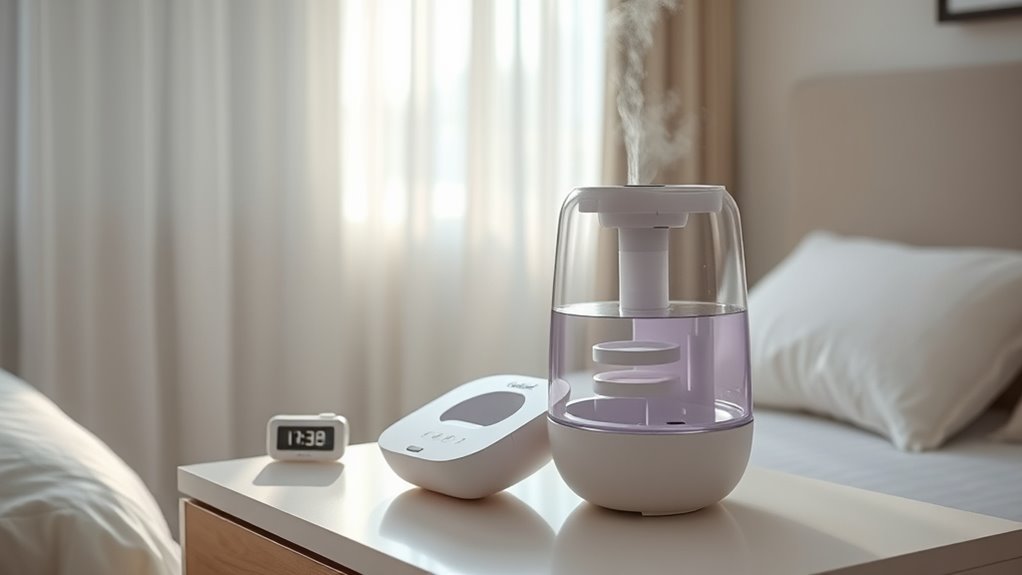
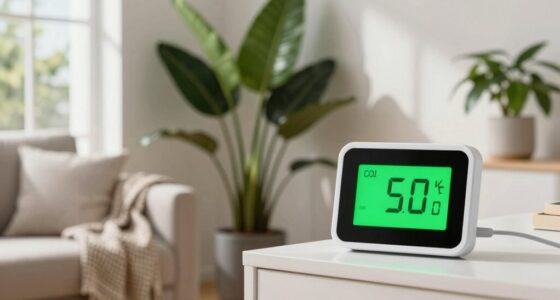
Maintaining fresh, clean air throughout the year requires consistent effort and good habits. First, change your humidifier’s water daily to prevent mold and bacteria buildup. Use distilled or filtered water to reduce mineral deposits that can harbor germs. Regularly clean and disinfect your device according to the manufacturer’s instructions—at least once a week during heavy use. Keep the surrounding area dry and well-ventilated to avoid excess moisture. Replace filters as recommended, and avoid over-humidifying rooms, which can lead to mold growth. Keep an eye on indoor humidity levels, ideally between 30-50%, using a hygrometer. Monitoring indoor humidity levels helps prevent conditions favorable to mold and bacteria growth. To simplify your document management, create a schedule or checklist to stay on top of cleaning routines. Additionally, maintaining proper air circulation can help disperse moisture evenly and prevent damp spots. Incorporating the use of dehumidifiers in particularly humid areas can further reduce excess moisture and improve air quality. Being aware of common indoor pollutants can also help you take targeted actions to improve air safety. By sticking to these simple practices, you ensure the air remains fresh, healthy, and comfortable year-round.
Frequently Asked Questions
Can I Use Vinegar to Clean All Types of Humidifiers?
Yes, you can use vinegar to clean most types of humidifiers. Vinegar effectively removes mineral deposits and disinfects, making it a versatile cleaning solution. Just fill the tank with equal parts vinegar and water, let it sit for 30 minutes, then scrub and rinse thoroughly. However, always check your humidifier’s manual to guarantee vinegar won’t damage the materials, especially with ultrasonic or electronic models.
How Do I Prevent Mold Growth in My Humidifier?
To prevent mold growth in your humidifier, you should clean it regularly—at least once a week—and dry all parts thoroughly after each use. Use vinegar or a mild disinfectant to eliminate mold spores, and always empty and refill the water daily. Keep the humidity level below 50%, and place the unit in a well-ventilated area. These steps help keep mold at bay and ensure clean, healthy air.
Is Distilled Water Necessary for Preventing Bacteria Buildup?
They say, “Prevention is better than cure,” and using distilled water in your humidifier helps prevent bacteria buildup. Distilled water is free of minerals and contaminants that can promote mold and bacteria growth, making it a smarter choice than tap water. While it’s not strictly necessary, it considerably reduces the risk of microbial growth and keeps your humidifier cleaner, helping you breathe easier and maintain healthier air.
How Often Should I Replace the Humidifier’s Filters or Wicks?
You should replace your humidifier’s filters or wicks every 1 to 3 months, depending on usage and water quality. Regularly inspect them for mold, mineral buildup, or discoloration, and substitute if they look worn or dirty. Using distilled water can extend their lifespan. Proper replacement ensures your humidifier runs efficiently, prevents bacteria growth, and maintains healthy humidity levels in your space.
Are There Specific Cleaning Products Recommended for Sensitive Skin?
When it comes to cleaning products for sensitive skin, you shouldn’t have to take any chances. Opt for natural options like white vinegar or a mild, fragrance-free soap. These are gentle yet effective at disinfecting your humidifier without irritating your skin. Always rinse thoroughly and dry completely before use. Remember, a little goes a long way—less is more when it comes to sensitive skin.
Conclusion
Sticking to a regular cleaning routine keeps your humidifier running smoothly and your air fresh. Don’t wait until it’s too late—removing mold and bacteria now saves you headaches later. Think of your humidifier as a trusted ally in your home; neglect it, and problems could snowball. Keep up with these simple steps, and you’ll enjoy clean, healthy air all year round. Remember, an ounce of prevention is worth a pound of cure.