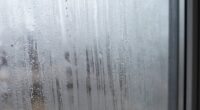
Dew point is a more accurate way to predict when condensation will occur because it measures the actual moisture content in the air, regardless of temperature. Relative humidity shows how saturated the air is at a given moment, but it can be misleading if the temperature changes. When the air cools to the dew point, condensation happens. To prevent moisture problems effectively, understanding both metrics is key—keep exploring how they work together.
Key Takeaways
- Dew point directly indicates the temperature at which condensation occurs, making it a precise predictor.
- Relative humidity shows moisture levels relative to saturation but varies with temperature, affecting condensation predictions.
- Dew point remains consistent regardless of temperature changes, providing a reliable measure for condensation risk.
- High dew point values signal higher moisture content, increasing the likelihood of condensation at certain temperatures.
- Relying solely on relative humidity can be misleading; combining it with dew point offers a clearer prediction of condensation events.
Understanding Dew Point and How It Is Measured

Understanding dew point begins with recognizing that it’s the temperature at which air becomes saturated with moisture, causing dew to form. When air cools to this temperature, its capacity to hold water vapor decreases, leading to condensation. You can measure dew point using a hygrometer, which detects the humidity level, or with a digital dew point meter designed specifically for this purpose. In practical terms, you might see dew point readings on weather reports or scientific instruments. The measurement involves cooling a surface or sensor until moisture begins to condense. This temperature indicates how much moisture is present in the air regardless of the current temperature. Accurate dew point measurement is essential for predicting condensation and managing humidity in different environments, especially in industrial processes where moisture control is critical. Knowing the dew point helps you understand when condensation or fog might occur, impacting weather, comfort, and various industrial processes.
The Concept of Relative Humidity and Its Significance

While knowing the dew point tells you when air reaches saturation, relative humidity provides a more immediate measure of moisture in the air compared to its capacity. It’s expressed as a percentage, showing how much moisture is present relative to the maximum air can hold at a given temperature. This makes it a practical indicator of comfort and potential condensation. When relative humidity is high, your skin might feel damp, and surfaces could feel moist. Conversely, low levels can cause dryness and static. Visualize humid air clinging to your skin, damp windows fogging up, or a mug of hot coffee releasing steam. These images help you grasp how relative humidity influences your environment and comfort levels, making it a crucial metric in everyday life. Additionally, high relative humidity can promote mold growth and affect indoor air quality.
Comparing Dew Point and Relative Humidity: Key Differences

Understanding how dew point and relative humidity are measured helps you see their differences clearly. These measurements affect how condensation forms and what they mean for comfort and safety. By comparing their practical uses, you can better decide which is more relevant for your needs.
Measurement Methods Comparison
When comparing dew point and relative humidity as measurement methods, it’s important to recognize how each provides different insights into atmospheric moisture. Dew point measures the temperature at which air becomes saturated, directly indicating moisture content. Relative humidity, on the other hand, shows how close the air is to saturation at a specific temperature.
Think of these methods like different lenses:
- Dew point is like a thermometer revealing moisture content regardless of temperature changes
- Relative humidity fluctuates with temperature shifts, even if moisture stays constant
- Dew point stays steady with changing temperatures, giving a consistent moisture level
- Relative humidity can feel more uncomfortable during hot days
- Dew point helps predict condensation, independent of air temperature fluctuations
Both methods offer unique perspectives for understanding humidity and moisture behavior.
Impact on Condensation
Dew point and relative humidity each influence whether condensation occurs, but they do so in different ways. Dew point directly indicates the temperature at which air becomes saturated, so when the air temperature drops to this point, condensation starts. If the dew point is high, it means the air is already holding a lot of moisture, making condensation more likely at higher temperatures. Relative humidity, on the other hand, shows how close the air is to saturation at a given temperature. Even if the relative humidity is high, a low dew point means the air isn’t holding as much moisture, reducing condensation risk. So, while relative humidity tells you how humid the air is, dew point provides a clearer picture of when and where condensation will happen. Understanding the fabric composition can also influence condensation potential, especially in materials that retain moisture or facilitate breathability.
Practical Application Differences
While both dew point and relative humidity are essential for evaluating moisture in the air, their practical uses differ considerably. Dew point provides a clear measure of actual moisture content, making it useful for assessing comfort, heating, and cooling needs. Relative humidity, on the other hand, indicates how humid the air feels compared to its maximum capacity, guiding ventilation and dehumidification decisions.
Imagine:
- Checking your home’s comfort level on a humid day
- Adjusting your HVAC system based on dew point readings
- Planning outdoor activities with awareness of condensation risks
- Preventing mold growth by monitoring dew point in damp areas
- Managing storage conditions for sensitive items
Understanding these differences helps you make smarter decisions about air quality and comfort in everyday life.
How Dew Point Predicts When Condensation Will Occur

Understanding dew point thresholds helps you predict when condensation will happen. Temperature factors, like air cooling, influence how close you are to that dew point. Knowing how accurate these predictions are can help you better prepare for moisture buildup. Additionally, Free Floating concepts highlight how environmental conditions can cause unpredictable changes in humidity levels. Recognizing climate variability can further refine your understanding of when condensation might occur under different circumstances. Being aware of predictive accuracy in dew point calculations can also improve your moisture management strategies. Incorporating knowledge of sensor calibration can enhance the reliability of dew point measurements in varying environments, especially when considering market fluctuations that affect humidity levels and environmental conditions.
Dew Point Thresholds
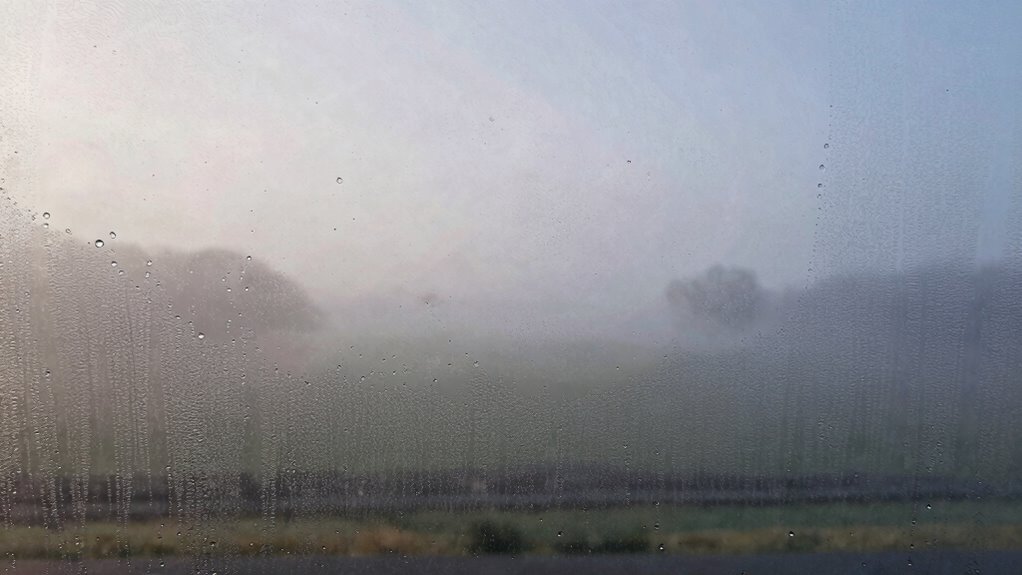
Knowing the dew point helps you predict when condensation will happen, as it indicates the temperature at which air becomes saturated. When the air temperature drops to the dew point, moisture begins to condense, forming dew, fog, or other condensation. Dew point thresholds vary depending on the environment and humidity levels. For example, a dew point below 55°F usually means dry air, while above 65°F suggests high humidity and potential condensation. Recognizing these thresholds allows you to anticipate moisture buildup. Imagine cool mornings with dew on grass, foggy mornings, or bathroom mirrors fogging up after a hot shower. These are all linked to specific dew point thresholds that signal when moisture will appear. Being aware of these thresholds helps you prevent or manage condensation in your space.
Temperature Impact Factors
Dew point plays a crucial role in predicting when condensation will occur because it directly indicates the temperature at which air becomes fully saturated with moisture. When the air cools to this temperature, the moisture in the air can no longer stay vaporized, leading to dew or condensation. Temperature impacts dew point because warmer air can hold more moisture before reaching saturation, raising the dew point. Conversely, cooler air has a lower capacity, meaning the dew point drops. Sudden temperature drops or persistent cooling environments can cause the air to reach dew point faster, making condensation more likely. Understanding how temperature influences dew point helps you anticipate when condensation might happen, especially in environments where temperature fluctuations are common. Additionally, awareness of AI tools can assist in analyzing weather patterns and predicting condensation events more accurately.
Predictive Accuracy
Dew point serves as a reliable indicator for predicting when condensation will occur because it directly measures the temperature at which air becomes saturated with moisture. When the air cools to this temperature, water vapor transforms into dew or condensation. This makes dew point a precise predictor, unlike relative humidity, which varies with temperature changes. Visualize a mirror fogging up in a bathroom or droplets forming on a cold beverage—these happen when the air reaches its dew point.
- Cool surfaces collecting tiny water beads
- Glasses fogging up in a chilly room
- Bathroom mirrors misting after a shower
- Windows frosting on cold winter mornings
- Moisture gathering on cold pipes or walls
The Limitations of Relying Solely on Relative Humidity

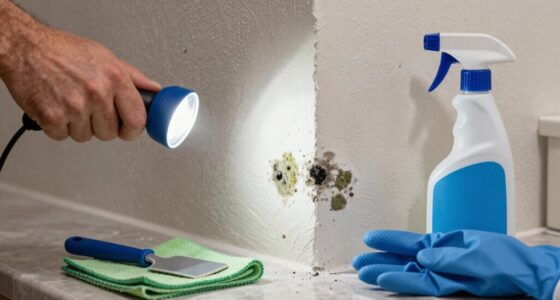
While relative humidity provides useful information about moisture in the air, relying on it alone can be misleading. It doesn’t account for temperature changes that affect condensation risk. For example, high humidity at warm temperatures might seem safe, but if the air cools, condensation can still occur unexpectedly. Relying solely on relative humidity ignores how dew point shifts with temperature, which is a better indicator of when moisture will condense. Additionally, two environments with the same relative humidity can have different dew points due to temperature differences, making humidity less reliable for predicting condensation. Without considering dew point, you may think the air is safe, but you risk overlooking potential moisture problems. To prevent issues like mold or dampness, you need a more extensive understanding beyond just relative humidity.
Practical Ways to Use Dew Point and Humidity Data in Your Home
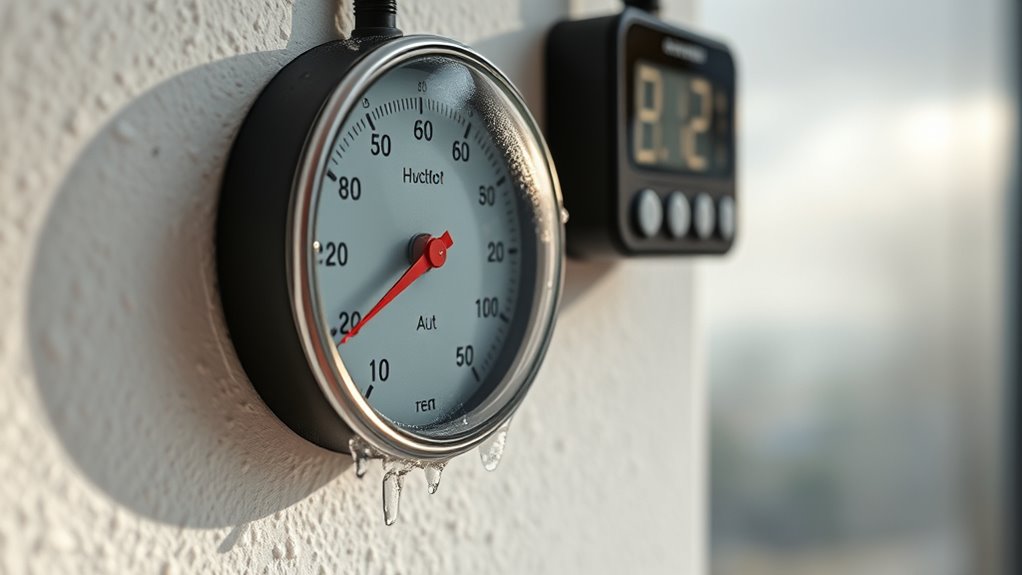
Understanding and monitoring both dew point and humidity levels can help you prevent moisture problems in your home. By tracking these metrics, you can adjust your heating, cooling, and ventilation to maintain ideal conditions. Use a hygrometer and a dew point monitor to get real-time data. When you notice dew point nearing indoor temperatures, it’s time to increase ventilation or dehumidify.
Imagine:
- Opening windows during early mornings to release excess moisture
- Running exhaust fans in bathrooms and kitchens after showers and cooking
- Using a dehumidifier in damp, poorly ventilated areas
- Insulating windows to prevent condensation buildup
- Keeping indoor plants in well-ventilated spots to avoid excess humidity buildup
Choosing the Right Metric for Preventing Condensation Problems

Choosing the right metric to monitor is key to effectively preventing condensation problems in your home. If you want to stay ahead of issues, focus on dew point, as it directly indicates when surfaces may reach temperatures that cause moisture to condense. Dew point is especially useful in colder environments or areas prone to frost or mold. Understanding dew point can help you better anticipate when condensation is likely to occur, allowing for more targeted adjustments. Relative humidity, on the other hand, shows how much moisture is in the air relative to its capacity, helping you manage overall comfort. For practical purposes, monitoring dew point allows you to set specific temperature controls to avoid surface condensation. Additionally, understanding the concept of air quality can help you maintain a healthier indoor environment. However, combining both metrics provides a holistic picture, enabling you to adjust indoor conditions proactively. The key is understanding your space and choosing the metric that best aligns with your prevention strategy.
Frequently Asked Questions
How Does Temperature Affect Dew Point and Humidity Readings?
When temperature changes, it directly impacts dew point and humidity readings. As temperature rises, the air can hold more moisture, often lowering relative humidity if moisture stays constant. Conversely, cooler temperatures reduce the air’s capacity to hold moisture, increasing relative humidity and bringing you closer to dew point, which can cause condensation. So, when it gets warmer or cooler, expect shifts in both dew point and humidity levels, affecting how moist or dry the air feels.
Can Dew Point and Relative Humidity Be Used Together for Better Predictions?
Yes, combining dew point and relative humidity enhances your predictions. When both metrics align, they reveal a clearer picture of potential condensation or comfort levels. You’ll notice that high humidity with a rising dew point signals increased moisture, raising the chance of dew or fog. By monitoring both, you can anticipate changes more accurately, giving you an edge in understanding weather patterns or indoor conditions before they fully unfold.
What Are the Ideal Dew Point Levels to Prevent Mold Growth?
To prevent mold growth, keep the dew point below 60°F (15.5°C). When the dew point rises above this level, moisture condenses on surfaces, creating an environment conducive to mold. You should aim to maintain indoor dew points around 55°F (13°C) or lower, especially in damp areas. Using dehumidifiers and proper ventilation helps you control humidity, keeping mold risk minimized and your space healthier.
How Accurate Are Consumer Devices in Measuring Dew Point?
Consumer devices can vary in accuracy when measuring dew point, but many are reasonably reliable for home use. You should expect some margin of error, often around ±2°F or ±1°C. These devices typically use sensors that respond quickly, but calibration issues or environmental factors can affect readings. To get the best results, follow the manufacturer’s instructions carefully and consider periodically calibrating your device for improved precision.
Are There Environmental Conditions Where Relative Humidity Is More Reliable Than Dew Point?
In certain environmental conditions, relative humidity can be more reliable than dew point, especially when temperatures fluctuate rapidly. If you’re in an environment with variable temperatures, relative humidity adjusts quickly, giving a more immediate sense of moisture levels. Dew point measurements may lag or become less accurate under these conditions. As a result, monitoring relative humidity helps you better understand moisture risks in dynamic environments.
Conclusion
So, while relying on relative humidity might keep you from feeling damp, it’s the dew point that truly reveals when your home’s about to turn into a condensation nightmare. Ironically, the very metric you overlook could be your best defense. Next time you check the humidity, remember—knowing the dew point might just save you from mold, dampness, and costly repairs. Sometimes, the simplest measure is the one you least expect to protect you.