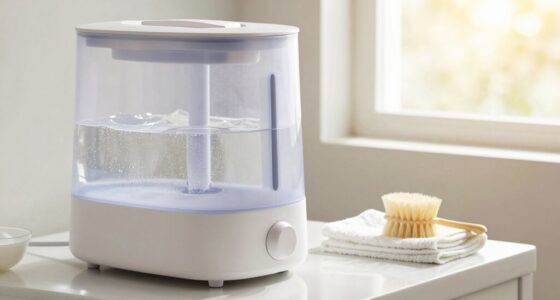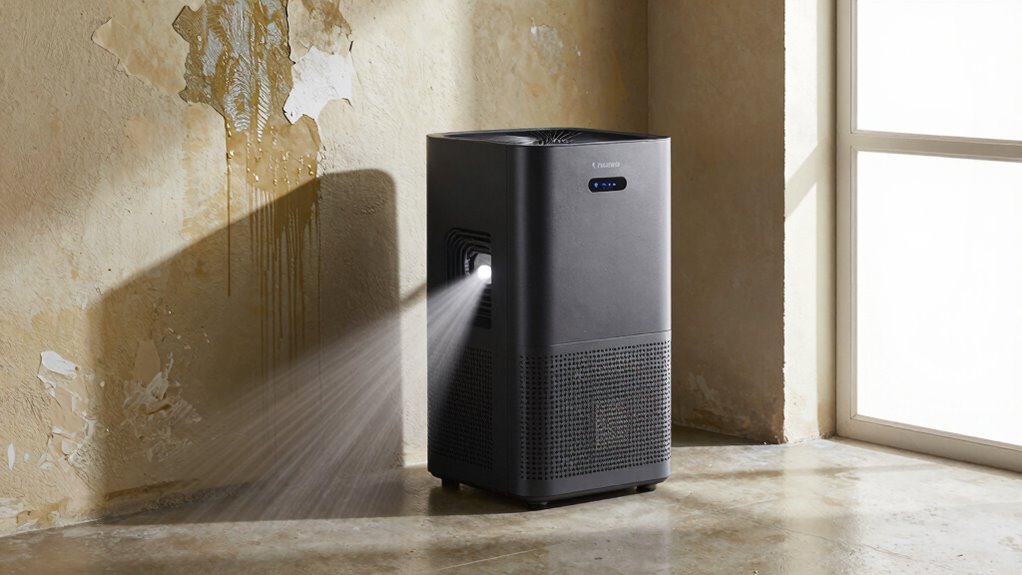

To get the best results, place your dehumidifier where air can circulate freely, like near damp areas or centrally in the room. Avoid spots behind furniture, curtains, or in tight corners, as these block airflow. Keep it away from heat sources, direct sunlight, or outdoor humidity sources. Proper placement ensures efficient moisture removal, reduces energy use, and promotes a healthier environment. Continue exploring to discover further tips on ideal dehumidifier positioning.
Key Takeaways
- Place dehumidifiers in central, open areas for optimal air circulation and moisture removal.
- Avoid placing units behind furniture, curtains, or in corners to prevent obstructed airflow.
- Keep dehumidifiers away from heat sources, direct sunlight, and outdoor humidity sources for best performance.
- Use appropriately sized models based on room size to ensure effective humidity control.
- Position portable units on flat surfaces, avoiding tight spaces to maximize efficiency and lifespan.
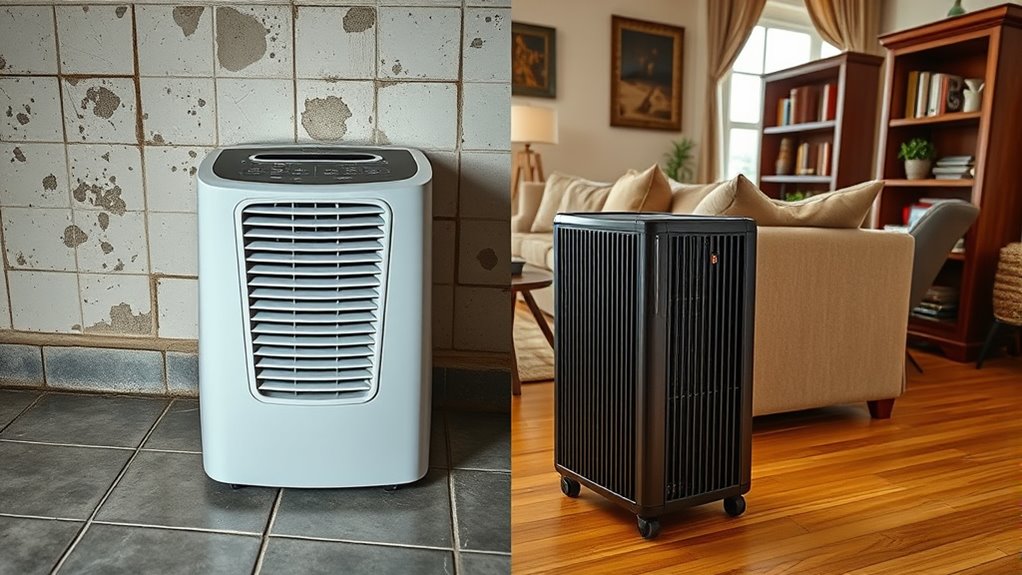
Proper placement of your dehumidifier is essential for maximizing its efficiency and guaranteeing a dry, comfortable space. When considering where to put it, you need to think about the room size and the appliance type. Larger rooms require a more powerful dehumidifier with higher capacity, while smaller spaces can often get by with compact models. If you place a small appliance in a large, damp basement, it’ll struggle to keep humidity levels under control. Conversely, a high-capacity unit in a small room may be overkill, wasting energy and space. Knowing the size of your room helps you select the right appliance type and position it correctly.
Once you’ve chosen the appropriate dehumidifier for your space, placement becomes key. You want to position it where it can circulate air freely without obstructions. Typically, this means placing it in the center of the room or near the dampest area, such as a corner or near a water source. Avoid placing it behind furniture, curtains, or in tight corners, as these can block airflow and reduce its effectiveness. Proper placement ensures the dehumidifier can draw in moist air and distribute dry air evenly throughout the room. If your room has high ceilings, consider placing the unit lower to the ground, where moisture tends to settle. Additionally, understanding airflow dynamics can help optimize location choices for better moisture control.
The appliance type influences placement as well. For example, a portable dehumidifier is versatile and easy to move around, so you can reposition it based on changing moisture levels. Built-in or whole-house dehumidifiers, on the other hand, are installed in fixed locations, often near the HVAC system or central ventilation points. For portable units, it’s best to keep them on a flat, stable surface away from walls and furniture, ensuring good airflow. If you have a wall-mounted or integrated model, placement is dictated by the system’s design, but it should still be positioned where it can operate efficiently without airflow restrictions.
Additionally, avoid placing your dehumidifier near sources of heat or direct sunlight, which can skew humidity readings and cause it to work harder. Keep it away from vents or windows where outdoor humidity might interfere. Remember, proper placement not only improves efficiency but also prolongs your appliance’s lifespan. By considering room size and appliance type, and positioning your dehumidifier in a well-ventilated, unobstructed spot, you’ll maximize its performance and maintain a healthier, more comfortable environment.
Frequently Asked Questions
Can a Dehumidifier Be Used Outdoors Effectively?
You can’t use a dehumidifier outdoors effectively because outdoor humidity and weather impact its performance. These units are designed for indoor use, where temperature and humidity levels are controlled. Exposure to rain, snow, or direct sunlight damages the appliance and skews its readings. Instead, focus on indoor spaces with high humidity, and keep outdoor areas ventilated to manage moisture naturally.
How Loud Are Dehumidifiers During Operation?
Think of a dehumidifier as a gentle thunderstorm—some models are quiet, while others roar like a summer storm. Noise levels vary, often comparable to a dishwasher or a conversation. If sound insulation isn’t sufficient, it might disrupt your peace. Choosing a quieter unit or placing it in a room with good insulation can help keep the noise manageable, letting you breathe easy without the racket.
Do Dehumidifiers Require Regular Maintenance or Filter Changes?
Yes, your dehumidifier needs regular filter maintenance to keep it running efficiently. You should clean or replace the filters every few months, depending on usage and humidity levels. Follow the operational tips in your manual to guarantee peak performance. Regular maintenance prevents mold buildup, improves air quality, and extends your dehumidifier’s lifespan. Staying on top of filter changes keeps your unit running smoothly and effectively in controlling moisture.
Can Multiple Dehumidifiers Be Used in the Same Space?
Sure, you can use multiple dehumidifiers in the same space—ironic, isn’t it? Just make certain their combined capacity matches your room’s needs and avoid overlapping placement strategies. Position them wisely, not too close, to prevent redundancy and guarantee efficient moisture removal. Remember, more isn’t always better. Proper placement strategies optimize dehumidifier capacity, helping you keep the space dry without wasting energy or causing unnecessary noise.
What Are the Energy Consumption Differences Among Models?
You’ll notice that energy-efficient dehumidifier models use less power consumption while still effectively removing moisture. These models often feature advanced compressors and better insulation, reducing overall energy use. When comparing, check the energy efficiency ratio (EER) or wattage ratings to see which consumes less power. Investing in a more efficient model might cost more upfront but saves you money on electricity bills over time, making it a smart choice.
Conclusion
Now that you know where to place your dehumidifier, you’ll keep your space dry and comfortable, just like a modern-day Marie Antoinette enjoying her retreat. Remember, avoid corners and obstructions for peak performance. Think of your dehumidifier as your loyal squire—when placed correctly, it fights humidity effectively. So, take these tips to heart and make your home a fortress against dampness. After all, a dry space is a happy space—no time machine needed!