To stay comfortable and prevent mold, you need to manage your home’s moisture levels using dehumidification. Understanding relative humidity tells you how humid the air is compared to its maximum at a given temperature, while the dew point indicates when moisture starts condensing on surfaces. Keeping humidity between 30-50% helps avoid issues like dampness and dryness. By mastering these concepts, you’ll improve your indoor environment—continue exploring to uncover essential tips for perfect moisture control.
Key Takeaways
- Maintaining indoor humidity between 30-50% prevents mold, dust mites, and mold growth, ensuring a healthier environment.
- Dew point indicates when air reaches saturation; monitoring it helps avoid condensation and surface mold.
- Relative humidity shows how much moisture air holds; high levels cause clamminess, while low levels lead to dryness.
- Dehumidifiers remove excess moisture, especially in humid spaces, to maintain comfortable and mold-free conditions.
- Continuous humidity monitoring and control improve air quality, comfort, and protect home structures from moisture damage.

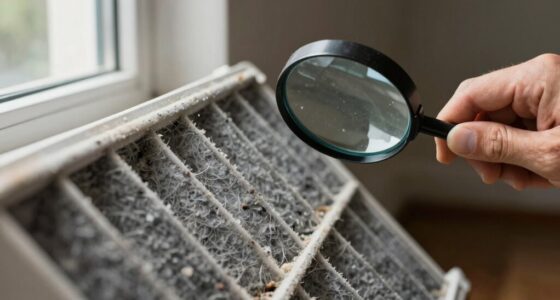
Have you ever wondered why your home feels damp or why mold keeps appearing? The answer often lies in the level of humidity inside your space. Humidity control plays a vital role in creating a comfortable and healthy environment. When the air holds too much moisture, it becomes ideal for mold growth, dust mites, and other allergens. To prevent these issues, you need effective moisture removal strategies. Dehumidifiers are designed specifically for this purpose—they remove excess moisture from the air, helping you maintain ideal humidity levels.
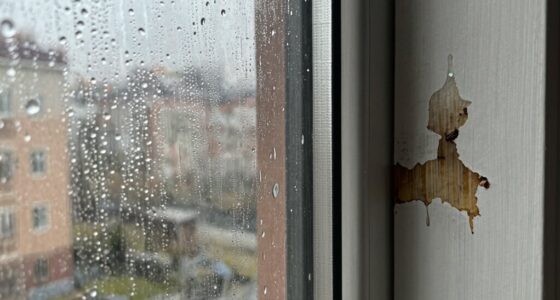
Understanding the relationship between relative humidity and dew point can make a big difference in how you manage indoor air quality. Relative humidity refers to the percentage of moisture the air can hold at a given temperature. When it’s high, the air is saturated with moisture, which can lead to condensation and dampness. Dew point, on the other hand, is the temperature at which the air becomes fully saturated and water vapor starts to condense into liquid. When indoor air reaches or falls below the dew point, you might notice condensation on windows or walls, signaling that moisture levels are too high. By controlling humidity and monitoring dew point, you can prevent these uncomfortable and damaging conditions.
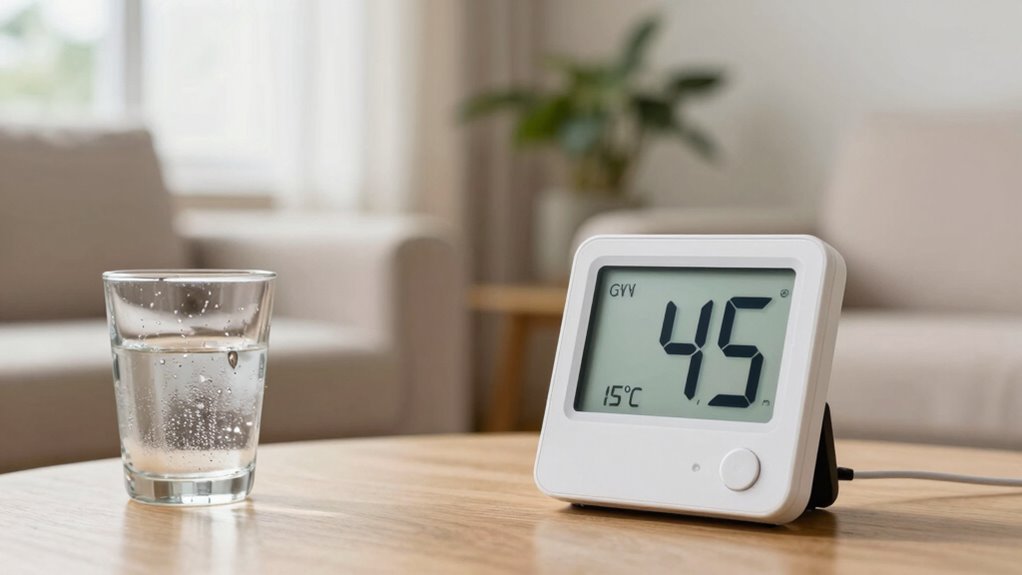
Monitoring dew point helps prevent condensation and mold by maintaining optimal indoor humidity levels.
Maintaining the right humidity level isn’t just about avoiding mold; it also directly impacts your comfort. Ideally, indoor relative humidity should stay between 30% and 50%. When it exceeds this range, you may feel clammy or sticky, and the air can become heavy and oppressive. Conversely, if humidity drops too low, your skin might feel dry, and you could experience irritation in your respiratory passages. Proper humidity control creates a balanced environment that feels more comfortable, reduces static electricity, and preserves your home’s structural integrity. Additionally, understanding air moisture content can help you better manage humidity levels effectively.
Effective moisture removal involves more than just turning on a dehumidifier; it requires understanding your space’s specific needs. Larger or more humid environments may need higher-capacity units, while smaller rooms might only require portable dehumidifiers. Ensuring good ventilation, sealing leaks, and using exhaust fans can also help reduce excess moisture. When moisture levels are managed well, you’ll notice fewer issues with condensation, less mold growth, and improved air quality overall. Remember, maintaining proper humidity isn’t a one-time task—it’s an ongoing process that keeps your home healthier and more comfortable year-round.
Frequently Asked Questions
How Does Dehumidification Affect Indoor Air Quality?
Dehumidification improves your indoor air quality by reducing excess moisture, which helps prevent mold growth and dampness. This also leads to allergy relief since mold and dust mites thrive in humid environments. As you lower the humidity levels, you create a healthier, more comfortable space. You’ll notice less musty odors and fewer allergy symptoms, making your home safer and more enjoyable for everyone.
Can Dehumidifiers Remove Odors Along With Moisture?
Imagine opening a damp, musty closet and feeling the air clear, freshening instantly. Yes, dehumidifiers can help with odor elimination by removing moisture that traps smells. As they draw out excess humidity, they also help reduce mold, mildew, and bacteria that cause odors. So, along with moisture removal, your space smells fresher and cleaner, creating a more comfortable environment.
What Are the Energy Costs of Continuous Dehumidification?
Continuous dehumidification increases your energy consumption and operational costs. The energy costs depend on the dehumidifier’s efficiency and how often you run it. Expect higher electricity bills if you keep it on constantly, especially in humid environments. To manage costs, set a humidity target and use a timer or humidistat to optimize operation. Balancing comfort and energy efficiency can help you save money while maintaining a healthy indoor environment.
How Does Climate Impact Dehumidifier Effectiveness?
Climate variations and regional humidity markedly impact your dehumidifier’s effectiveness. In humid areas, it works harder to reduce moisture, potentially increasing energy use and wear. Conversely, in drier climates, it may run less often, saving energy. Understanding local humidity levels helps you choose the right size and settings, ensuring your dehumidifier maintains comfort efficiently without overexerting, regardless of regional climate differences.
Are There Health Risks Associated With Low Humidity Levels?
Low humidity levels can lead to health hazards like dry skin, irritated eyes, and respiratory issues. You might also increase your risk of mold growth, which worsens allergies and asthma. To prevent these problems, maintain balanced humidity levels that support mold prevention and overall well-being. Proper dehumidification helps keep your environment safe, comfortable, and free from health hazards caused by overly dry air.
Conclusion
Understanding dehumidification helps you create a more comfortable home. Keeping humidity levels between 30-50% can reduce mold growth and improve air quality. Did you know that, on average, Americans spend about 90% of their time indoors? That’s a lot of time in potentially humid environments. By controlling your humidity, you’ll not only breathe easier but also protect your belongings. Take control today for a healthier, more comfortable living space!