
To choose an HVAC filter without restricting airflow, match the filter’s MERV rating to your system’s specifications—generally MERV 8 to 13 for most homes. Avoid overly dense filters that can clog your system, and consider filters with advanced materials like electrostatic or pleated designs for better filtration without loss of airflow. Regularly replace filters according to manufacturer guidelines to keep your system running smoothly. Stay tuned to learn how to pick the best option for your needs.
Key Takeaways
- Select a filter with a MERV rating between 8 and 13 for effective filtration without restricting airflow.
- Choose pleated filters for higher surface area, balancing filtration with airflow capacity.
- Ensure your HVAC system can handle higher-density filters before opting for higher MERV ratings.
- Avoid overly dense or thick filters that may impede airflow and strain your system.
- Regularly replace filters as recommended to maintain proper airflow and indoor air quality.

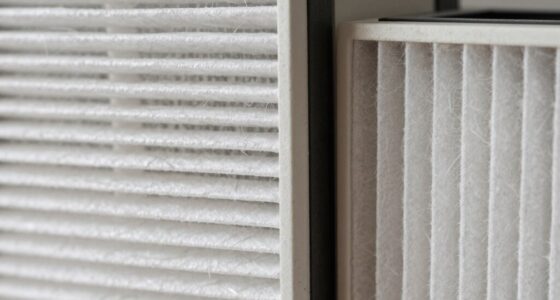
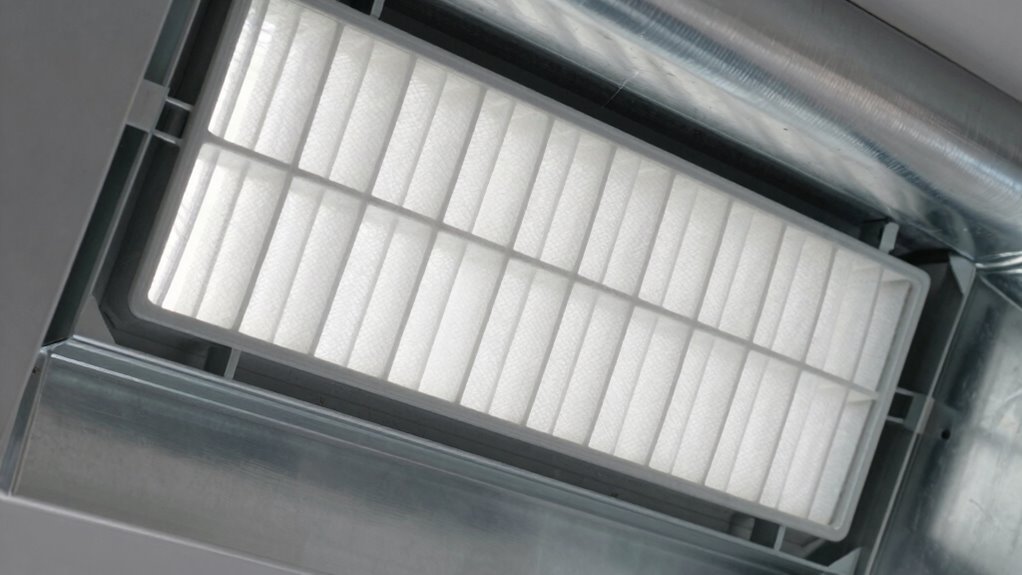
Are you unsure how to select the right HVAC filter for your home? The key is understanding that not all filters are created equal. When choosing, consider the filter material and the filter MERV rating, as these directly impact your system’s performance and indoor air quality. The filter material determines how well the filter captures particles; common options include fiberglass, polyester, pleated paper, and electrostatically charged fibers. Fiberglass filters are affordable but offer minimal filtration, mainly trapping larger debris. Pleated filters, often made from polyester or cotton blends, provide a higher surface area, improving their ability to catch smaller particles without overly restricting airflow. Electrostatic filters, which generate static electricity, attract and trap tiny airborne contaminants more effectively. Selecting the right material depends on your specific needs—whether it’s basic particle removal or filtering out allergens and fine dust. Additionally, some filters incorporate advanced technology, such as activated carbon or antimicrobial coatings, to enhance indoor air quality further.
Next, you need to pay attention to the filter MERV rating, which indicates the filter’s efficiency at trapping airborne particles. MERV stands for Minimum Efficiency Reporting Value, and the scale runs from 1 to 20. For most residential homes, a filter with a MERV rating between 8 and 13 strikes the right balance. Higher ratings, such as 14 or above, can trap microscopic particles like bacteria and viruses but may also restrict airflow if your HVAC system isn’t designed to handle such dense filters. On the other hand, filters with lower MERV ratings might not effectively trap allergens or fine dust, compromising indoor air quality. Always check your HVAC system’s specifications before choosing a high-MERV filter, as using one that’s too dense can cause your system to work harder, leading to strain and reduced lifespan.
When selecting your filter, think about your home’s environment. If you have allergies, pets, or live in a polluted area, opting for a filter with a higher MERV rating and a specialized filter material can make a significant difference. Conversely, if your system is older or has limited airflow capacity, sticking with a lower MERV rating ensures you won’t impede airflow. Remember, the goal is to find a filter material and MERV rating that effectively captures pollutants without reducing airflow to the point where your HVAC system has to work overtime. Regularly replace your filter according to the manufacturer’s recommendations to maintain ideal airflow and indoor air quality. By understanding these factors, you’ll be better equipped to choose an HVAC filter that keeps your air clean without strangling your system’s airflow.
Frequently Asked Questions
How Often Should I Change My HVAC Filter?
You should change your HVAC filter every 1 to 3 months, depending on its filter lifespan and your home’s needs. Regularly checking the filter guarantees it doesn’t get clogged, which can reduce airflow and strain your system. Maintenance tips include inspecting more frequently if you have pets or allergies, and switching to a higher-efficiency filter if necessary. Staying on top of filter changes helps your system run smoothly and efficiently.
What Is MERV Rating and How Does It Affect Airflow?
Think of MERV ratings as a filter’s speed limit—higher ratings catch more dust but can bottleneck airflow. They impact airflow by making your system work harder, like a wide-open highway suddenly narrowing. When selecting filters, balance the MERV rating with your home’s needs to prevent restricting airflow. Lower ratings keep air flowing freely, while higher ones trap more particles but might slow your system down.
Can a Higher-Rated Filter Improve Indoor Air Quality?
Yes, a higher-rated filter can improve indoor air quality by capturing more dust, allergens, and pollutants. However, you’ll want to check air purifier compatibility and consider filter material options to guarantee your system handles the increased filtration without reducing airflow. Opt for filters made from high-quality materials that balance filtration efficiency with airflow, so you get cleaner air without sacrificing system performance.
Are There Filters Suitable for Allergy Sufferers?
Did you know some filters are perfect for allergy sufferers? HEPA filters are your best bet, capturing tiny particles like pollen, dust, and pet dander. You can also pair them with air purifiers for extra protection. Look for filters labeled “allergy-friendly” or “high-efficiency” to guarantee you’re filtering out allergens effectively. This way, you breathe easier and enjoy cleaner indoor air without sacrificing airflow.
How Do I Tell if My Filter Is Restricting Airflow?
You can tell if your filter is restricting airflow by measuring it with an airflow meter, which shows the pressure difference across the filter. If airflow decreases substantially, the filter may be too restrictive. Also, check filter material options—high-quality, breathable materials promote good airflow while trapping allergens. Regularly replacing or cleaning your filter guarantees ideal airflow, preventing strain on your HVAC system and maintaining indoor air quality.
Conclusion
Just as Daedalus crafted wings that balanced strength and grace, selecting the right HVAC filter requires harmony between filtration efficiency and airflow. By understanding your home’s needs and avoiding the siren call of overly restrictive filters, you’ll guarantee your system runs smoothly without sacrificing comfort. Remember, a well-chosen filter isn’t just about cleaner air—it’s about maintaining the delicate balance that keeps your home’s environment both healthy and efficient.