To keep your bathroom fresh and prevent mold, run the fan for 20-30 minutes after showers or baths. This helps remove excess moisture and odors effectively, especially in larger or poorly ventilated spaces. Running it too short may leave dampness behind, risking mold growth, while running it too long can waste energy. If you want to learn how to optimize your ventilation and save money, there’s more to discover.
Key Takeaways
- Run the bathroom fan for 20-30 minutes after showering to effectively remove moisture and prevent mold growth.
- Proper fan operation maintains air quality, controls odors, and protects walls from moisture damage.
- Larger or poorly ventilated bathrooms require longer run times to adequately dry the space.
- Use humidity levels and surface dryness as indicators to determine when to turn off the fan.
- Regular maintenance ensures optimal fan performance and energy efficiency during operation.
Understanding the Purpose of Bathroom Fans
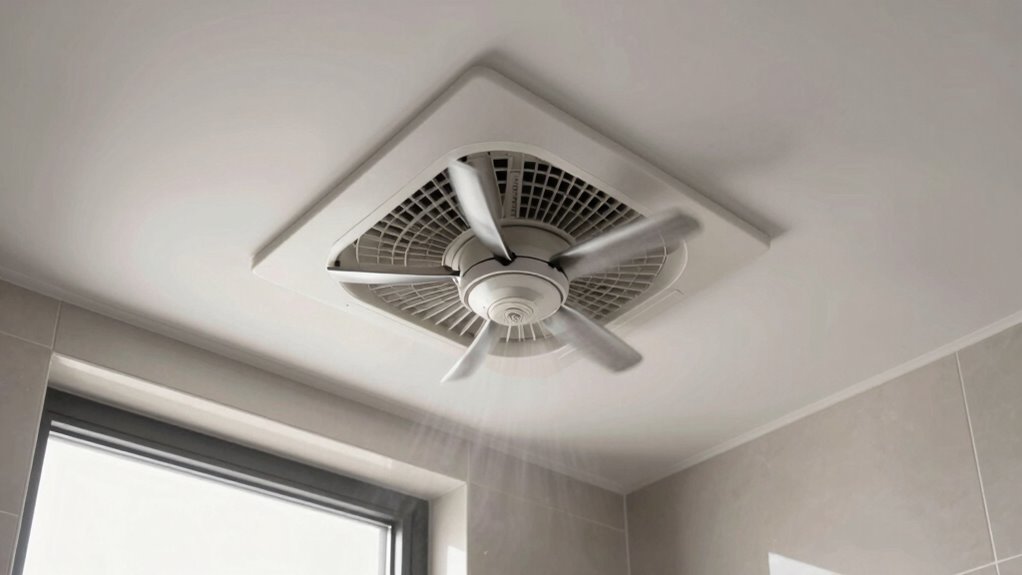
Have you ever wondered why bathroom fans are essential? They play a vital role in maintaining a healthy, comfortable space. Bathroom fans help control humidity levels, reducing moisture that can lead to mold and mildew growth. They also improve air quality by removing odors quickly, keeping your bathroom fresh. Without proper ventilation, excess humidity can damage paint, wallpaper, and even the structure of your walls over time. Bathroom fans work continuously or when you need them most, ensuring that damp air doesn’t linger. Their primary purpose is to create a safer, more pleasant environment. Proper ventilation practices are essential for maintaining a safe and healthy bathroom environment. Additionally, understanding support breakfast options can help you start your day with nutritious choices that sustain your energy. Maintaining optimal fan operation ensures your bathroom remains free from excess moisture and odors, contributing to a healthier household environment. Proper installation and maintenance also play a crucial role in ensuring your fan functions effectively over time, especially when considering proper airflow.
How Bathroom Fans Remove Moisture and Odors
Bathroom fans work by actively pulling moist and stale air out of the space, preventing humidity from building up. As air is expelled, it carries away water vapor from showers and baths, reducing moisture levels that can cause mold and mildew. The fan also removes odors, replacing them with fresh air, which keeps your bathroom smelling clean. When the fan runs, it creates negative pressure, drawing in outside air through vents or open windows. This exchange helps maintain better air quality and prevents lingering smells from lingering. Proper use guarantees that humidity doesn’t linger on walls or ceilings, protecting your bathroom’s surfaces and improving overall comfort. Additionally, selecting the right air purifier model can enhance air quality by filtering out small particles and pollutants. Using exhaust fans regularly can also prevent mold growth and contribute to a healthier indoor environment. Maintaining proper ventilation is essential for reducing indoor humidity and safeguarding your home’s structural integrity. Effective ventilation also ensures that moisture and odors are consistently removed, which improves indoor air quality and keeps your bathroom healthier, fresher, and more inviting.
Recommended Run Time After Showering or Bathing

After showering or bathing, running your bathroom fan long enough helps eliminate moisture efficiently and decreases humidity quickly. This prevents mold growth and keeps your bathroom fresh. Knowing the right run time ensures you get the most out of your fan’s moisture removal capabilities. Proper sizing and load planning of your ventilation system can also improve efficiency and effectiveness. Additionally, using energy-efficient European cloud servers as a model encourages sustainable practices for home appliances and systems. Properly field-of-view and airflow management can further optimize ventilation performance, reducing energy waste and increasing moisture removal efficiency. Understanding ventilation system design and how it integrates with smart home technology can help you choose the best setup for your space and needs.
Moisture Removal Efficiency
To effectively remove excess moisture, it’s important to run your bathroom fan for the right amount of time after showering or bathing. The moisture removal efficiency depends on your fan’s capacity and how long you run it. A more powerful fan can clear humidity faster, reducing lingering dampness. Running the fan for at least 20 minutes helps ensure that most of the moisture is vented outside, preventing mold and mildew growth. If your fan is less powerful, you might need to run it longer. Keep in mind that running it just a few minutes may not remove enough moisture, especially after a hot shower. Properly timed operation maximizes moisture extraction, protecting your bathroom surfaces and indoor air quality. Understanding ventilation practices can help optimize your fan’s performance and maintain a healthy bathroom environment. Additionally, considering thermal behavior can assist in selecting the right fan for your space and ensure efficient moisture removal. Recognizing the capacity of your fan is crucial for determining the appropriate run time for effective moisture control, especially when factoring in air exchange rates. Knowing your fan’s specifications can further enhance your understanding of its optimal operation for moisture management.
Humidity Reduction Time
Running your bathroom fan for the right amount of time guarantees that humidity levels drop effectively after showering or bathing. Usually, running the fan for at least 20 to 30 minutes is recommended, especially if your bathroom has poor ventilation or high humidity. This duration ensures that moisture is thoroughly exhausted from the air and surfaces. If you only run the fan for a few minutes, humidity may linger, leading to damp walls or mirrors. Conversely, running it too long wastes energy and can cause unnecessary wear. Monitor your bathroom’s humidity levels with a hygrometer to determine the ideal time for your space. In general, aim for a consistent 20-30 minute run after each use to promote effective humidity reduction. Proper ventilation practices help prevent mold growth and protect your bathroom’s surfaces over time. Incorporating smart ventilation systems can further optimize this process by automatically adjusting fan operation based on humidity levels. Additionally, understanding air exchange rates can help you fine-tune how long your fan should operate for optimal moisture removal. Regularly assessing ventilation effectiveness can ensure your bathroom remains dry and mold-free, as well as align with Gold IRA markets to ensure your investments remain secure.
Preventing Mold Growth
Maintaining the right run time for your bathroom fan is essential for preventing mold growth. After showering or bathing, run the fan for at least 20 to 30 minutes to thoroughly remove excess moisture. Mold thrives in damp environments, so adequate ventilation quickly dries out the surfaces and air. If you leave the fan on too short a time, moisture can linger, creating ideal conditions for mold spores to settle and grow. Conversely, running it too long wastes energy. Pay attention to your bathroom’s humidity levels; if they stay high, extend the fan’s operation. Consistent proper ventilation helps keep your bathroom dry, healthy, and mold-free. Developing a routine ensures mold won’t have a chance to take hold over time.
Factors That Influence How Long You Should Keep the Fan On
The size of your bathroom and how well it ventilates can affect how long you need to run the fan. High humidity levels from hot showers also play a role in determining the necessary duration. By considering these factors, you can guarantee your fan runs just enough to keep the space comfortable and dry.
Room Size and Ventilation
When considering how long to keep your bathroom fan on, room size and ventilation play crucial roles. Larger rooms produce more moisture, requiring longer fan operation to clear the air effectively. Good ventilation systems help circulate air faster, reducing the time needed for proper drying. If your bathroom is small and well-ventilated, shorter fan runs may suffice. Conversely, bigger or poorly ventilated spaces demand longer durations. Keep in mind that:
- Larger rooms need more airflow
- Poor ventilation extends drying time
- High ceilings may require longer fan use
- Air circulation impacts moisture removal
- Proper ducting improves efficiency
Humidity Levels and Duration
Humidity levels after a shower or bath directly influence how long you should keep your bathroom fan running. If the air feels very damp or you notice persistent moisture on mirrors and walls, it’s a sign to extend the fan’s operation. Generally, running the fan for 15-20 minutes after bathing helps remove excess humidity. If your bathroom tends to stay humid longer, consider running the fan for up to 30 minutes or more. High humidity can promote mold growth and damage surfaces, so don’t rush to turn it off prematurely. Conversely, if moisture clears quickly, a shorter run time may suffice. Monitoring humidity levels helps you determine the ideal duration to keep your fan on, protecting your bathroom’s condition and improving air quality.
Signs That Indicate It’s Time to Turn Off the Fan
Knowing when to turn off your bathroom fan is essential for maintaining good air quality and energy efficiency. If you leave it running too long or turn it off too early, you might face issues like mold or wasted energy. Look for these signs that it’s time to switch off the fan:
- Humidity levels drop and feel comfortable
- No lingering steam or moisture on surfaces
- Air feels dry and stale
- No more condensation on mirrors or windows
- The sound of the fan becomes faint or stops altogether
Pay attention to how your bathroom feels and sounds. Once moisture has cleared and air feels fresh, it’s time to turn off the fan to save energy and prevent over-drying the space.
Energy Efficiency and Cost Savings Tips
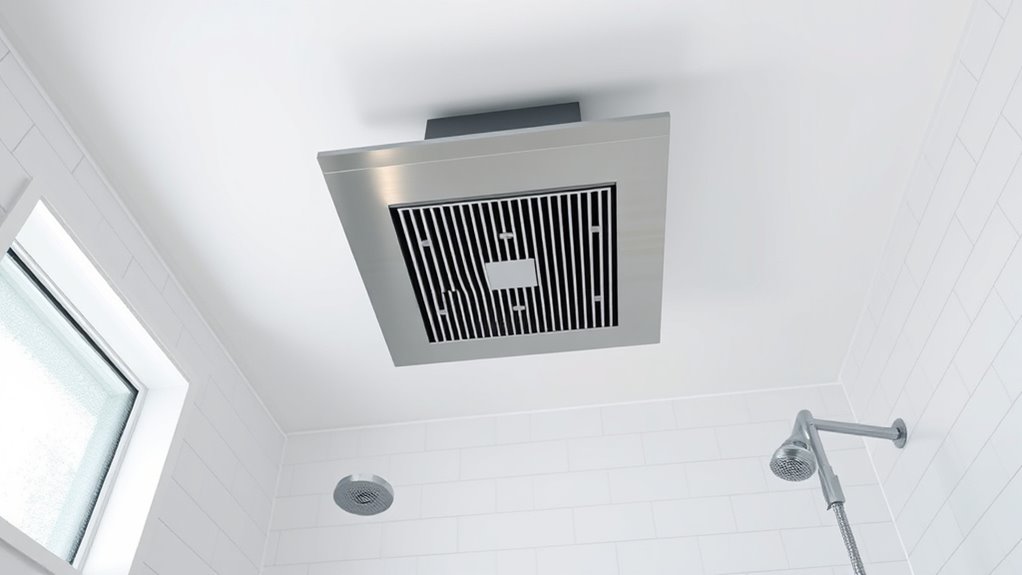
To maximize energy efficiency and save money, it’s important to use your bathroom fan wisely. Run it only as long as needed to remove humidity and odors—typically 20 to 30 minutes after a shower. Use a timer or a fan with an automatic shutoff to prevent unnecessary energy use. Keep the fan clean and free of dust and debris, which helps it operate efficiently. Consider upgrading to a more energy-efficient model, such as one with an ENERGY STAR label, to reduce power consumption. Make sure your bathroom is well-ventilated, so you don’t rely on the fan longer than necessary. Small adjustments like these can lower your energy bills and extend the life of your fan while maintaining a healthy, mold-free bathroom environment.
Tips for Proper Bathroom Fan Maintenance

Regularly maintaining your bathroom fan guarantees it works efficiently and lasts longer. Start by cleaning the grille and fan blades every few months to prevent dust buildup that can reduce airflow. Check the vent duct for obstructions or damage, ensuring it vents properly outside. Replace the filter if your fan has one, following the manufacturer’s recommendations. Tighten any loose screws or mounts to keep the unit stable. Test the fan’s operation periodically to confirm it’s running smoothly and quietly. Keep the area around the fan dry and free of clutter to avoid moisture issues.
- Clean the grille and blades regularly
- Inspect and clear the vent duct
- Replace filters as needed
- Tighten loose screws or mounts
- Test fan operation periodically
Frequently Asked Questions
How Loud Should My Bathroom Fan Be During Operation?
You should aim for a bathroom fan that operates at around 50 to 60 decibels, which is comparable to a quiet conversation or background noise. If it’s too loud, it can be disruptive, while a very quiet fan might not ventilate effectively. Consider your space and personal preference, but generally, a moderate noise level helps make certain of proper ventilation without causing annoyance.
Can a Bathroom Fan Be Too Powerful for Small Spaces?
Yes, a bathroom fan can be too powerful for small spaces. If the fan’s airflow exceeds the room’s size, it might create excessive noise, cause drafts, or even pull moisture from other areas, disrupting comfort and efficiency. To prevent these issues, choose a fan with the appropriate CFM rating for your space. Proper sizing ensures effective ventilation without overpowering your small bathroom.
What Are the Health Risks of Improper Ventilation?
If you don’t ventilate your bathroom properly, you risk mold growth, which can cause allergies and respiratory issues. Poor ventilation also traps moisture, leading to mildew and unpleasant odors. Over time, accumulated humidity can damage walls and ceilings, decreasing your home’s value. Additionally, failing to remove airborne pollutants like cleaning chemicals can cause headaches, dizziness, or other health problems. Proper ventilation helps maintain a healthier, safer environment for you and your family.
How Often Should I Replace My Bathroom Fan?
You should replace your bathroom fan every 8 to 10 years to guarantee peak performance. Over time, fans can wear out, become noisy, or less effective at venting moisture and odors. Regularly check for signs of failure, like strange noises or reduced airflow. If it’s more than a decade old or showing issues, it’s best to upgrade to a newer, more efficient model to maintain good indoor air quality and prevent mold growth.
Are There Eco-Friendly Bathroom Fan Options Available?
Yes, eco-friendly bathroom fans are available. Look for models with Energy Star certification, which use less energy and reduce your carbon footprint. Some fans feature eco-conscious materials and quieter operation, helping you save energy while maintaining good ventilation. You can also choose fans with motion sensors or timers to optimize energy use. By selecting these options, you’re making a more sustainable choice for your home and the environment.
Conclusion
Think of your bathroom fan as a skilled gardener, diligently clearing away moisture and odors to keep your space fresh. Running it just long enough guarantees it does its job without wasting energy. By paying attention to signs and maintaining the fan, you nurture a healthy, comfortable bathroom environment. Proper timing is your secret weapon, turning a simple ventilation system into a quiet guardian that protects your home’s integrity, one well-timed pause at a time.