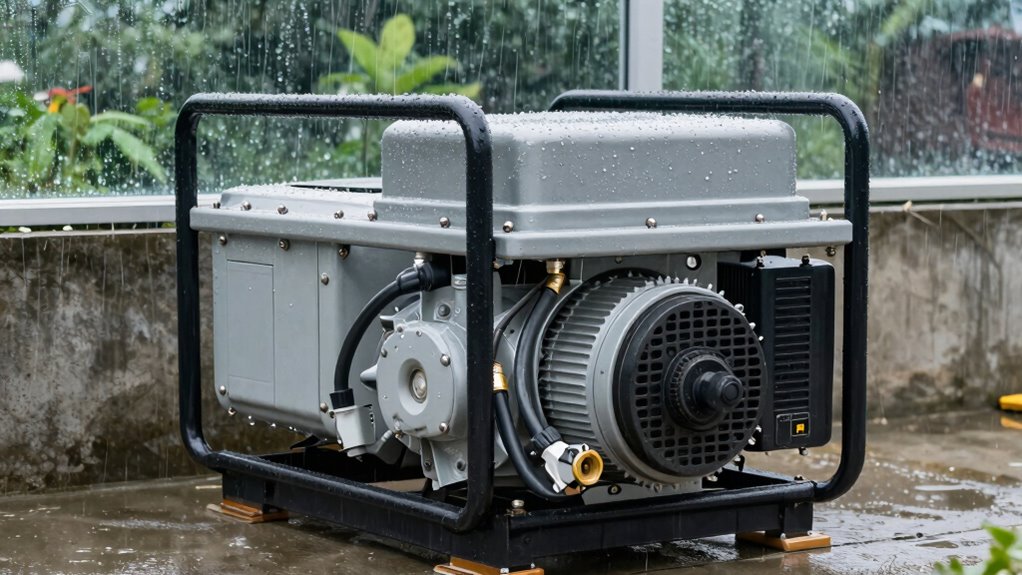

When operating your generator in the rain, make certain it’s properly grounded following manufacturer instructions and local codes, avoiding any DIY wiring. Use a weatherproof cover specifically designed for outdoor use that allows ventilation to prevent overheating. Place the generator on a dry, level surface away from open windows, doors, and vents, and keep cords elevated to prevent water contact. Prioritizing these safety steps helps protect you and your equipment—stay tuned to learn more about ensuring safe outdoor generator setups.

Turn your quiet moments into listening time
- Thousands of audiobooks, podcasts and originals
- Listen on your phone, tablet or Echo — also offline
- Cancel anytime
Key Takeaways
- Always use weatherproof, ventilated covers designed for outdoor generators to protect against rain and moisture.
- Position the generator on a dry, level surface away from open windows, vents, and flammable materials.
- Ensure proper grounding by connecting to a grounded outlet or grounding rod, following manufacturer and local electrical codes.
- Elevate cords and connections to prevent water contact and minimize electrical hazards.
- Regularly inspect all cords, connections, and grounding points for water exposure or damage to maintain safety.
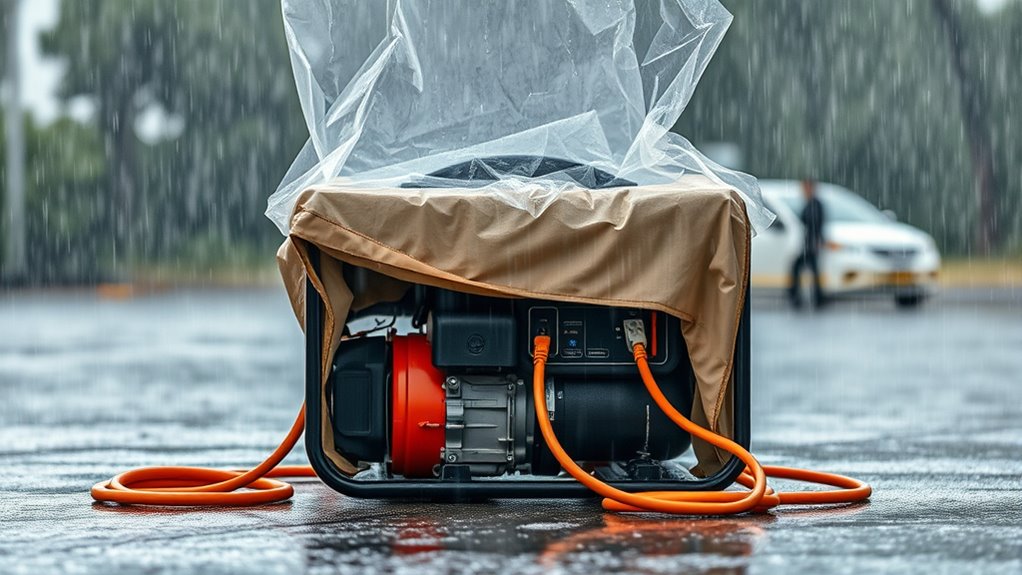
When a storm rolls in unexpectedly, a portable generator can be your best friend, providing power when the grid goes down. However, using a generator in the rain isn’t as simple as just turning it on and hoping for the best. Safety should always come first, especially when dealing with electrical equipment outdoors. One of the most critical safety considerations is grounding safety. Proper grounding prevents electrical shocks and protects both you and your equipment from power surges. Make certain your generator is properly grounded according to the manufacturer’s instructions. This typically involves connecting a grounding wire to a grounding rod driven into the earth or a grounded outlet, which helps dissipate any stray electrical currents safely into the ground. Never bypass grounding procedures or attempt to modify the grounding system; it’s a vital safety step that can prevent serious injury.
In addition to grounding, weatherproof covers are essential for outdoor generator use in the rain. These covers shield your generator from moisture, preventing water from entering crucial components and reducing the risk of electrical shorts or damage. Make sure the cover is specifically designed for generators and provides adequate ventilation to prevent overheating. When setting up your generator, position it on a dry, level surface, ideally on a concrete pad or a sturdy, non-flammable surface. Keep the generator away from open windows, doors, and vents to avoid exhaust fumes entering your home. Also, ensure the cords and connections are kept dry and elevated if possible, to minimize water exposure. Additionally, consult the grounding procedures outlined in the manufacturer’s safety guidelines and local electrical codes to ensure compliance and maximum safety.
Frequently Asked Questions
Can I Run My Generator During a Thunderstorm Safely?
You shouldn’t run your generator during a thunderstorm for safety reasons. Lightning can cause power surges or damage, and unsafe grounding safety practices may increase risks. If you must operate it outdoors, make sure it’s properly weatherproofed with weatherproofing tips, and keep it grounded correctly to prevent electrical hazards. Always prioritize safety, and avoid running your generator in stormy conditions to protect yourself and your equipment.
What Are the Signs of Electrical Shock Hazards Near a Generator?
Electrical shock hazards near your generator can be identified by signs like sparks, sparks, or unusual noises, indicating a ground fault. Nearly 30% of electrical injuries involve ground faults caused by insulation integrity failure. You should regularly check for exposed wiring, damaged insulation, or corrosion. If you notice any of these signs, stop using the generator immediately and have a professional inspect and repair the grounding system to guarantee safety.
How Do I Protect My Generator From Flooding?
To protect your generator from flooding, you should follow proper grounding procedures and use waterproof enclosures. Elevate the generator on a stable, dry platform to prevent water contact. Make certain all electrical connections are securely grounded to reduce risk. Cover the generator with a waterproof enclosure, but leave ventilation open to prevent overheating. Regularly inspect the setup for signs of water intrusion and maintain clear drainage around the area.
Is It Safe to Use Extension Cords With a Generator Outside?
Yes, it’s safe to use extension cords with your generator outside, but only if you follow grounding requirements and use proper extension cords. Make sure your cords are heavy-duty, outdoor-rated, and have grounded plugs to prevent shocks. Always connect the generator to the extension cords properly, and avoid overloading them. Proper grounding and using the right cords guarantee safe operation and protect you from electrical hazards.
What Maintenance Is Needed After Rain Exposure?
After rain exposure, you should inspect your generator for moisture damage and corrosion. Wipe down all surfaces with a dry cloth, especially electrical components, to prevent corrosion and moisture buildup. Check and tighten any loose connections, and consider applying a corrosion prevention spray to vulnerable parts. Make certain the generator is completely dry before storing it in a clean, dry place. Regular maintenance like this helps prevent long-term damage and keeps your generator running smoothly.
Conclusion
Remember, safety always comes first—don’t let a little rain turn into a big problem. Keep your generator protected and follow proper setup principles; after all, a wise person once said, “An ounce of prevention is worth a pound of cure.” By staying cautious and avoiding DIY wiring, you make certain your safety and keep the power running smoothly. Stay smart, stay safe, and enjoy peace of mind even in wet weather.
Fall Picks
fall essentials
As an affiliate, we earn on qualifying purchases.